Waterloo Bridge — History & Analysis
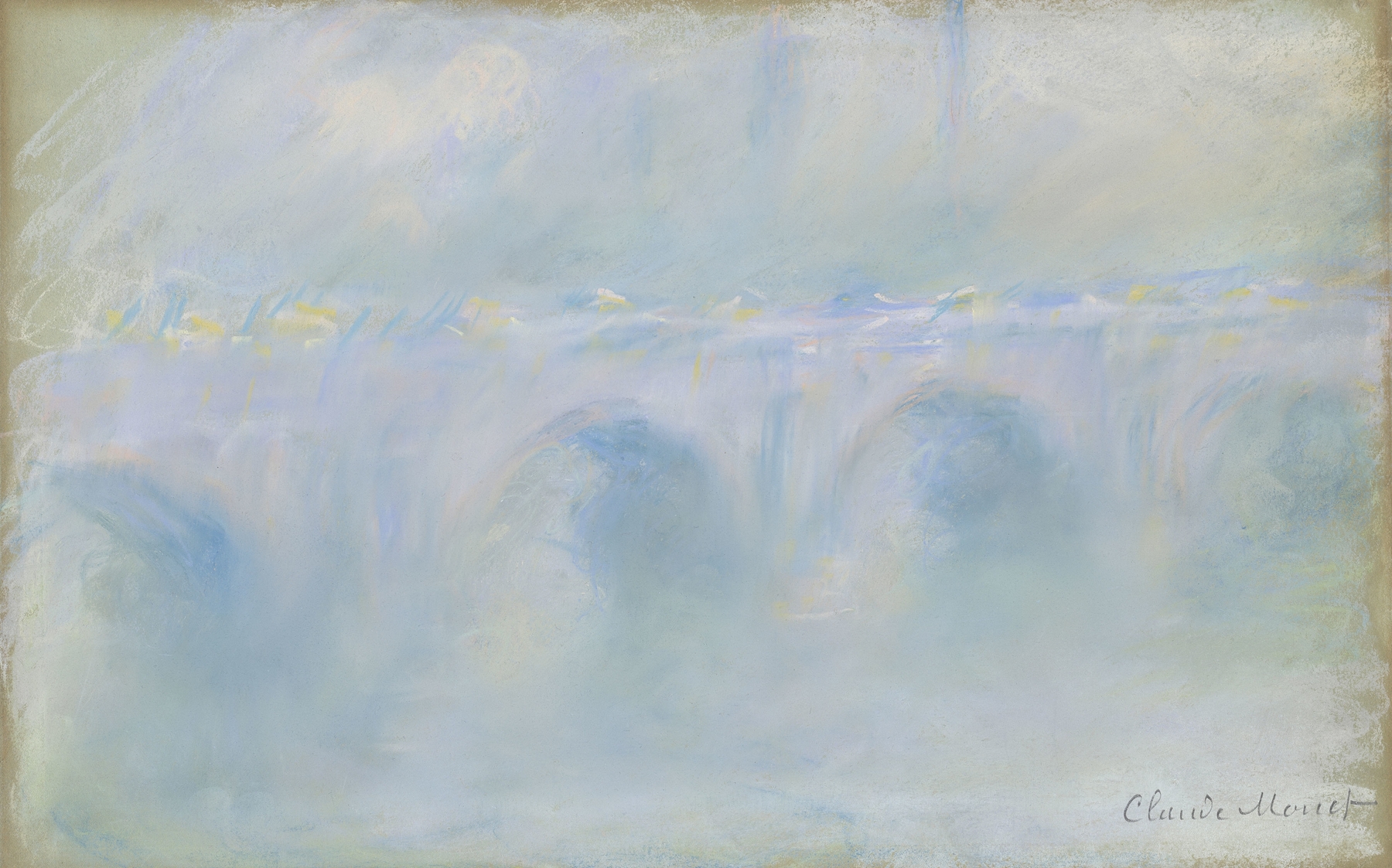
Can paint confess what words never could? In Waterloo Bridge, the essence of illusion drapes the scene in a shimmering veil, blurring the boundaries between reality and imagination. Look to the foreground, where soft, muted hues of blue and gray converge, creating a dreamlike atmosphere. Notice how the light dances across the water’s surface, reflecting the industrial structures of the bridge above. The delicate brushstrokes evoke a sense of transience, as if the moment captured is on the cusp of dissolving into mist.
The hazy silhouette of the bridge looms in the background, its form not entirely defined, suggesting both presence and absence, a fleeting memory. Delve deeper into this composition, and you’ll uncover emotional tensions between the solidity of the bridge and the ethereal quality of the surroundings. The interplay of light and shadow accentuates a contrast between the man-made world and nature’s ephemeral beauty. It invites questions about permanence, as though the bridge represents the weight of experience while the fog signifies the transient nature of life itself.
Each stroke amplifies the feeling of nostalgia, urging the viewer to reflect on their own memories intertwined with such places. In 1901, Monet created this piece amidst a transitional period in his life, having moved to Giverny, where he embraced the outside world as his studio. This was a time of increasing experimentation within the Impressionist movement, and Monet sought to capture the fleeting effects of light and atmosphere, pushing the boundaries of perception in his work. As the world around him changed rapidly, he remained steadfast in his pursuit of the beauty found within the moment, forever shaping the landscape of modern art.