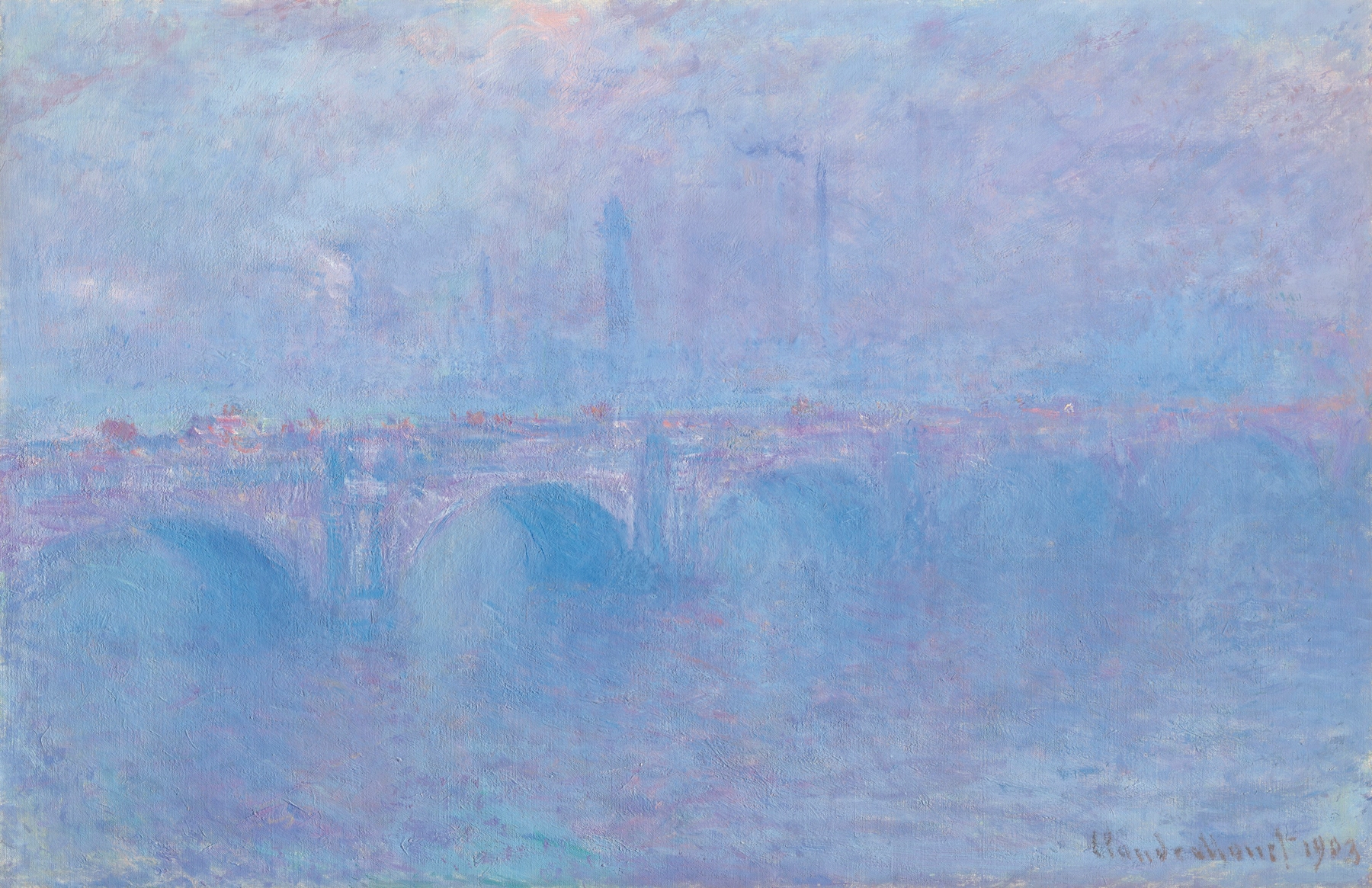
Waterloo Bridge, effet de brouillard — History & Analysis
“Between color and silence, truth hides.” In the soft embrace of early morning, a world awakens, swathed in gauzy fog. The muted hues speak of a moment caught between the ethereal and the real, where the familiar structure of the bridge dissolves into a dreamlike presence. Look closely at the delicate swirls of blue and gray that envelop the canvas; your eyes are naturally drawn to the bridge arching gracefully across the water. The layers of paint create an atmospheric depth, while the dappled reflections shimmer like whispers on the river's surface.
Monet’s masterful brushwork conveys a sense of movement, capturing the fleeting nature of the scene and inviting you to experience the transitory beauty of the moment. Beneath the surface lies a complex interplay of light and shadow, evoking both tranquility and a sense of isolation. The blurred outlines of boats and figures hint at life stirring beneath the fog, suggesting a deeper connection to the unseen and the unknown. This juxtaposition of clarity and obscurity invites contemplation: what stories linger in the mists, hidden yet palpable, waiting to awaken?
In 1903, the artist found inspiration in the changing atmosphere of England, living in a time when Impressionism was evolving and expanding in its emotional expression. His frequent visits to London influenced his exploration of light and color, rendering the essence of a moment rather than its precise details. This work stands as a testament to his ability to capture the ephemeral, revealing the magic that resides in both nature and memory.