Waterloo Bridge, Gray Weather — History & Analysis
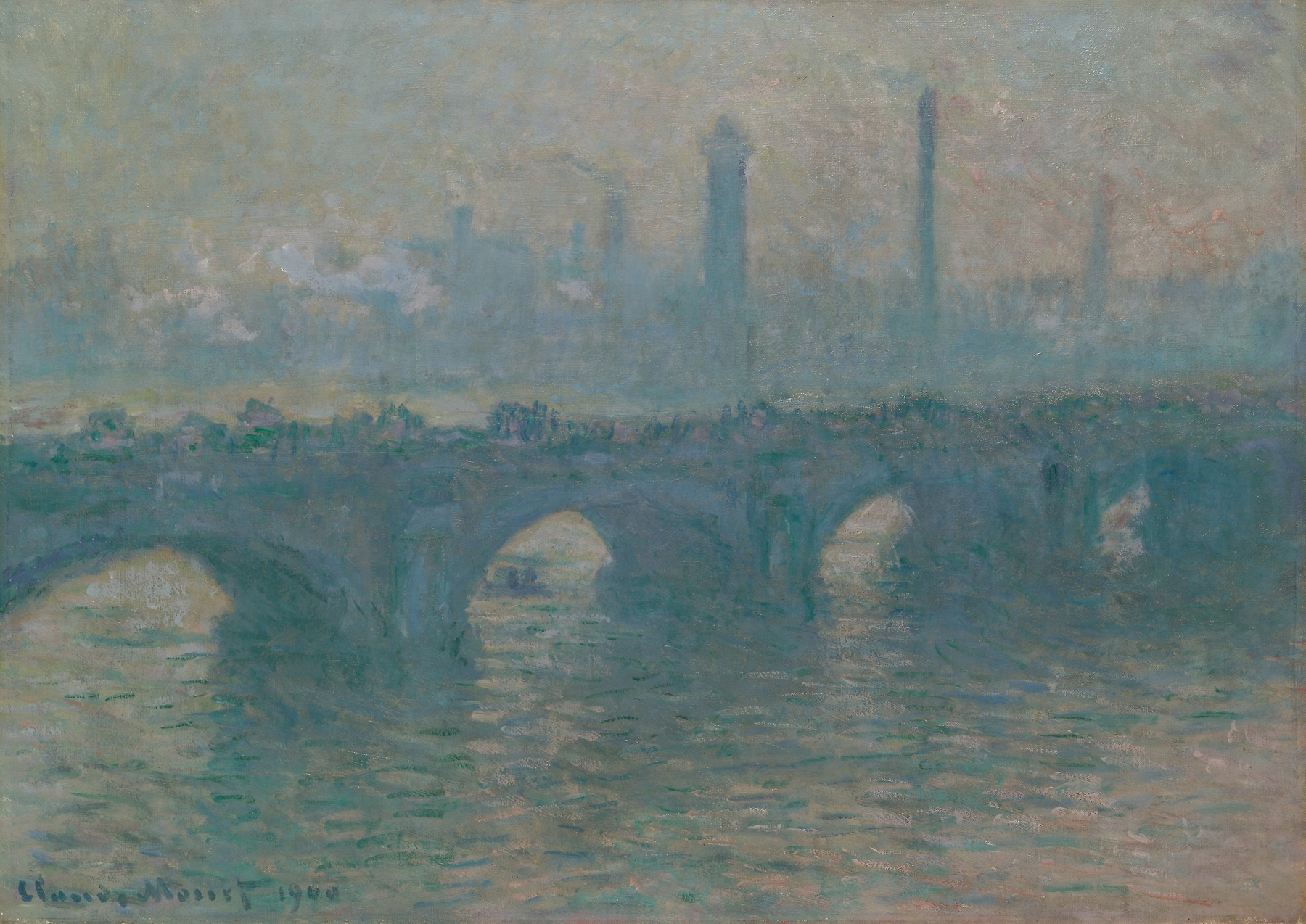
“To paint is to remember what time wants us to forget.” In Waterloo Bridge, Gray Weather, the chaos of fleeting moments hangs heavy in the air, captured in Monet’s brushstrokes that meld reality with memory. The foggy atmosphere and shifting light evoke a sense of transience, reflecting the tumultuous nature of both nature and human experience. Look to the center of the canvas, where the bridge emerges from a soft veil of mist, its arches barely discernible. Notice how the muted palette of grays and blues envelops the scene, contrasting with hints of warm ochre and rust that peek through the fog.
The application of paint is loose yet deliberate, creating an atmospheric quality that invites the viewer to sense the chill in the air and the weight of the clouds above. The interplay between light and shadow in this work reveals deeper emotional tensions. There is chaos in the indistinct figures crossing the bridge, as if they are merely specters moving through time. The blurred landscape suggests both a connection and a separation from the vibrant life that once was, emphasizing the impermanence of existence and the memory of moments slipping away.
Created in 1900 while Monet was living in London, this painting reflects his experimentation with light and atmosphere, continuing his exploration of Impressionism. The artist sought to capture the essence of a fleeting moment in time, amidst the transformations of the industrial world around him. In this period, Monet was also grappling with the effects of aging and the changing art landscape, making Waterloo Bridge, Gray Weather a poignant reflection of his place within both his personal history and the broader context of art.