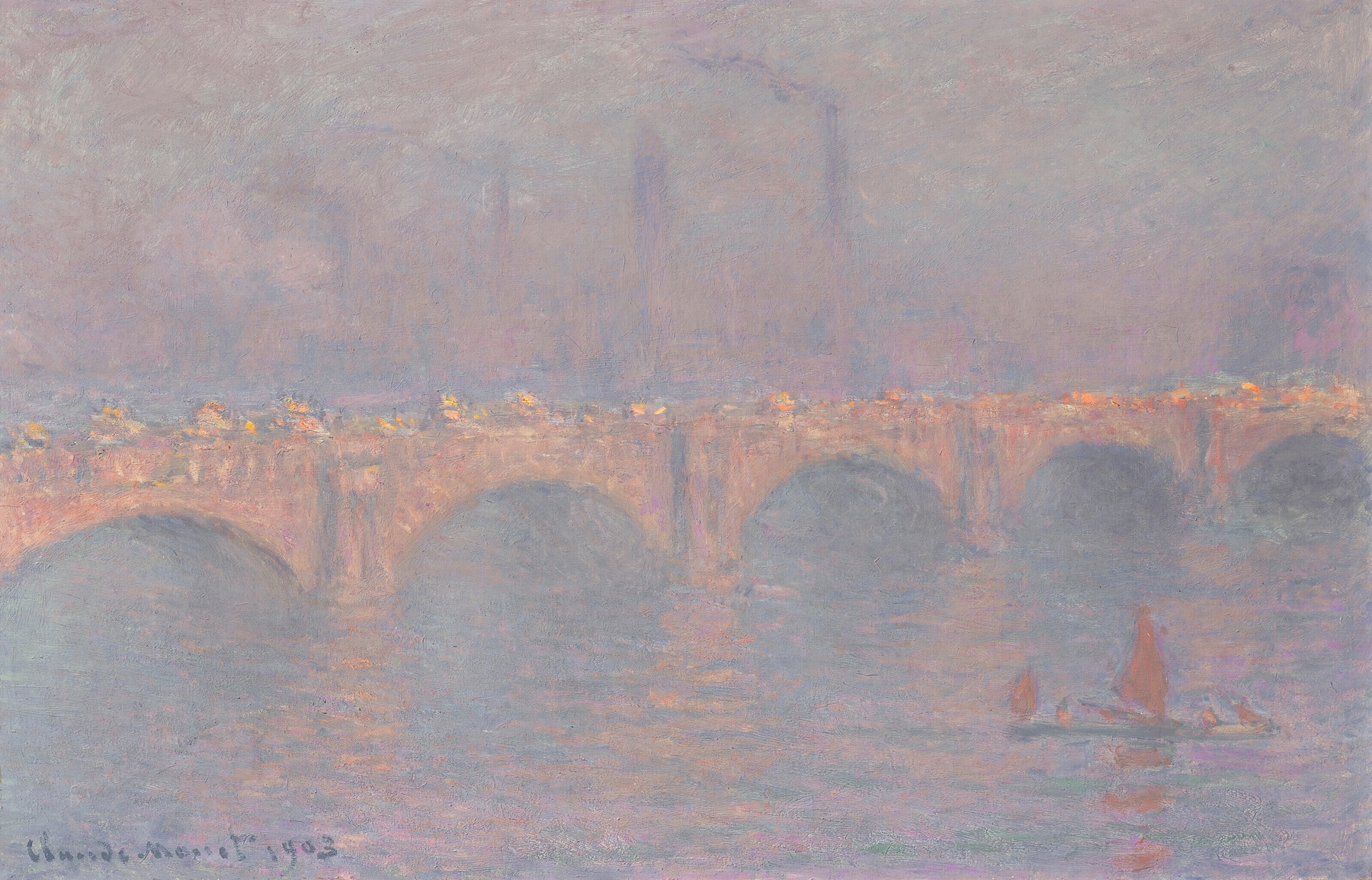
Waterloo Bridge, soleil voilé — History & Analysis
“Every brushstroke is a heartbeat remembered.” In the delicate hues of twilight, longing swells amidst the passing moments, captured eternally on canvas. Here, the gentle embrace of light and shadow weaves a narrative of nostalgia, inviting the viewer to contemplate time lost yet vividly alive. Focus on the soft transitions in color that Monet so masterfully orchestrates. Look to the ethereal blues and warm pinks that dance across the water, blurring the boundaries between reality and recollection.
Notice how the figures on the bridge dissipate into the mist, ghosts of presence captured in fleeting tones, while the hazy outlines of London’s architecture evoke a sense of intangible beauty. Each stroke imbues the canvas with a lyrical quality, uniting the elements of nature and the human experience. As you immerse yourself in this scene, consider the emotional contrasts at play—the vibrancy of life against the ephemeral fog that obscures it. The bridge, a symbol of connection, becomes a metaphor for the distances we travel and the moments we yearn for.
The fleeting light mirrors our own transient joys and sorrows, inviting introspection and a bittersweet remembrance of experiences both shared and lost. During the late 1890s, Monet painted Waterloo Bridge, soleil voilé while living in his home at Giverny, France. This period marked a time of personal reflection for him, as he grappled with the complexities of his own legacy within the Impressionist movement. The changing light of the London skyline served as a profound source of inspiration, further pushing the boundaries of perception and color that defined his later works.