Waterloo Bridge,Gray Day — History & Analysis
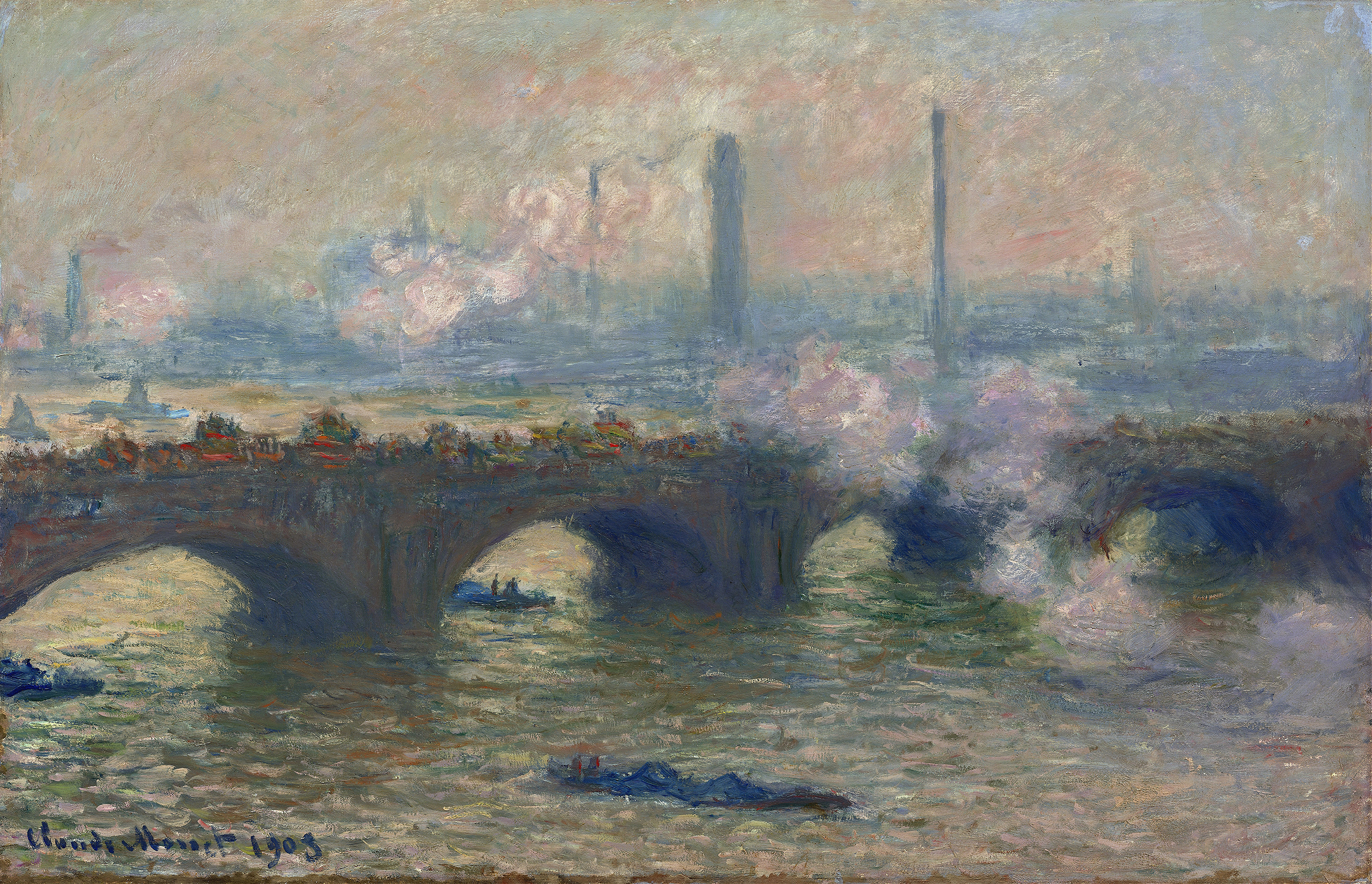
“Art reveals the soul when the world turns away.” In a fleeting moment, Monet captures not just a bridge, but the very essence of awe woven into the fabric of daily life. The atmospheric quality of the scene invites deep contemplation and reflection, drawing viewers into a realm where nature and human creation coexist harmoniously. Look to the center of the canvas, where the imposing structure of the bridge emerges, shrouded in soft, muted hues. The cool grays and blues blend seamlessly into one another, creating a veil of fog that envelops the scene, blurring boundaries between water, sky, and architecture.
Notice how the delicate strokes evoke a sense of movement; the rippling waters reflect the dusky light, while the figures in the distance seem to dissolve into the mist, enhancing the ethereal quality of the moment. This painting speaks to the contrasts of existence—the solid bridge symbolizing human endeavor against the ephemeral nature of fog and light. The subdued palette evokes a melancholic serenity, inviting the viewer to ponder the transitory beauty of everyday life. Hidden within the mist are the whispers of countless lives, each moment fleeting yet eternally captured in the lingering atmosphere of the piece.
In 1903, Monet was immersed in his exploration of light and color after relocating to Giverny, France. This period marked a shift in his focus towards the effects of weather and atmosphere on landscape, drawing from his deep admiration for nature. As the art world was evolving with movements like Impressionism, Monet remained a pivotal figure, continuing to inspire generations with his ability to transform ordinary scenes into extraordinary experiences.