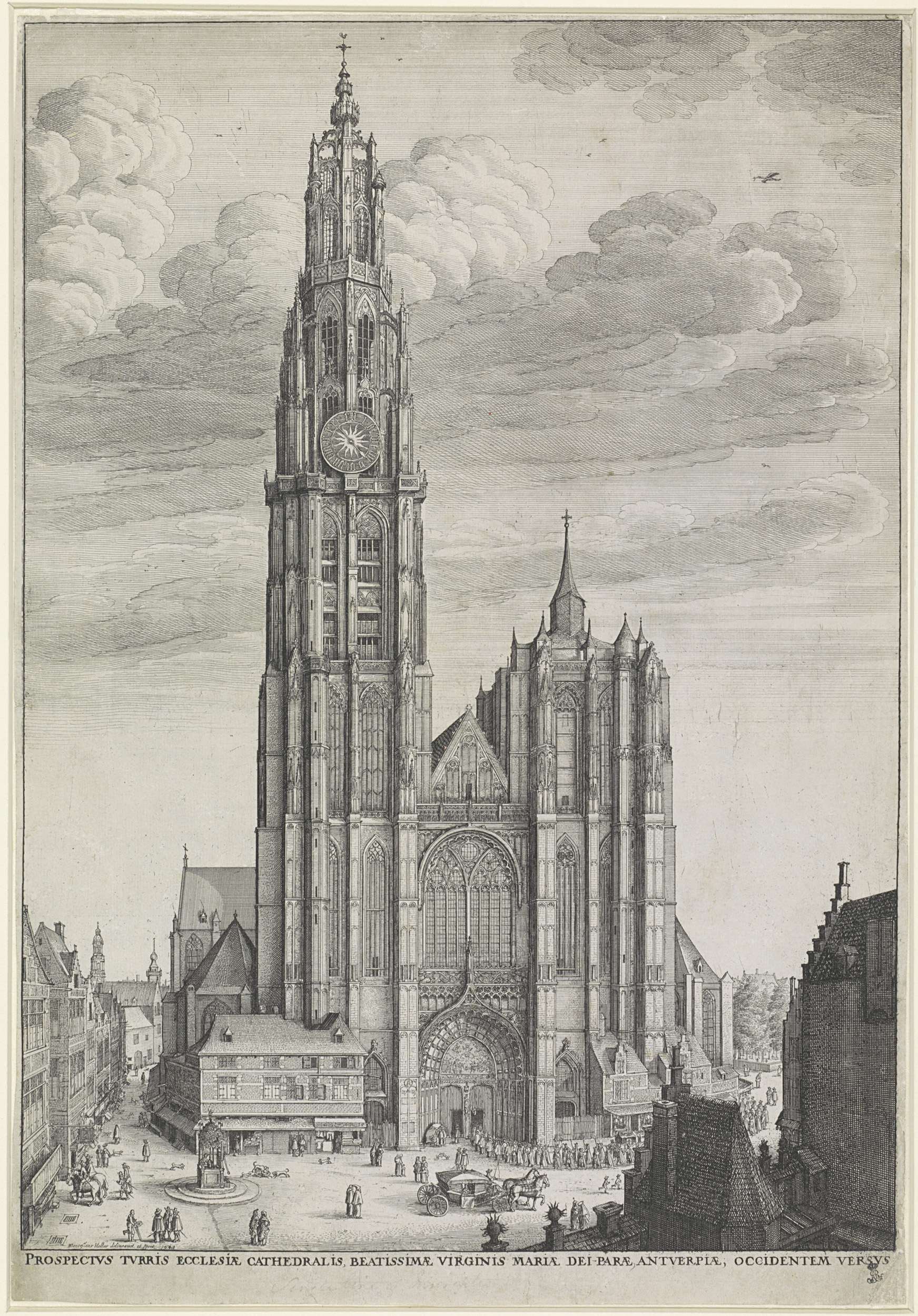
Westgevel van de Onze-Lieve-Vrouwe-Kathedraal te Antwerpen — History & Analysis
“Art reveals the soul when the world turns away.” In a realm where desire and ambition intertwine, the intricate details of a grand cathedral stand as a testament to human longing for the divine. Look to the left at the soaring spires, reaching skyward in a bold display of devotion. The meticulous engravings capture the textured stonework, inviting the eye to traverse the imposing façade. Notice how the delicate interplay of shadow and light accentuates the architectural marvel, revealing depth and inviting contemplation.
The soft, muted hues of gray and brown evoke both reverence and awe, while the careful lines direct your gaze upward, drawing you into the spiritual embrace of this monumental structure. Within the composition lies a profound tension between the earthly and the ethereal. The cathedral’s grand presence contrasts with the intricacies of life unfolding below, suggesting that even amidst the clamor of existence, the soul yearns for connection with something greater. Elements like the ornate carvings and the quiet spaces reflect an unfulfilled desire for transcendence, as if the cathedral itself serves as a silent witness to the hopes and dreams of those who pass by.
Wenceslaus Hollar created this engraving in 1649, during a period in which he resided in Antwerp after fleeing from the turmoil of the Thirty Years' War. This era marked a significant shift in the world of art, as Hollar navigated the vibrant yet turbulent artistic landscape of Northern Europe. His work often captured the architectural grandeur of his surroundings, reflecting both his personal experiences and the collective aspiration of a society striving to reclaim beauty amidst chaos.