Wire — History & Analysis
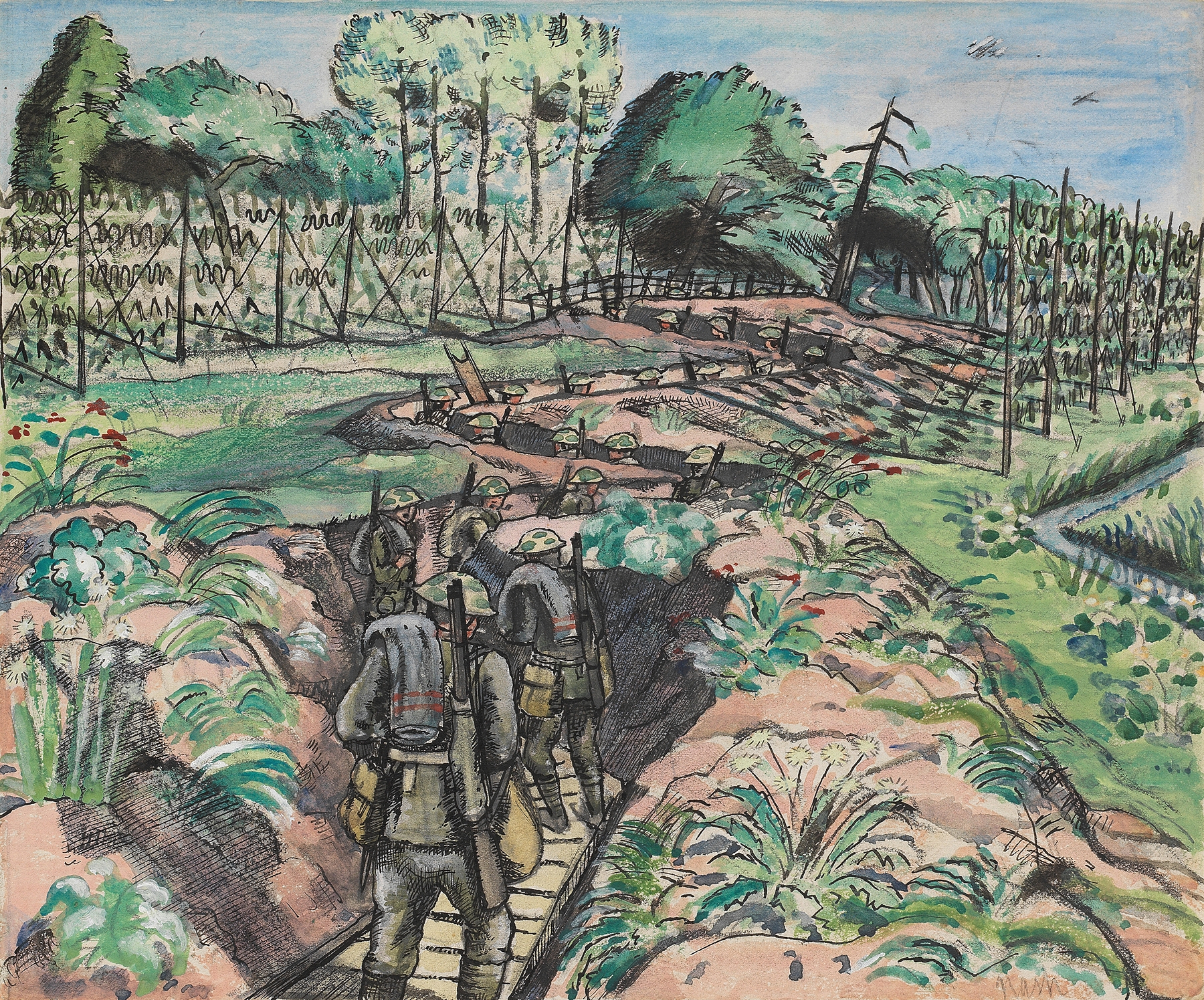
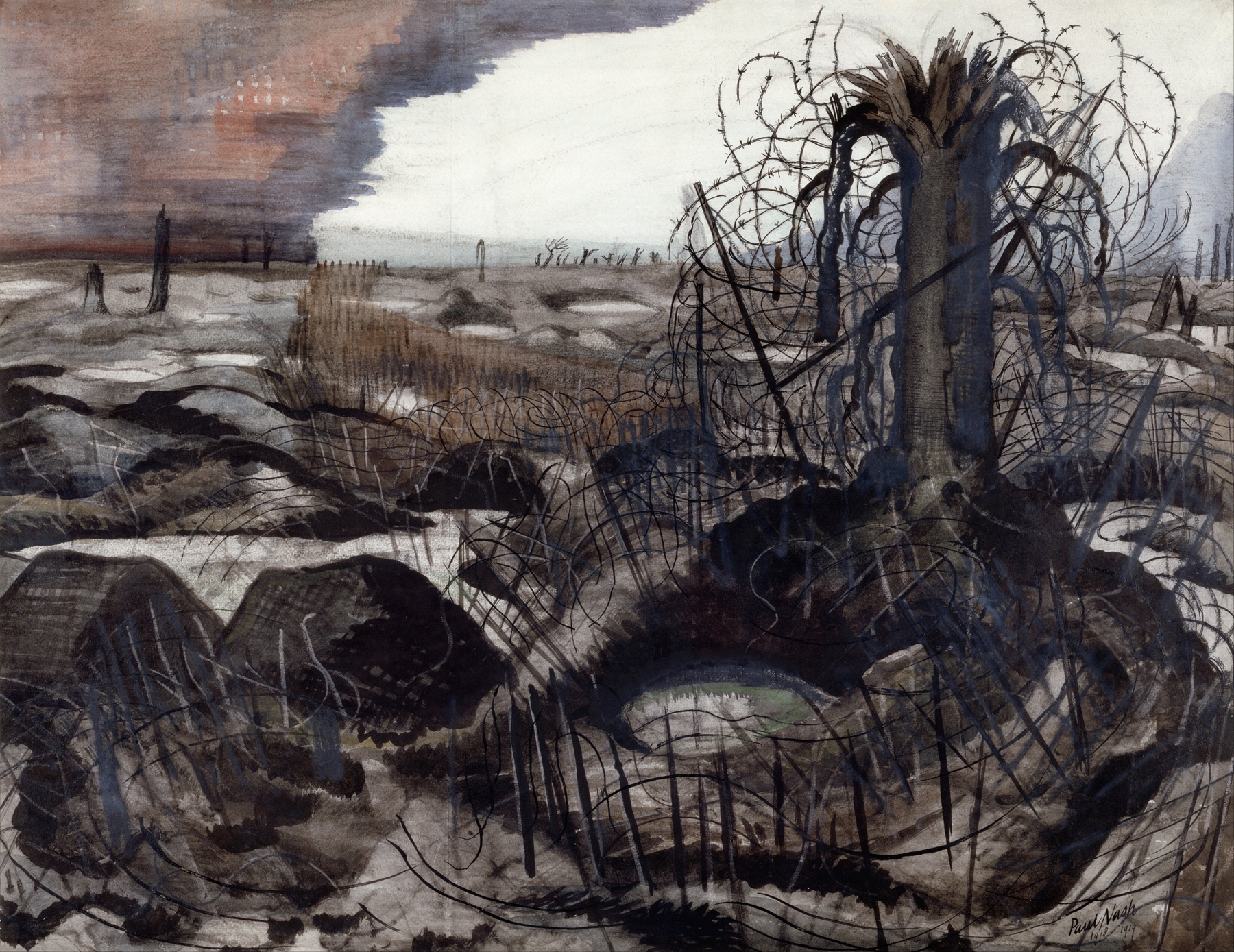
What if beauty was never meant to be finished? In Paul Nash's Wire, the essence of loss lingers in the stark forms and muted hues, echoing the aftermath of conflict. Focus on the jagged lines of barbed wire that dominate the foreground, drawing your eye to their cruel elegance. The twisted metal glimmers under a somber sky, a stark contrast to the desolate earth beneath. Notice how the color palette, dominated by deep greys and muted greens, captures not only the physical wasteland but also an emotional void, inviting viewers to confront the bitterness of its message.
The tension between beauty and brutality is palpable, each barb serving as a reminder of fragility amid destruction. Within this composition lies a poignant interplay of hope and despair. The wire, an emblem of confinement and violence, also suggests the unresolved tensions of survival and resilience. Each element, from the barren landscape to the lurking shadows, conveys a sense of mourning for what has been lost and a questioning of what beauty can emerge from devastation.
The absence of human figures amplifies the feeling of isolation, evoking the haunting silence that follows chaos. Painted in 1918, during the aftermath of World War I, Nash's work emerges from a time of deep societal upheaval. The artist, grappling with his experiences as a war artist, captured the stark realities of the landscape and the psychological scars left by conflict. Wire reflects not only his personal journey but also the broader disillusionment of a generation, leaving a haunting resonance long after the canvas was completed.