Wolken boven glooiend landschap — History & Analysis
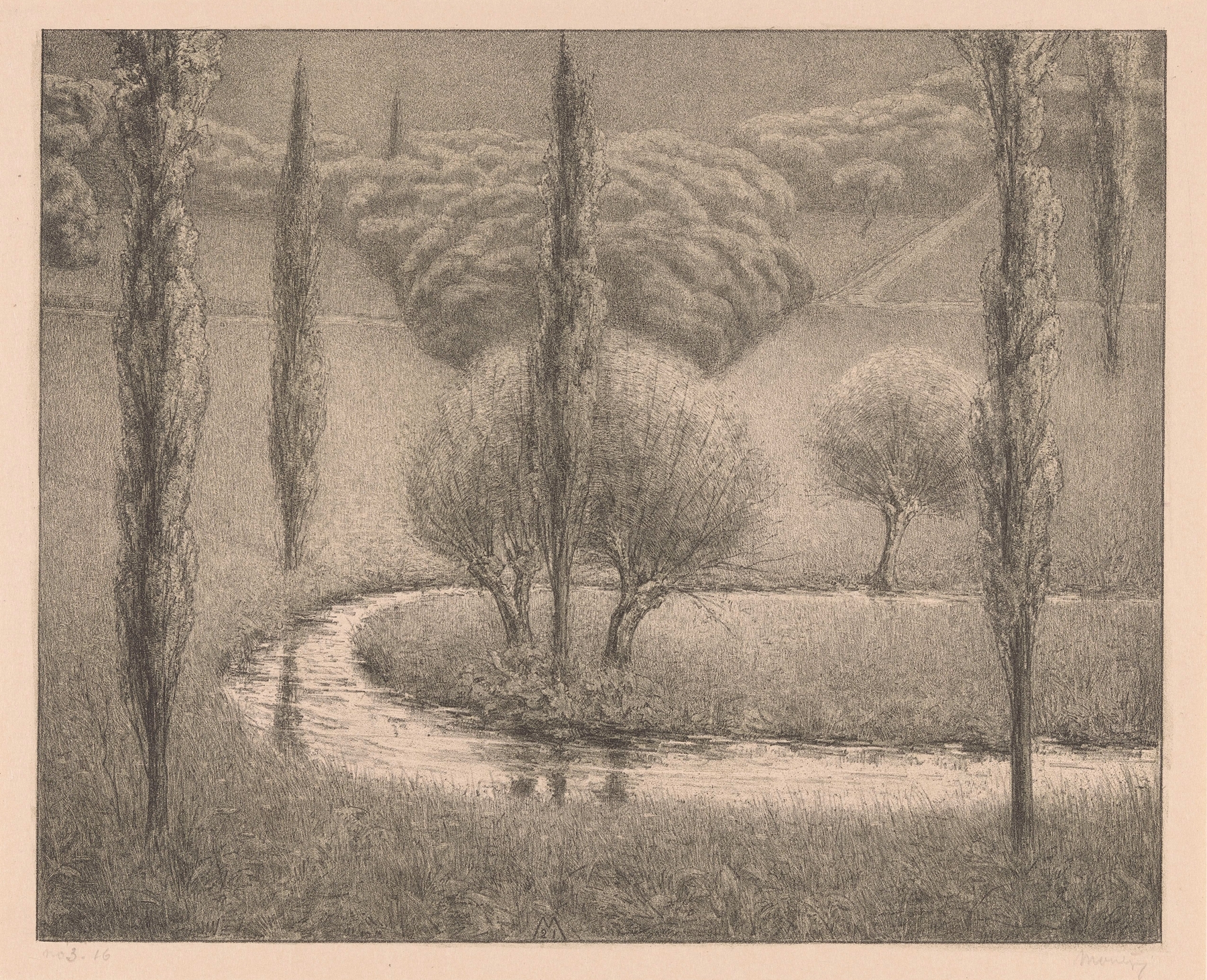
Who listens when art speaks of silence? In Wolken boven glooiend landschap, a symphony of muted colors and gentle forms invites contemplation, urging us to find beauty in the quiet spaces between chaos and clarity. Look to the center of the canvas, where rolling hills unfurl like waves, their subtle undulations cradled by a sky heavy with clouds. The soft palette of greens and grays, punctuated by fleeting touches of white, creates a tranquil rhythm that draws the eye. Notice how the light filters through the clouds, casting delicate shadows that dance across the landscape, enhancing the sense of depth and serenity.
This interplay of light and shadow encapsulates a fleeting moment of peace, echoing the artist's intent to capture nature’s ephemeral beauty. Beneath this calm exterior lies a profound emotional tension. The vastness of the gray sky looms over the landscape, evoking feelings of both solitude and freedom. The hills, though gentle, convey a sense of longing and yearning that resonates deeply.
This contrast between the expansive sky and the intimate land creates an atmosphere of introspection, inviting the viewer to ponder their own emotional landscapes amidst the overwhelming beauty. Simon Moulijn painted Wolken boven glooiend landschap in 1921, during a period when the Netherlands was grappling with post-war recovery and the rise of modernism in art. Living in a time of change, Moulijn sought to explore the relationship between nature and emotion, positioning himself as a key figure in Dutch landscape painting. His work reflects an appreciation for the natural world, while also embodying the complexities of human experience during turbulent times.