Woman in front of a Still Life by Cézanne — History & Analysis
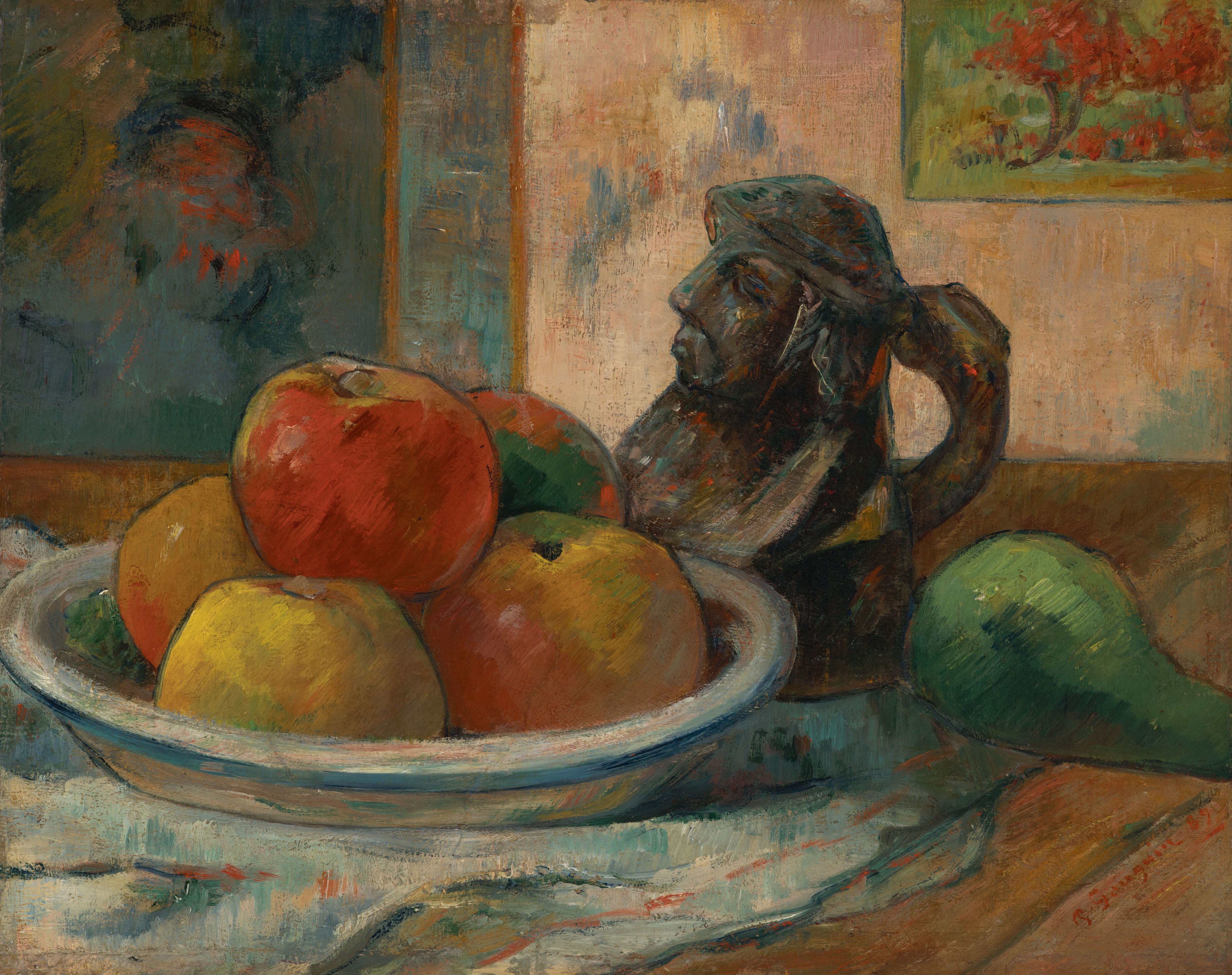
Can beauty exist without sorrow? In Woman in front of a Still Life, the delicate balance between longing and appreciation pulses quietly beneath the surface, inviting viewers to contemplate the layers of emotion intertwined with both the figure and the objects surrounding her. Look to the left at the woman, her gaze fixed on the arrangements before her. Notice how the soft, muted colors of the still life—earthy reds, gentle greens, and rich browns—contrast with her vibrant clothing.
The brushwork reveals a meticulous attention to texture, each stroke forming a bridge between the organic and the crafted. The light cascades softly across the scene, illuminating the fruit’s polished surfaces while casting gentle shadows that echo the depth of her contemplation. The tension in this piece arises from the juxtaposition of the woman’s contemplative solitude against the exuberant colors of the still life. Her posture, slightly hunched, suggests a yearning that transcends the moment; it speaks of desires unfulfilled and aspirations left unexpressed.
The carefully arranged objects hint at abundance, yet they silently echo her solitude, leaving us to ponder the harmony and discord inherent in her surroundings. In 1890, Gauguin was immersed in the vibrant art scene of Paris, yet also grappling with personal turmoil. Having recently returned from his travels in Brittany, he was striving to carve out his unique artistic identity amidst the rise of Impressionism. During this period, he adopted a bolder use of color and form, seeking to convey deeper emotional truths, which resonate powerfully through this intimate yet poignant portrayal.