Wooded Landscape with Figures on a Path — History & Analysis
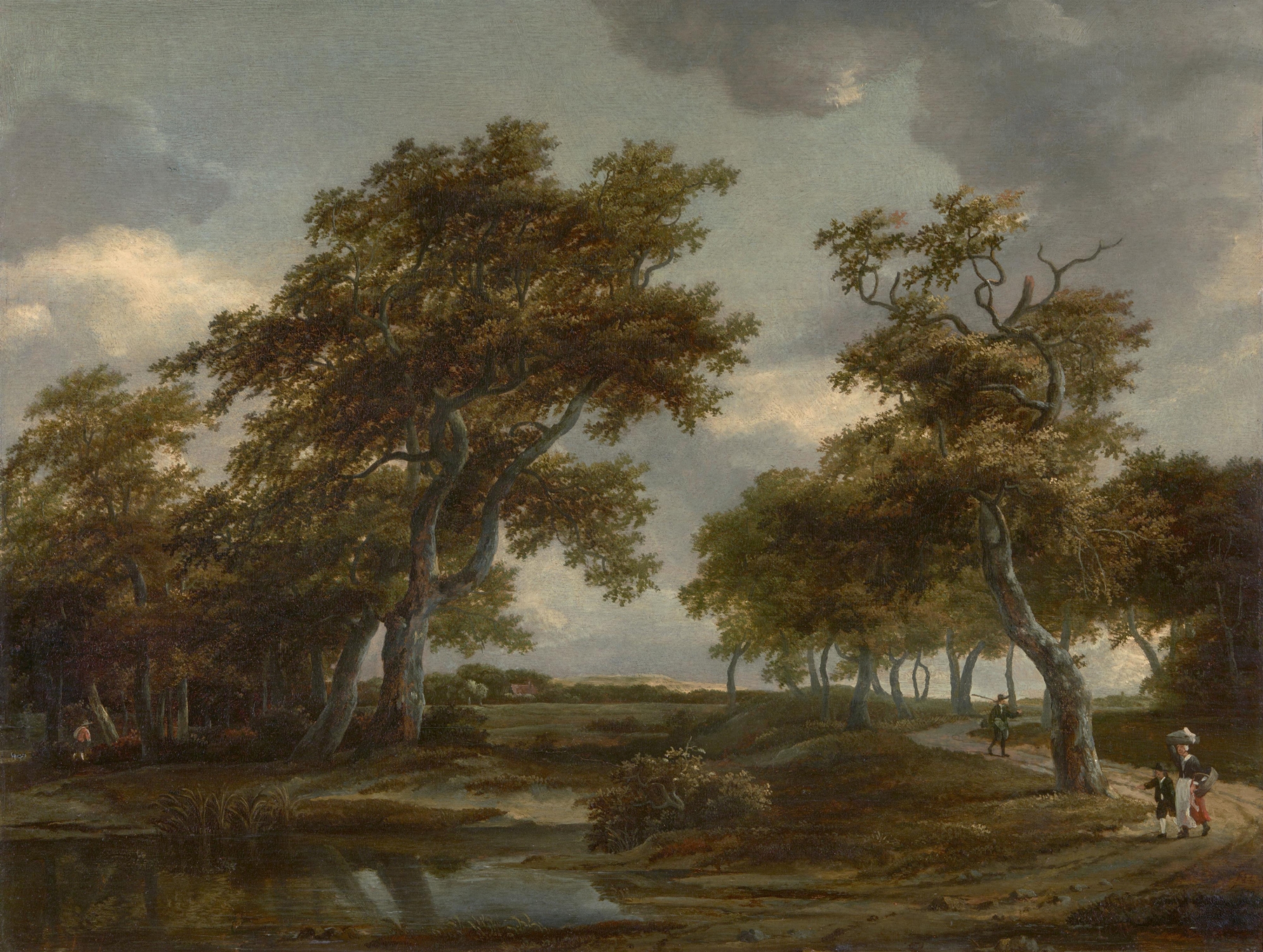
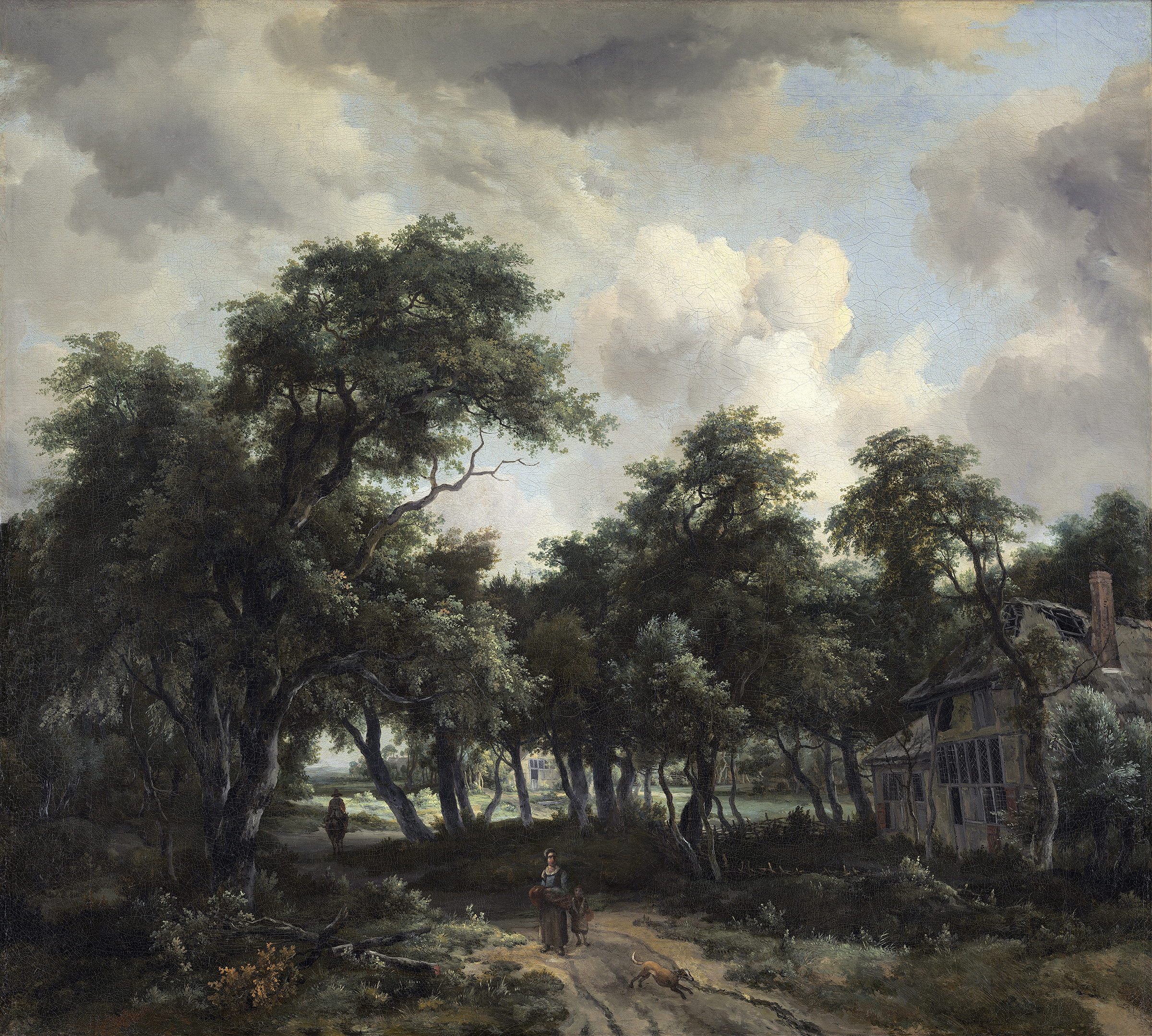
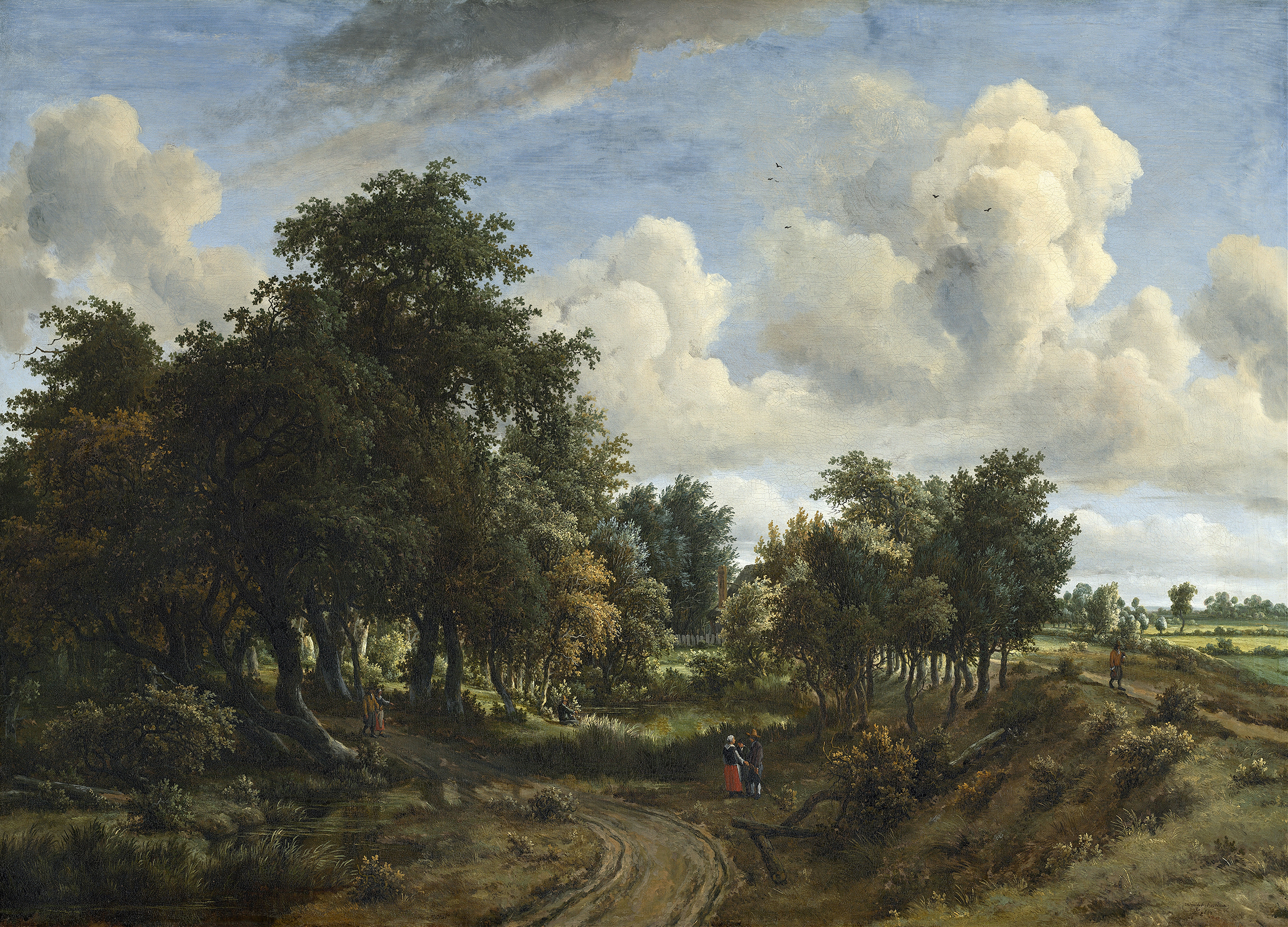
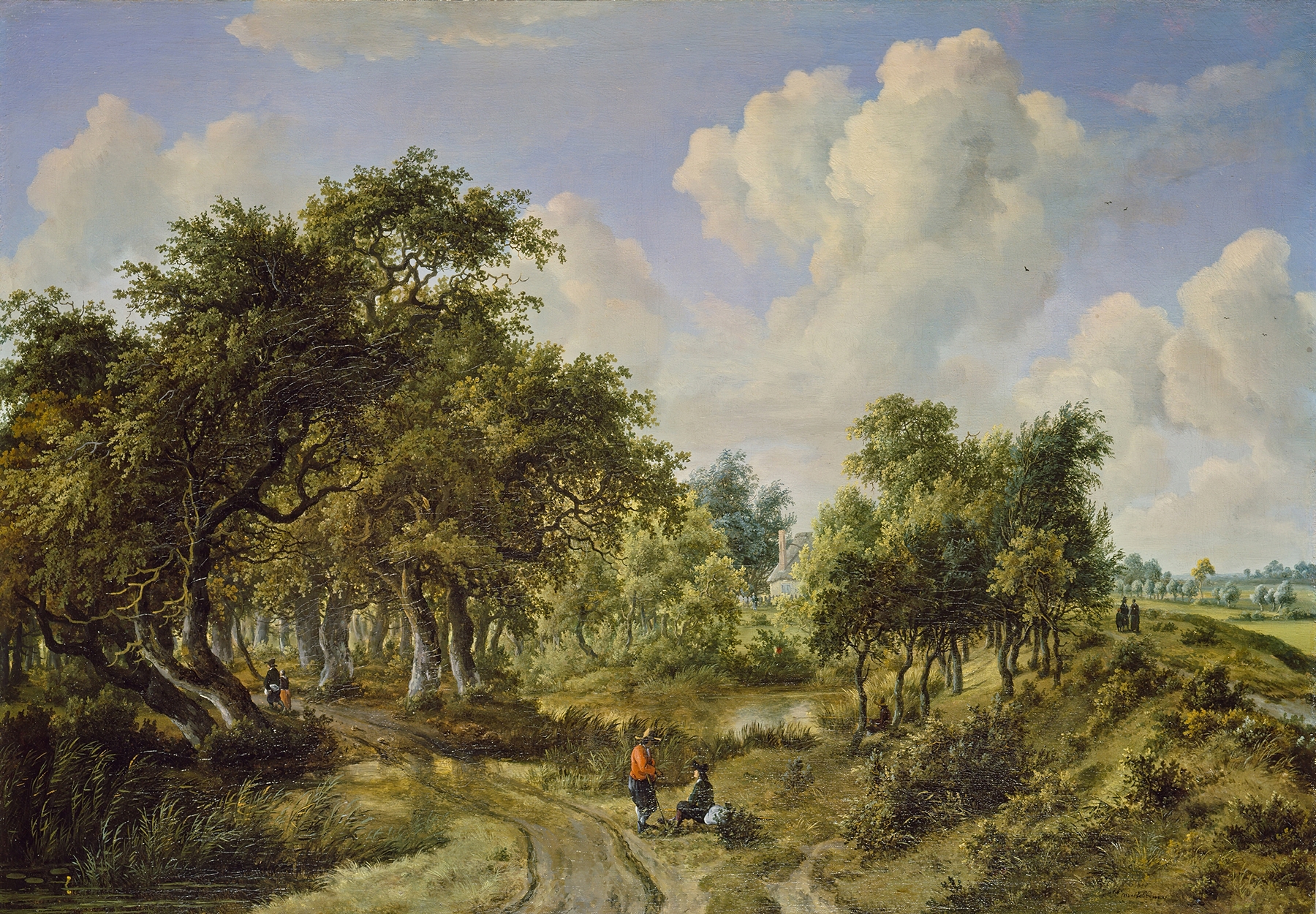
“To paint is to remember what time wants us to forget.” Such is the gift of light, which captures fleeting moments and preserves them within the confines of canvas. In the world of art, it becomes a whisper of the past, resonating with the emotions of those who gaze upon it. Look to the left of the composition, where gentle sunlight pierces through the dense canopy of trees, illuminating the winding path below. The careful brushwork breathes life into the foliage, with soft greens and browns mimicking the rustle of leaves in a gentle breeze. As your eyes follow the path, notice how the figures traverse the scene, their movements harmonizing with the tranquil rhythm of nature.
Each stroke of Hobbema’s brush seems deliberate, evoking the very essence of a serene woodland moment. The juxtaposition between light and shadow creates a dialogue of solitude and companionship. The figures, though small against the expansive trees, convey a sense of connection — perhaps a friendship or family bond forged amidst the tranquility of the landscape. The play of light draws attention to their journey, suggesting that each step taken is not just physical but also a personal journey through life’s landscape.
This subtle interplay invites viewers to reflect on their own paths, underscored by the beauty of nature’s embrace. In the mid-17th to early 18th century, Hobbema painted this work during a time when Dutch landscape painting was flourishing, influenced by the naturalism of the era. Living in Haarlem, he was surrounded by a vibrant artistic community that revered the beauty of rural landscapes. His ability to capture light and atmosphere in such detail marked him as a significant figure, embodying the spirit of a period that sought to connect humanity with the natural world.