Wooded Landscape with Figures on a Path — History & Analysis
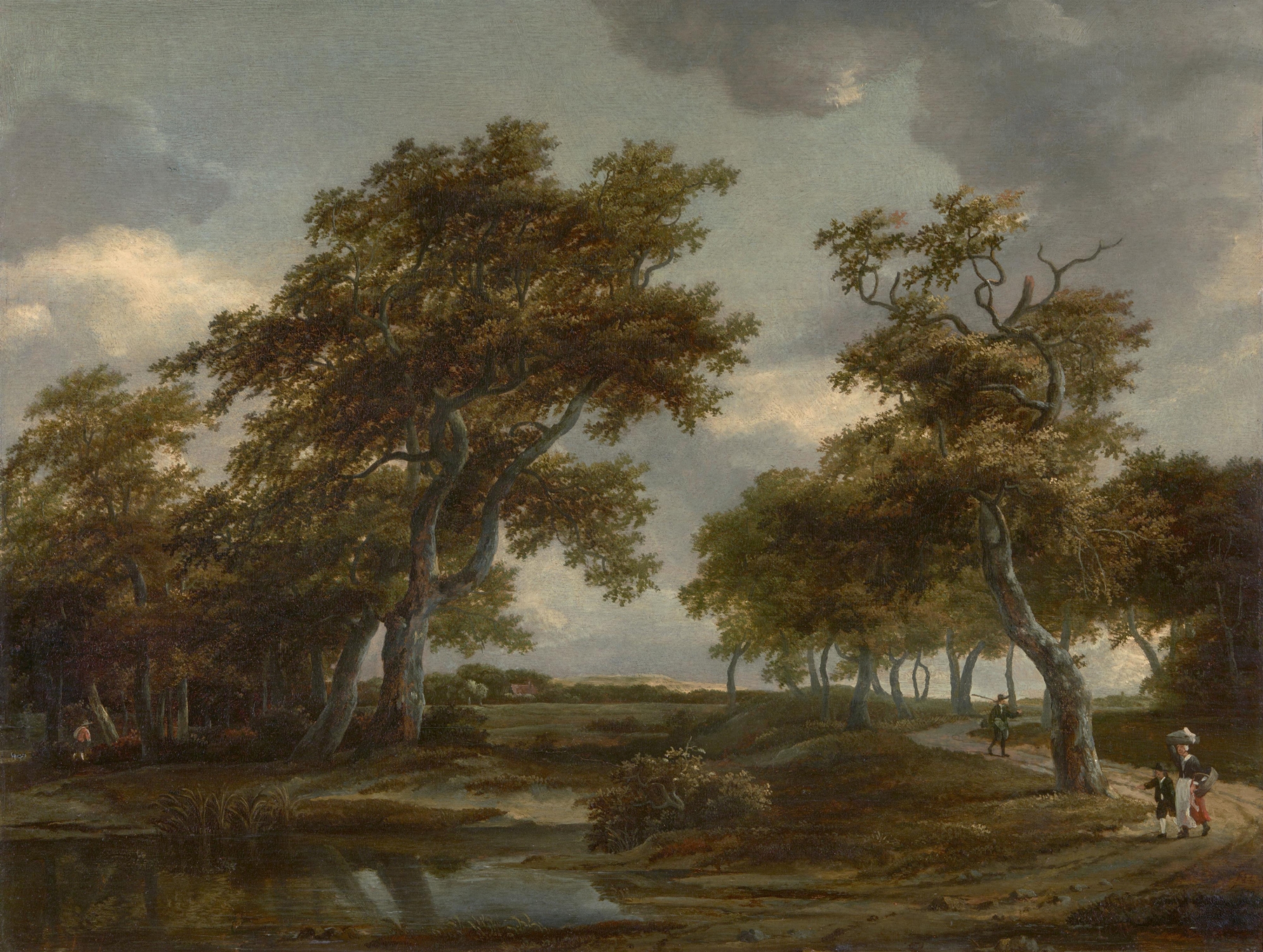
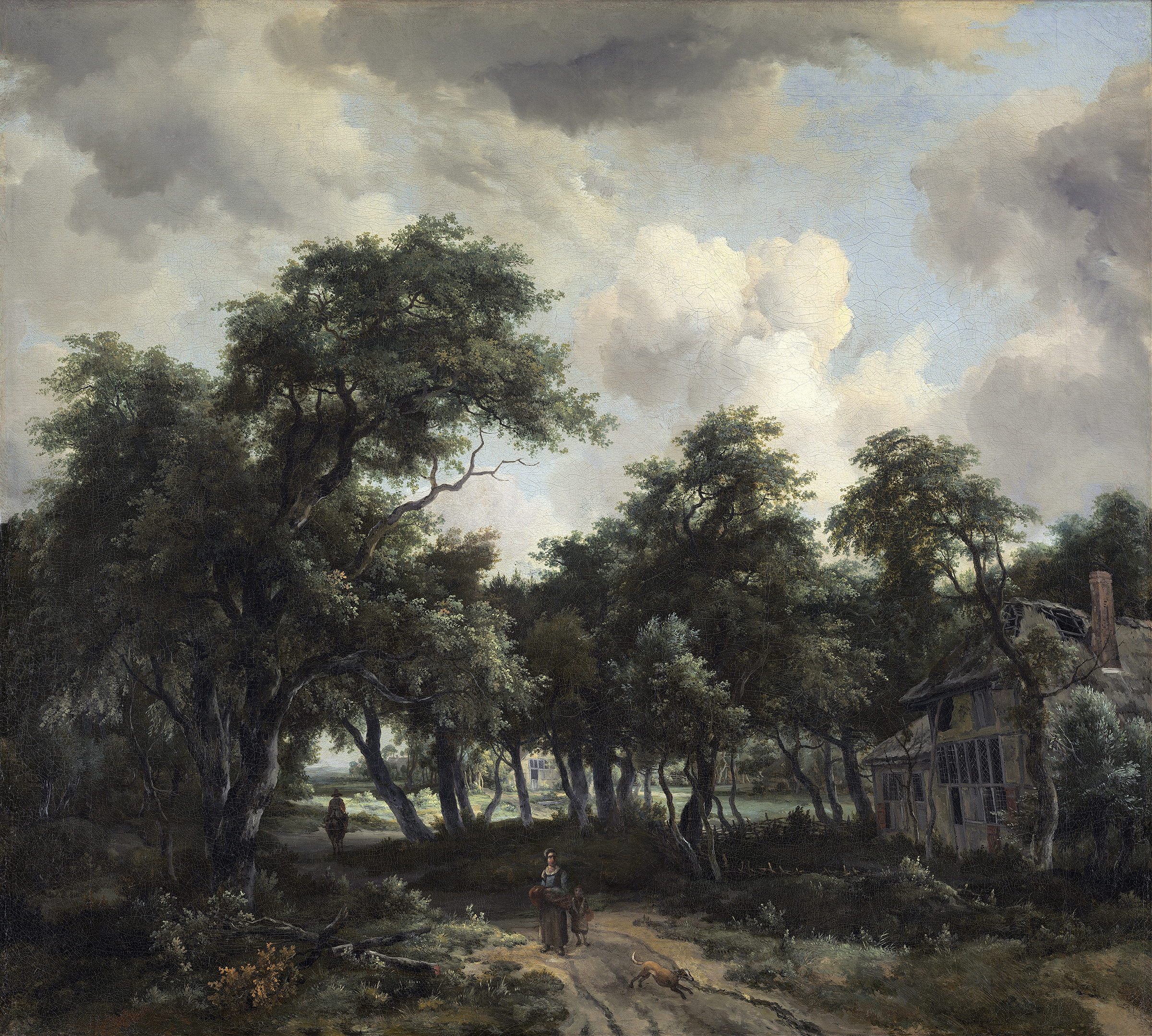
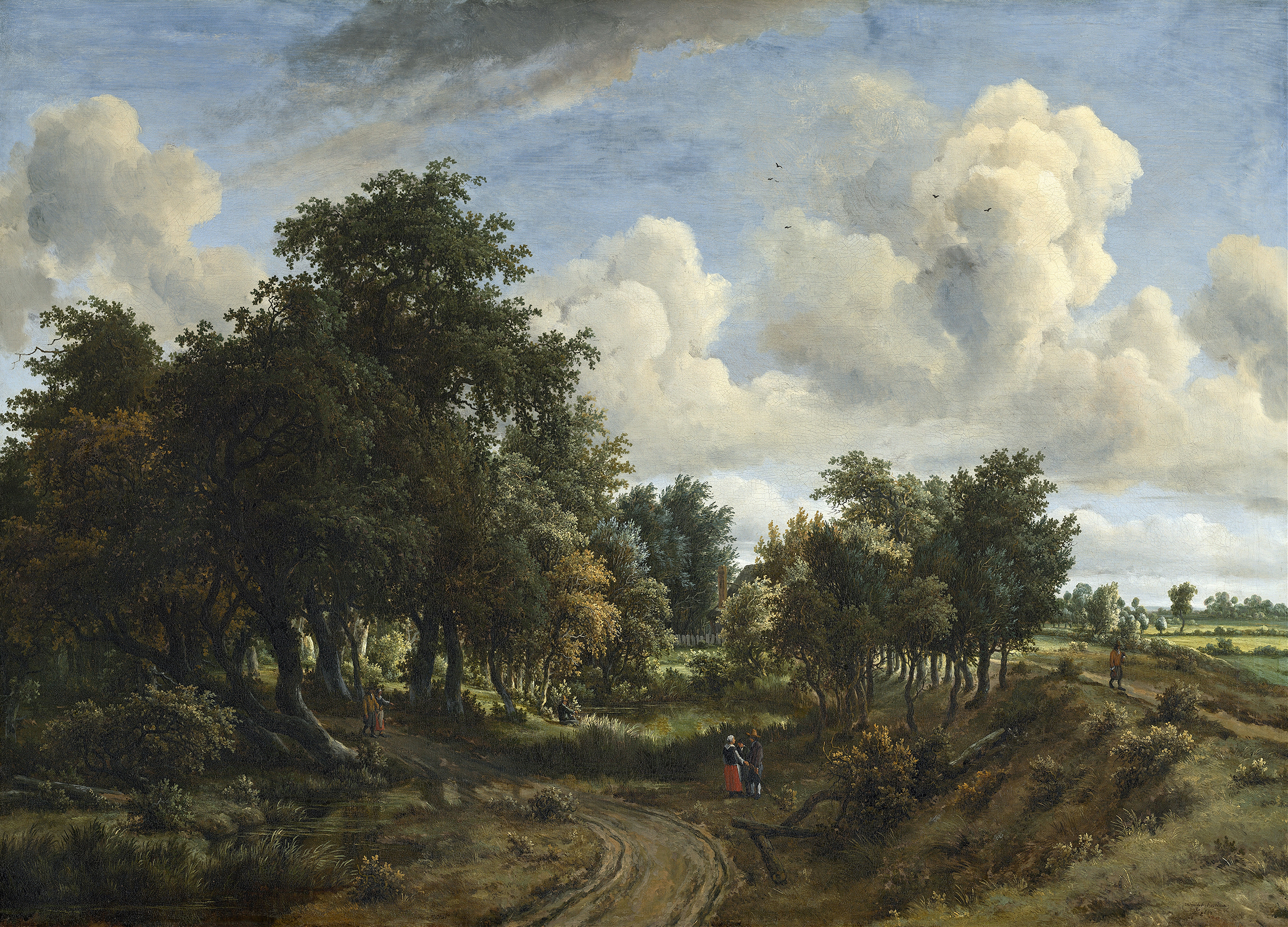
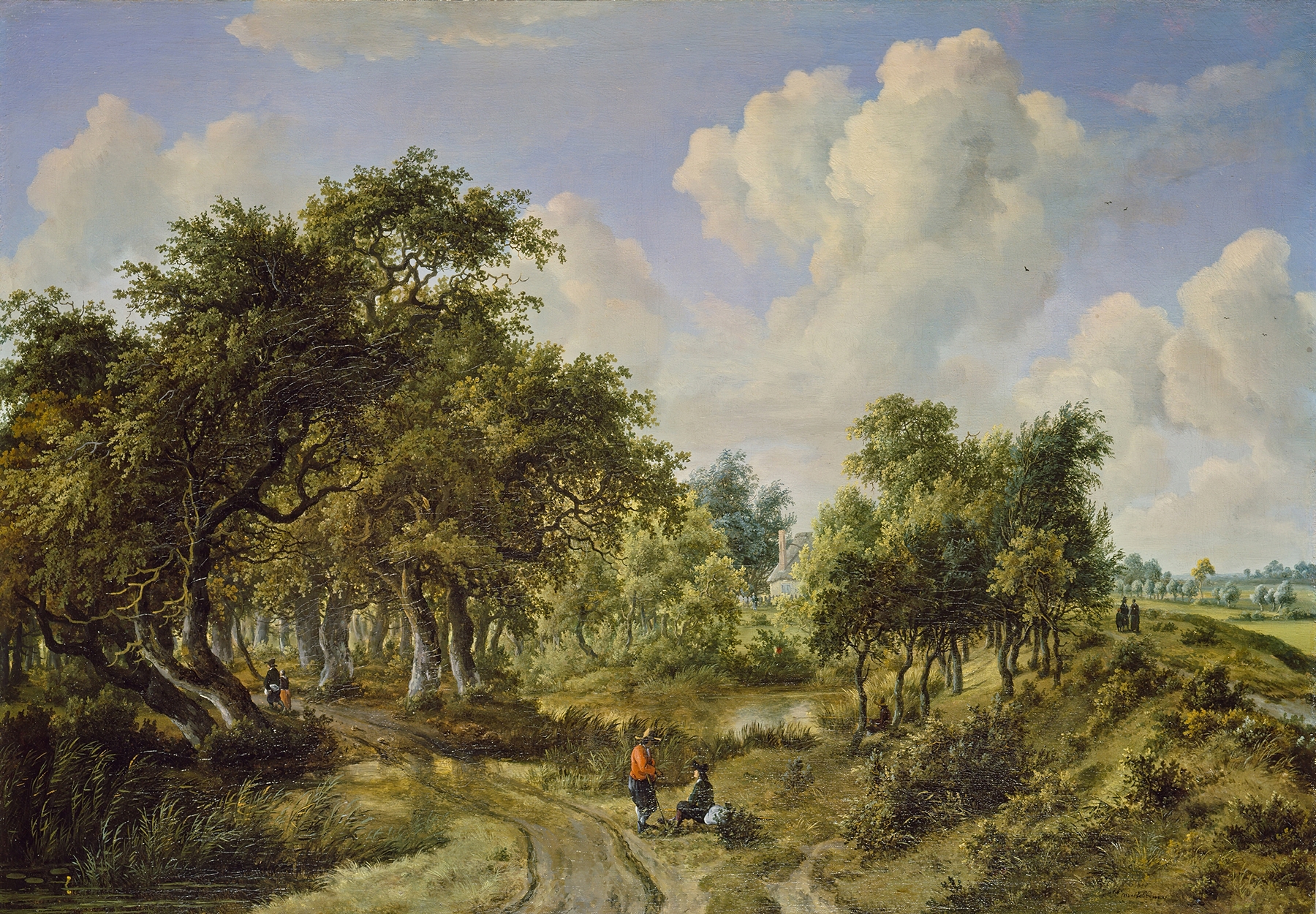
Can paint confess what words never could? In the stillness of a wooded landscape, fear lurks beneath the surface, whispering secrets only the trees can hear. Focus on the figures walking along the narrow path, their quiet movements contrasting with the towering trees that encase them. The deep greens and browns dominate the scene, while dappled sunlight filters through the foliage, illuminating their route with a gentle, almost deceptive warmth.
Notice how the light plays upon the path, creating a sense of depth and inviting the viewer to step into the tranquility, yet hinting at the underlying tension that could be lurking just out of sight. Beneath the serene beauty lies an emotional duality. The inviting open space is cradled by the dense woods, symbolizing the balance between safety and the unknown. The figures, though seemingly at ease, appear small and vulnerable against the vastness of nature, evoking an unease about the path they tread.
This complex interplay of light and shadow not only captivates but also incites contemplation on the fears that accompany our journey through life. Meindert Hobbema created this masterpiece in the mid-17th to early 18th century, during a period marked by a burgeoning appreciation for landscape painting in the Dutch Golden Age. At this time, artists explored the depths of nature, capturing both beauty and unease, reflecting the society’s growing tensions amidst prosperity. Hobbema's work stands as a testament to the nuanced relationship humans have with their environment, resonating with both contemporary viewers and his own time.