Woodland Brook — History & Analysis
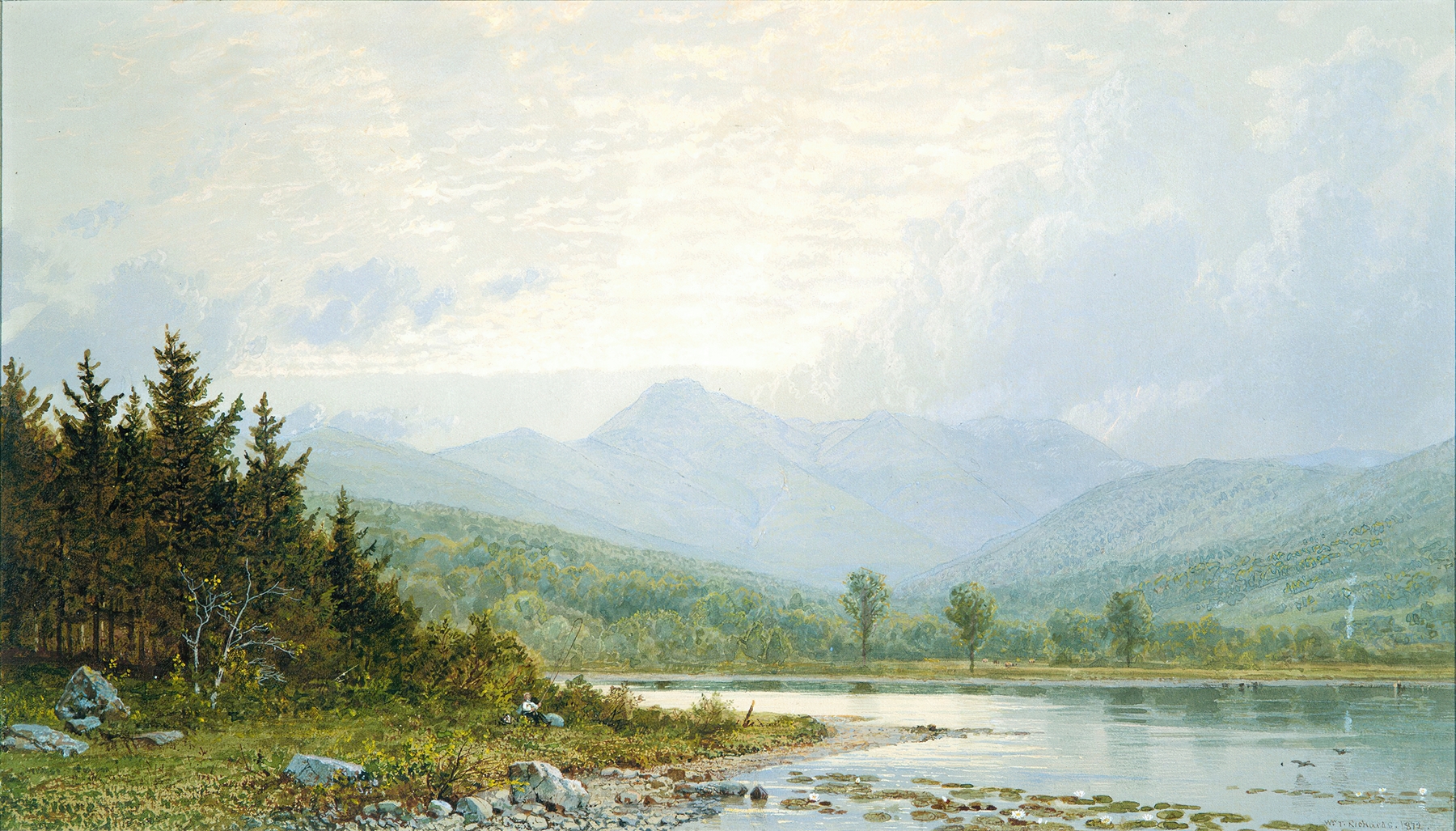
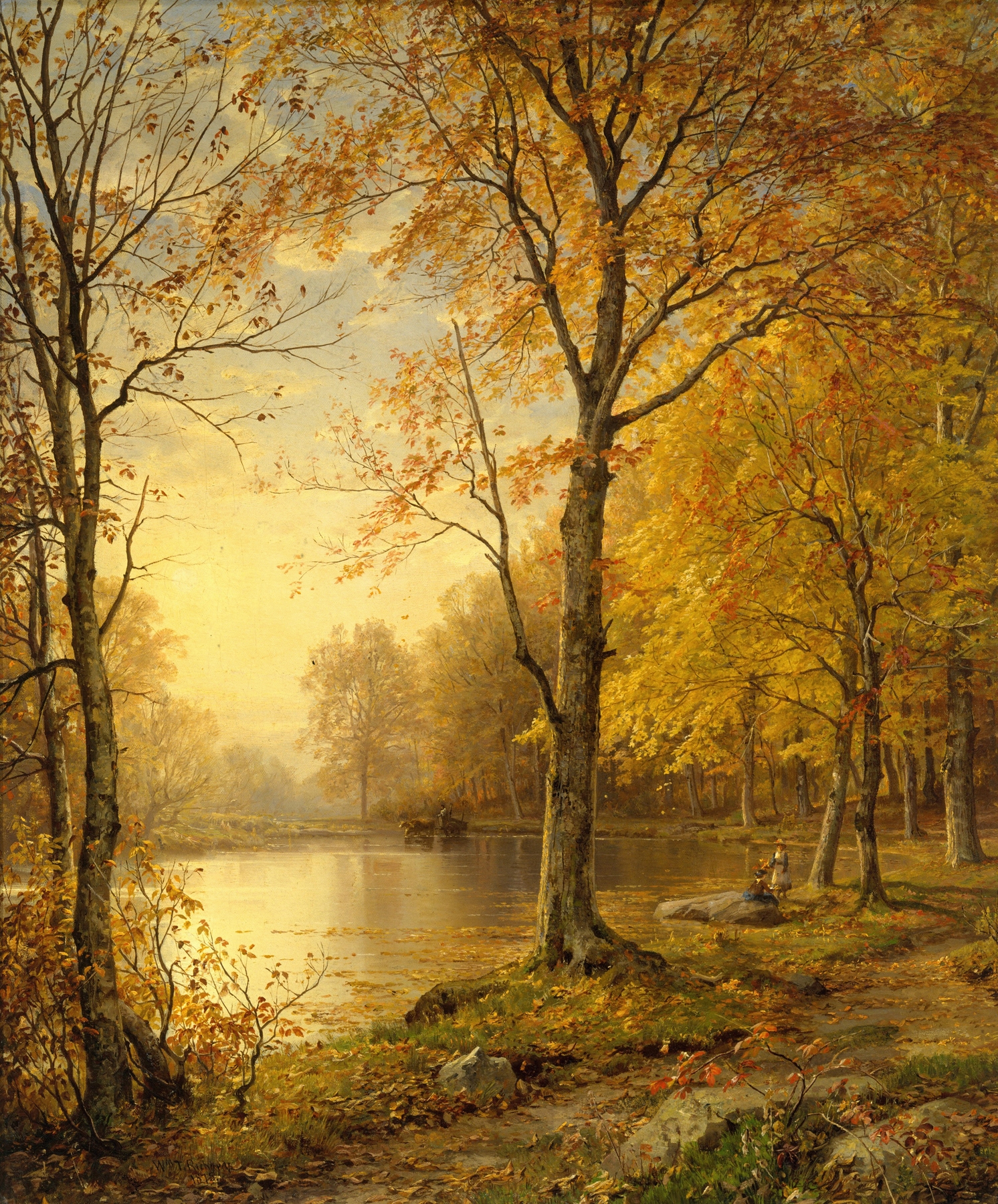
Could beauty survive in a century of chaos? Woodland Brook invites the viewer to ponder this question, as its serene landscape reflects a world untouched by the turmoil of its time. The image captures a tranquil brook, surrounded by lush foliage and majestic trees, suggesting an oasis of calm where nature reigns supreme, despite the roar of industrial change brewing beyond its borders. Look to the left at the water’s gentle flow, where it catches the light, shimmering like scattered diamonds. Notice how Richards employs a harmonious palette of greens and browns, infusing the scene with life and vitality.
The careful brushwork creates an interplay of light and shadow, casting a dappled glow that draws the eye deeper into the lush undergrowth. Each leaf, each ripple, speaks to a meticulous attention to detail, inviting the viewer to immerse themselves in this enchanting world. At first glance, the painting seems to portray simple beauty, but beneath its tranquil surface lies a poignant tension: the encroaching forces of modernity contrasted against nature's enduring grace. The brook symbolizes the passage of time, a quiet witness to both the serenity of life and the inevitable change that looms ahead.
Each element—the gnarled roots, the textured rocks—echoes the struggle for survival, hinting at the fragility of this moment in an ever-shifting landscape. Richards painted Woodland Brook in 1861, a pivotal time in American art, marked by a growing appreciation for the natural world amidst the backdrop of the Civil War. Living primarily in Pennsylvania, the artist was deeply influenced by the Hudson River School, yet he sought to develop a unique style that emphasized detail and emotional resonance. In the face of chaos, he captured this fleeting beauty, reminding us of nature’s power to inspire and heal.