Wreck of an East Indiaman — History & Analysis
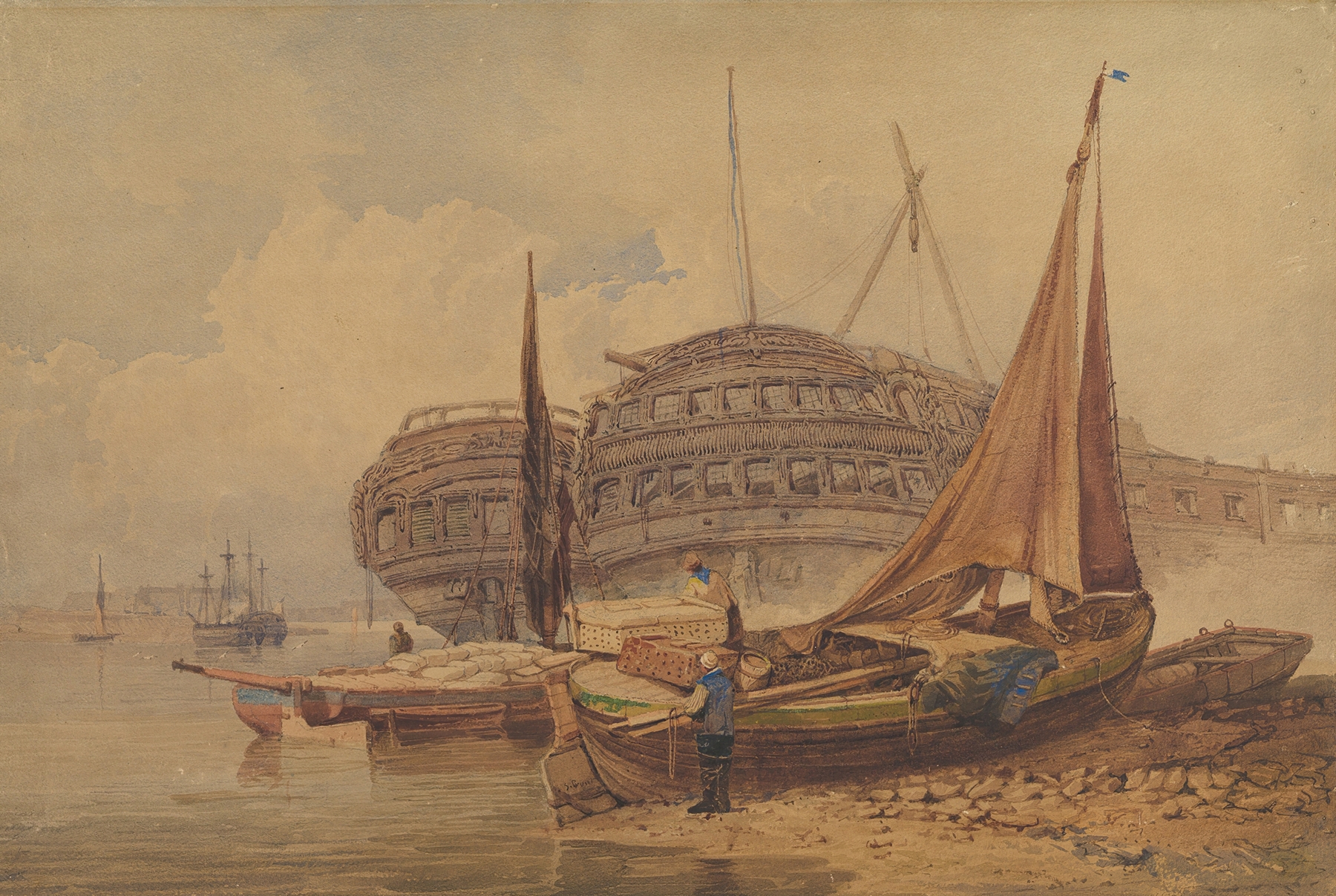
“To paint is to remember what time wants us to forget.” In a world where chaos looms, serenity can often feel like a distant memory. Look to the center of the canvas, where a sun-soaked shipwreck rests in quiet resignation. The tattered sails billow gently against a backdrop of soft, rolling waves, their colors a harmonious blend of turquoise and gold. Notice how the light filters through the clouds, casting an ethereal glow on the ship's remnants, illuminating each detail with a delicate touch.
Prout's meticulous brushwork accentuates the contrast between the once-mighty vessel and the surrounding tranquility of the sea and sky. On closer inspection, this artwork unfurls layers of meaning. The wreck, a symbol of loss, invites contemplation of the passage of time and the inevitable decay of human endeavors. Yet, the serene sea embraces the wreck gently, suggesting acceptance and the beauty found in imperfection.
The interplay between the ship's haunting presence and the calmness of the ocean transforms the scene into a meditation on resilience in the face of adversity. Samuel Prout created this piece during a time when maritime themes were gaining popularity in the early 19th century, reflecting the Romantic fascination with nature and decay. Living in England, he was influenced by a shifting art world that witnessed the rise of both realism and the allure of the sublime. His works often encapsulated fleeting moments in time, preserving them with an emotional richness that resonates even today.