
Young Woman with a Lute — History & Facts
A young woman sits at a table, holding a lute and turning her gaze toward an open window at the left edge of the composition. Her right hand is poised on the neck of the lute, while her left hand rests on the instrument’s body, suggesting she is tuning it. The light streaming in from the window softly illuminates her face and upper body, casting gentle shadows across the room.
A blue curtain hangs beside the window, framing the woman and enhancing the play of light and shadow. A viola da gamba rests on the floor in the foreground, its neck and scroll extending toward the viewer. To the right, a dark wooden chair with brass studs stands empty, its seat and back catching some of the window’s light.
The tiled floor beneath the table and chair alternates between dark and light squares, adding to the geometric structure of the scene. The composition is carefully arranged, with the woman framed by the window, table, and map, creating a sense of depth and intimacy. Brushstrokes are subtle and smooth, especially in the rendering of the woman’s face, the folds of her jacket, and the reflective surfaces. Johannes Vermeer painted this scene around 1662–63, during the period known as the Dutch Golden Age.
The painting was given to the Metropolitan Museum of Art in 1900 as a bequest from Collis P. Huntington. The impression of depth and space in the foreground is affected by the darkening of some objects with age and by abrasion of the paint surface, especially in those areas.
Sources: Metropolitan Museum of Art, record 25.110.24 · Wikidata Q839359 · Wikipedia: Woman with a Lute
More Artworks by Johannes Vermeer

View of Delft
Johannes Vermeer

Girl with a Pearl Earring
Johannes Vermeer
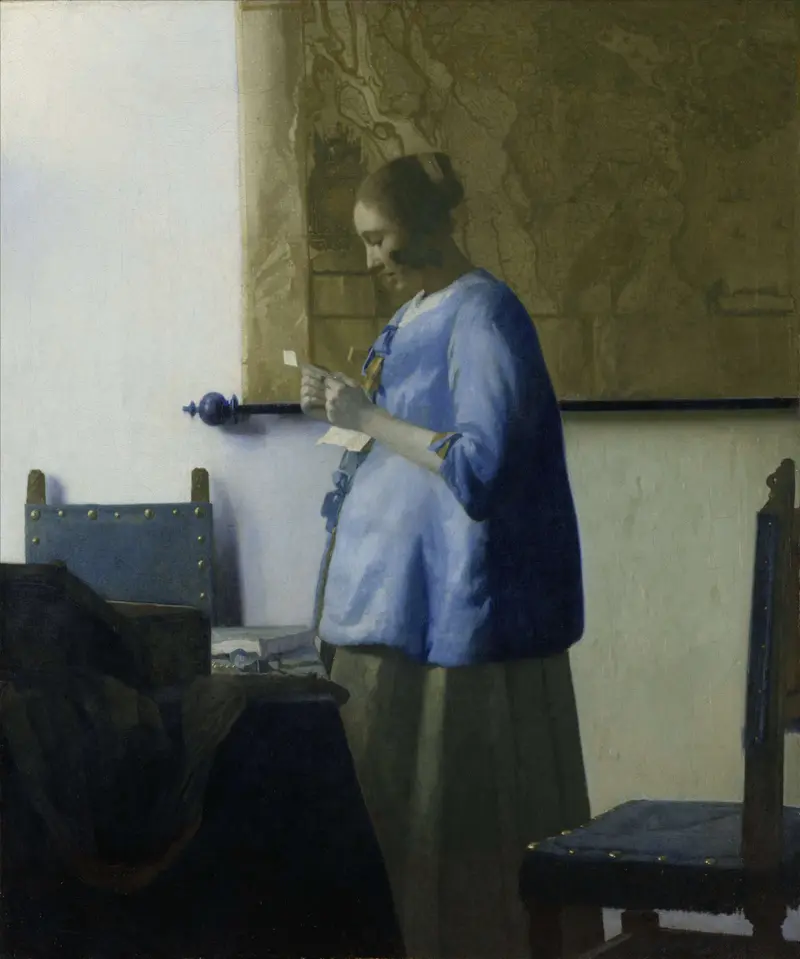
Woman in Blue Reading a Letter
Johannes Vermeer
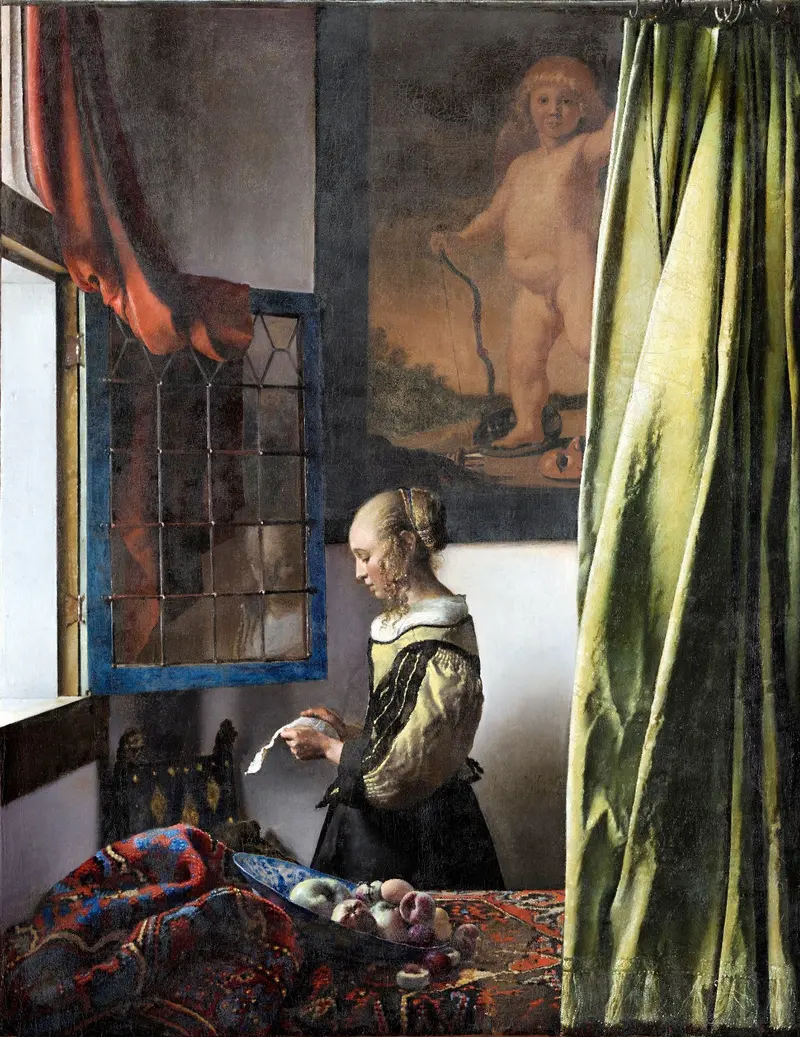
Girl Reading a Letter at an Open Window
Johannes Vermeer
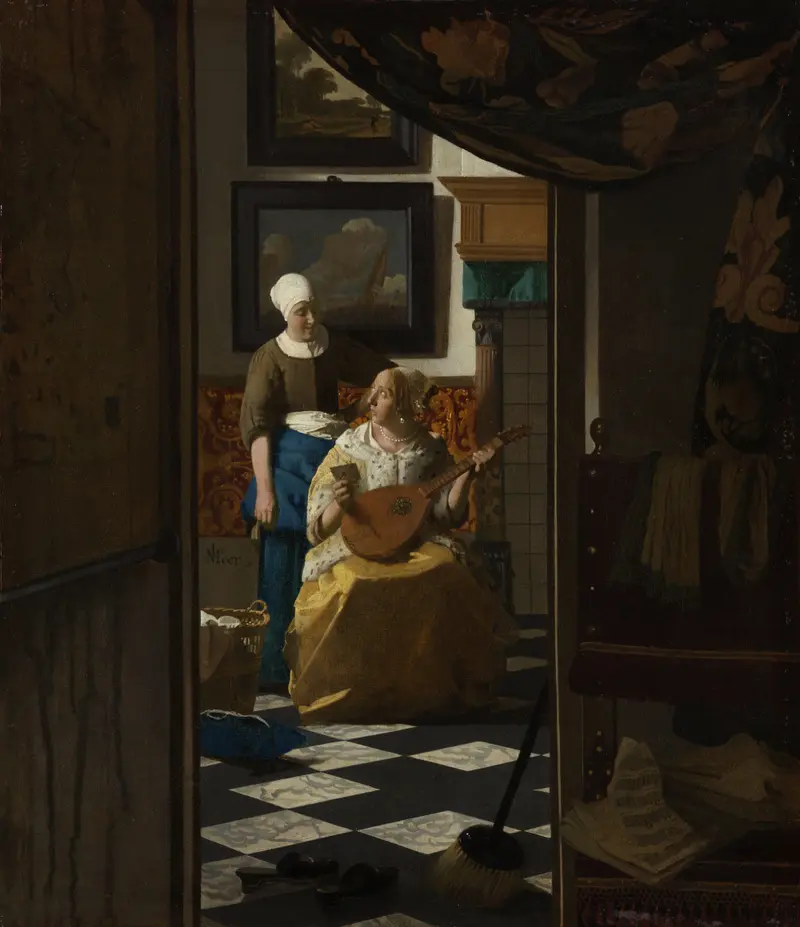
The Love Letter
Johannes Vermeer

The Music Lesson
Johannes Vermeer

A Girl Asleep
Johannes Vermeer
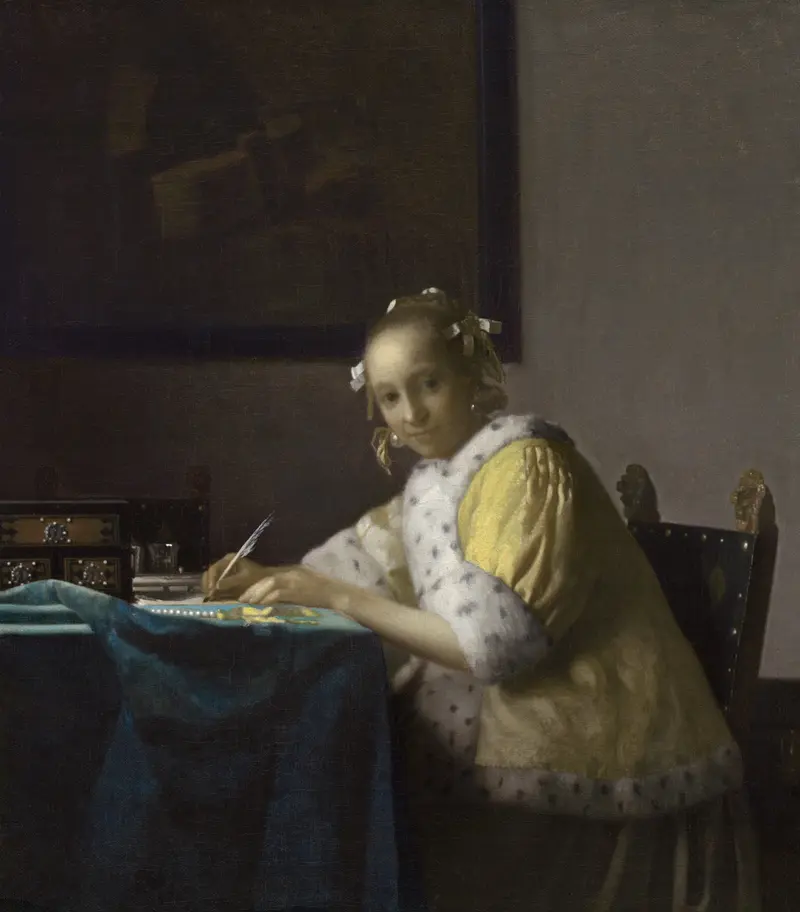
A Lady Writing a Letter
Johannes Vermeer
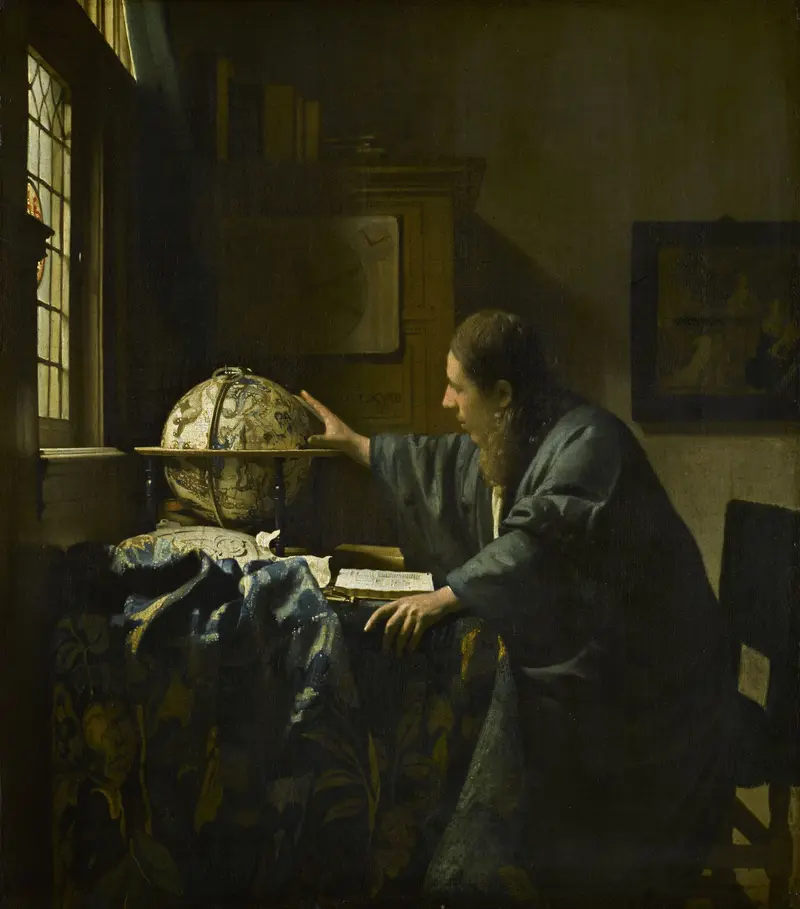
The Astronomer
Johannes Vermeer
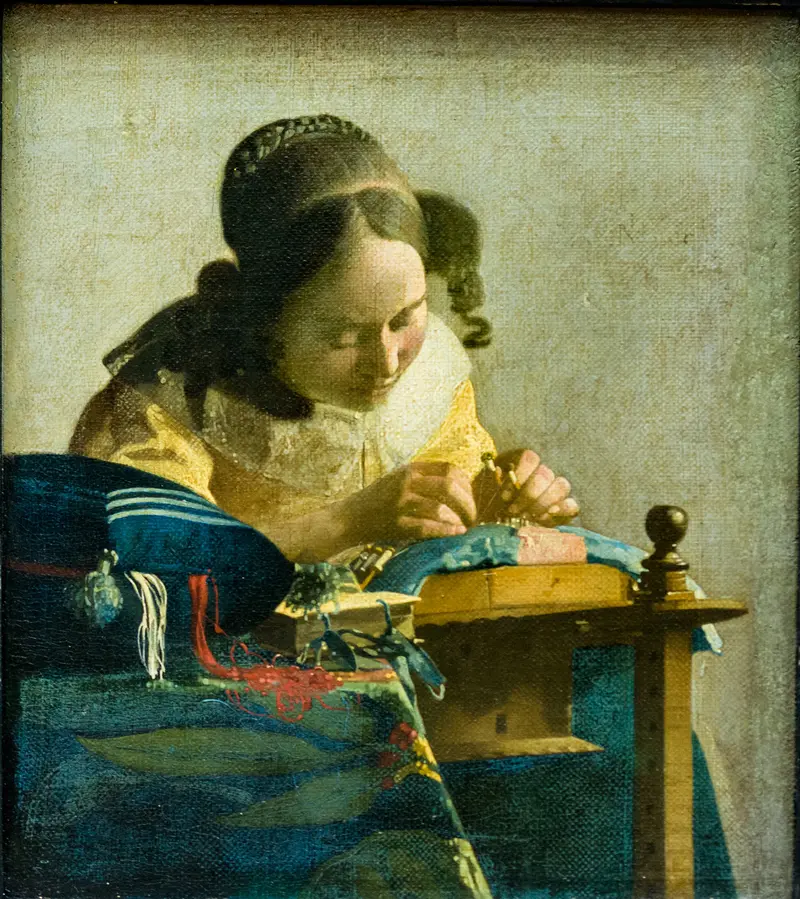
The Lacemaker
Johannes Vermeer




