A Day’s Fishing — History & Analysis
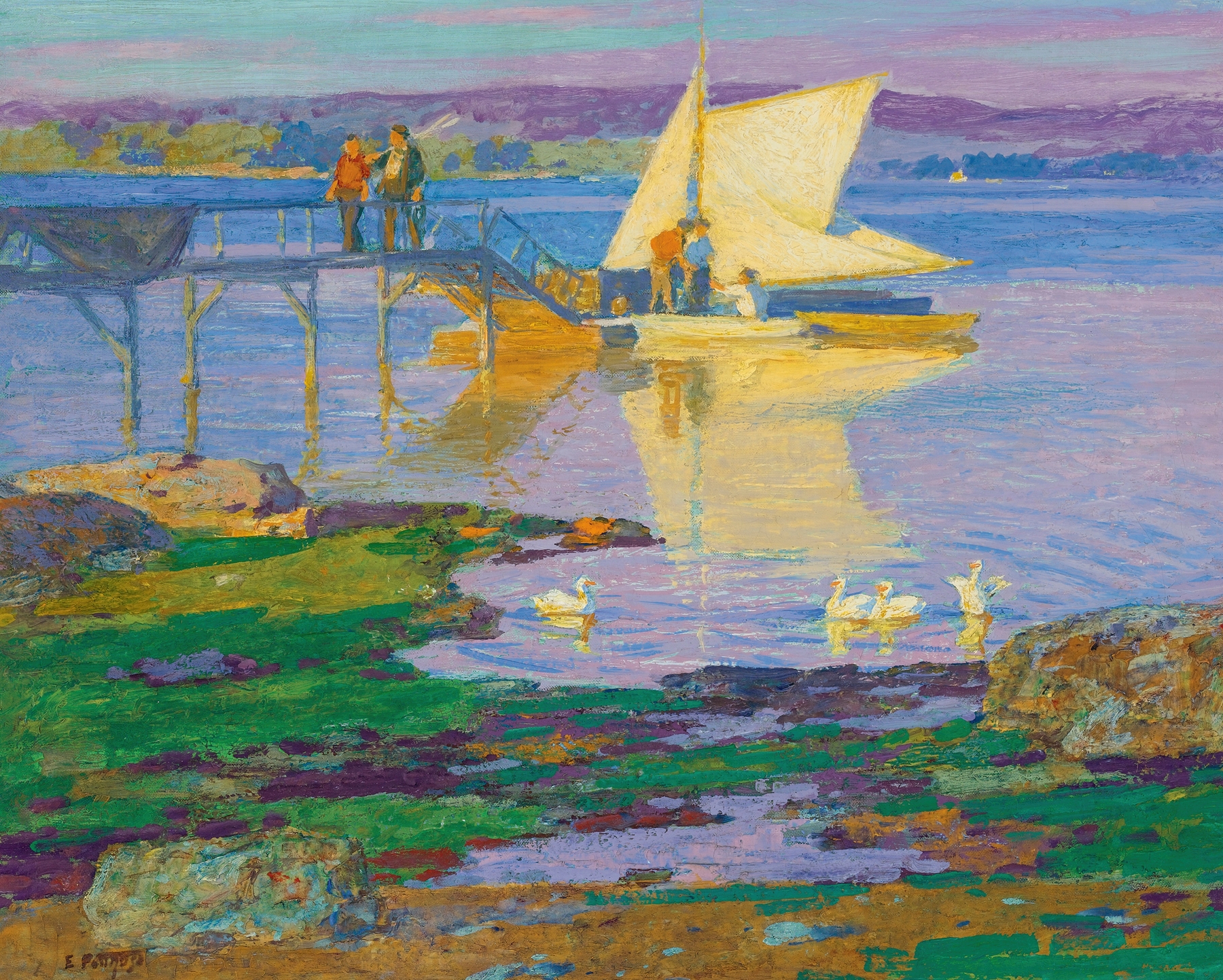
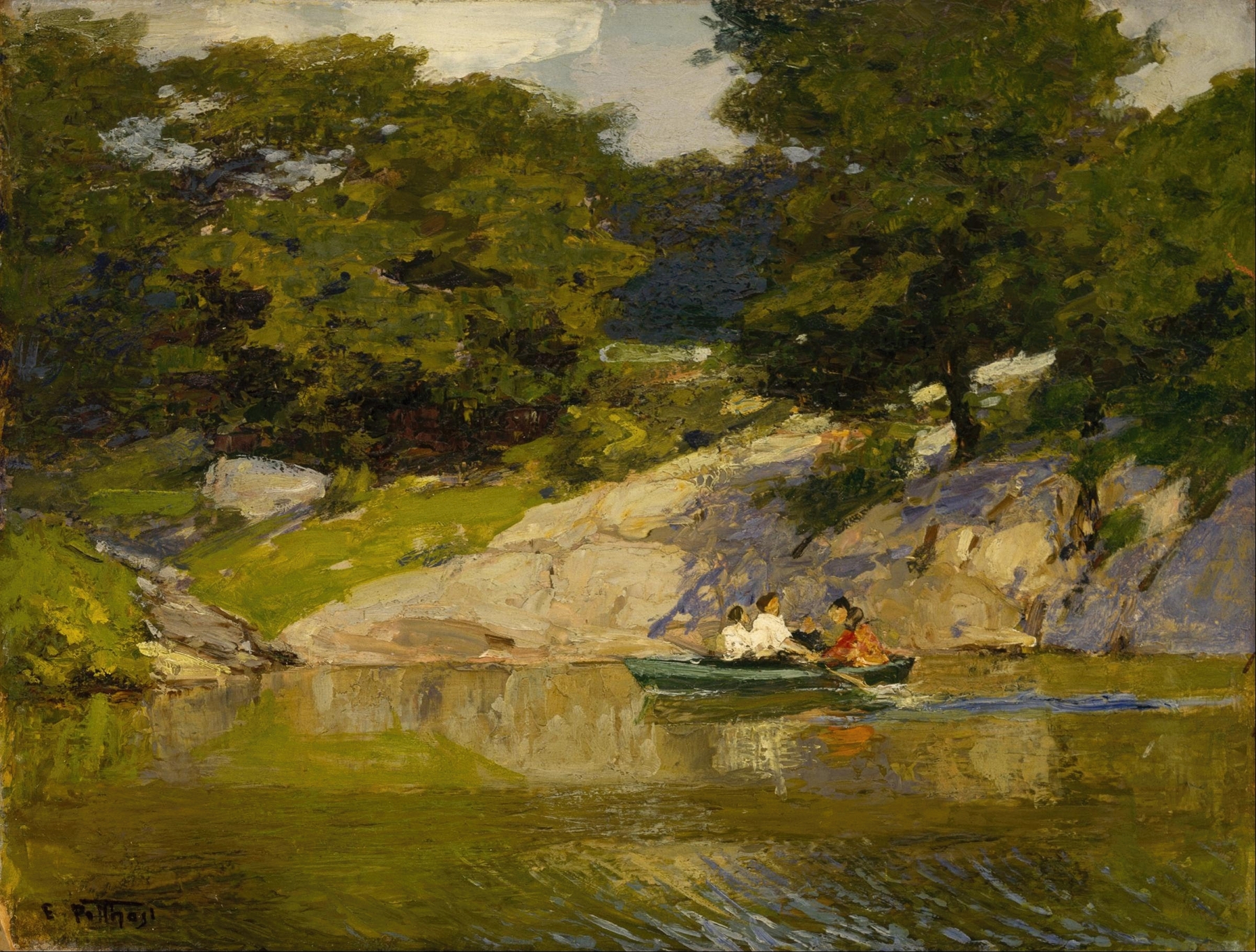
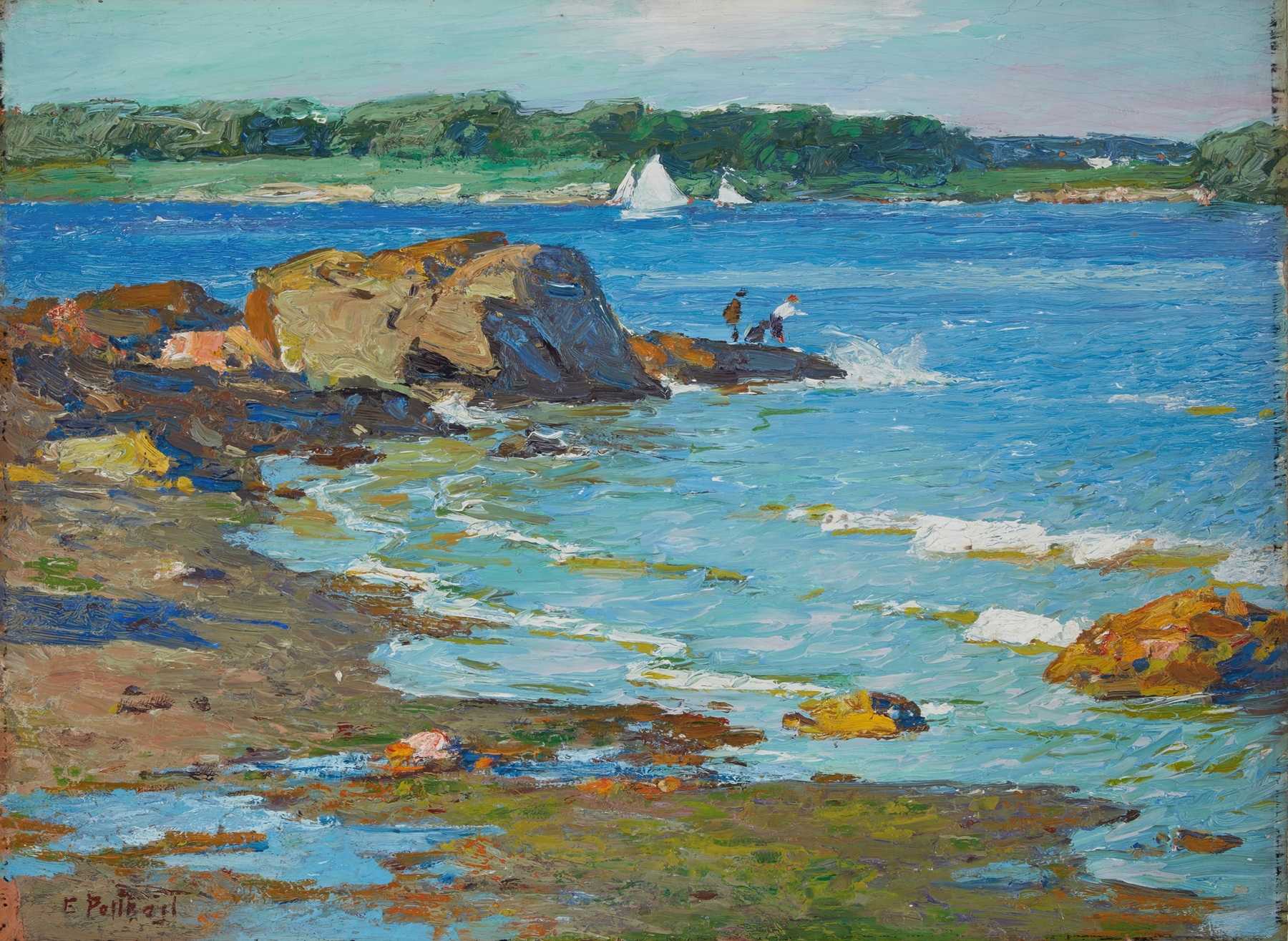
Can beauty exist without sorrow? In the gentle embrace of nature, where moments of joy often dance alongside the shadows of life, this question lingers like a soft breeze across a calm lake. Look closely at the vibrant interplay of colors in A Day’s Fishing, where lush greens and shimmering blues evoke the serenity of a summer day. Your gaze is drawn first to the figures in the foreground: two fishermen poised on a boat, their silhouettes outlined against the glistening water.
Notice how the sunlight caresses their outstretched arms, as if inviting them deeper into the experience. The brushwork is lively, full of energy, capturing the rippling water that reflects the brilliant sky above, deftly merging realism with an ethereal quality. As you explore further, consider the contrasting elements—the stillness of the water against the excitement of the fishermen's pursuit. The trees surrounding the scene stand silent and watchful, embodying nature's timeless presence, suggesting that while joy is present, the quiet depth of solitude remains.
This balance between activity and stillness hints at life's dualities, where moments of happiness are often tinged with the awareness of fleeting time and the inherent unpredictability of nature. In 1923, when this work was created, Potthast found himself amidst a burgeoning American art scene that celebrated the beauty of leisure and the outdoors. He was inspired by the impressionist movement, infusing his scenes with a sense of immediacy and light. During this time, the world was recovering from the tumult of war, and artists like him sought solace and expression through the simple pleasures of life, reflecting a deeper yearning for connection with nature and one another.