The Inlet — History & Analysis
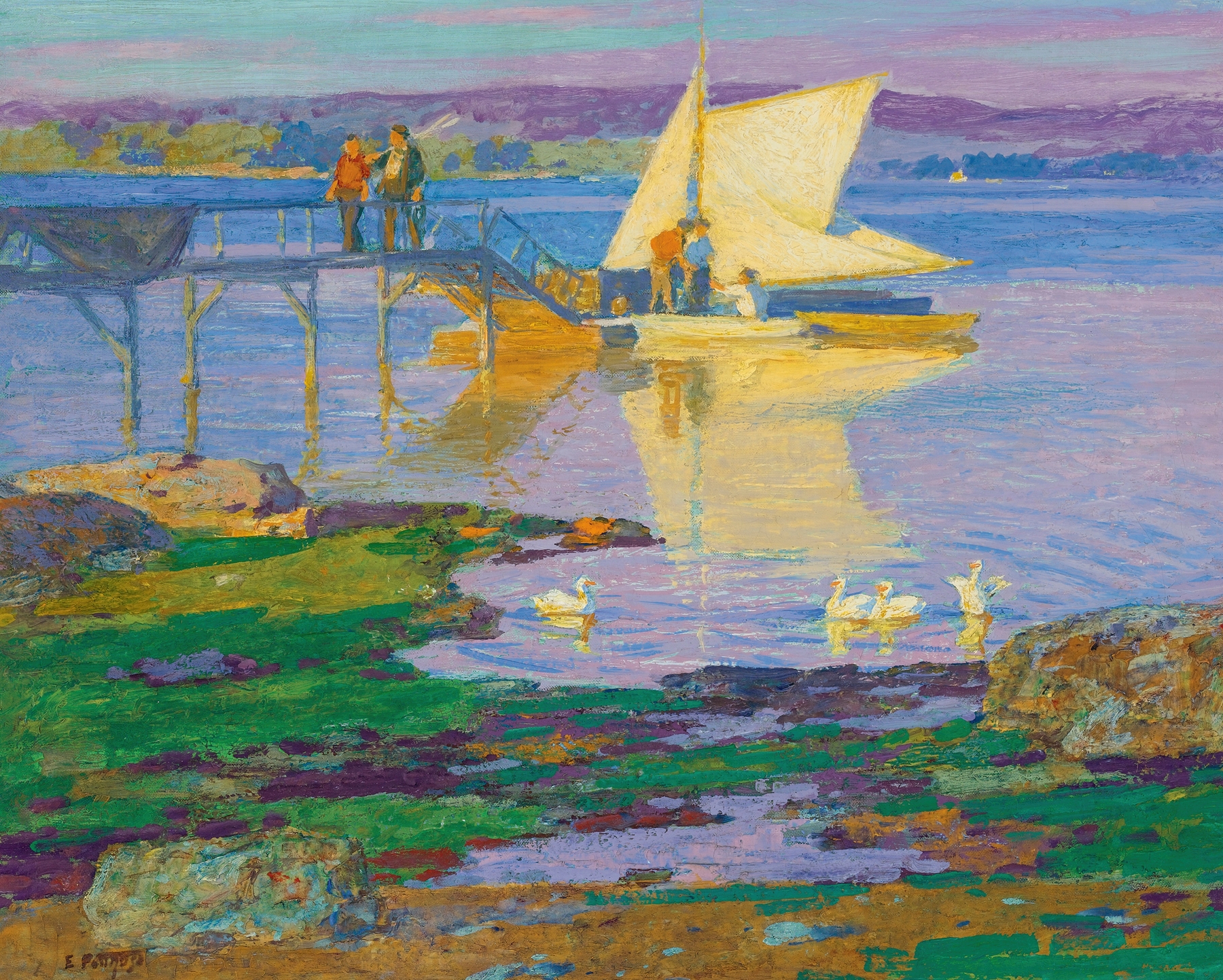
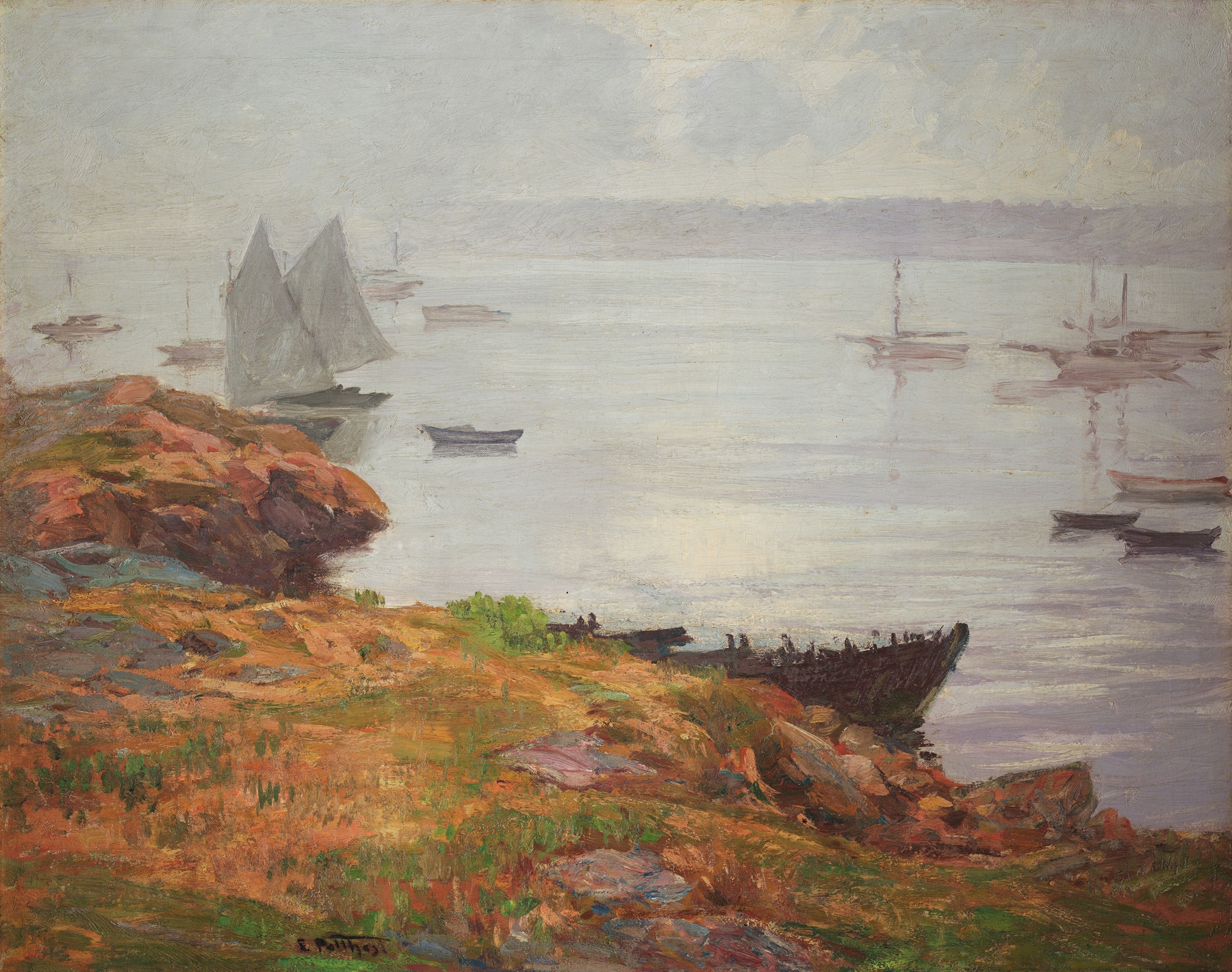
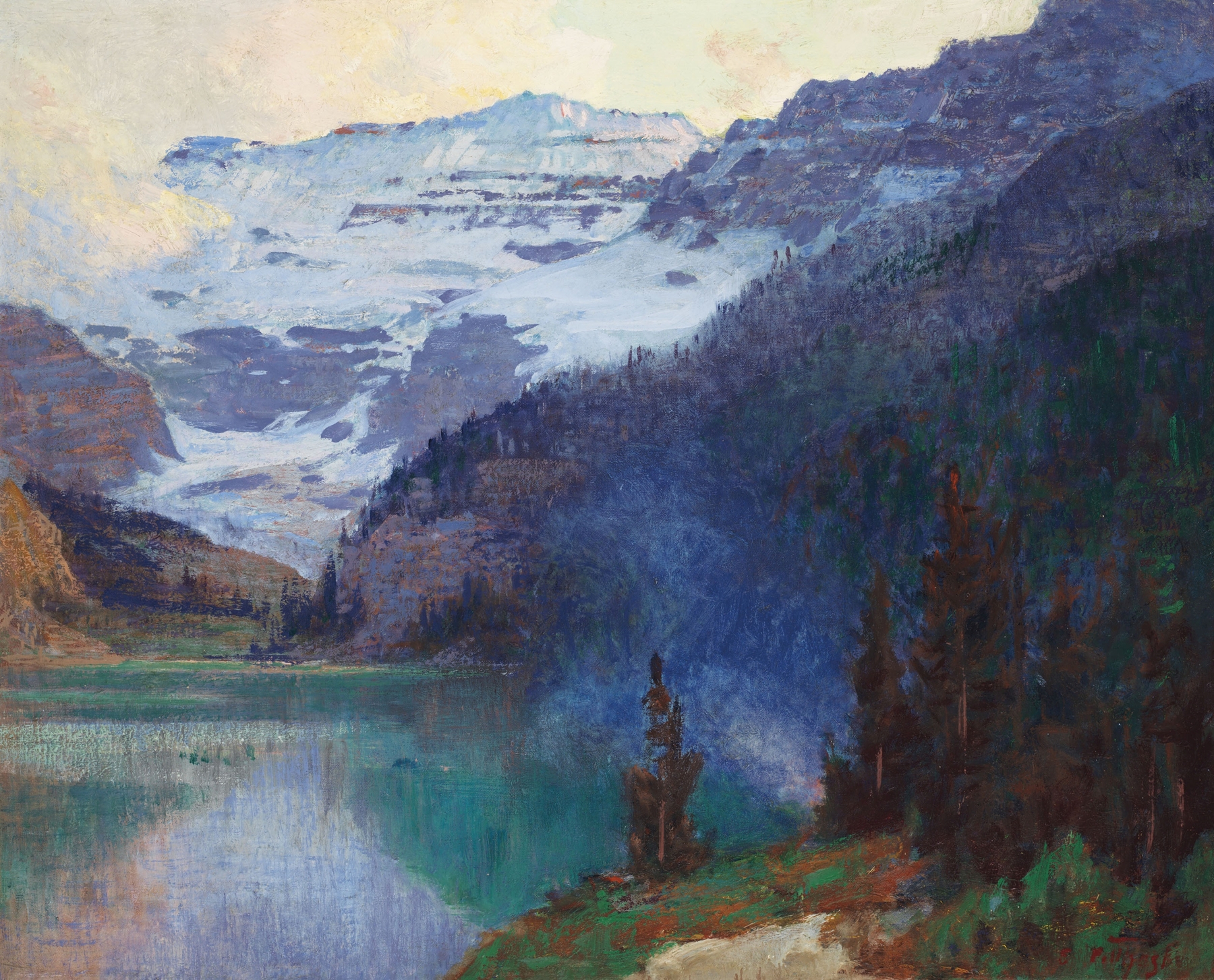
Could a single brushstroke hold eternity? In Edward Henry Potthast's The Inlet, the canvas encapsulates a fleeting moment where water and sky converge in shimmering reflections, inviting contemplation of nature's ephemeral beauty. Look to the lower right, where gentle waves lap against the shore, creating a cascade of light that dances upon the surface. The artist employs a palette of soft blues and warm creams, each brushstroke layered with intention, capturing the fluidity of the water.
Your gaze should then travel upward, where the horizon blurs into the soft blush of a setting sun, harmonizing the scene with warmth and tranquility. The composition guides your eye across the canvas, seamlessly blending the natural elements, evoking a sense of peace. Delve deeper into the contrasts presented here; notice how the calm waters mirror the vibrant sky, a delicate balance between serenity and the underlying chaos of nature. The interplay of light and shadow speaks to the duality of existence—the transient nature of beauty juxtaposed with the enduring power of the landscape.
Each reflection holds a whisper of the past, urging viewers to ponder the layers of time and memory. In this work, Potthast engaged with the Impressionist movement during a period of exploration in American landscape painting. Created in the late 19th to early 20th century, he was influenced by the burgeoning interest in capturing light and atmosphere, embodying a shift toward more emotive and experiential depictions of the natural world. This era marked a departure from strict realism, inviting a more subjective interpretation of the environment, which Potthast embraced wholeheartedly.