Lobster Cove — History & Analysis
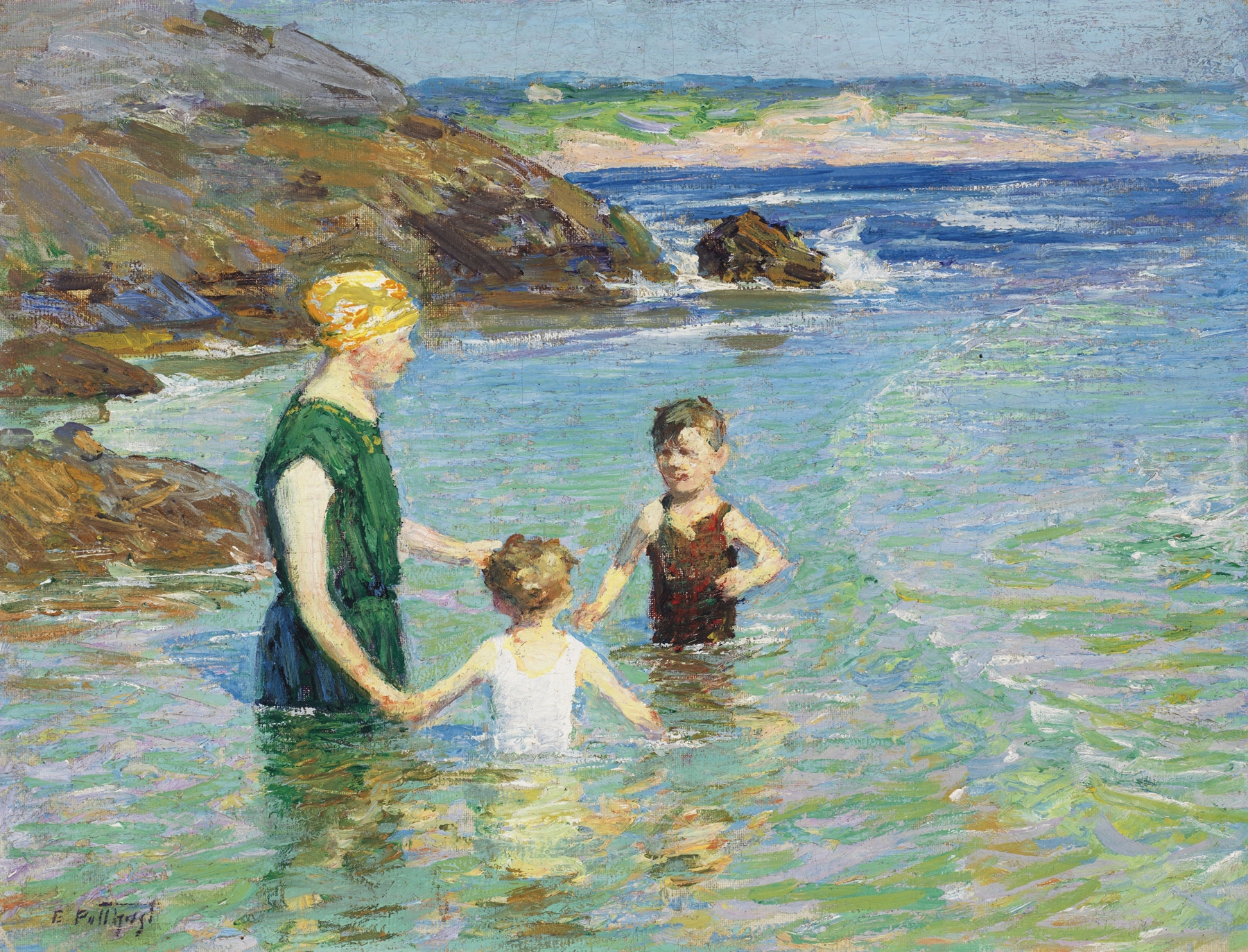
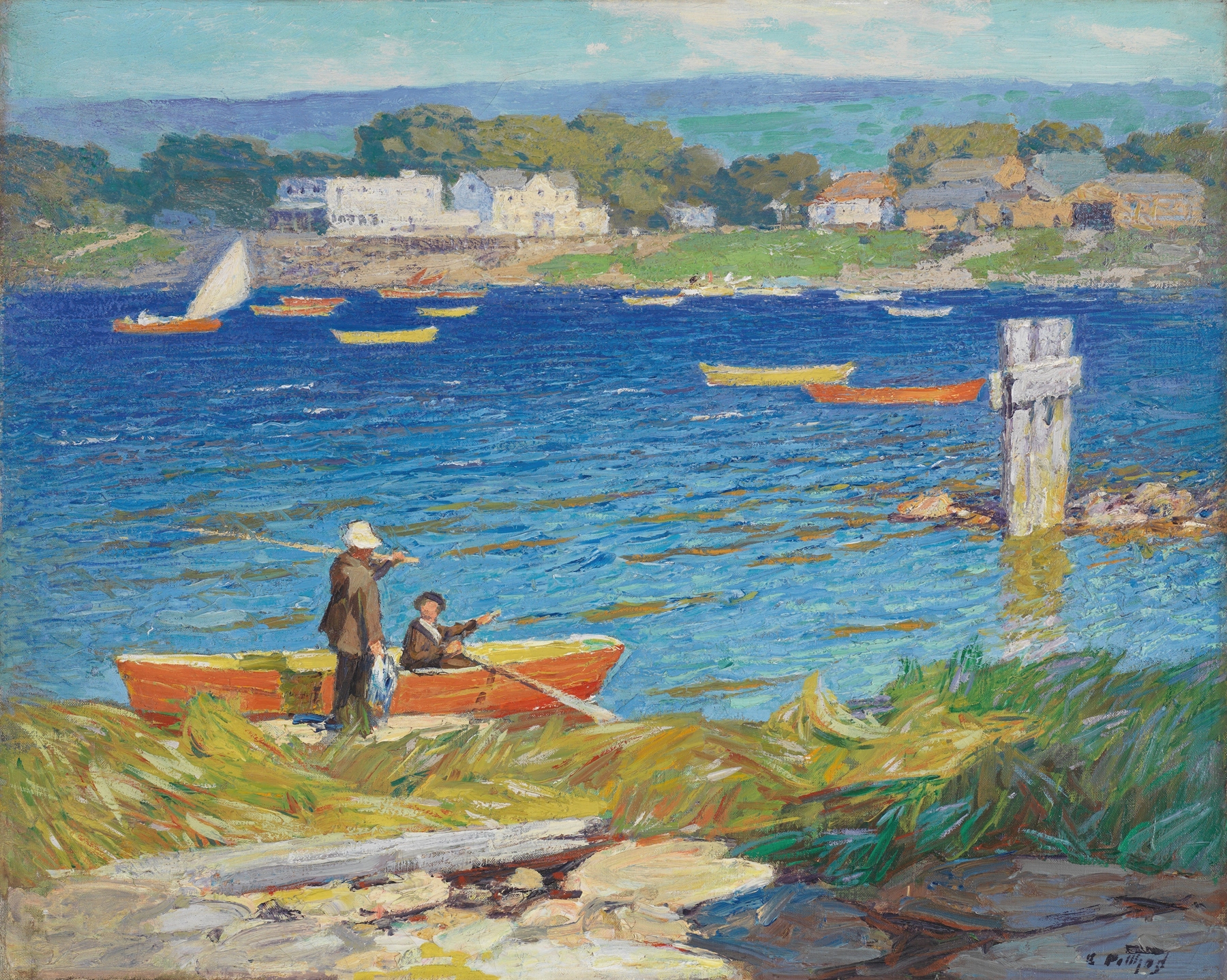
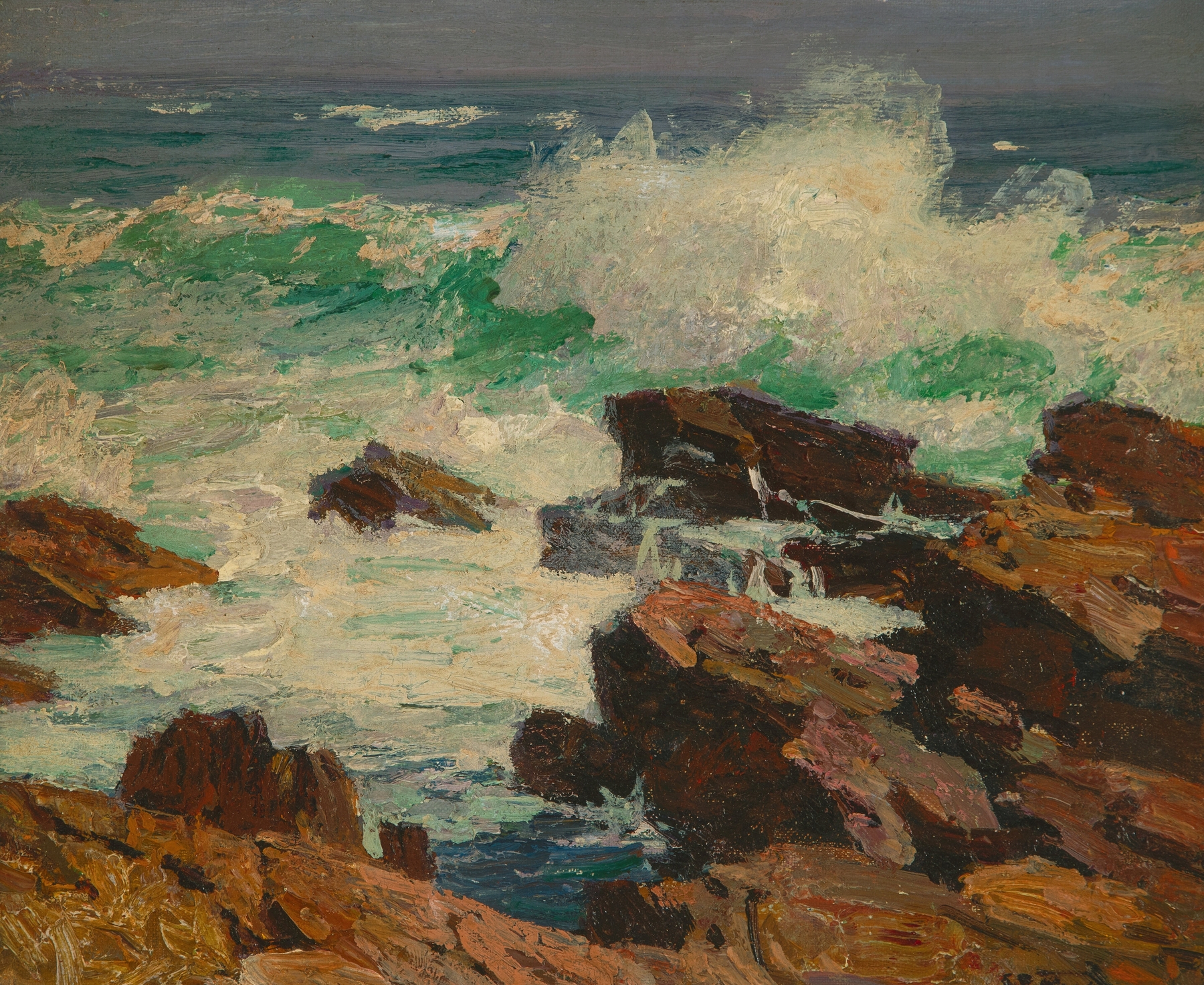
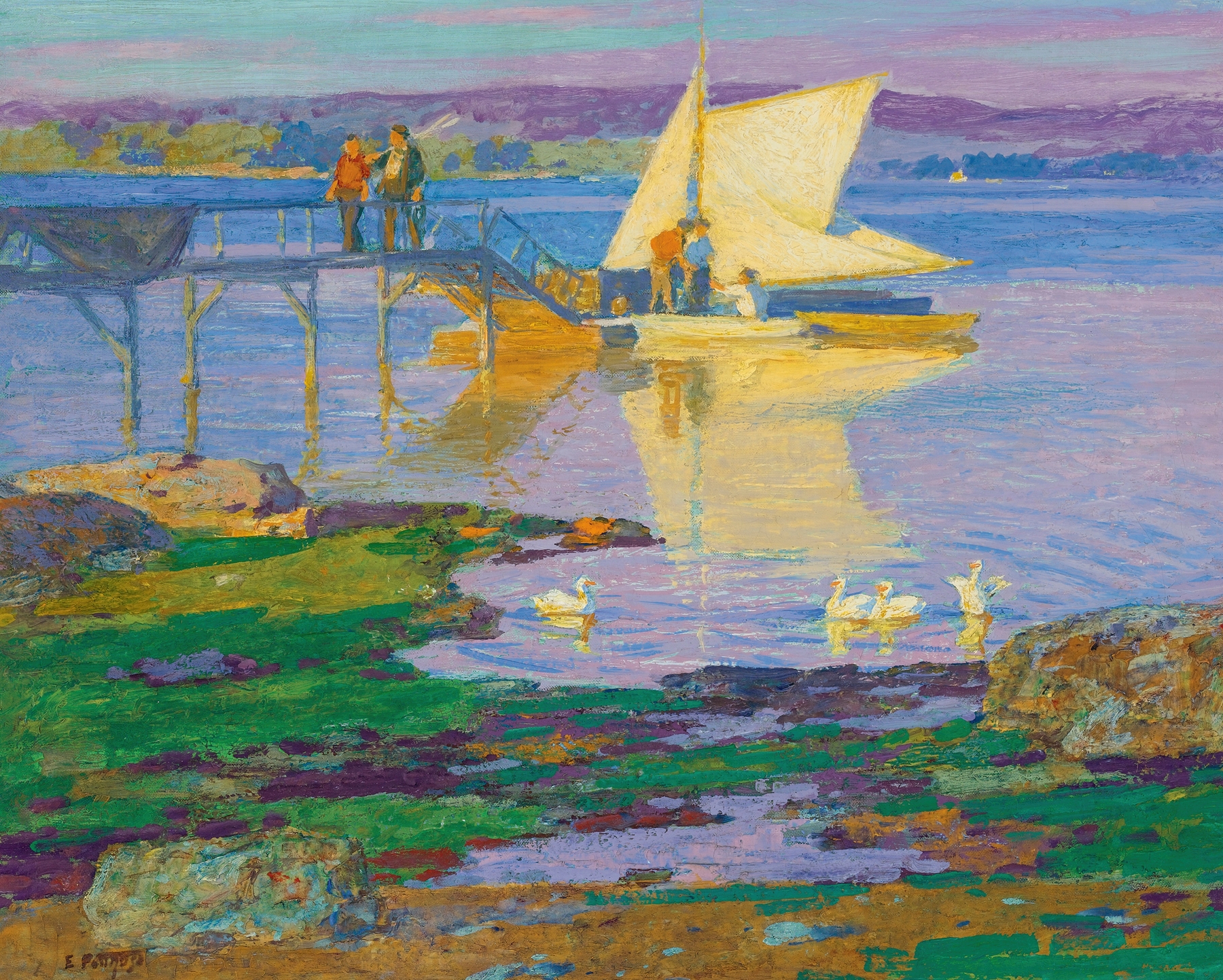
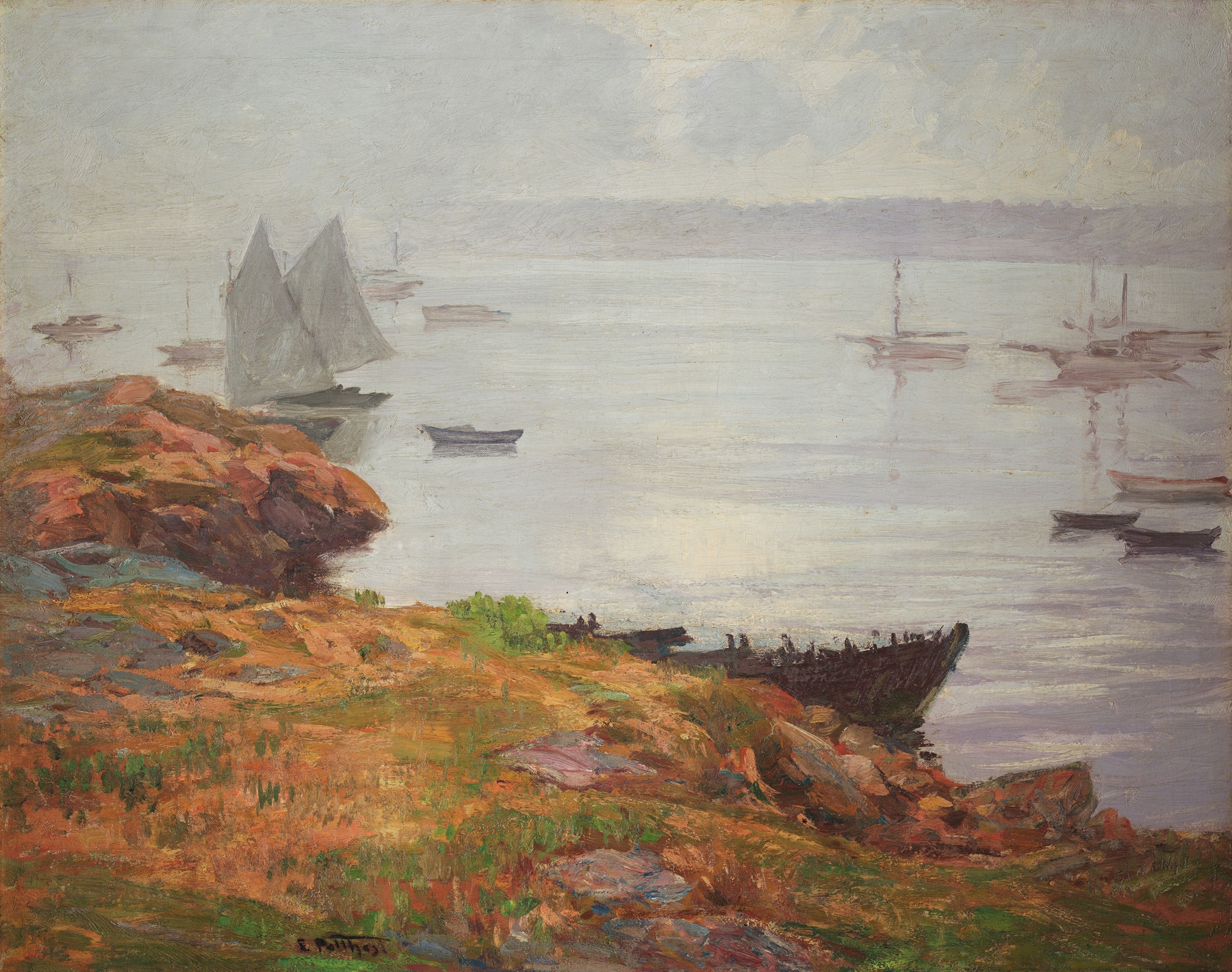
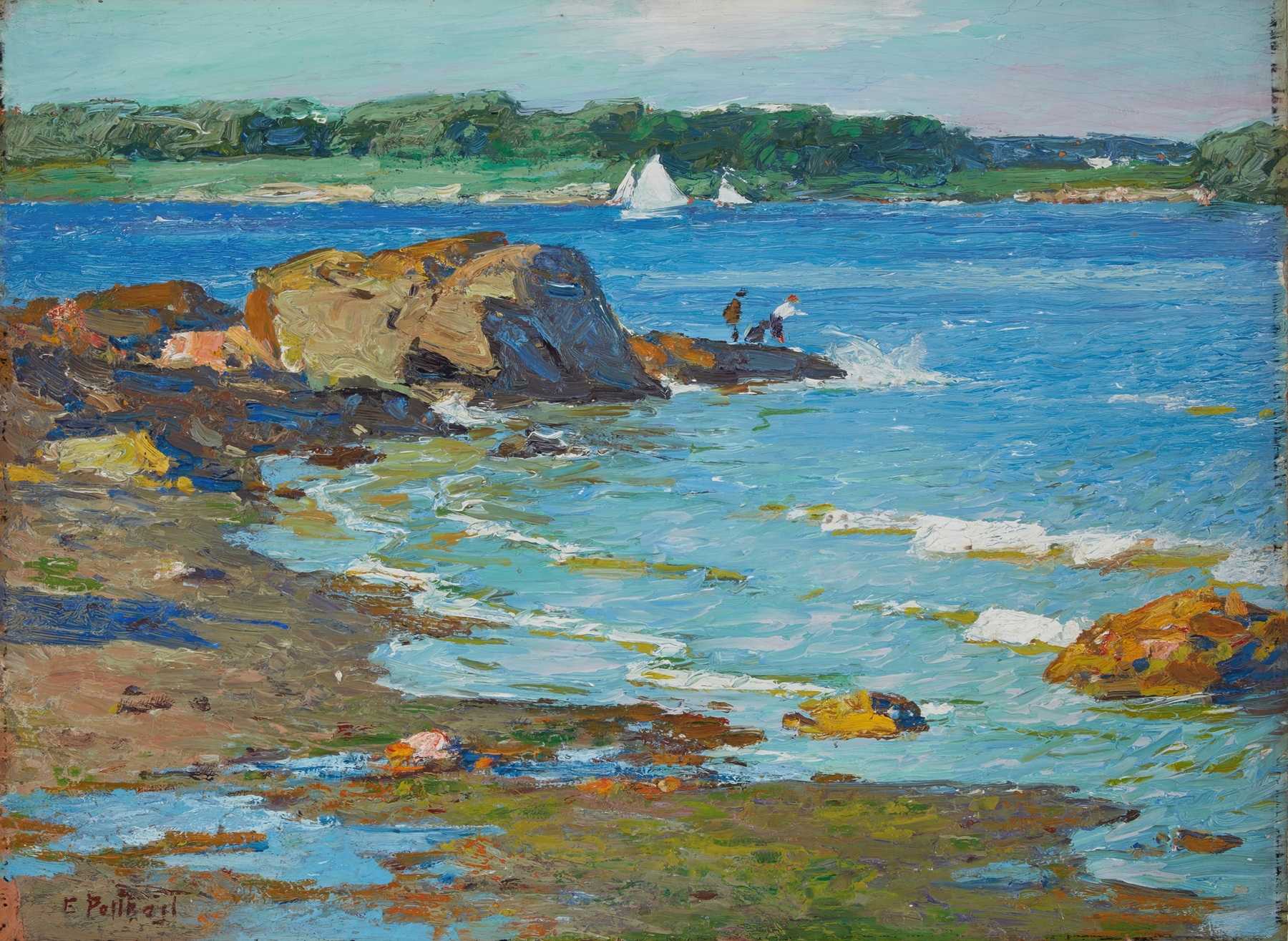
Can paint confess what words never could? In the gentle embrace of color and brushstrokes lies an unspoken longing, a desire that transcends mere description and beckons the viewer closer. Look to the center, where the tumultuous waves crash against the rugged coastline, their frothy white edges whispering secrets of the sea. Notice how the deep blues and greens intertwine, capturing the play of light as it dances across the water’s surface. The sky, a canvas of soft pastels, hints at a fleeting moment—perhaps dusk or dawn—where day meets night in a silent dialogue, while the boats bob gently in the harbor, inviting exploration.
The composition is alive, a snapshot of nature's beauty forged through Potthast’s masterful technique. Beneath this picturesque scene, hidden tensions weave through the painting. The interplay between the serene sky and the restless waves evokes a dichotomy of peace and chaos, stirring feelings of nostalgia and yearning. The boats, small against the vastness of the ocean, symbolize the human spirit’s desire for connection with nature, as well as the pursuit of adventure.
Each stroke reveals a deeper emotional resonance, suggesting that while the surface may appear tranquil, life’s currents are ever in motion. Edward Henry Potthast painted Lobster Cove during a time when American Impressionism was flourishing, likely in the early 20th century. Living in New York, he was influenced by the changing dynamics of coastal landscapes and the romanticism of leisure at the seaside. Against the backdrop of an evolving art world, where color and light became paramount, his work reflects a personal and collective desire for escape and solace in nature’s embrace.