A Farrier’s Shop — History & Analysis
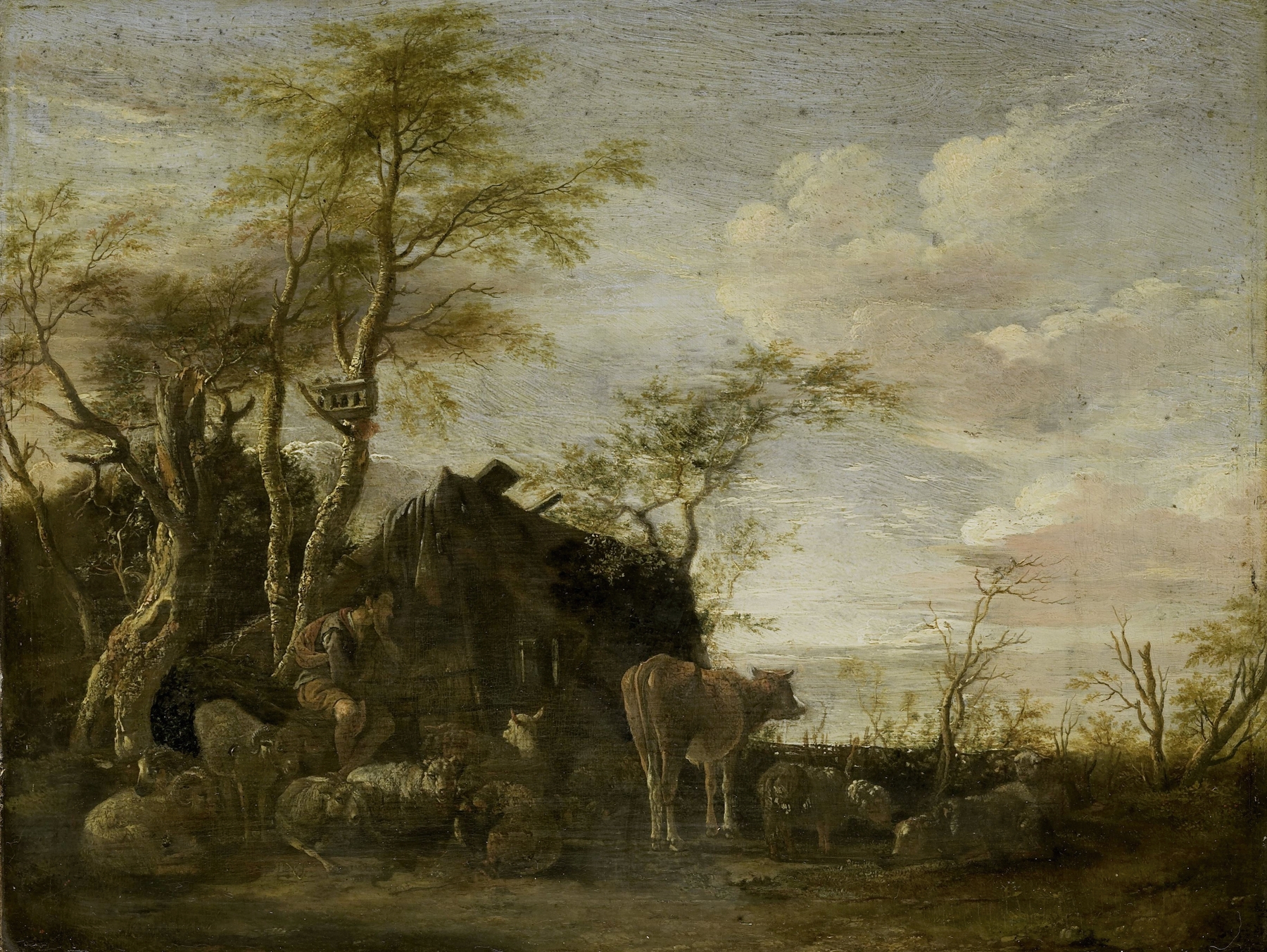
When did color learn to lie? In the realm of art, the hues often oscillate between truth and illusion, or perhaps, they reveal a deeper fragility beneath their surface. Look to the left at the dominant figure of the farrier, muscles taut as he hammers iron on the anvil. The warmth of the metal glows against the palette of browns and grays, while the dim light filters through the open door, casting elongated shadows that stretch across the stone floor. Notice how the color choices evoke a tactile sense of the workshop’s raw, earthy atmosphere, drawing the viewer into the immediacy of labor.
The meticulous detailing of textures—be it the coarse grain of wood or the gleaming surface of the horseshoe—invites closer inspection. Yet beneath the apparent strength lies a vulnerability. The farrier, a pillar of craftsmanship, is contrasted by the vulnerability of the young horse awaiting its turn, echoing themes of trust and dependence. The interplay of light highlights moments of stillness amidst the labor—the horse's patient demeanor speaks volumes about the fragility of life and the bond between man and beast.
This scene reflects an intricate dance of power and submission, encapsulating the human experience within a simple workshop. In 1648, Paulus Potter was an emerging talent within the Dutch Golden Age of painting, creating A Farrier's Shop in his native Netherlands. During this time, the art world was shifting towards realism and the portrayal of everyday life, as artists sought to capture the essence of their surroundings. Potter was influenced by this movement, and his dedication to exploring the nuances of ordinary scenes distinguished him from his contemporaries, marking a crucial period in his artistic development.