A Landscape with a Herd of Pigs, The Swineherd Conversing with Another Man — History & Analysis
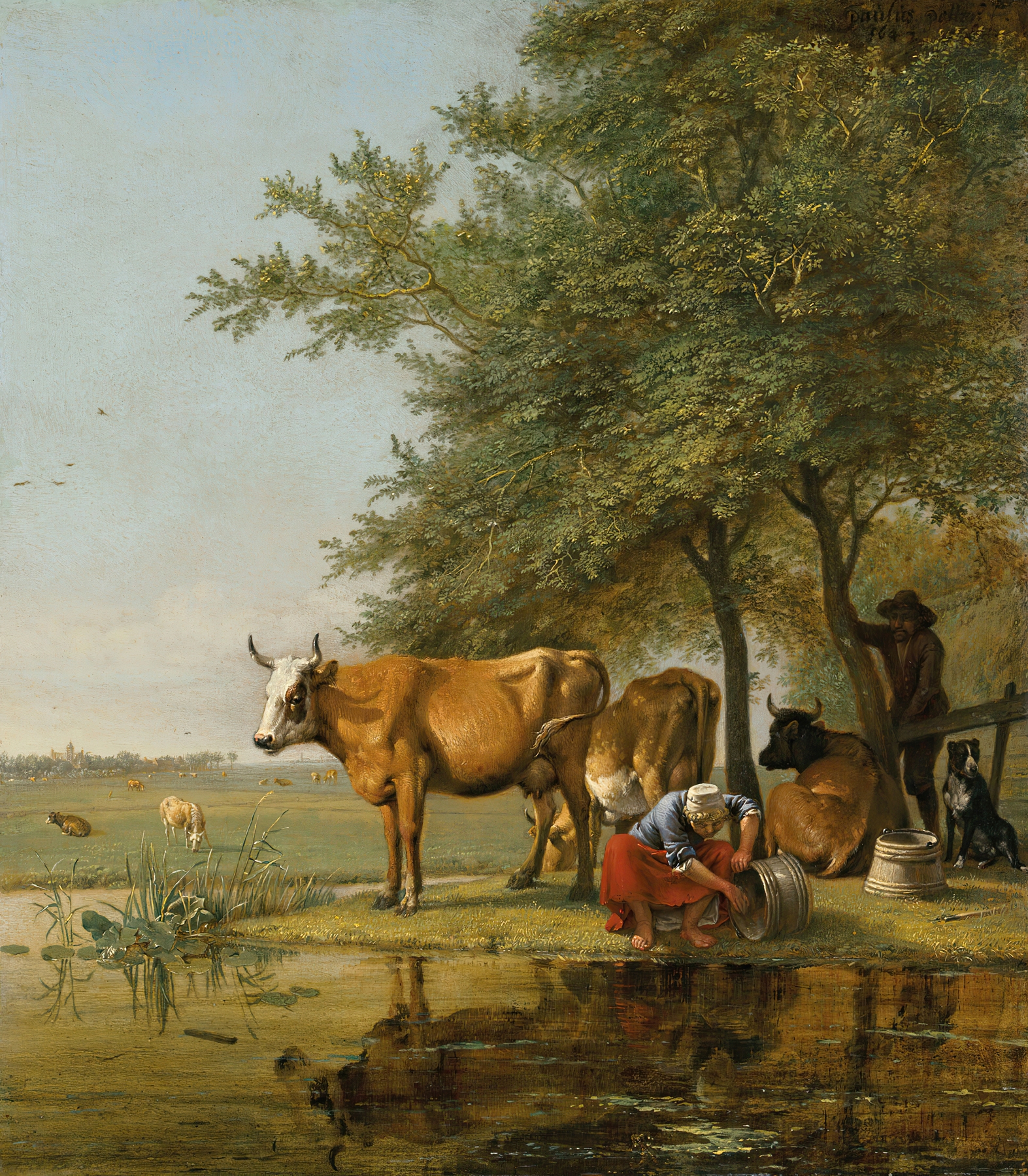
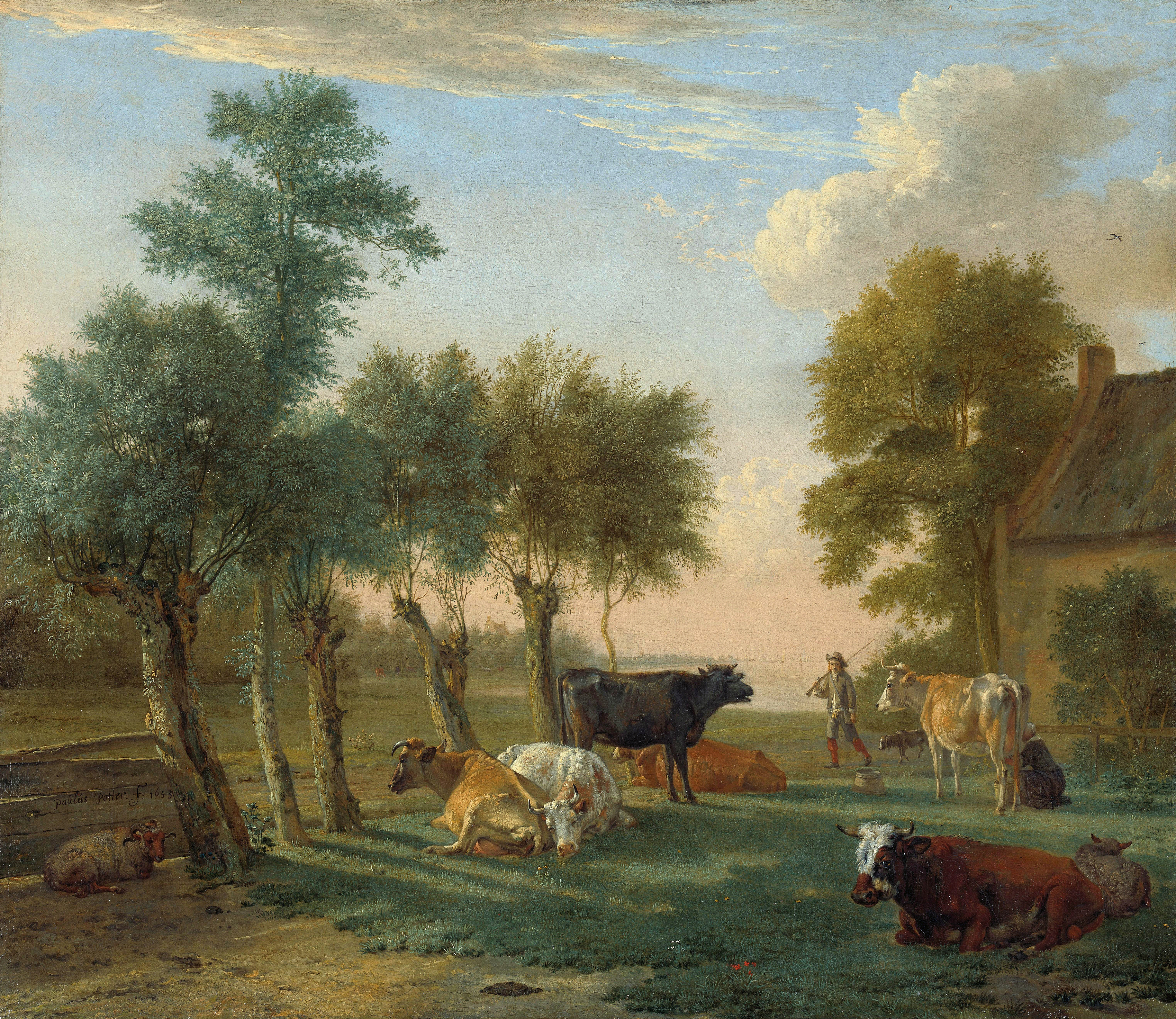
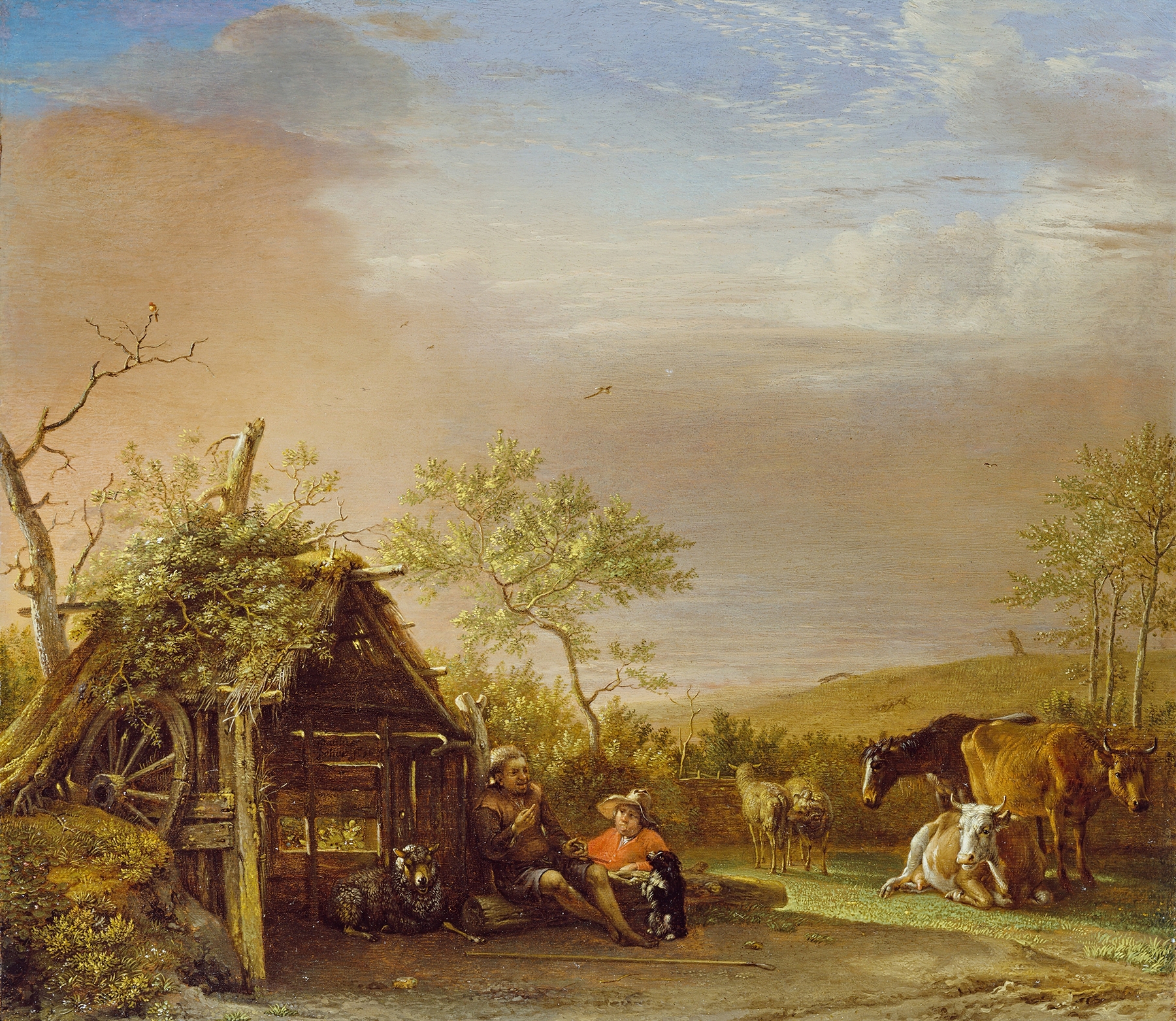
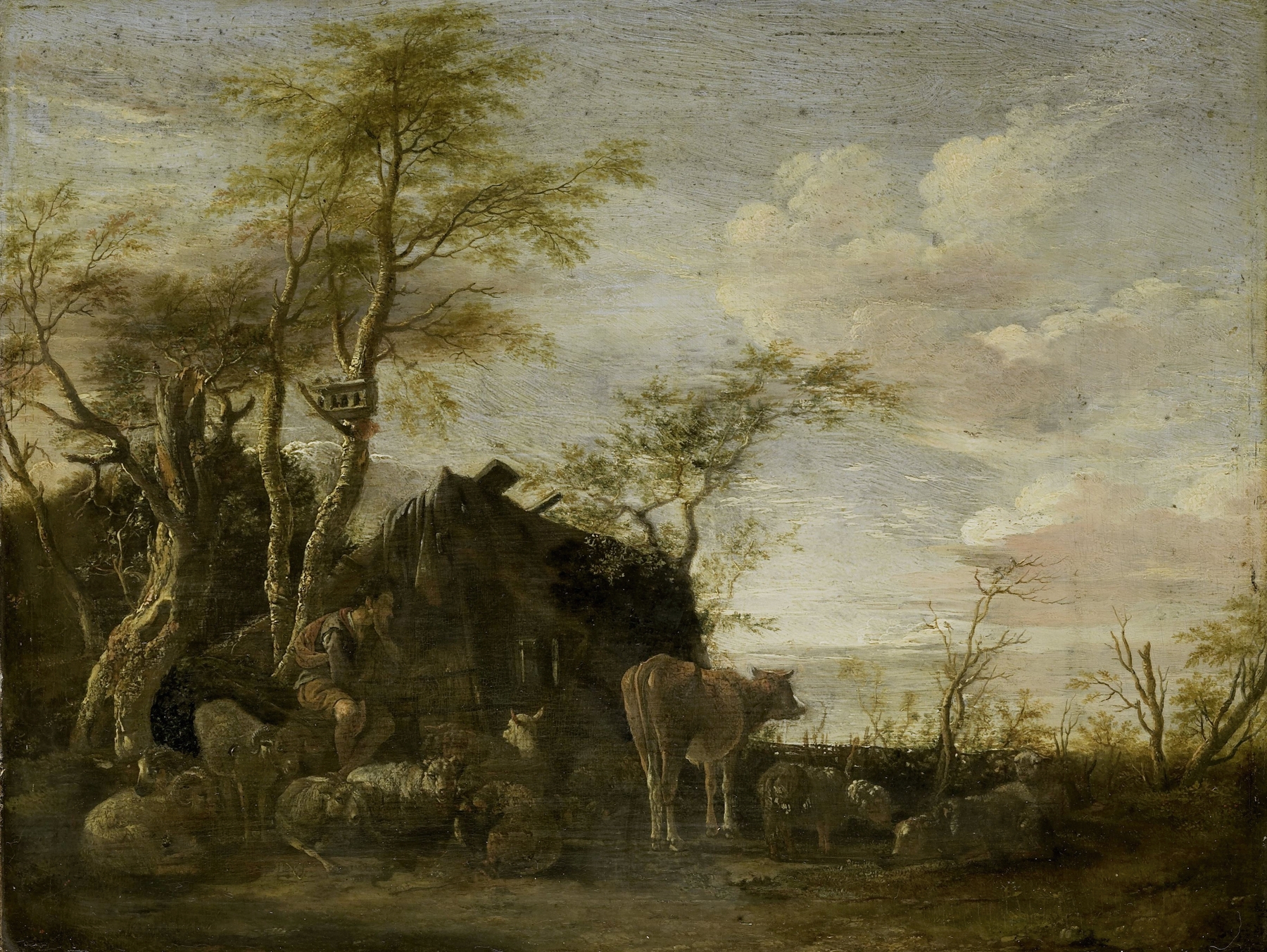
Did the painter know this moment would outlive them? In A Landscape with a Herd of Pigs, the stillness of a pastoral scene evokes questions about the fleeting nature of life and labor, captured in a single serene moment. Look to the left at the swineherd, his figure elegantly positioned against a backdrop of rolling hills and lush greenery. The earthy tones of the pigs contrast beautifully with the vibrant greens and blues of the landscape, drawing your eye into the rich texture of each brushstroke.
Notice how the light cascades softly across the scene, illuminating the figures and animals with a gentle glow that suggests the magic of everyday life. In the distance, the gentle conversation between the swineherd and another man unfolds, hinting at the camaraderie found in rural life. The juxtaposition of the industrious pigs against the expansive and tranquil landscape speaks to the balance between nature and human endeavor. Each figure carries a story; the swineherd, focused yet relaxed, embodies the harmony of their existence, while the pigs, both wild and domesticated, represent the duality of freedom and domestication.
Painted in 1645, this work emerged as Paulus Potter was establishing his reputation in the Dutch Golden Age, a time when the appreciation for landscape and animal painting was flourishing. Living in Amsterdam, Potter was influenced by the natural world around him and the rising market for detailed rural scenes. This painting reflects both his artistic mastery and the cultural shift toward valuing the simplicity and beauty of daily life.