Cows in a Meadow near a Farm — History & Analysis
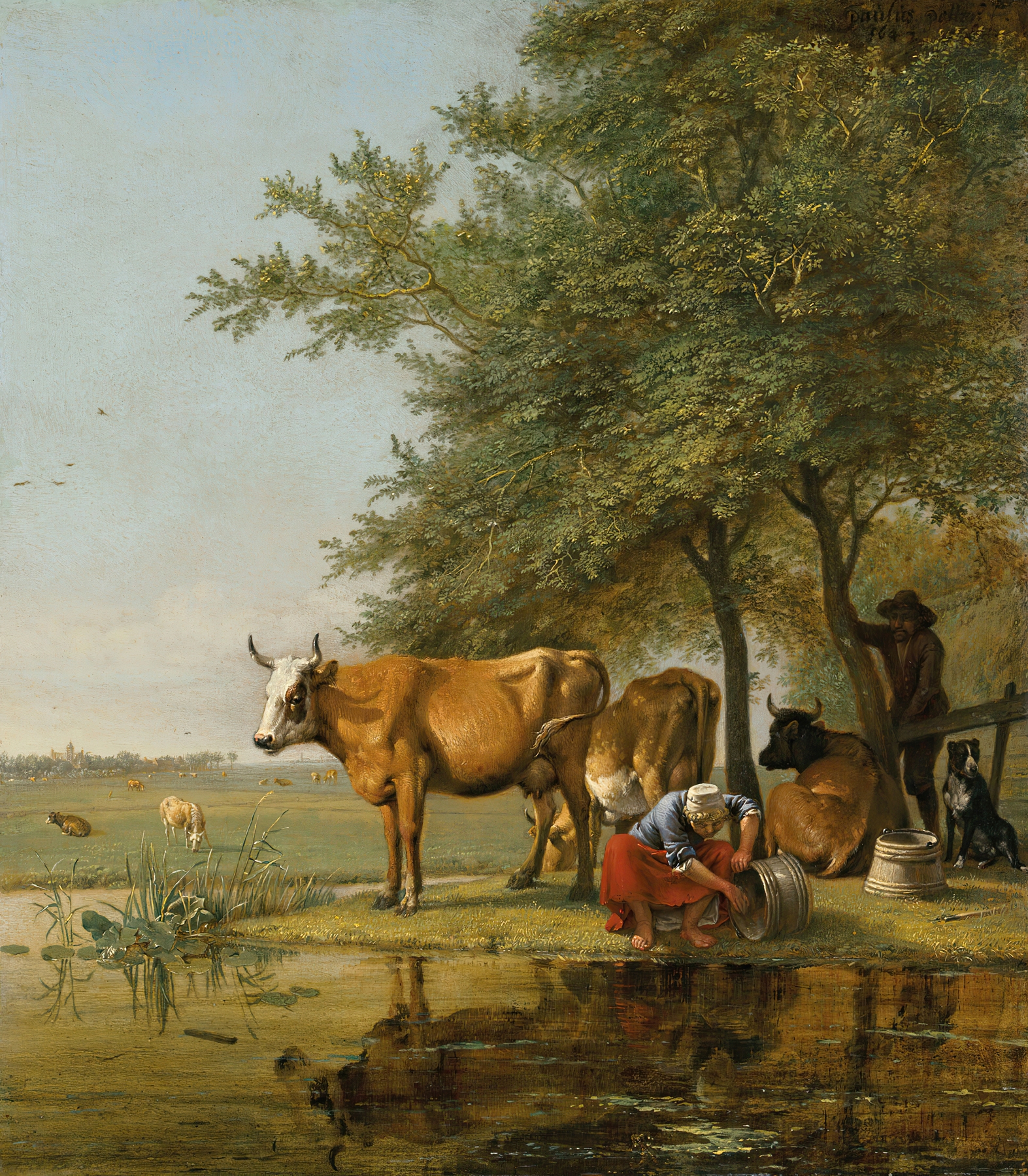
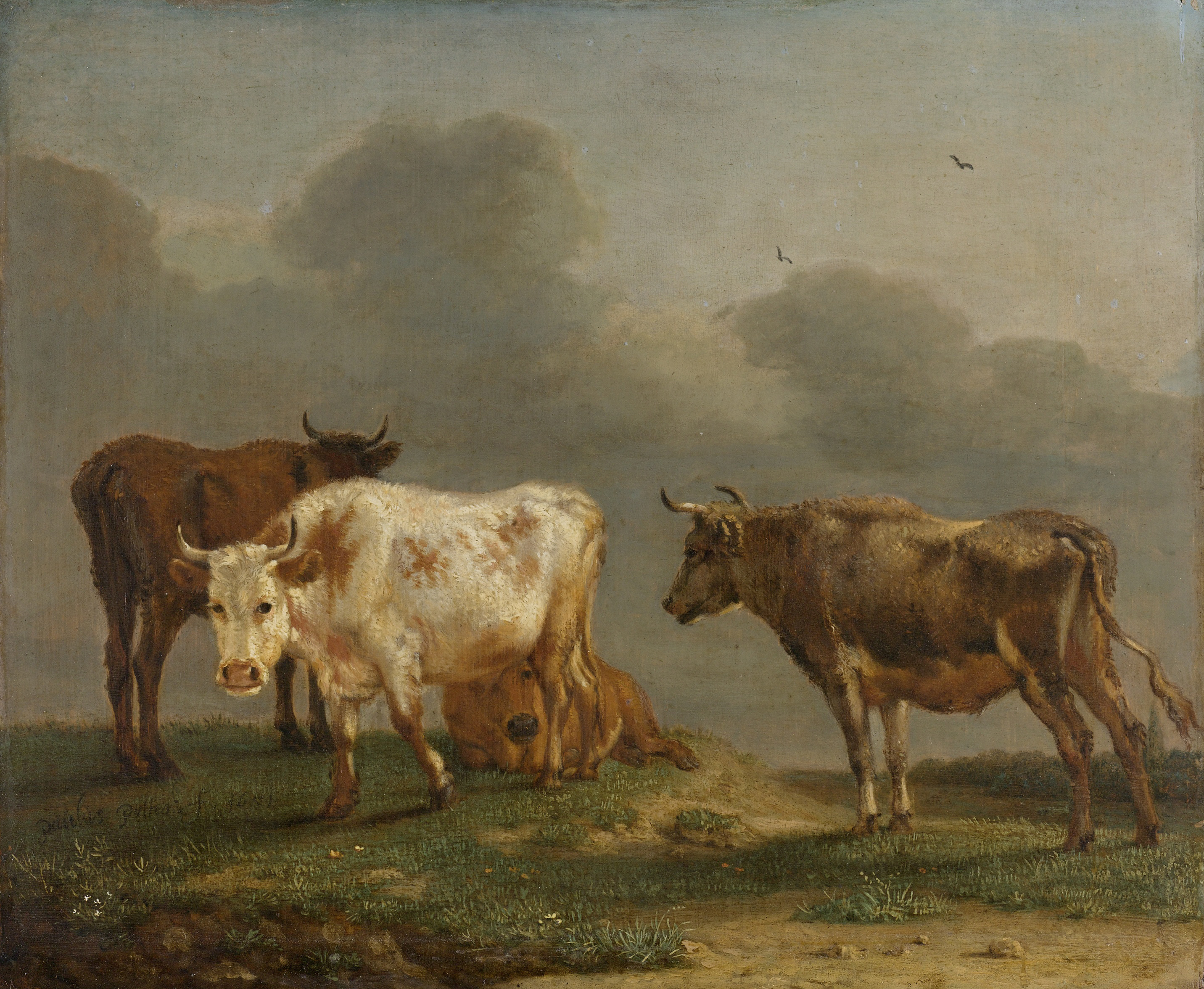
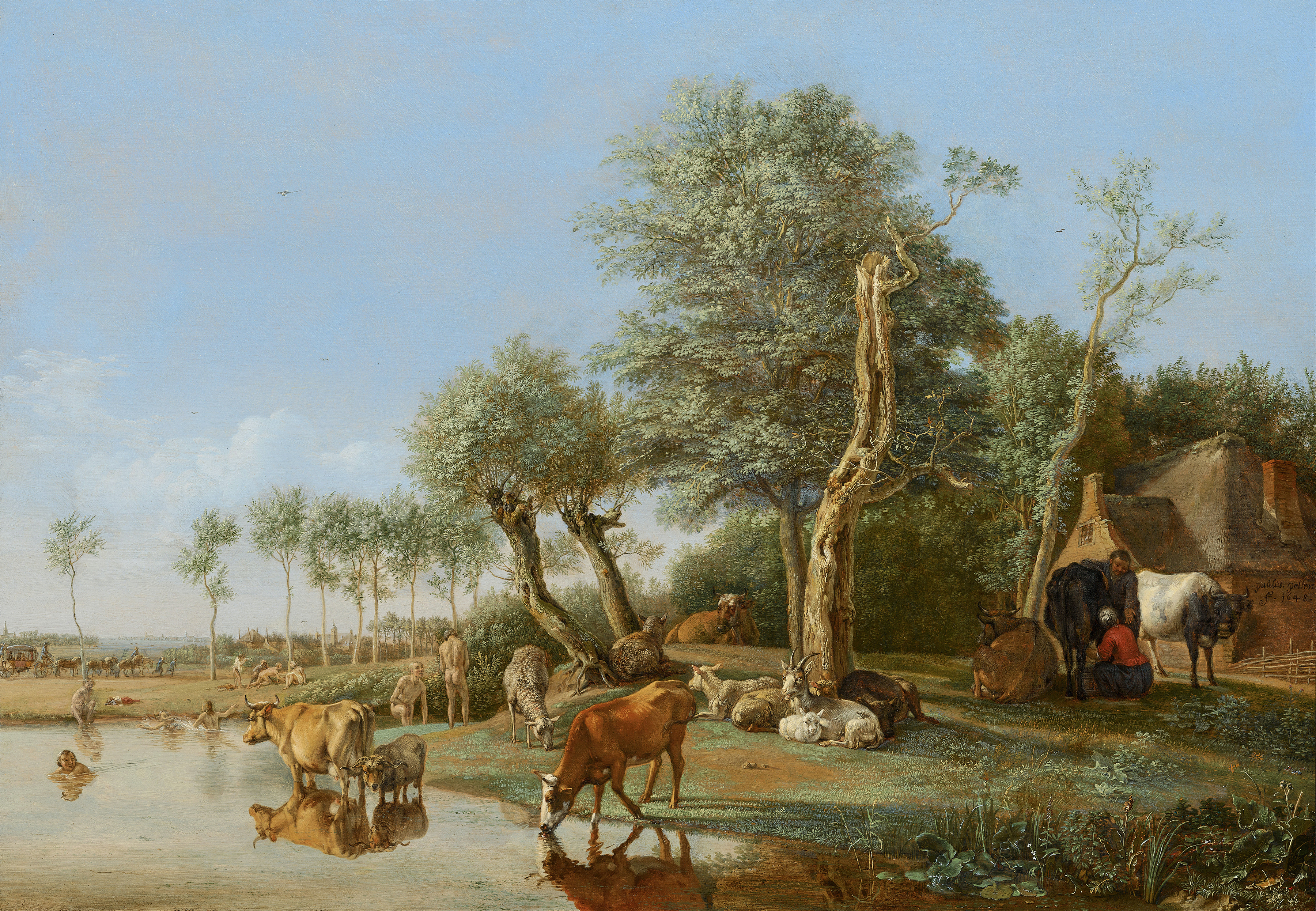
“Sometimes beauty is just pain, disguised in gold.” In the serene swath of the meadow, fragile moments of life unfold beneath the ever-watchful gaze of nature. Look to the center of the canvas, where a cluster of cows grazes peacefully, their rich browns and whites standing in stark contrast to the lush greens surrounding them. Notice how the artist captures the play of light across their coats, highlighting each curve and shadow with a meticulous brushstroke that breathes life into the scene. The vivid hues of the grass pulse with vitality, while distant trees frame the horizon, guiding the eye deeper into the serene landscape.
Yet beneath this idyllic portrayal lies a tension—a quiet fragility that echoes through the luscious greens and heavy clouds above. The juxtaposition of the animals’ robust forms against the soft, ephemeral nature of their meadow hints at a world that is fleeting, where beauty coexists with the inevitability of change. The tranquil setting whispers of life’s cyclical nature, revealing the delicate balance between abundance and loss, an unspoken reminder that this moment, too, shall pass.
Painted in 1653, the artist captured this tranquil yet poignant vision during a time when pastoral scenes flourished in Dutch art. Potter, at the height of his career, sought to elevate the representation of animals, grounding them in a realistic portrayal that resonated with viewers. As Europe faced shifts in socio-economic structures, this serene depiction of agrarian life became not just a celebration of nature but also a reflection on the fragility of existence amidst a changing world.