Landscape with cattle and a woman cleaning a bucket by a stream — History & Analysis
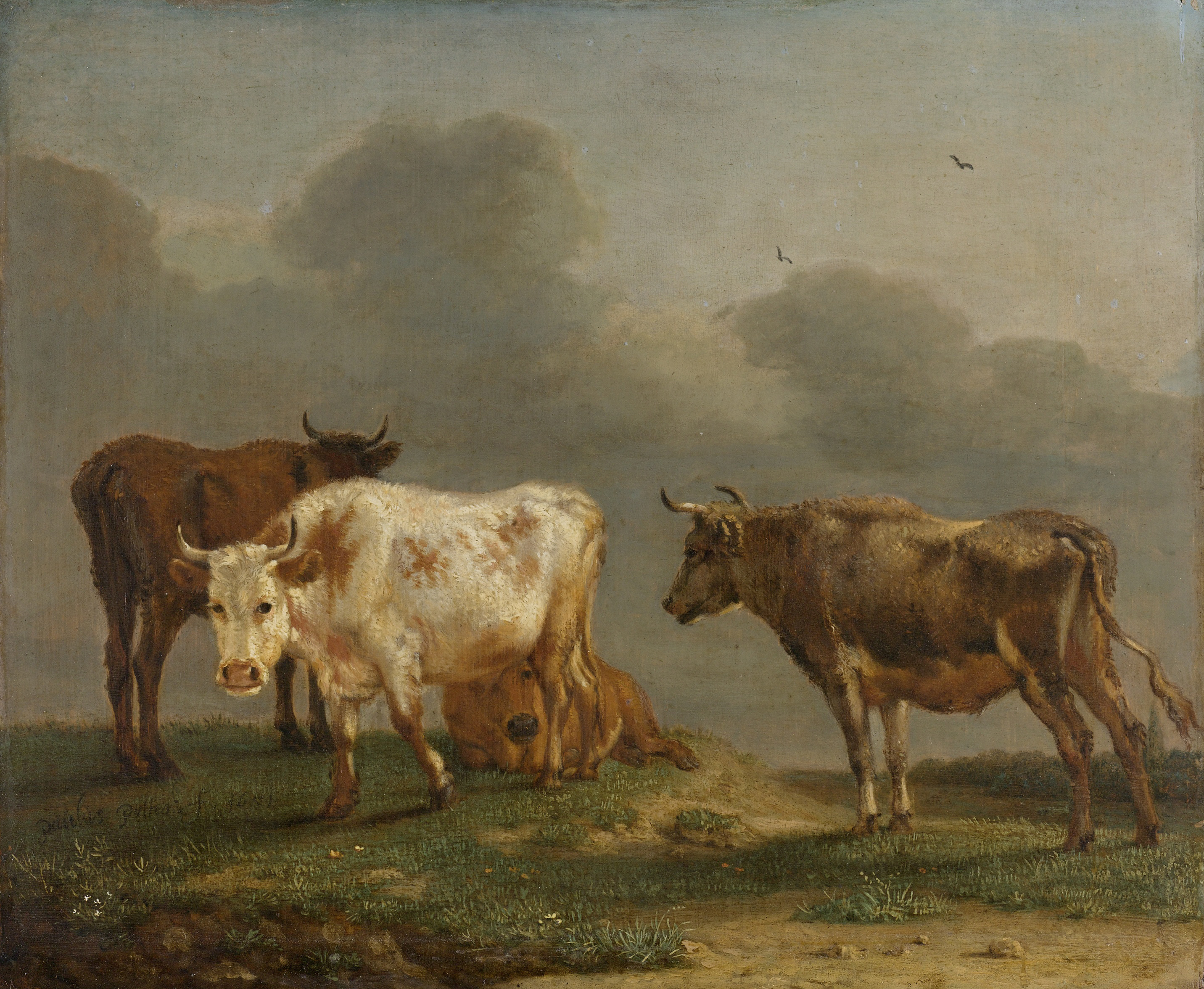
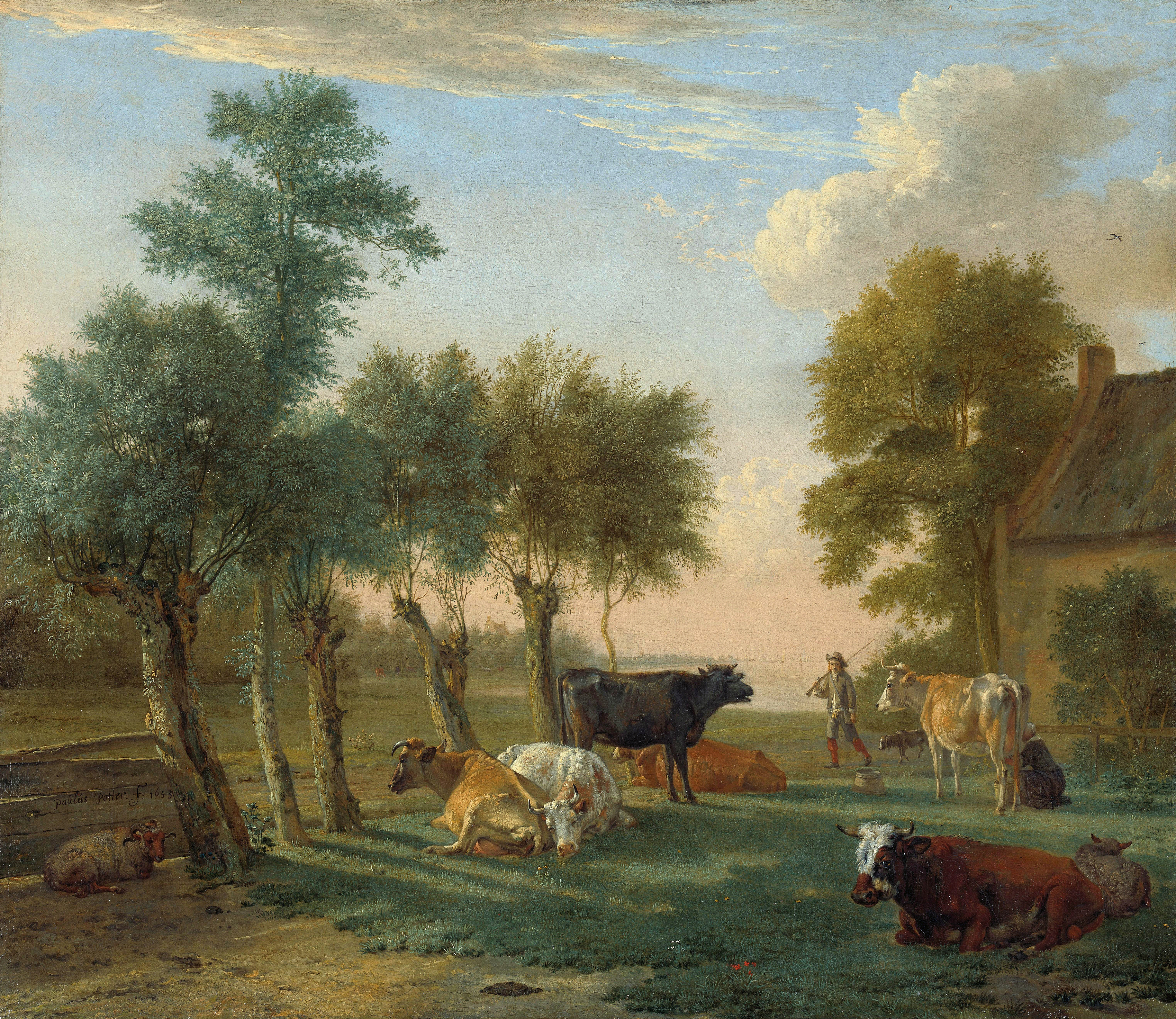
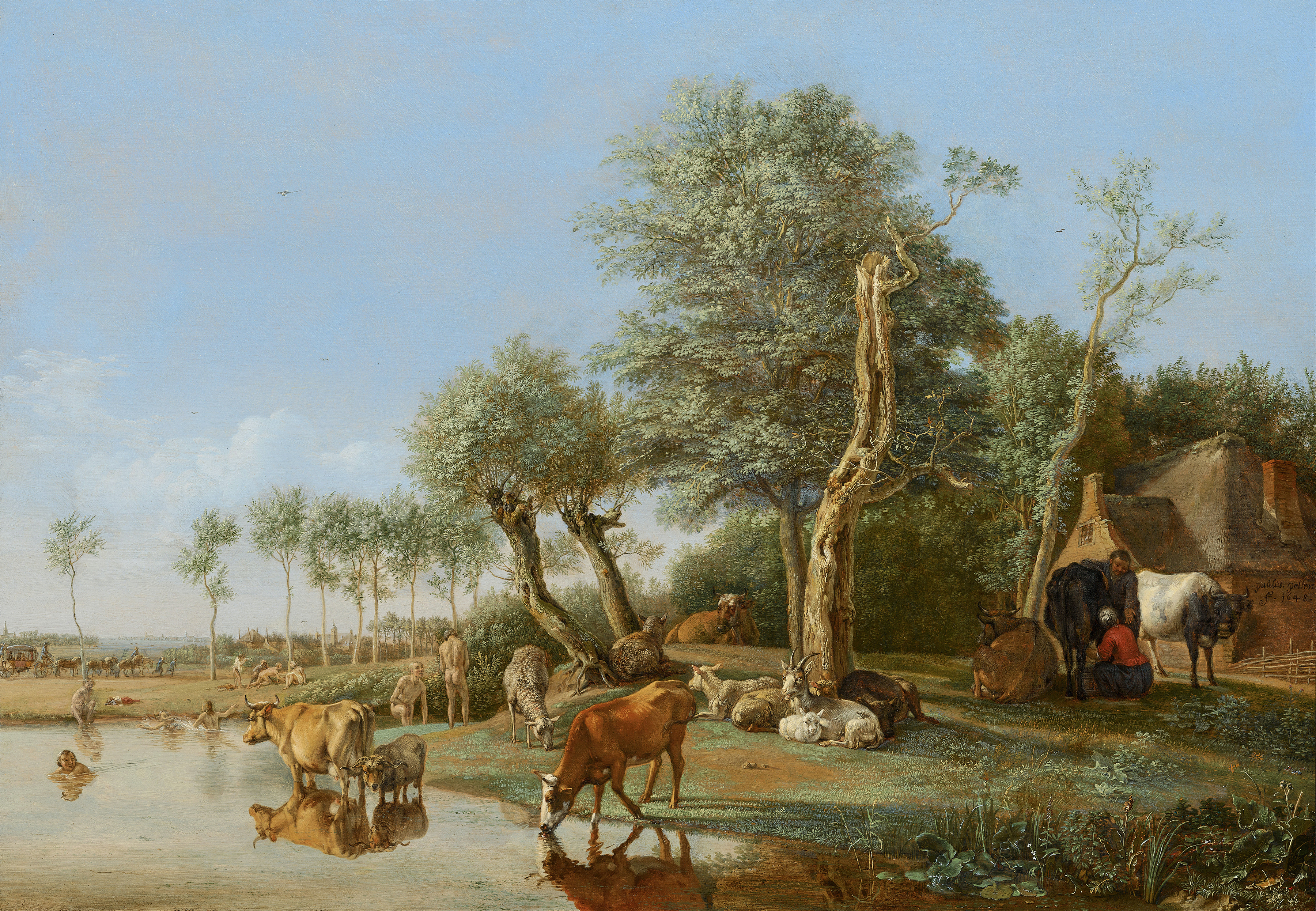
“The canvas doesn’t lie — it simply waits.” In the quiet embrace of nature, innocence finds its home amidst the vibrant strokes of life. Each detail invites contemplation, whispering secrets of a simpler time when the world felt unburdened. Look to the left at the woman, bent gracefully over a bucket, her serene concentration drawing your eye. Notice how the light dances upon the water, reflecting the soft hues of the sky.
The lush greenery frames the scene, contrasting the earthy tones of the cattle grazing peacefully nearby. It's a composition that balances human presence with the serenity of nature, celebrating the harmony between them. Delve deeper into the heart of the piece: the cattle symbolize pastoral tranquility, while the woman’s act of cleaning suggests diligence and nurturing. This juxtaposition of the mundane with the idyllic encapsulates the cycle of life in rural existence.
The gentle ripples in the stream echo an underlying current of simplicity and purity, enhancing the theme of innocence persisting in a chaotic world. In 1647, while in Amsterdam, Potter was captively observing the natural world around him. The Baroque art movement was witnessing a shift, emphasizing realism and the beauty of everyday life. This piece came at a time when artists began to explore more intimate connections with their subjects, reflecting both personal experiences and broader societal changes, rooted in the tranquil rhythms of country life.