A Glimpse into Hell, or Fear — History & Analysis
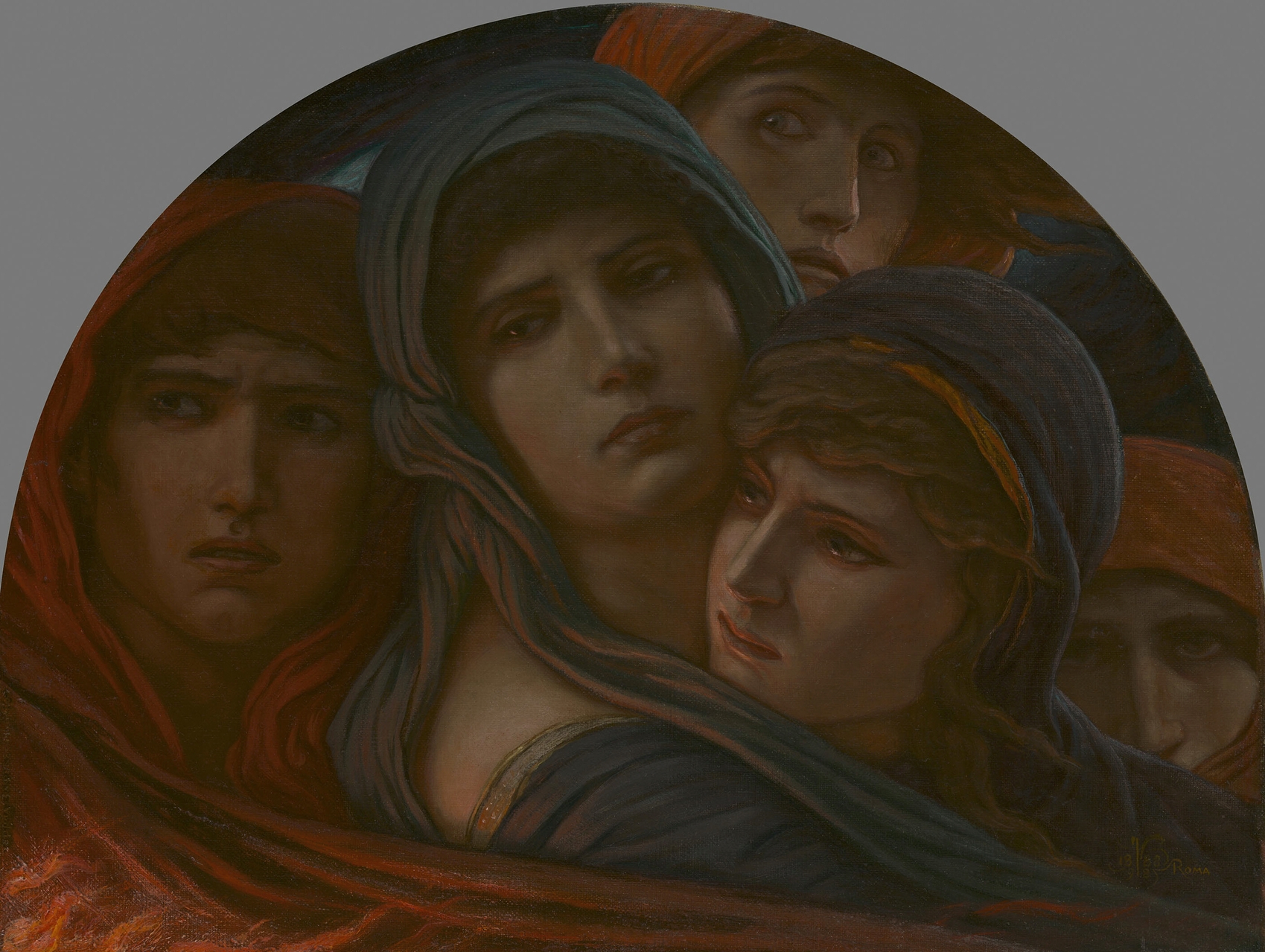
Is this a mirror — or a memory? In A Glimpse into Hell, or Fear, the viewer is invited to confront the darkest corners of the psyche, where dread and fascination entwine. Look closely at the central figure, a shrouded man kneeling in anguish. His silhouette looms large against a turbulent background painted in ominous reds and blacks, evoking the very essence of despair. The swirling forms around him seem to pulsate with energy, leading the eye towards the chaotic abyss.
Notice how the masterful use of chiaroscuro not only highlights the figure's pallor but also casts shadows that whisper of the secrets lurking in the darkness. This interplay of light and shadow suggests a haunting presence, one that challenges the viewer's comfort with their own fears. In this haunting tableau, the contrast between the serene face of the man and the chaos behind him speaks to a profound emotional tension. The encroaching flames and ghostly shapes hint at the struggles within — a battle between hope and despair, life and death. The figure’s bowed head suggests submission to these inner demons, while the intensity of the colors invites a sense of awe and horror, urging viewers to reflect on their own vulnerabilities.
Every brushstroke seems to echo a silent scream, reminding us that fear can often be both paralyzing and enlightening. Elihu Vedder created this unsettling piece between 1888 and 1898, during a time when the Symbolist movement was gaining momentum. Living in Rome, Vedder was deeply influenced by the themes of mysticism and the subconscious, which permeated the artistic landscape of his era. As he navigated his own complex emotions, he transformed personal turmoil into a visual exploration of universal fears, capturing a moment in art history that resonates with profound honesty and raw emotion.