Near Villa Ansidei Perugia, Sunset — History & Analysis
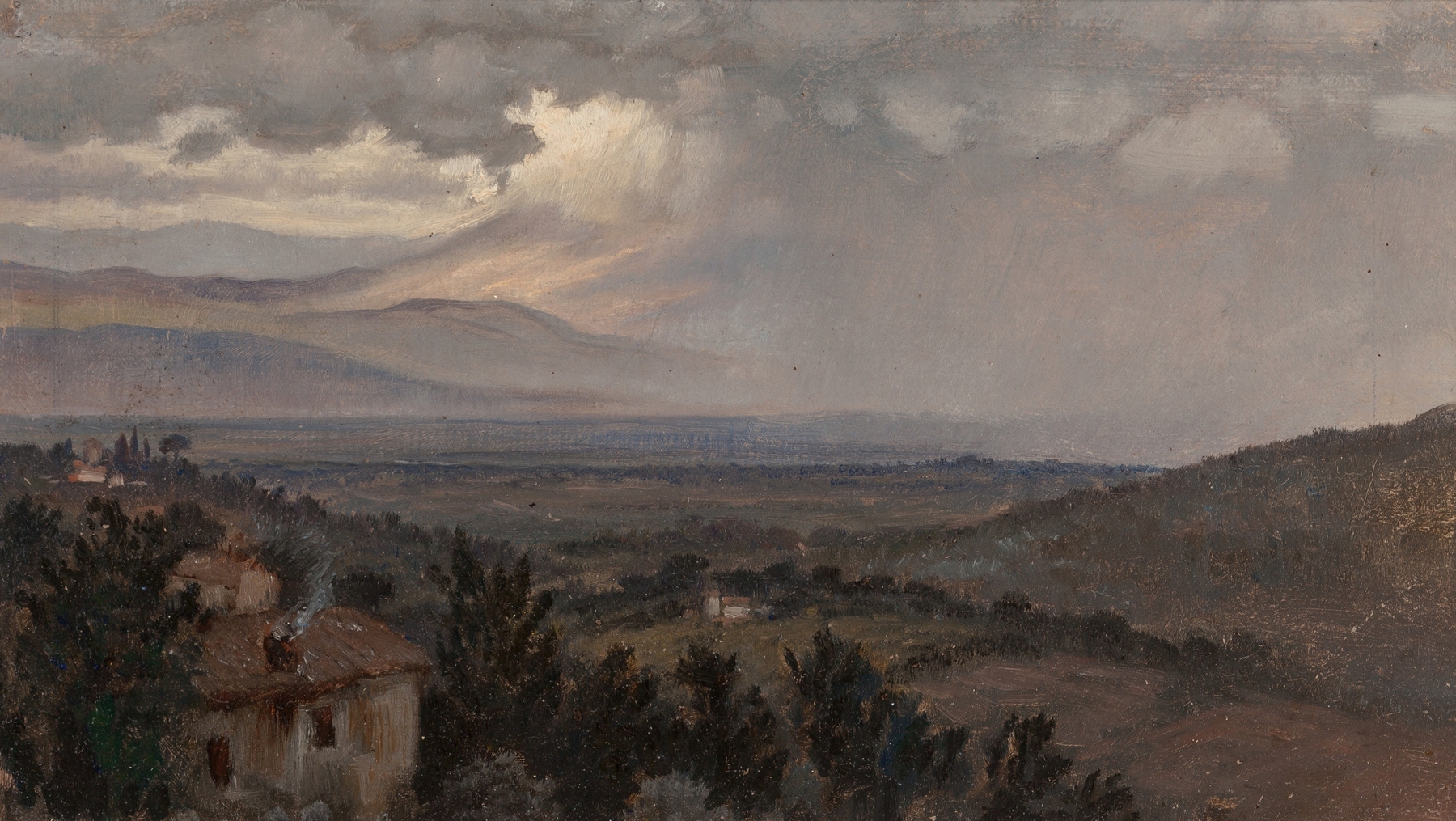
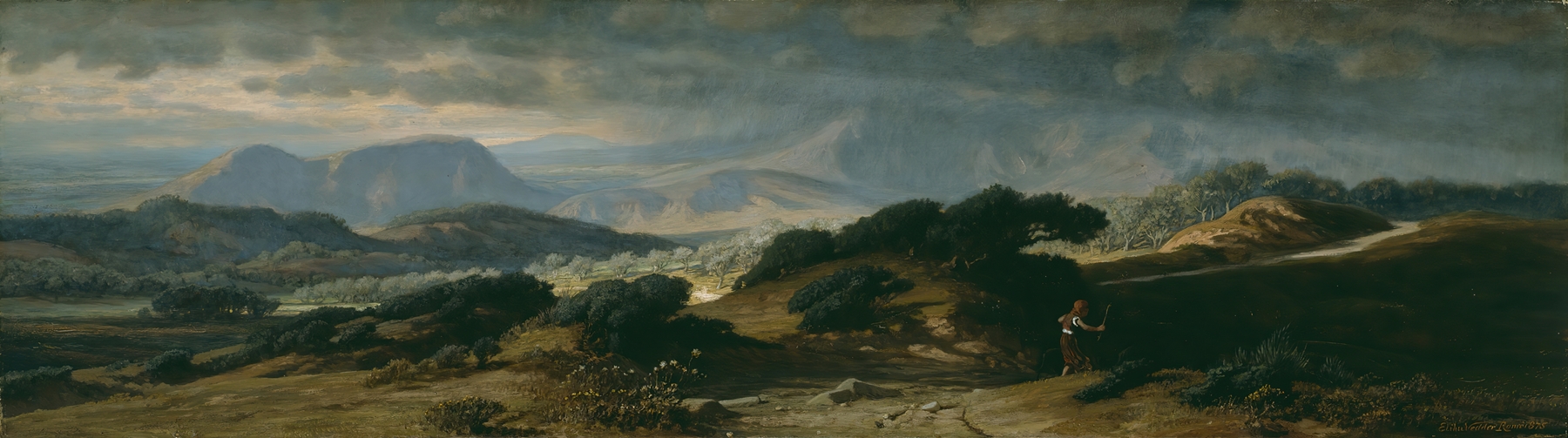
Could beauty survive in a century of chaos? In Near Villa Ansidei Perugia, Sunset, the answer whispers through the delicate interplay of color and light. Look closely at the horizon, where the sun melts into a rich tapestry of oranges and purples. There, the sky becomes a canvas alive with brushstrokes, each hue reflecting a fleeting moment. The silhouettes of distant hills emerge in soft contrast, their dark outlines grounding the scene while the vibrant sky ignites the viewer's imagination.
The meticulous rendering of the landscape draws your eye towards the gentle ripples of water in the foreground, inviting contemplation and reflection. The painting encapsulates a duality; the tranquility of nature juxtaposed against the tumult of human emotion. The serene sunset suggests a fleeting peace, yet the surrounding darkness hints at uncertainty and unrest. Each stroke carries the weight of time, suggesting that amid beauty lies an undercurrent of desperation, a longing for stability in a world of shifting realities.
The stillness evokes a moment that is both ephemeral and eternal, urging the observer to pause, reflect, and feel. Elihu Vedder created this work between 1873 and 1880 while living in Italy, a period marked by personal exploration and the burgeoning American art scene. He was part of a movement that sought to blend the emotive qualities of Romanticism with the emerging Symbolist ideals. As Europe faced social and political upheaval, Vedder's art emerged as a sanctuary where beauty and meaning coalesced, capturing the essence of a world on the brink of change.