Storm in Umbria — History & Analysis
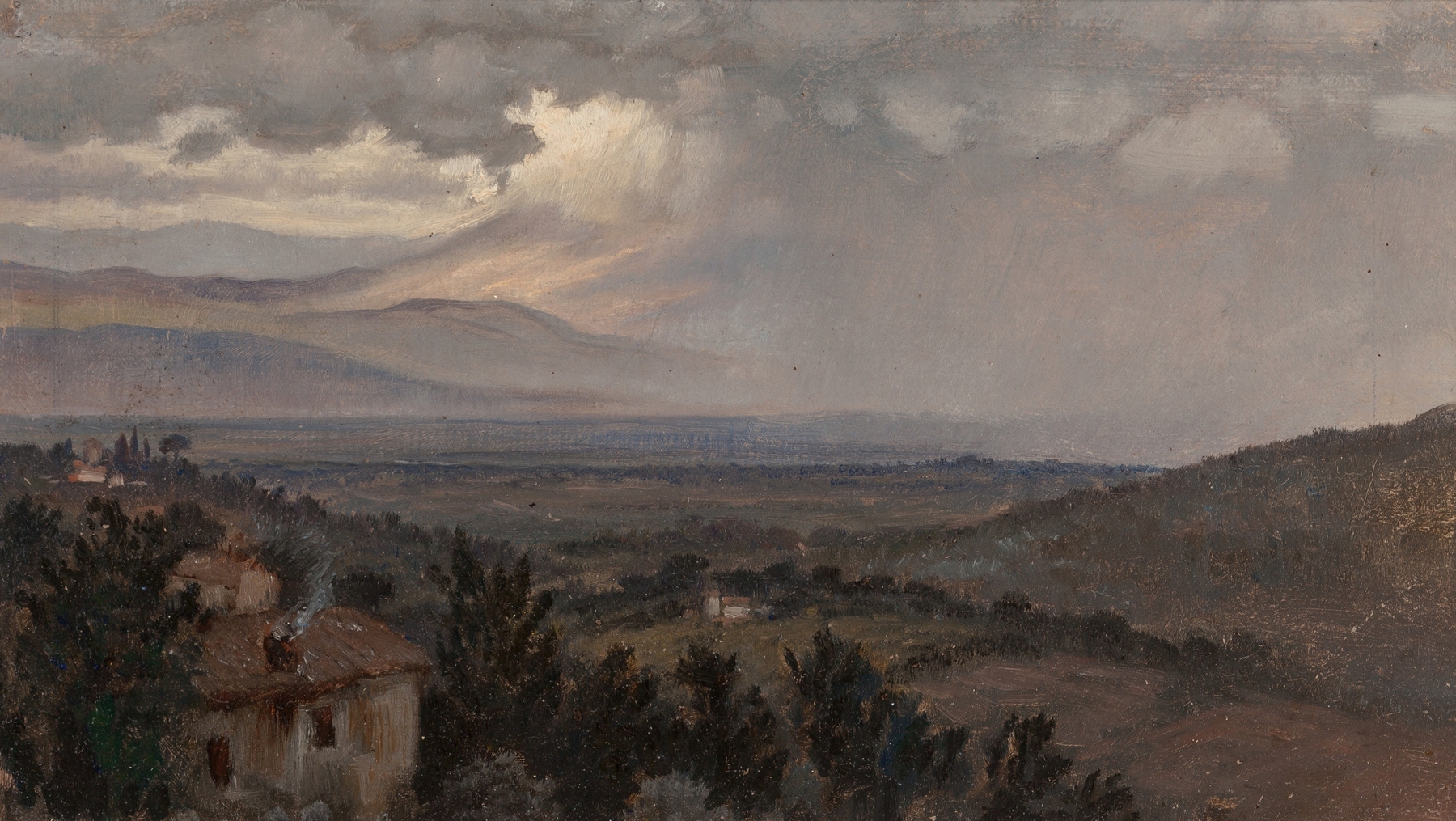
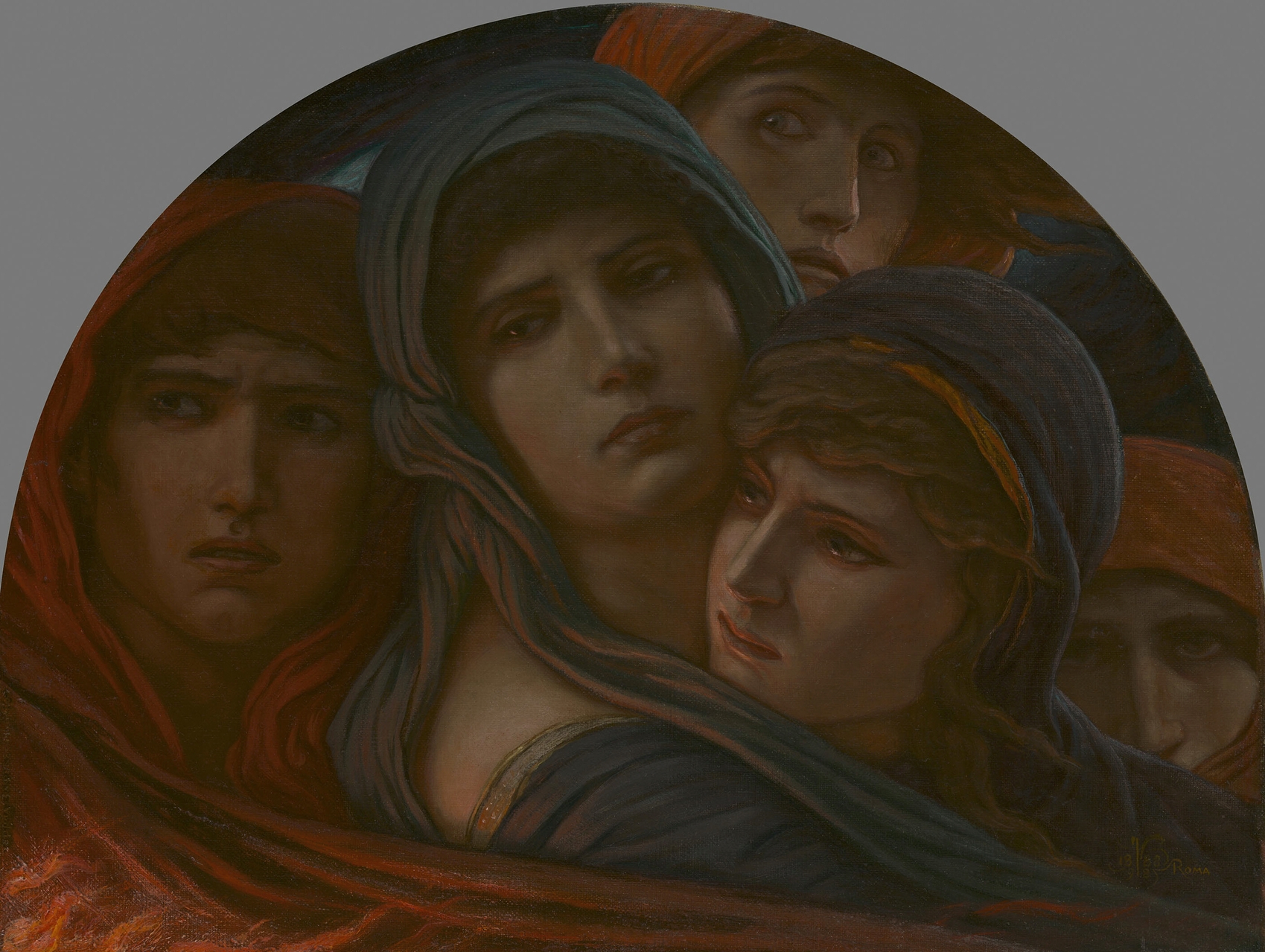
Did the painter know this moment would outlive them? In Storm in Umbria, the essence of creation is captured not just in a fleeting moment, but in the very spirit of nature's tumultuous beauty. Look to the left at the dark, swirling clouds that dominate the sky, their heavy forms almost tangible. The artist employs a palette of deep grays and greens, evoking the foreboding atmosphere of an impending storm.
To the right, light breaks through sporadically, illuminating the rugged landscape below, where the hills meet the tumultuous sky. Notice how the brushwork varies — thick, expressive strokes in the clouds contrast with the smoother strokes of the distant horizon, creating a dynamic tension that pulls the eye throughout the canvas. The emotional weight of this painting lies in its contrasts: the chaos of the storm versus the serenity of the land, and the uncertainty of the weather against the steadfastness of the earth. The impending storm serves as a metaphor for life’s unpredictability, while the resilient landscape reminds us of the enduring nature of existence.
The interplay of light and dark further emphasizes the theme of creation — life emerging from chaos, renewal born from destruction. Elihu Vedder painted Storm in Umbria in 1875, during a period when he was heavily influenced by Romanticism and its celebration of nature's power. Living in Rome at the time, he was immersed in a world of artistic exploration, drawing inspiration from Italian landscapes and the dramatic interplay of light. This piece reflects not only his personal artistic evolution but also the broader currents of 19th-century art, as artists began to embrace emotional depth and the sublime beauty of the natural world.