Nile Journey,No. 22 — History & Analysis
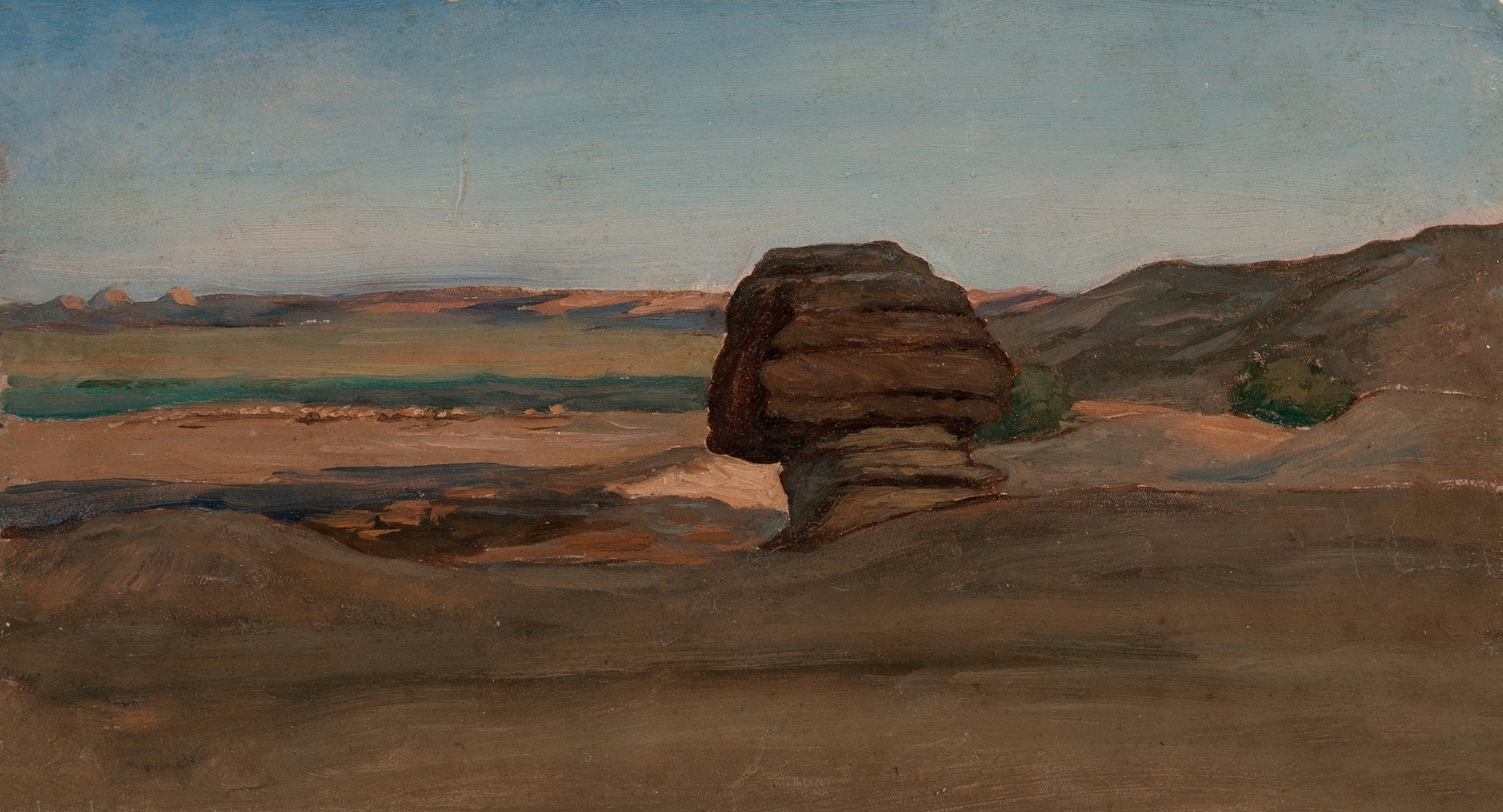
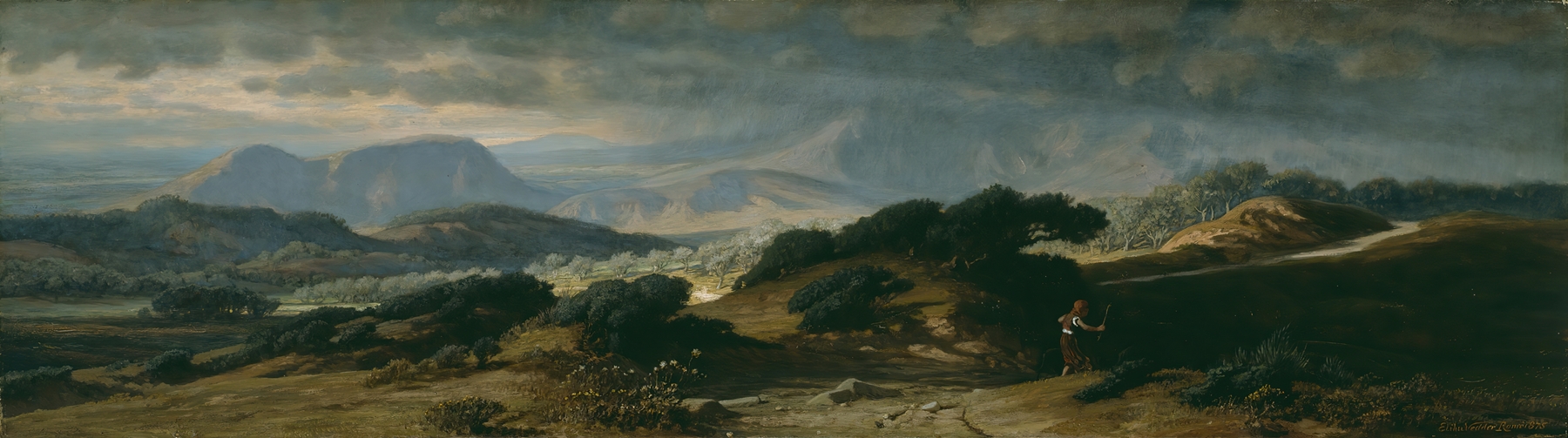
Could a single brushstroke hold eternity? In Nile Journey, No. 22, the fleeting essence of a moment resonates with the profound weight of destiny. Focus on the swath of golden sand that unfolds beneath the luminous sky, guiding your gaze diagonally across the canvas. Notice how Vedder employs rich ochres and soft blues, creating a dance between earth and sky that speaks to the duality of existence.
The figures, small yet significant, traverse this vast expanse, their silhouettes echoing a pilgrimage marked by longing and discovery. The gentle gradients suggest time slipping away while anchoring us in a particular journey. Dig deeper, and the painting reveals layers of meaning hidden within its serene surface. The travelers are more than mere wanderers; they embody the search for purpose, their journey a metaphor for life's path. The interplay of light and shadow hints at the struggles interwoven with the pursuit of destiny, while the rolling dunes symbolize both obstacles and the passage of time.
This tension between aspiration and reality lingers, drawing us into the contemplative journey of the soul. In 1890, Vedder painted this work during a period of personal introspection while living in Italy. At a time when the art world was shifting towards realism and impressionism, he remained captivated by symbolism and the mystical aspects of life. The themes of exploration and destiny reflected not only his artistic vision but also the existential questions that permeated the era.