A market before Nusretiye Camii mosque in Tophane, Constantinople — History & Analysis
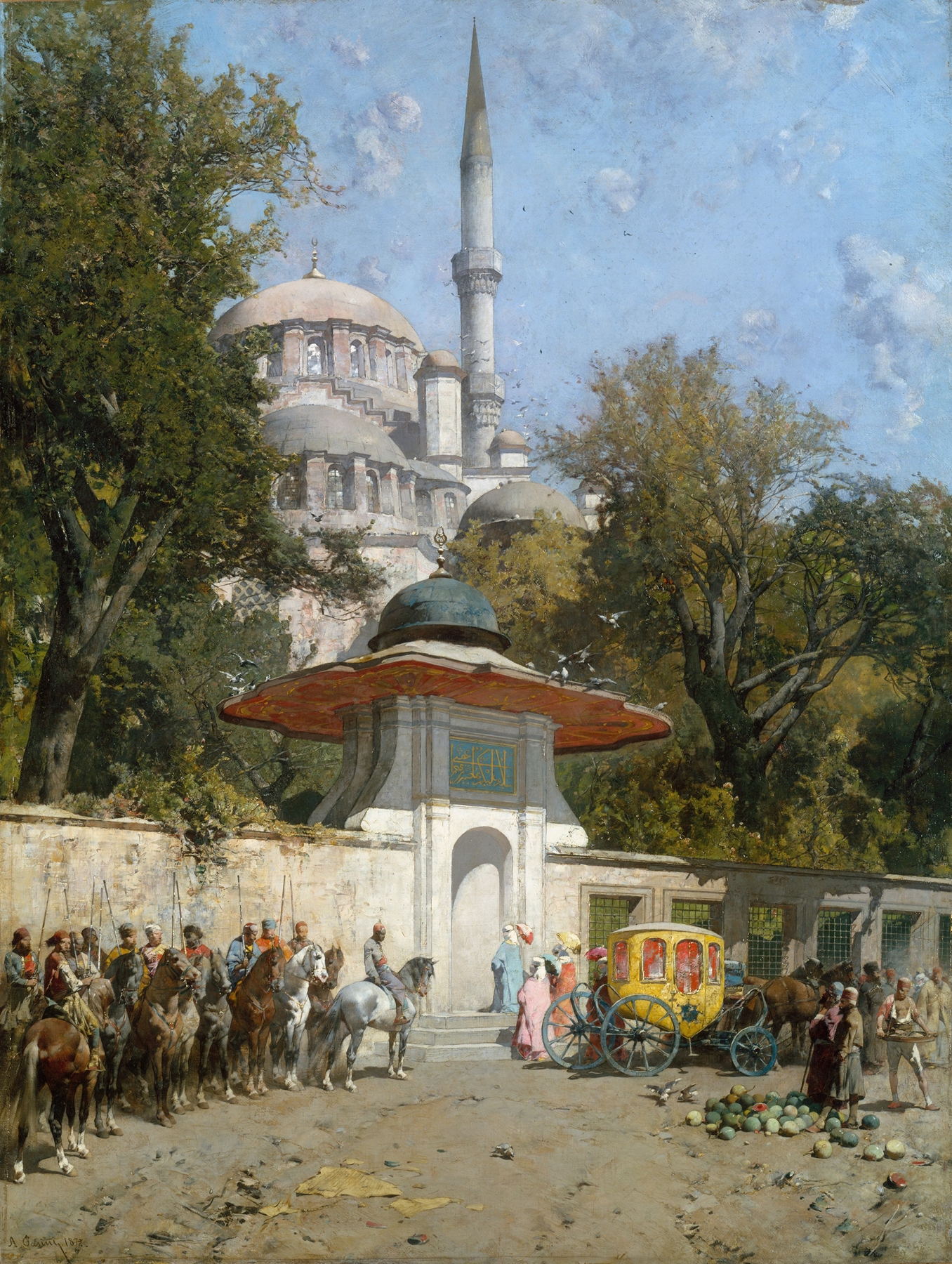
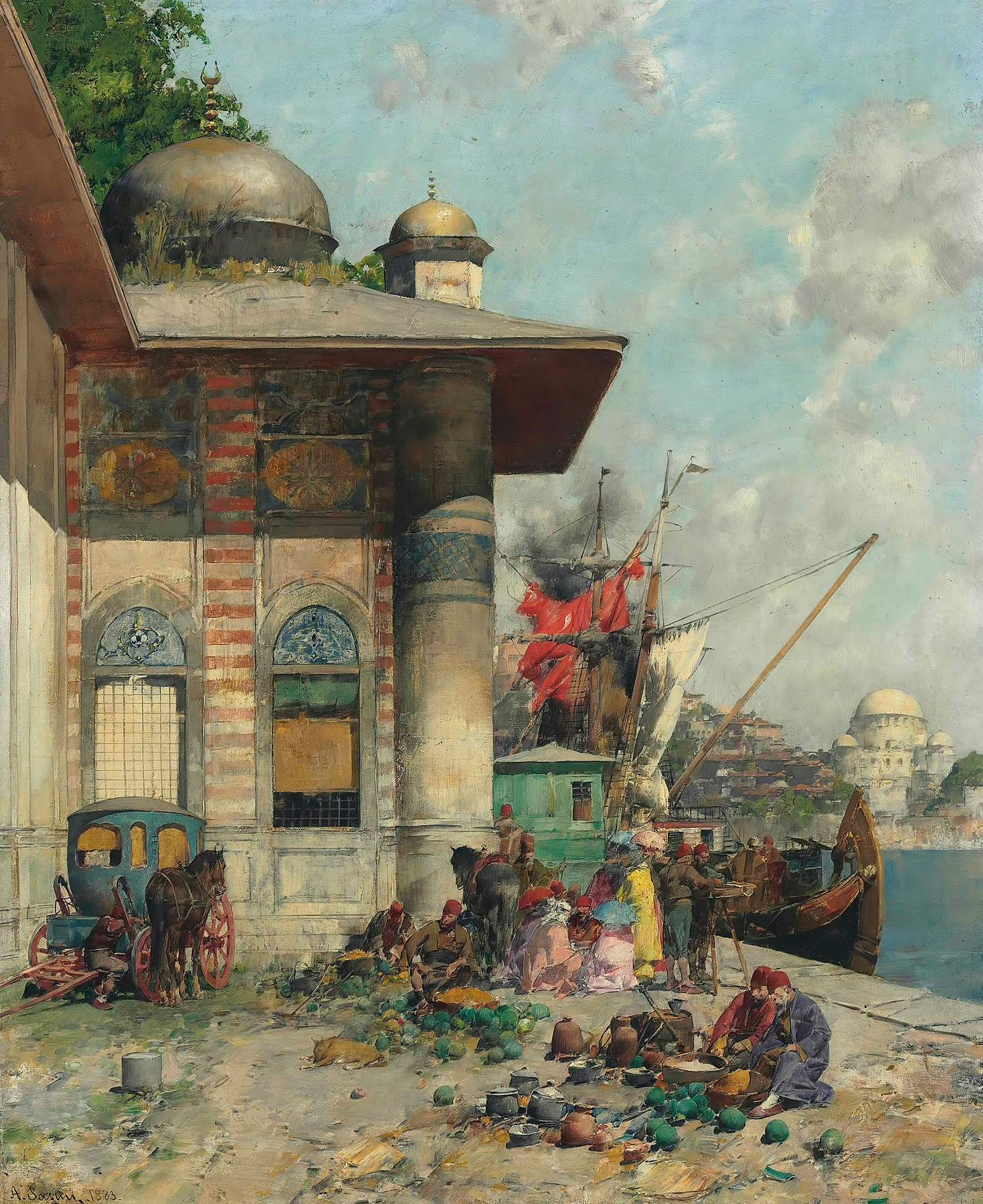
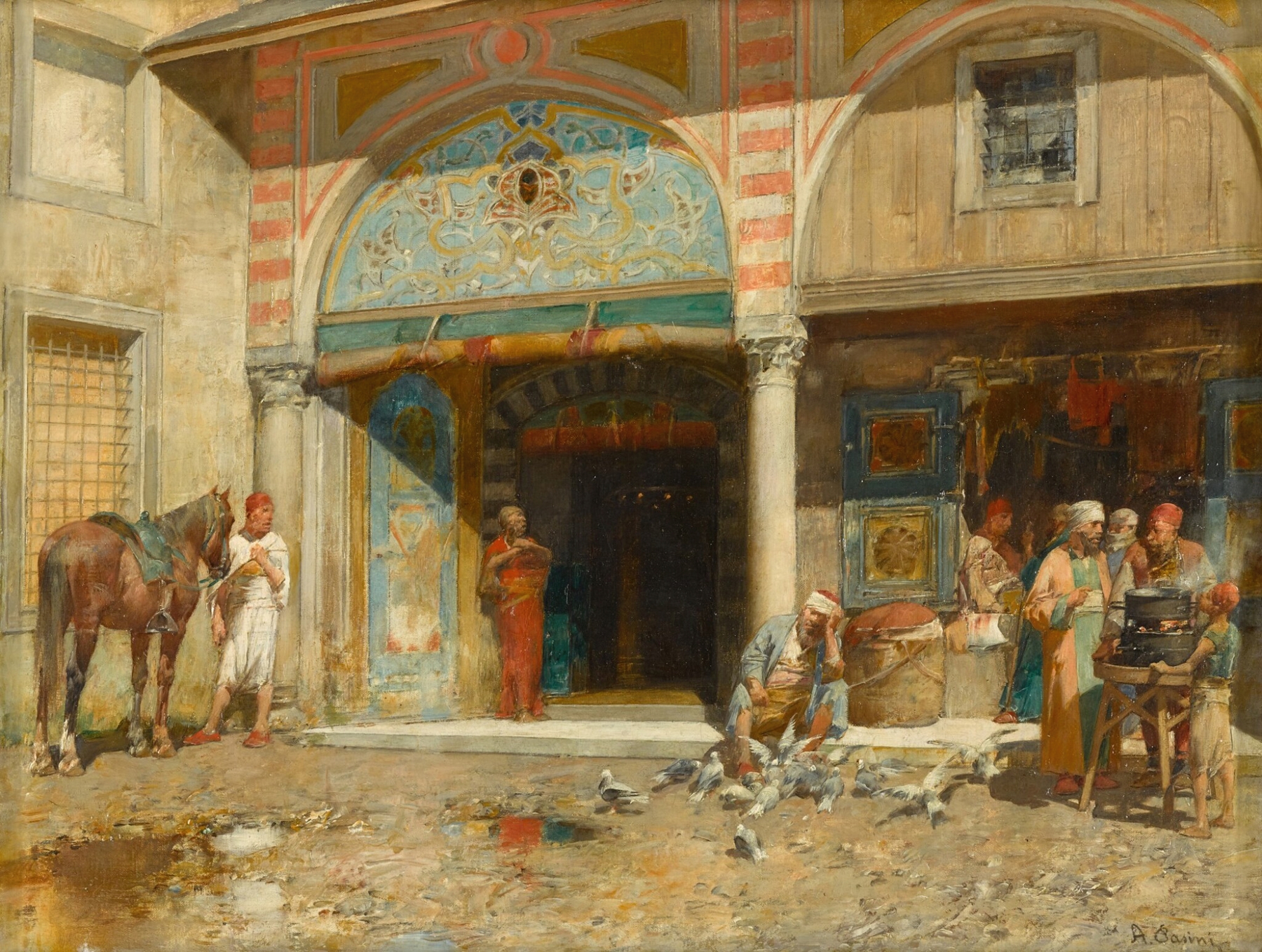
What secret hides in the quiet of the canvas? In A market before Nusretiye Camii mosque in Tophane, Constantinople, a world unfolds, revealing the delicate dance between reality and illusion. Look to the left where a vivid array of colors leap from the market stalls, each item a story in itself. Notice how the golden sunlight spills over the scene, illuminating the faces and fabrics with a warm glow that invites you closer.
The artist employs a soft palette, harmonizing earthy tones with splashes of vibrancy, guiding your gaze toward the architectural marvel of the mosque that looms majestically in the background. As you absorb the details, consider the contrasts at play: bustling life amidst the stoic presence of the mosque, the interplay of light casting both shadows and highlights, suggesting a world alive with motion yet tethered to tradition. The merchants engage in commerce, their gestures hinting at animated negotiations, while the serene structure behind them serves as a reminder of constancy and faith in a changing society. Every brushstroke whispers a story of the everyday against the backdrop of sacred architecture.
Created in 1870 during his time in Constantinople, Pasini was deeply immersed in the rich cultural and artistic tapestry of the city. This period marked a growing interest in Orientalism among Western artists, as they sought to capture the allure of Eastern landscapes and lifestyles. The artist’s personal journey through this vibrant metropolis informed his depiction, offering a glimpse not only into the market’s bustle but also into the broader dialogue between East and West.