Outside the Mosque — History & Analysis
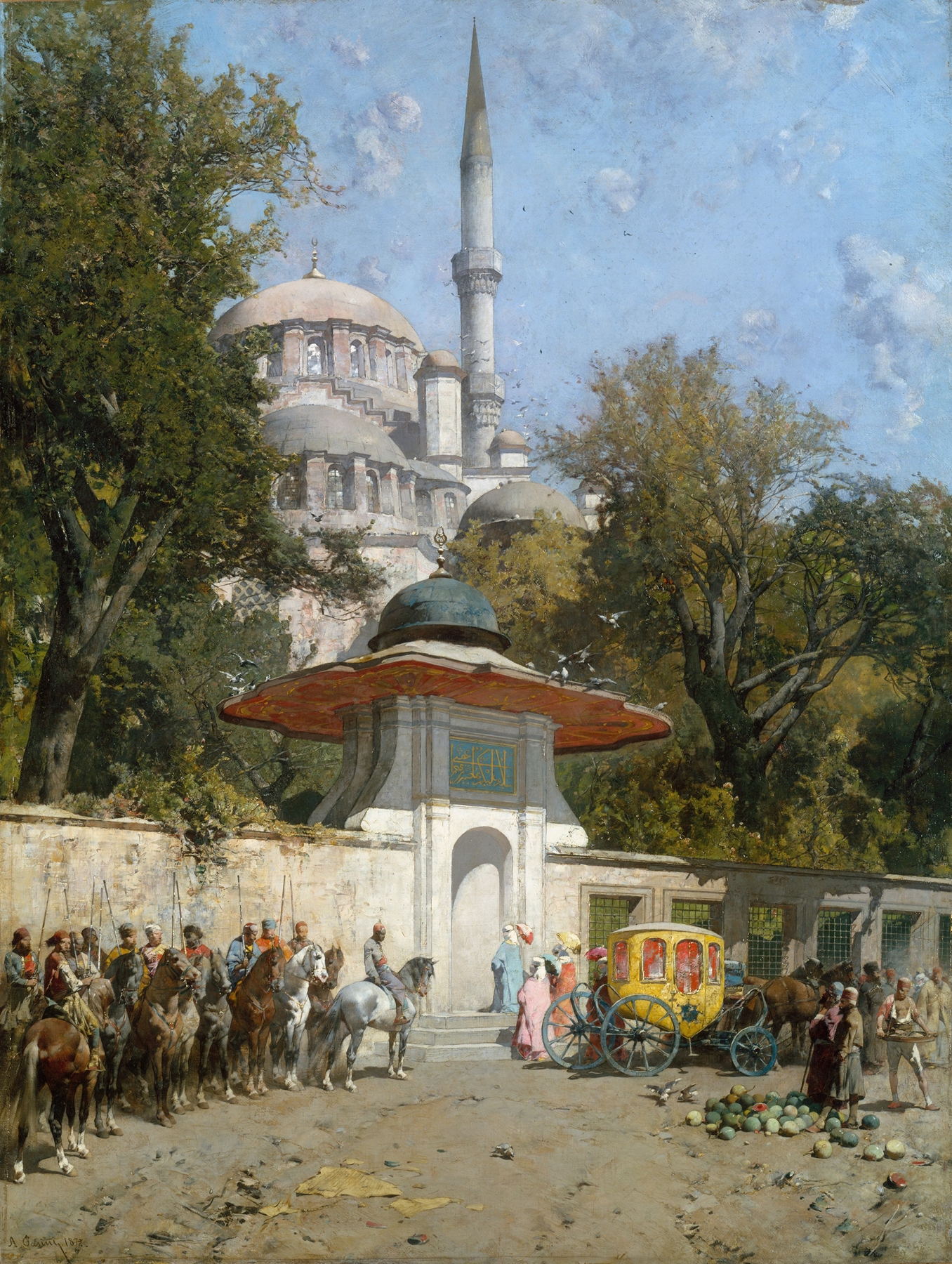
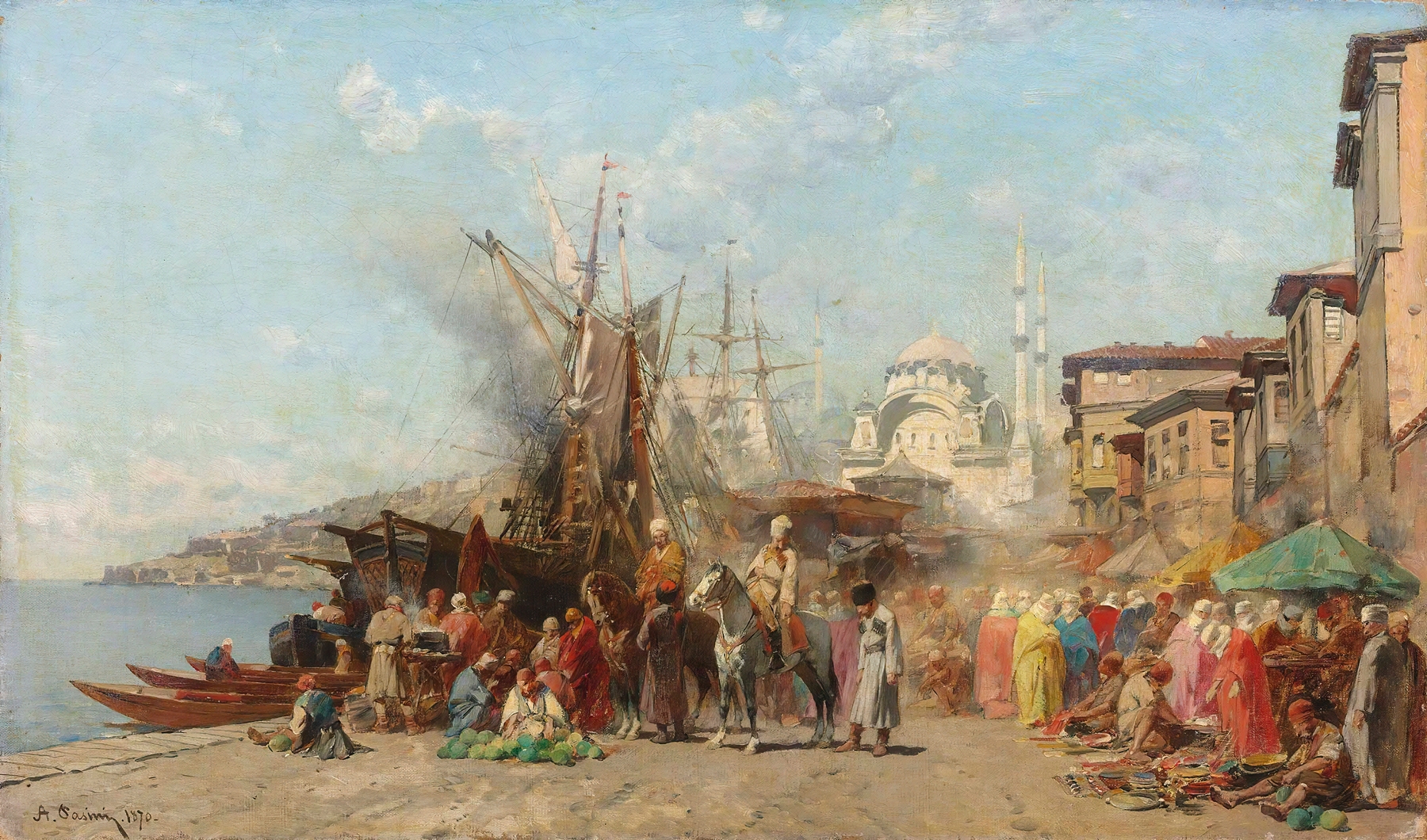
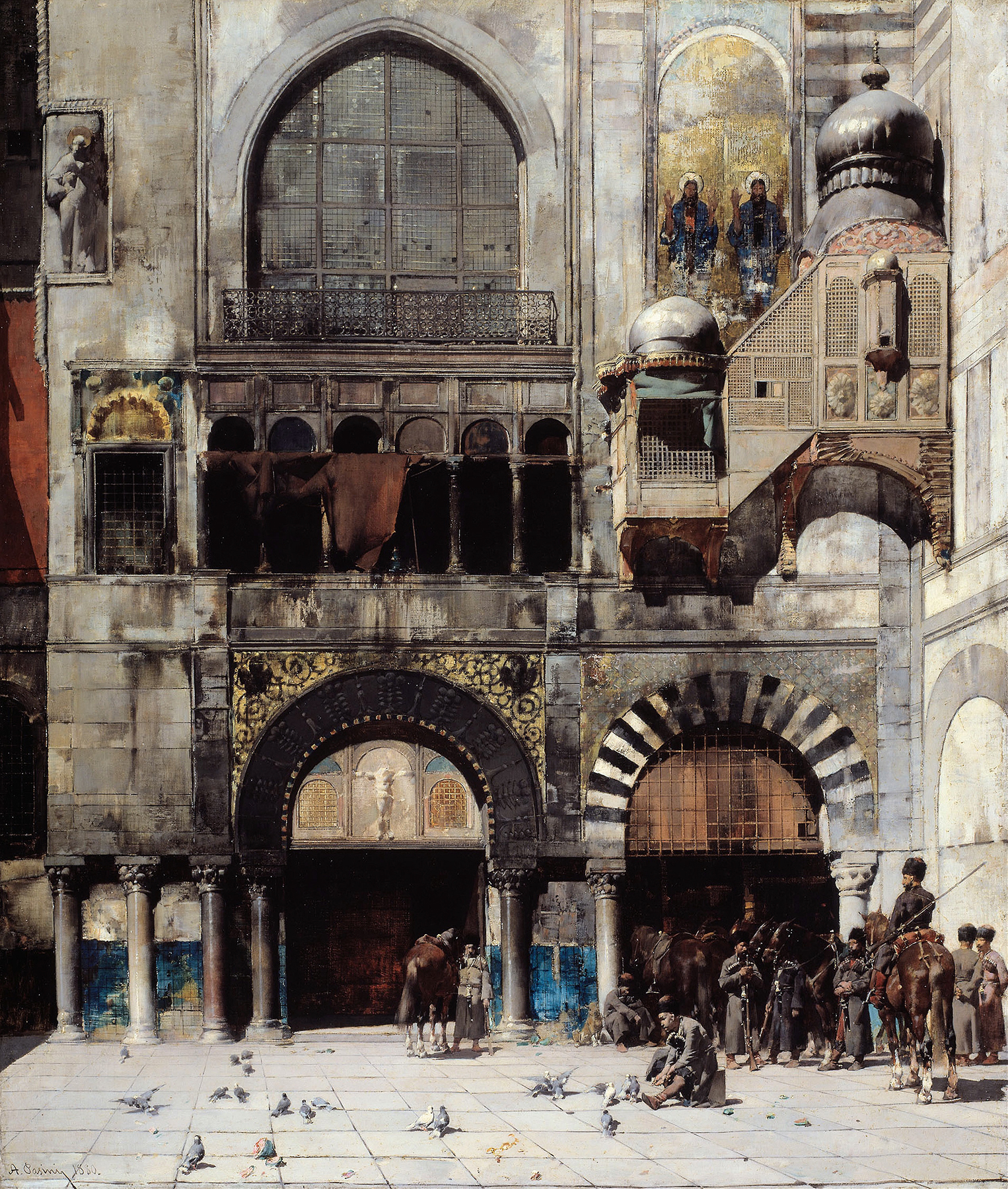
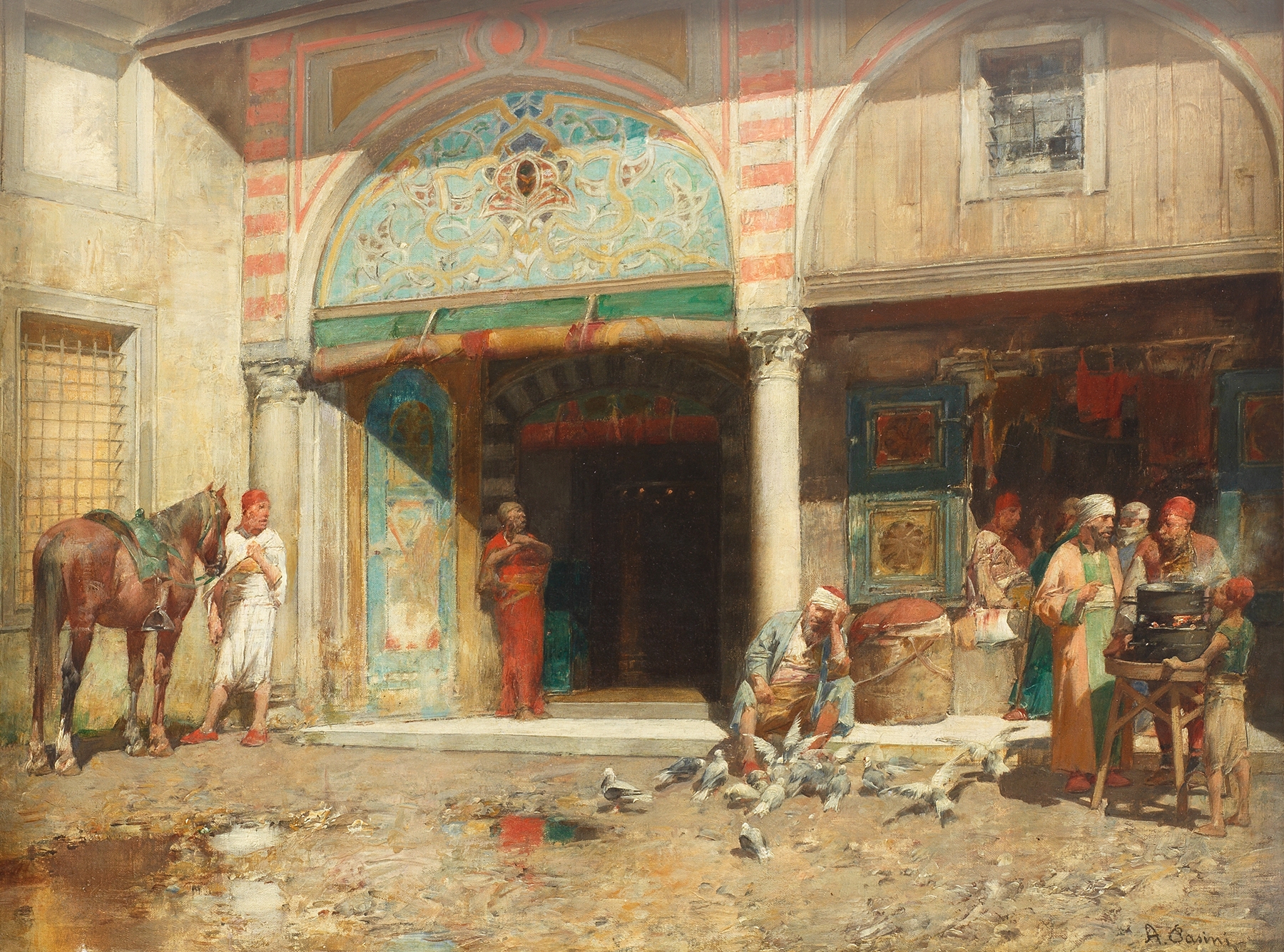
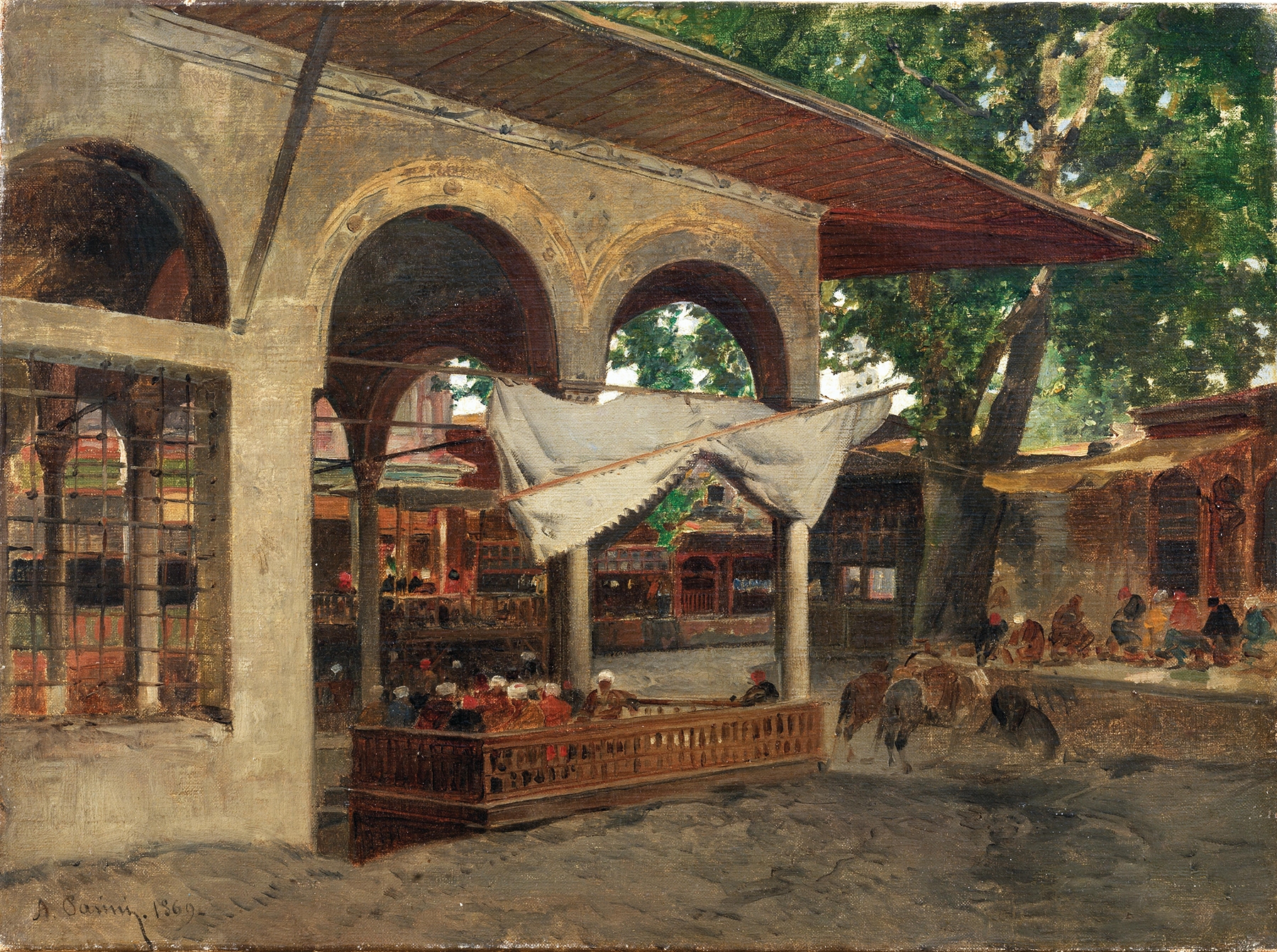
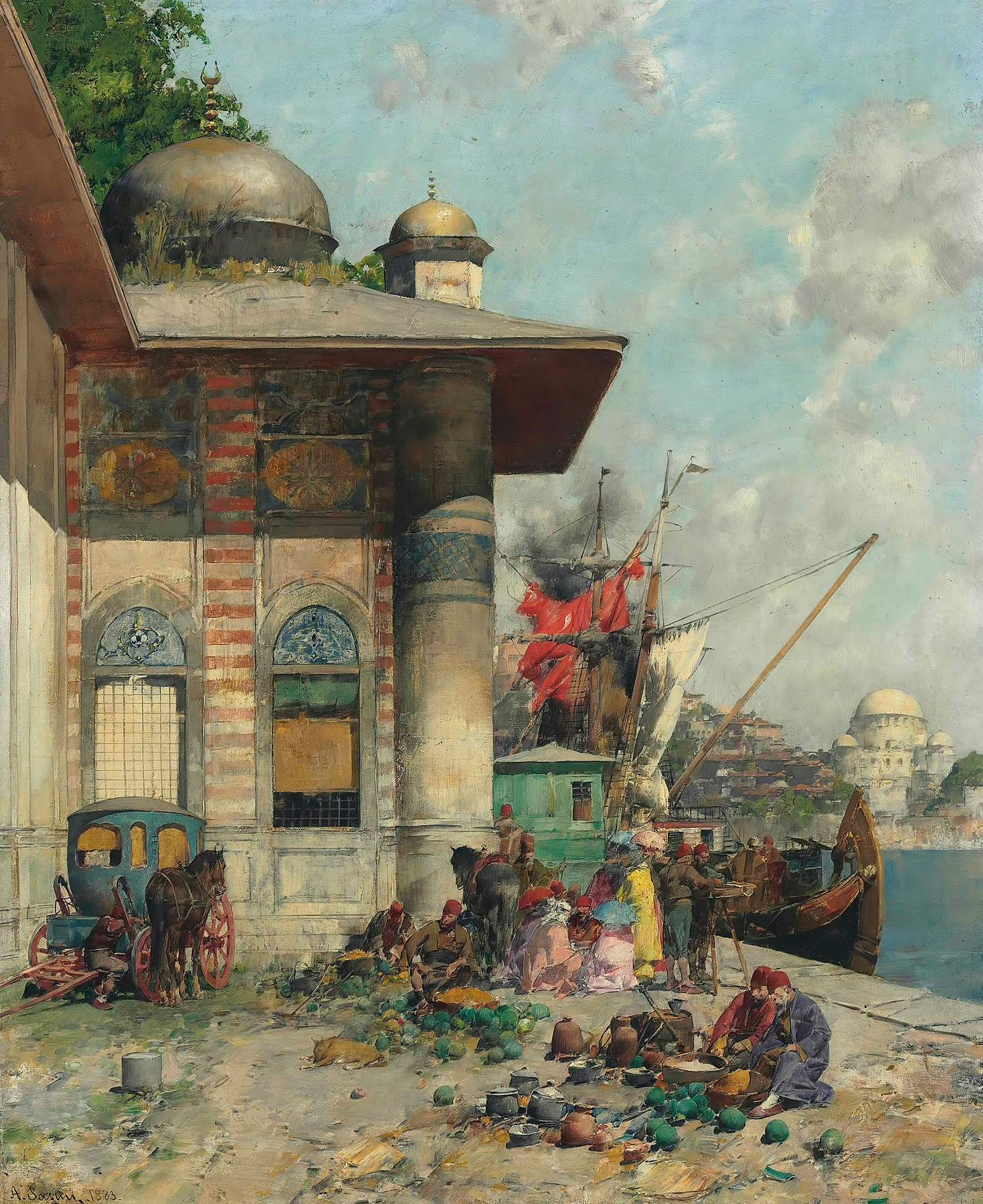
What secret hides in the quiet of the canvas? A stillness envelops the viewer, inviting reflection and wonder. Focus on the intricate patterns adorning the architectural forms that dominate the composition. The delicate interplay of light and shadow breathes life into the scene, enhancing the warm earth tones that evoke a sense of history and solace.
Notice how the figures, draped in flowing garments, seem to melt into the serene backdrop, their gestures fluid yet purposeful, suggesting a deep connection to the sacred space. Delve into the contrast between the vibrant hues of the mosque's façade and the muted tones of the figures—each element converging to create a dialogue between the sacred and the everyday. The stillness in the air is palpable, yet there is a richness in the moment that speaks volumes: a shared reverence for tradition and spirituality may linger unspoken among those present. The artist subtly captures the awe that such a setting inspires, inviting the viewer to ponder the stories that unfold within its walls.
Alberto Pasini painted this piece during a period when he was deeply influenced by his travels through the Middle East. Working in the late 19th century, he aimed to convey the exotic allure and cultural richness of the regions he encountered. His dedication to capturing architectural beauty and human emotion reflects a time when Orientalism was prevalent in art, blending reality with romantic idealism.