Circassian Cavalry Awaiting their Commanding Officer at the Door of a Byzantine Monument — History & Analysis
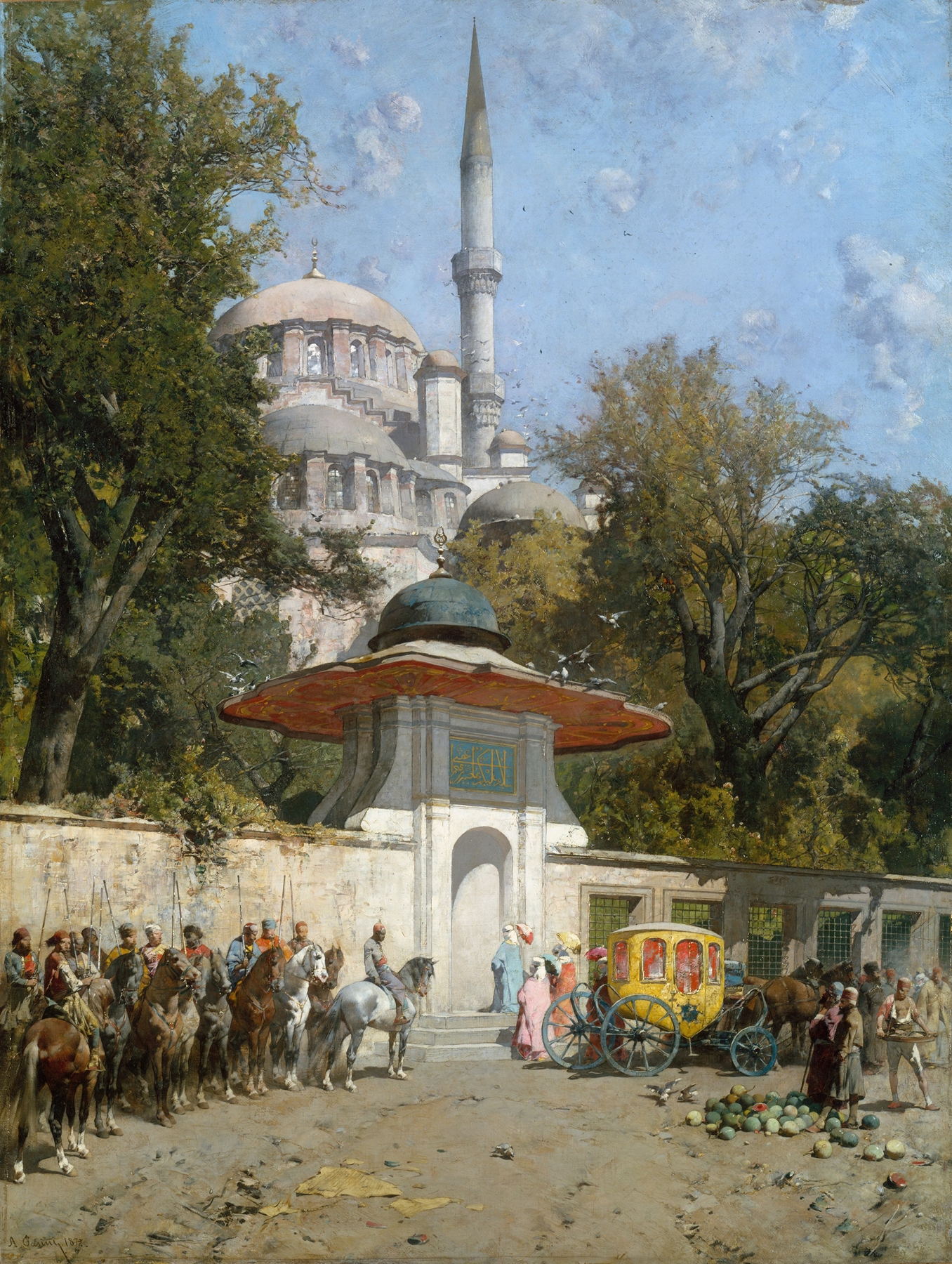
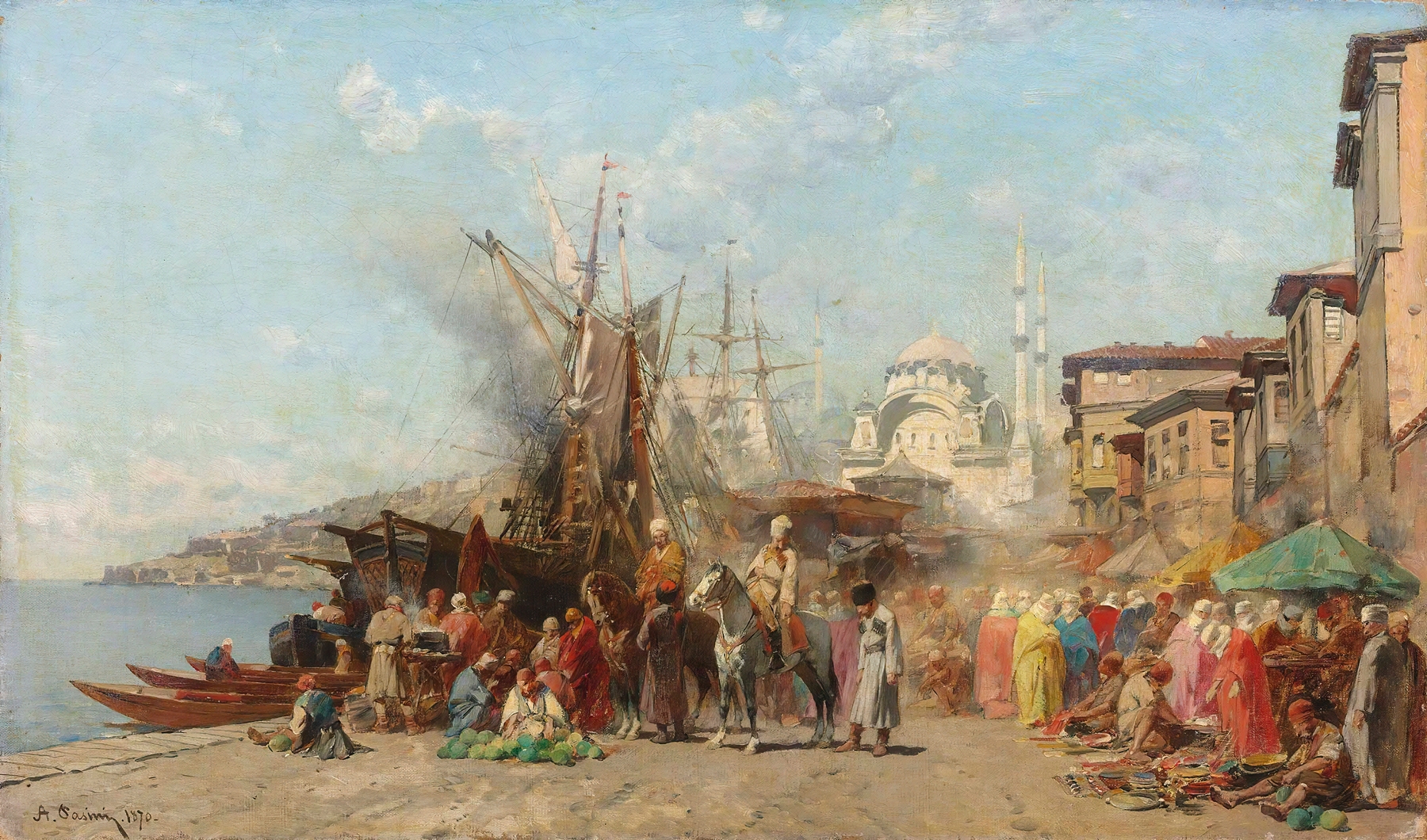
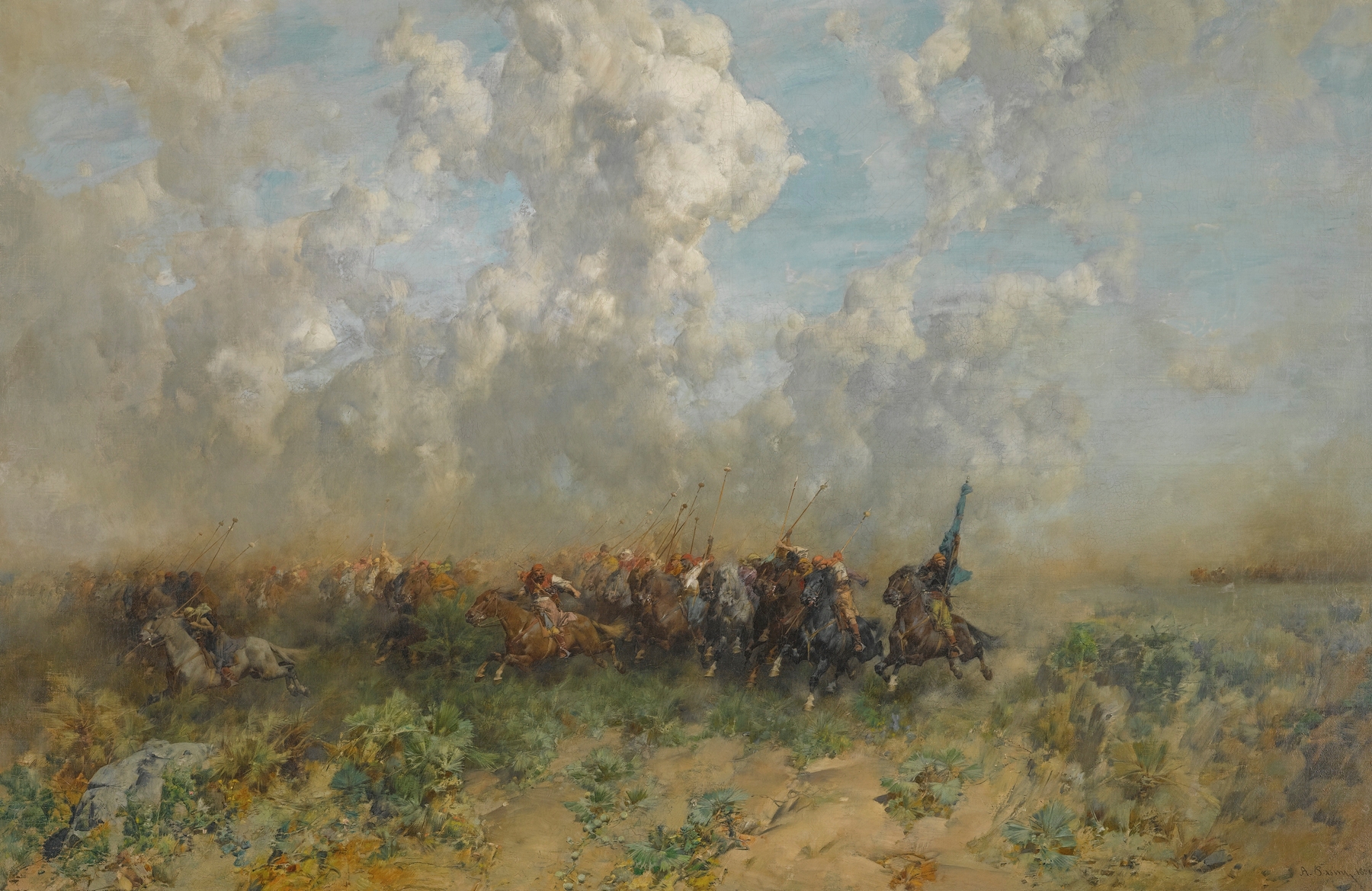
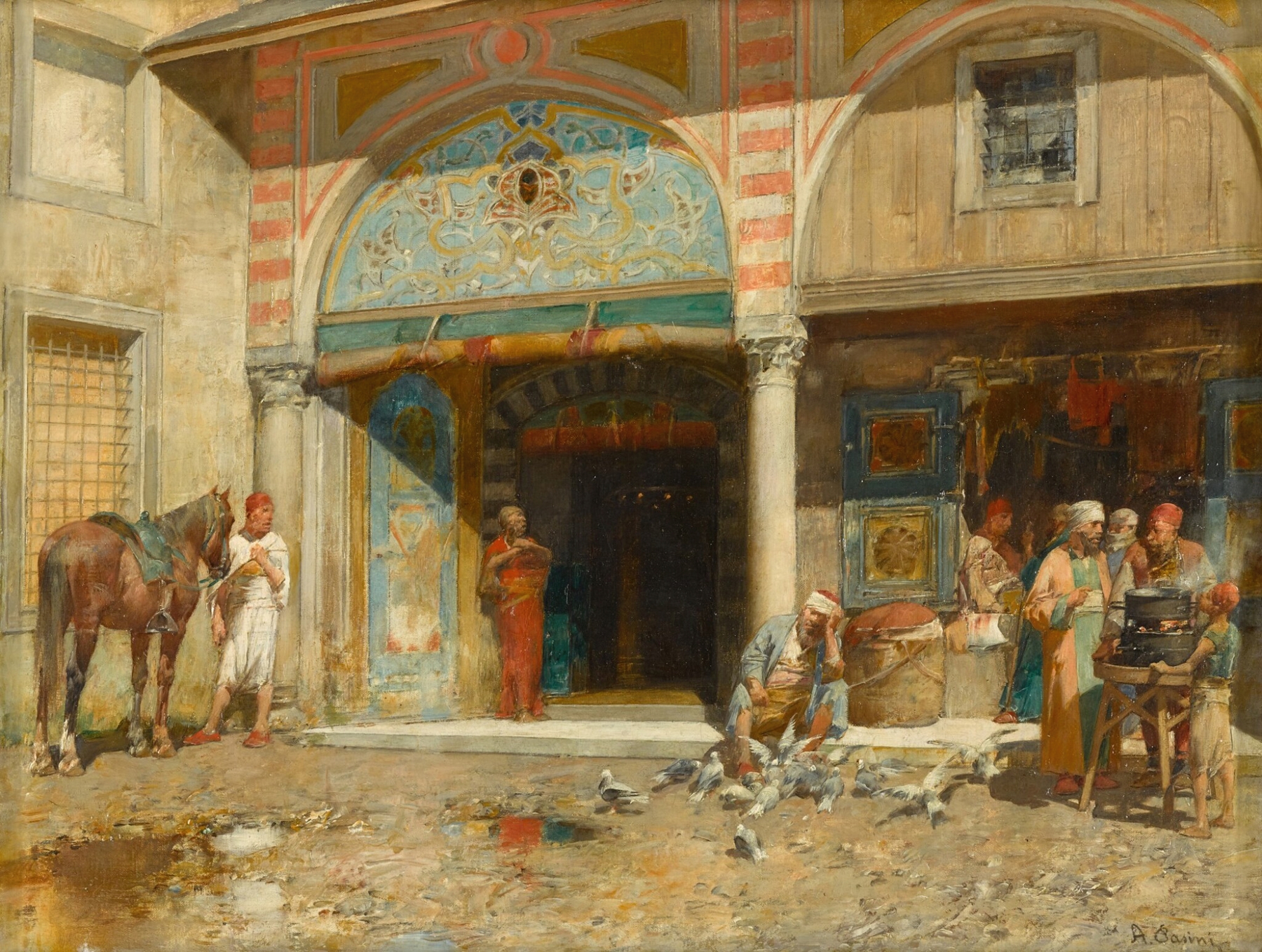
“Art reveals the soul when the world turns away.” In a moment suspended between reality and imagination, we find ourselves awakening to the power of history, culture, and identity through art. Look to the center of the composition, where the Circassian cavalry stands poised, their horses' powerful forms echoing the underlying tension of command and anticipation. The rich palette of warm ochres and deep blues envelops them, drawing your gaze. Notice the intricate details of their uniforms, each fabric fold and metallic ornament reflecting light, reminiscent of a bygone era.
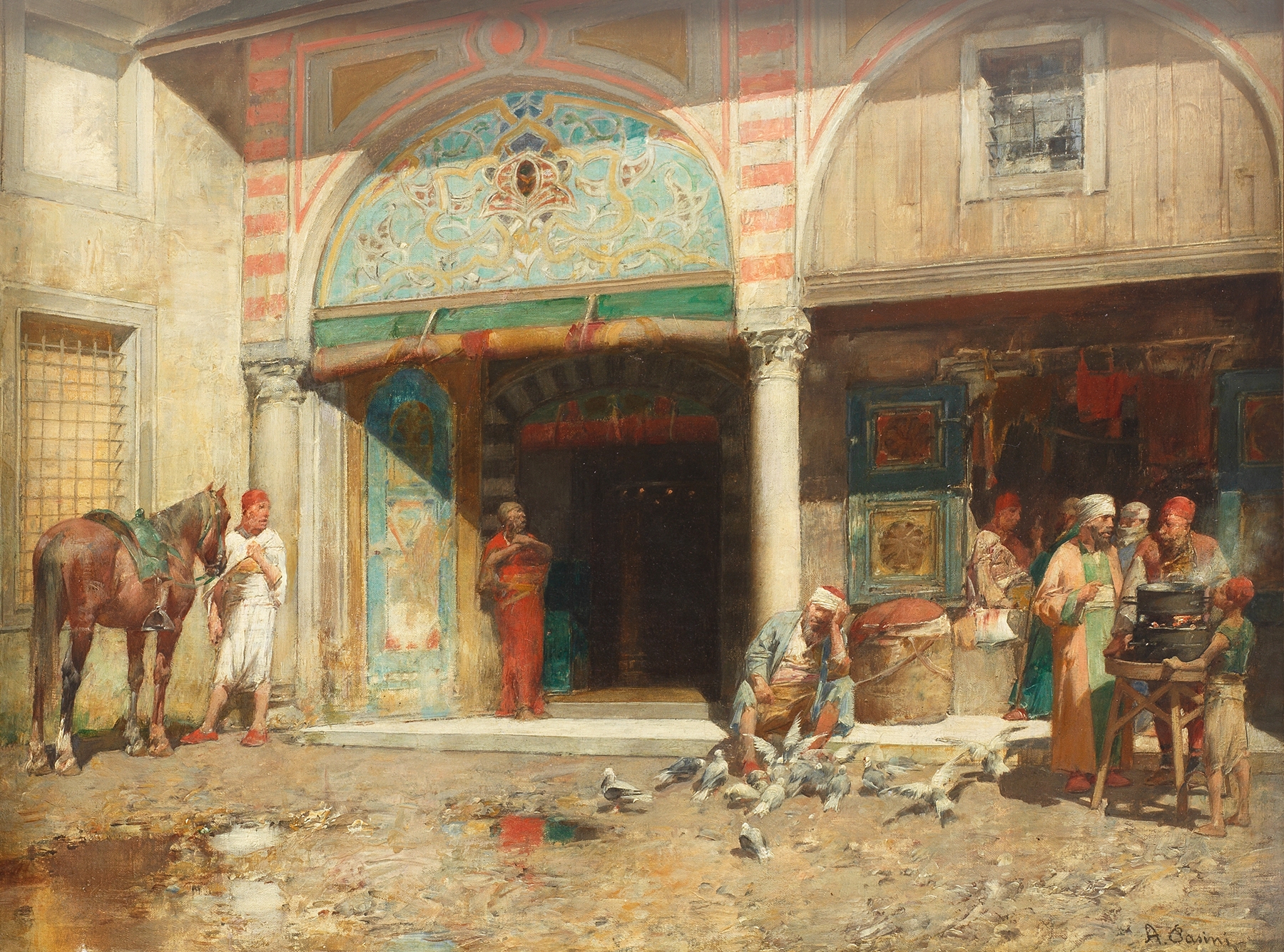
The monumental Byzantine architecture looms in the background, grounding the scene in a tangible past while suggesting the weight of legacy borne by these soldiers. The emotional tension pulses through the painting—these cavalrymen represent not just a military force, but a cultural identity steeped in pride and honor. Their steadfast presence hints at both loyalty to command and the unspoken yearning for autonomy. The striking contrast between the soldiers' vibrant attire and the muted, age-old structure behind them serves as a metaphor for the clash of tradition and modernity, reflecting the complexities of their existence.
The moment captures a pause—an awakening to the realization of their roles not just as warriors, but as custodians of a rich heritage. In 1880, when this artwork was completed, Pasini was living in Italy after years of travel, having absorbed diverse influences from the East. The world was undergoing rapid changes marked by the rise of nationalism and a fascination with the exotic. This painting emerged during a time when many artists began to explore themes of cultural identity, revealing the deep connections between art, history, and the longing for place in a turbulent world.