Istanbul, under a Portico in Beykoz — History & Analysis
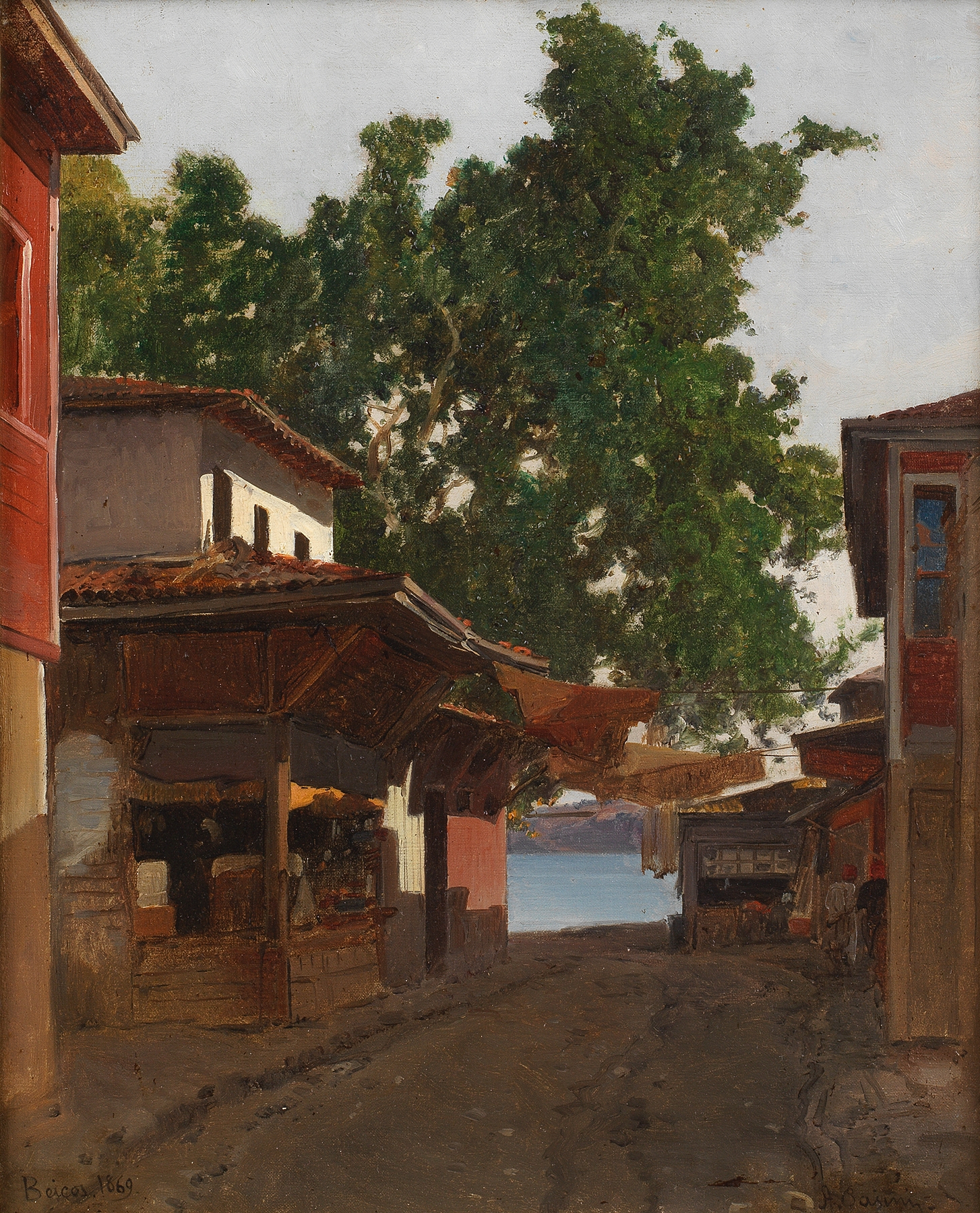
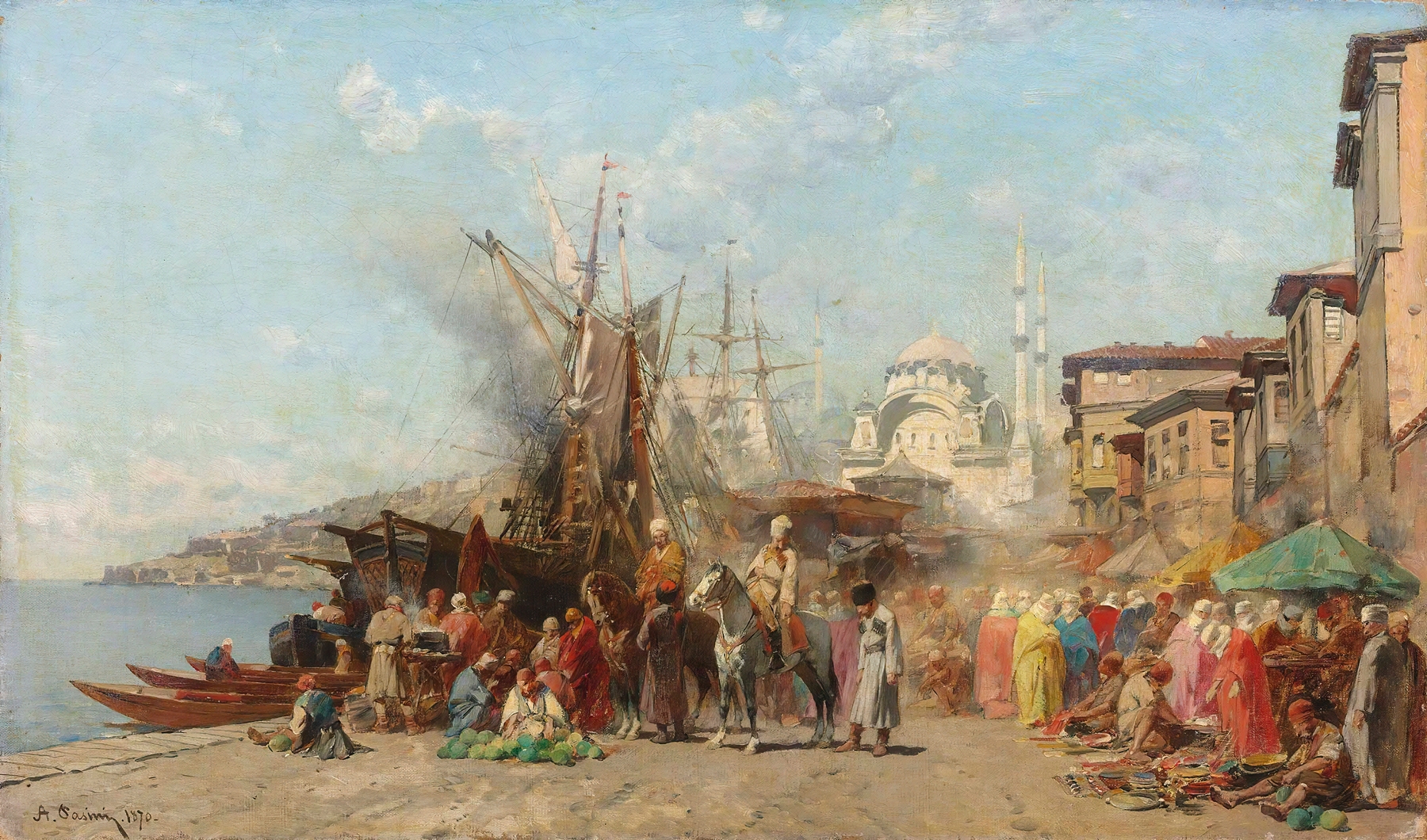
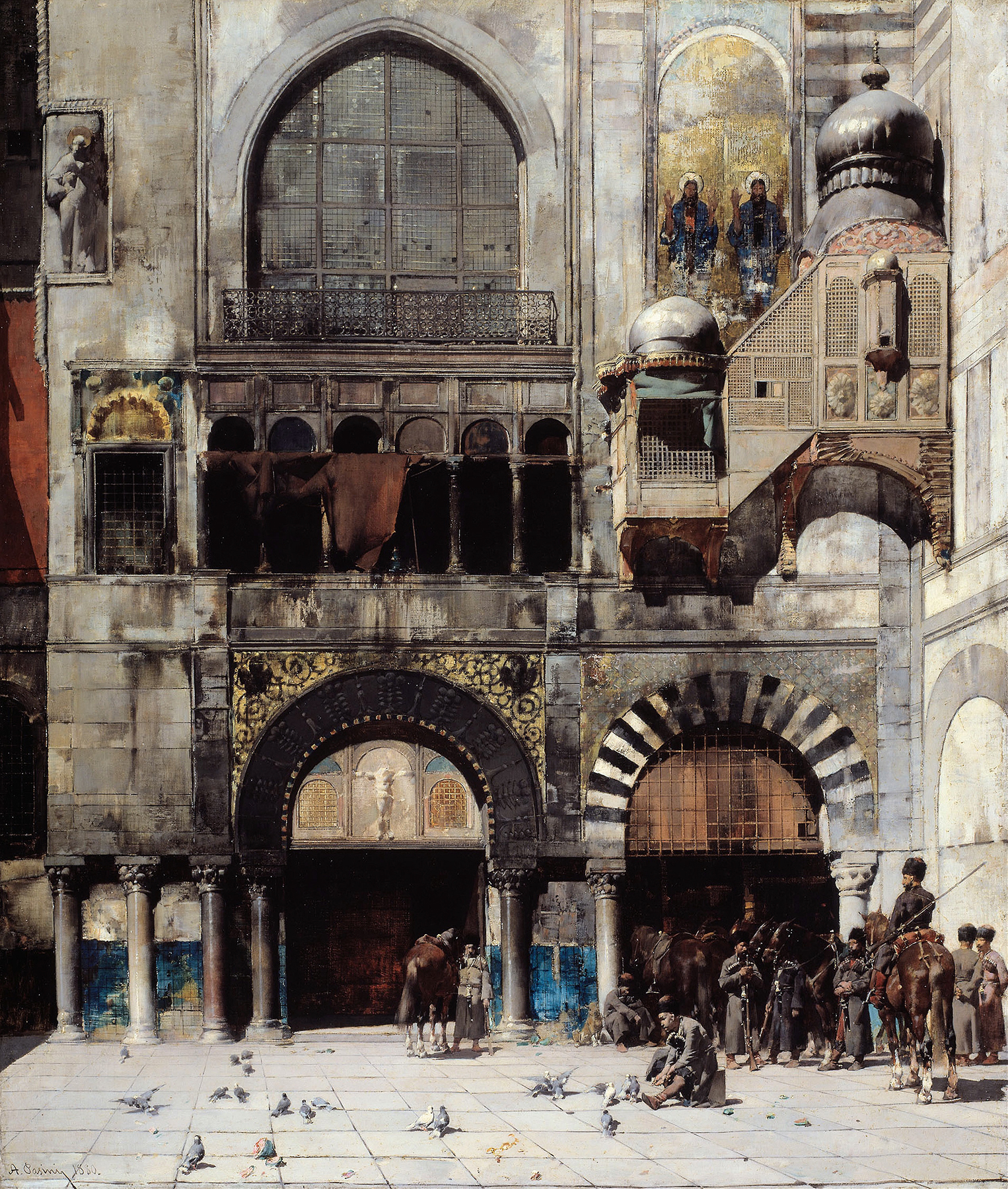
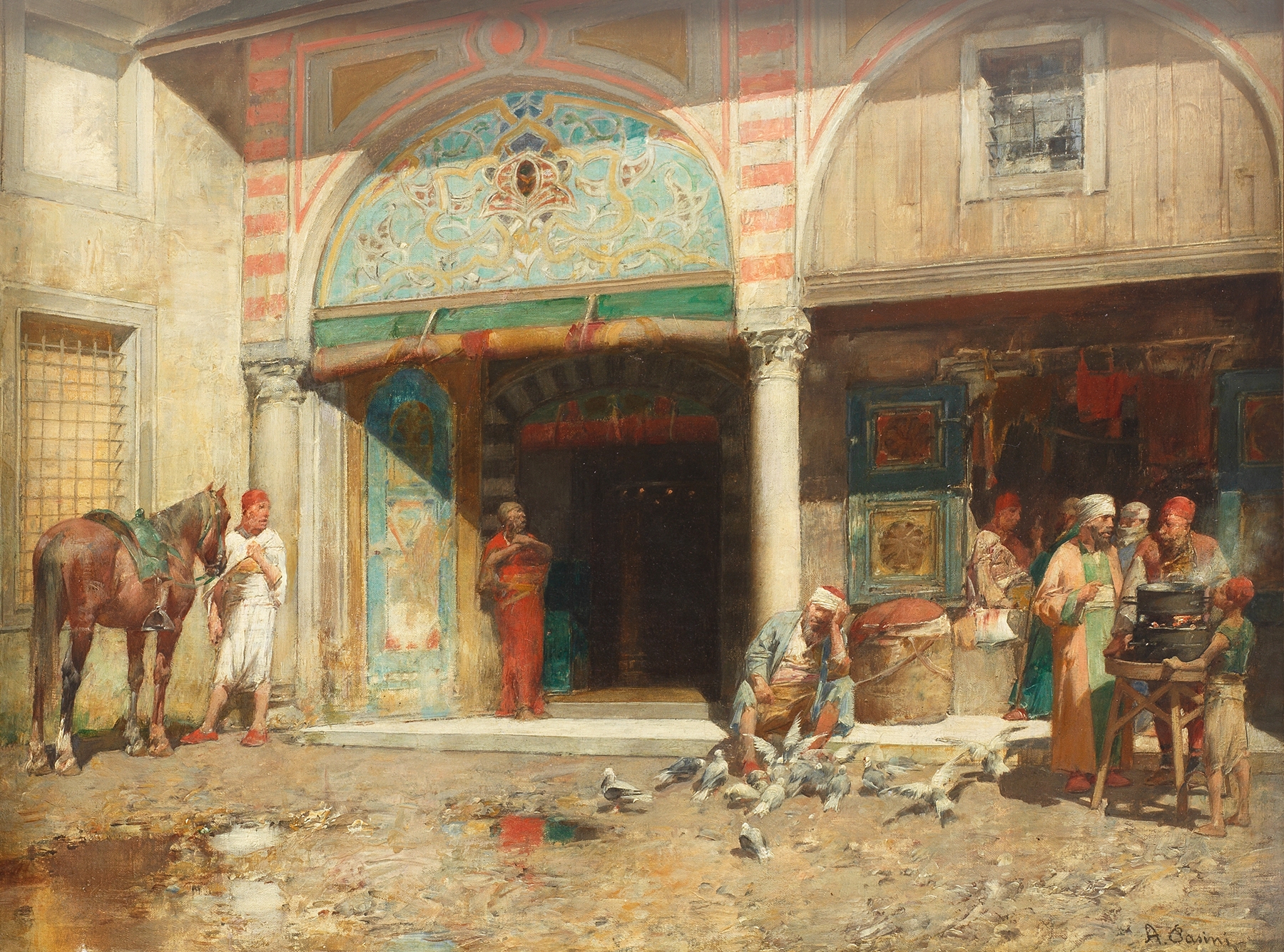
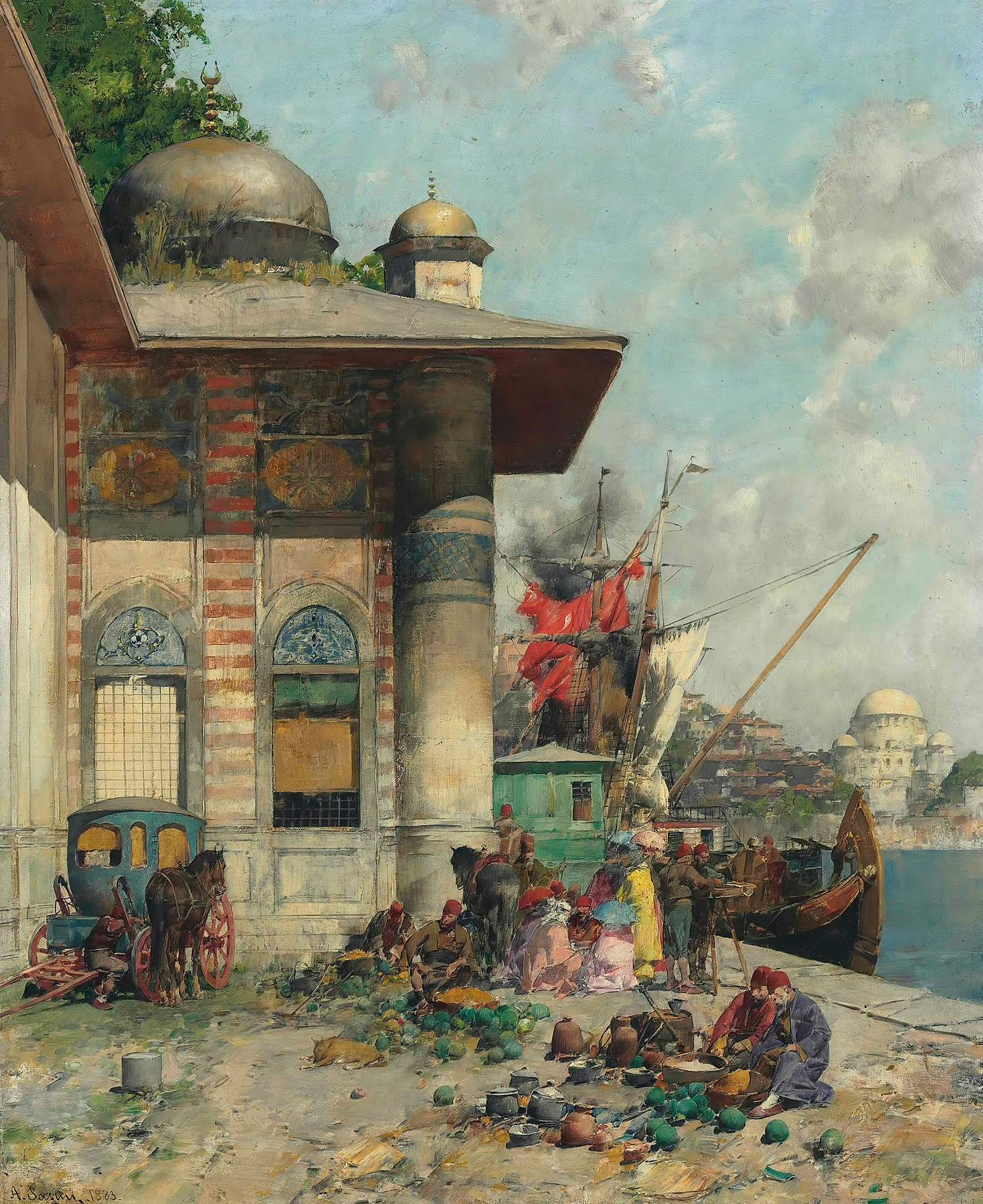
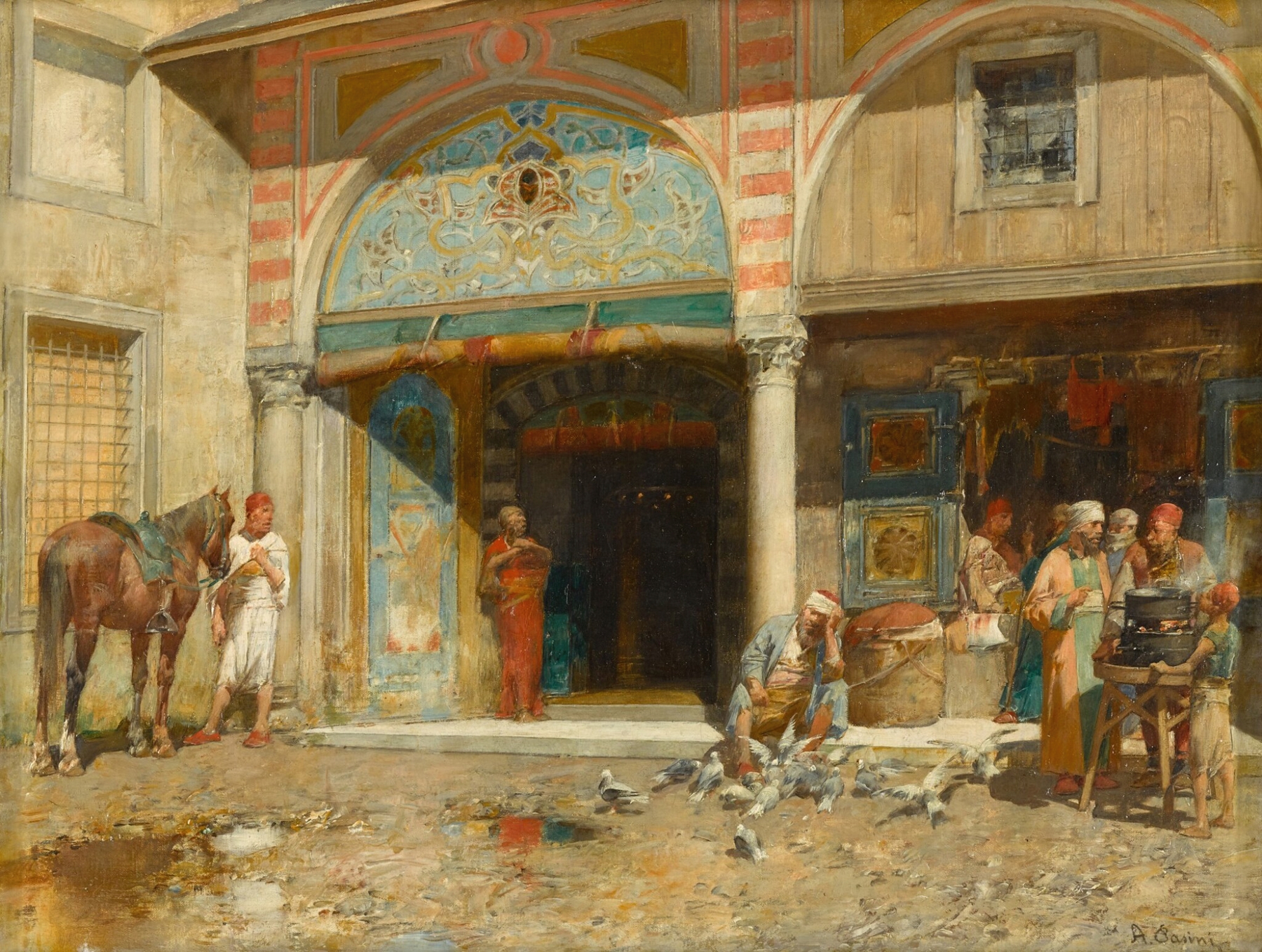
Did the painter know this moment would outlive them? In Istanbul, under a Portico in Beykoz, the essence of a fleeting encounter is captured, preserving a slice of life that echoes through the ages. Look to the left at the ornate columns, intricately detailed, standing sentinel to a vibrant scene below. The warm, golden light filters through the portico, illuminating the muted colors of the figures and the rich textures of their garments. Notice how the shadows dance along the ground, creating a play of contrast that hints at the passage of time.
The composition feels intimate yet expansive, drawing the viewer into the graceful sway of everyday life in a bustling corner of the Ottoman Empire. As you delve deeper, consider the juxtaposition of the solemnity of the architecture with the lively gestures of the figures. Their postures convey stories of connection and conversation, perhaps reflecting a cultural exchange rich with history and tradition. The artist’s use of color—subdued yet warm—evokes nostalgia while simultaneously inviting contemplation of the moment’s transience.
What narratives linger in the air, unspoken but palpable? Alberto Pasini painted this work in 1869 during his stay in Istanbul, where he was immersed in the vibrant culture and intricate beauty of the city. This period marked significant artistic exploration, as European artists increasingly turned their gaze toward the East, inspired by its history and mystique. Amidst this cultural renaissance, Pasini's choice to immortalize a singular, everyday moment speaks to the profound legacy that art can create, capturing not just a scene, but an entire ethos.