A Night in May — History & Analysis
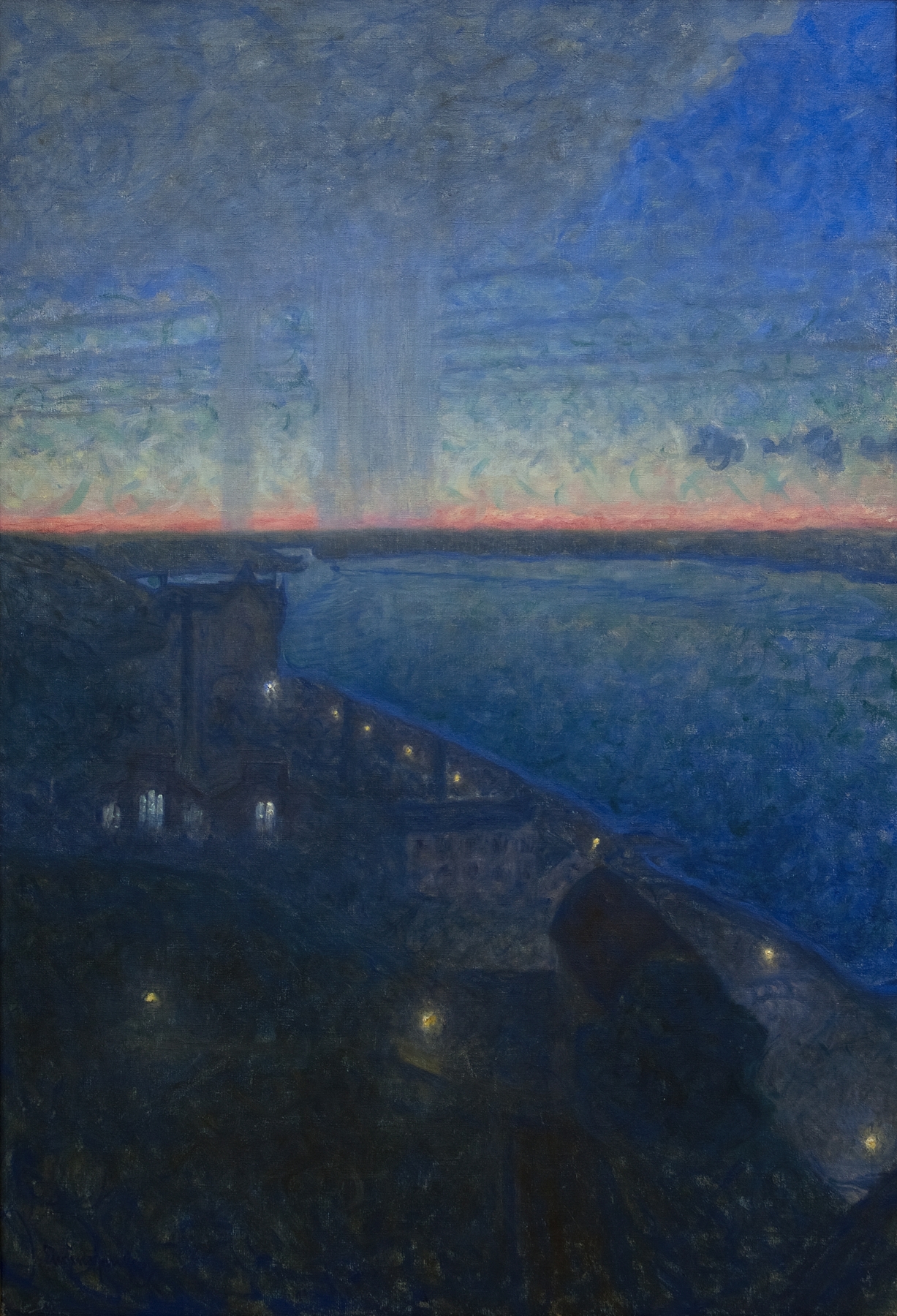
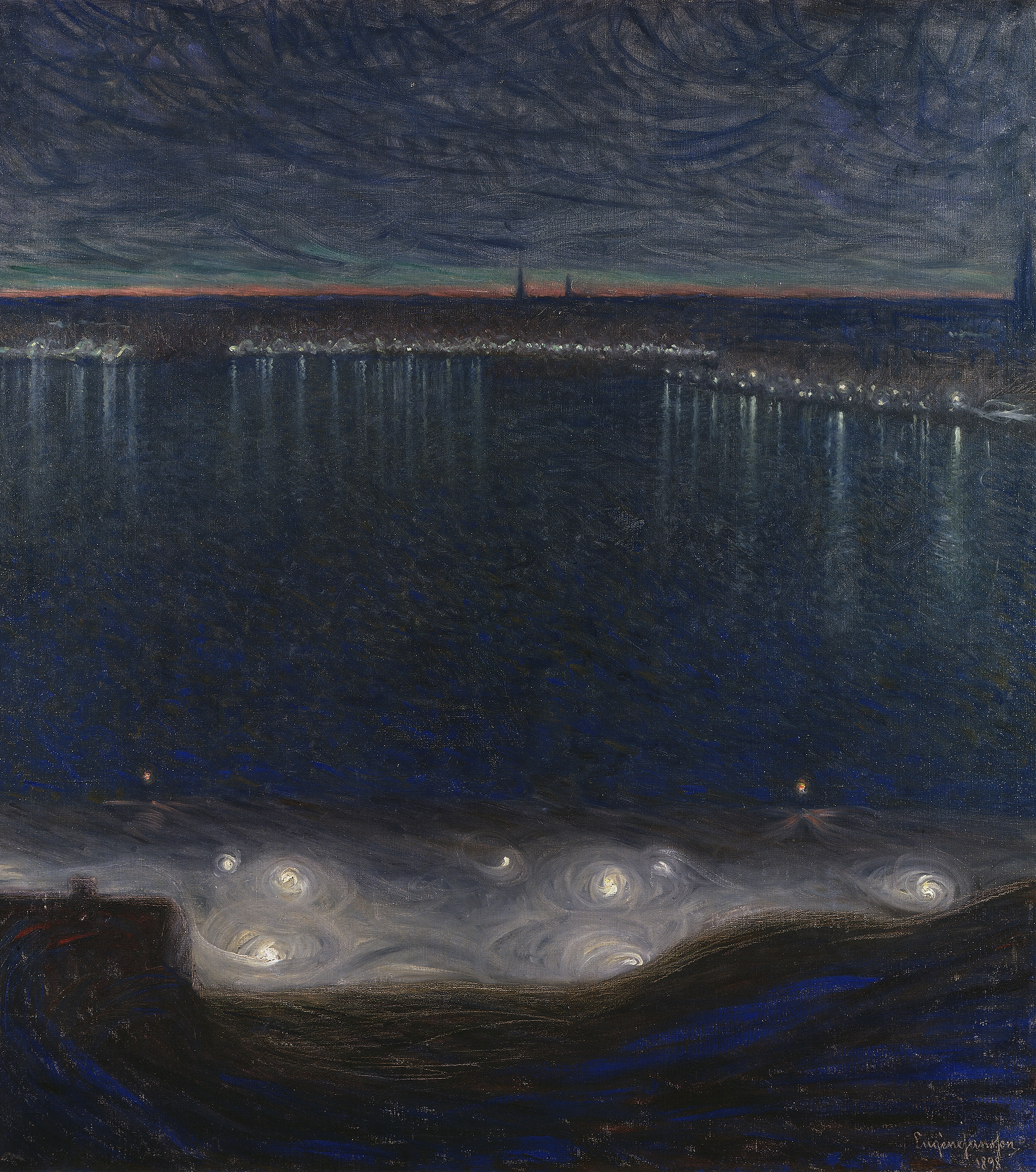
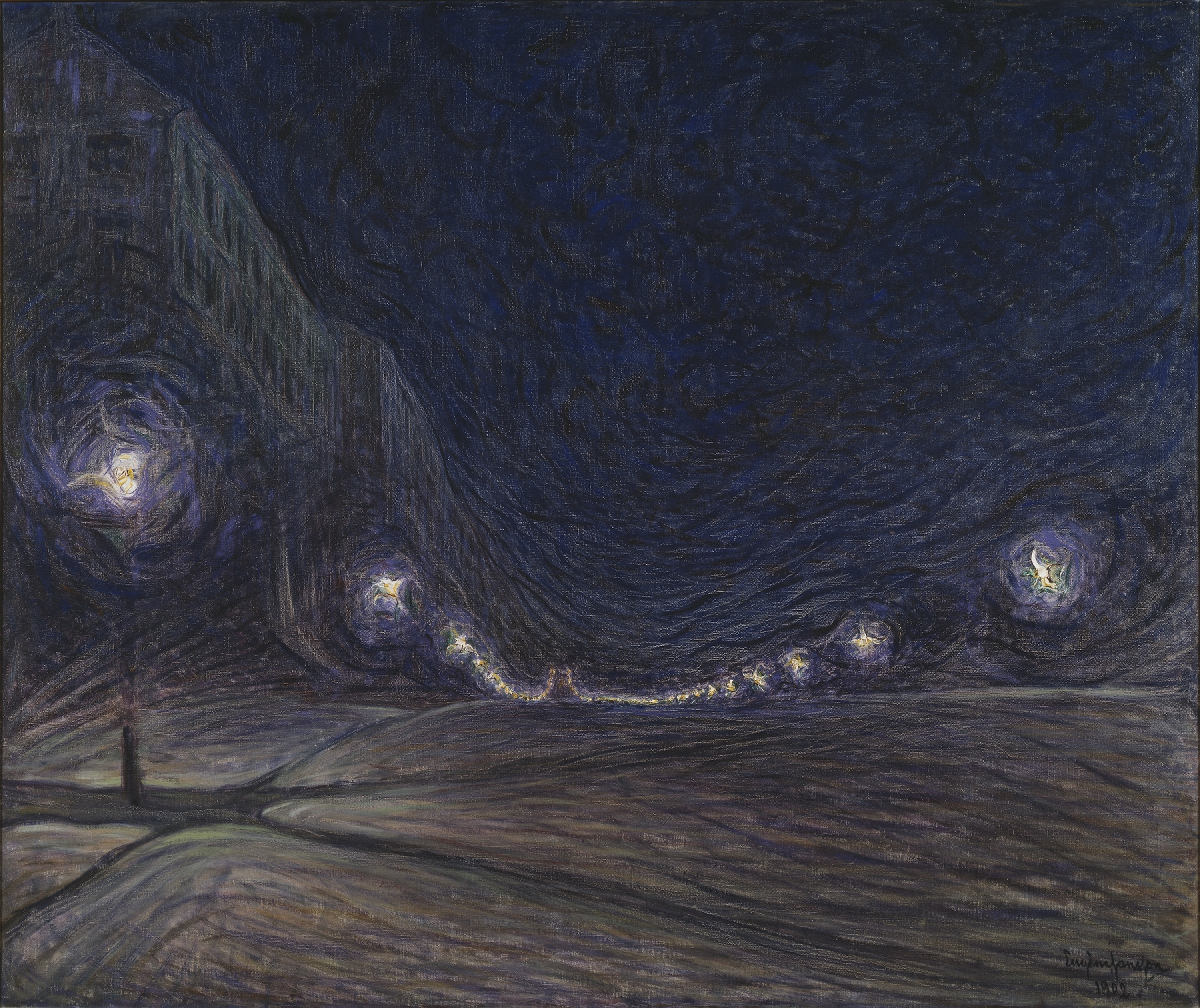
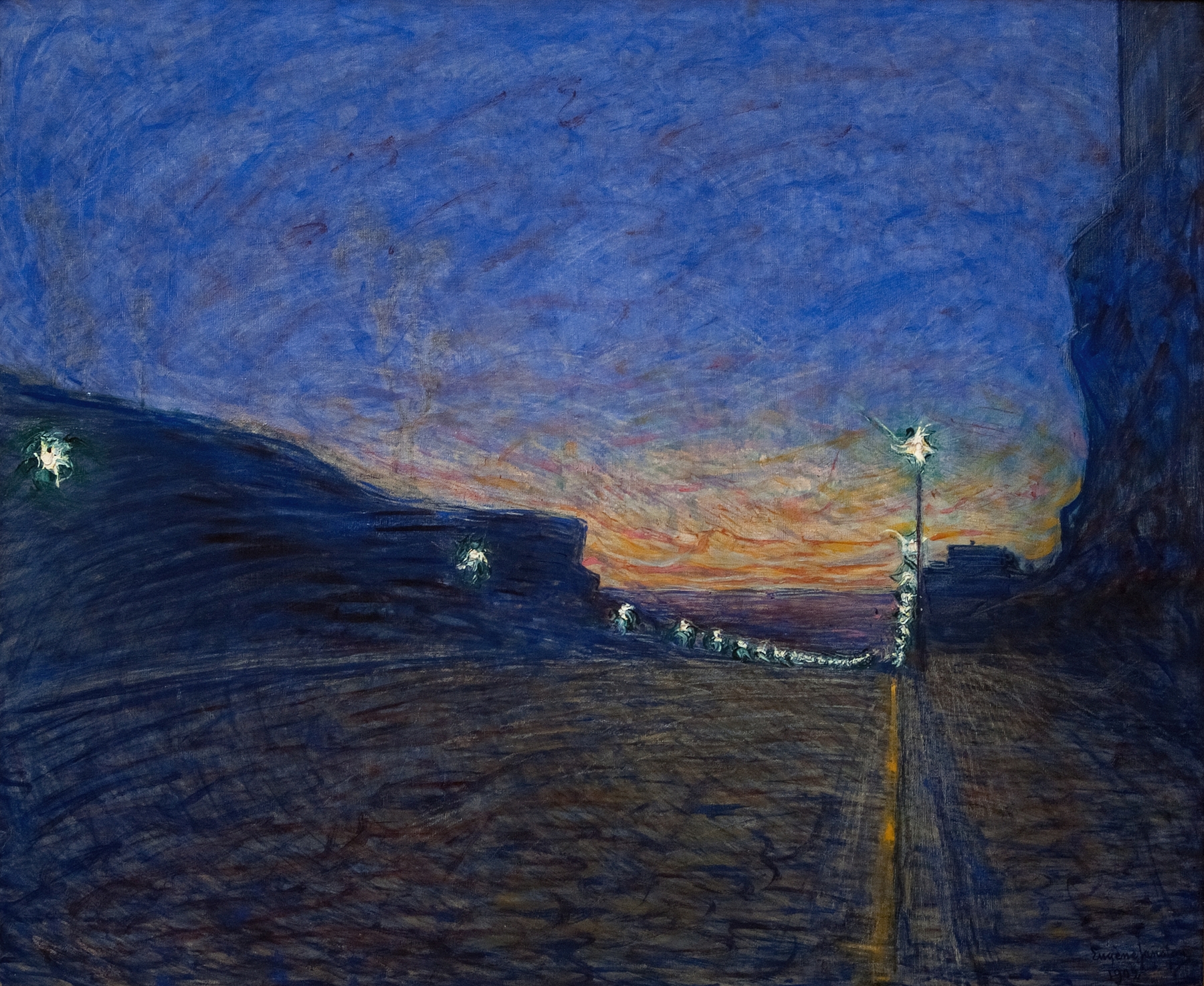
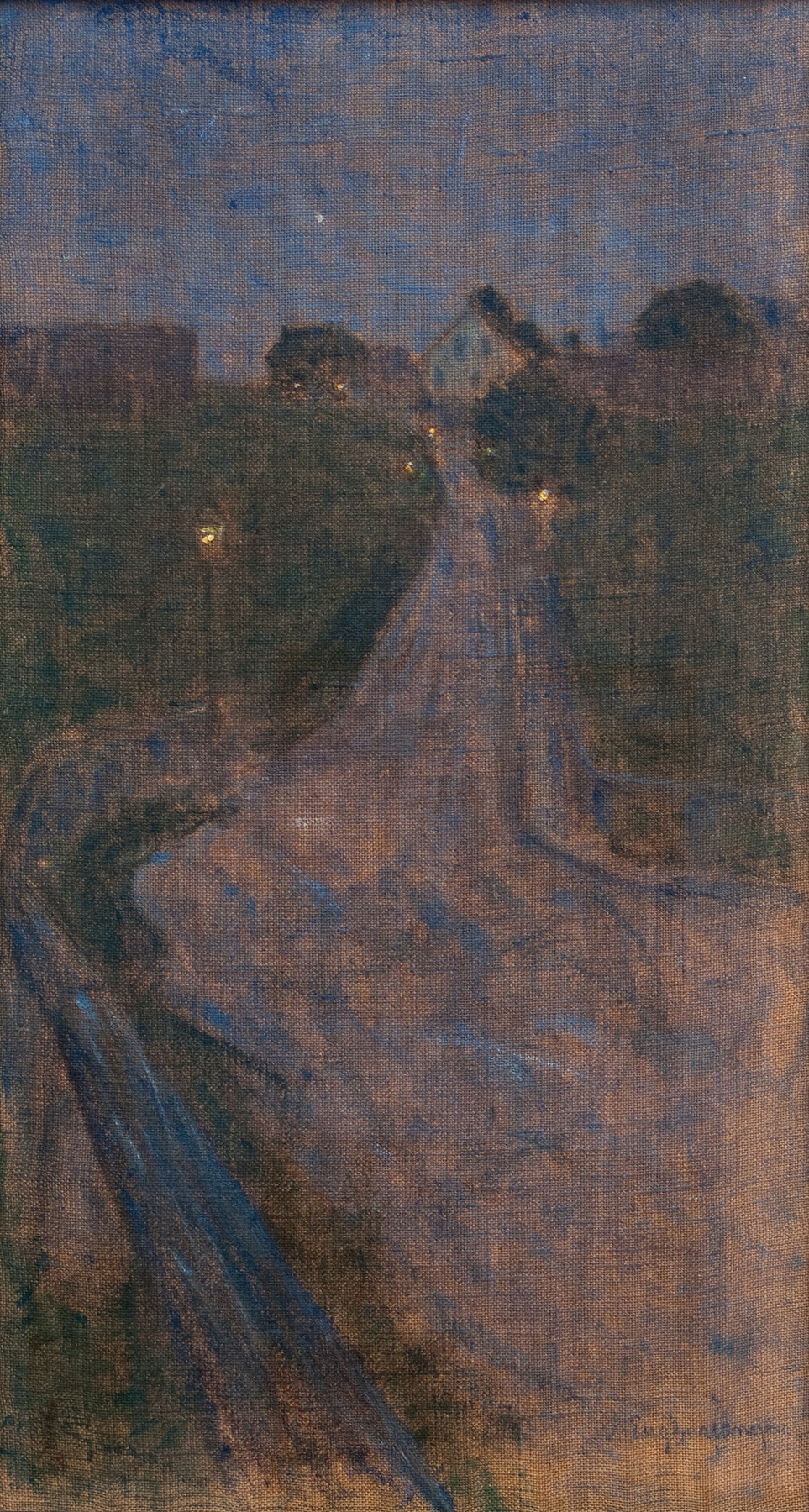
Can paint confess what words never could? In A Night in May, the brush whispers of mortality, capturing a fleeting moment that lingers long after the last light fades. Look to the center of the canvas, where the deep blue of twilight envelops a solitary figure seated on a verdant hill. The soft glow of the moonlight dances upon the water’s surface, illuminating the gentle ripples as they echo the figure’s contemplative demeanor.
Notice how the artist's delicate strokes create a balance between the vibrant greens of the foliage and the tranquil blues of the night sky, revealing a harmonious connection between nature and the human experience. Here, the tension lies in the contrast between the vibrant life of nature and the solitary figure’s introspective stillness. The figure’s posture, slightly hunched, suggests a weight of thought, perhaps a reflection on life's impermanence—a poignant reminder of our fleeting existence. The interplay of light and shadow evokes a sense of melancholy, prompting the viewer to consider their own relationship with time and memory.
Eugène Jansson created A Night in May in 1895, during a period of introspective creativity in Sweden. The artist was deeply influenced by the interplay of light and color in the natural world, reflective of the Symbolist movement's exploration of emotion and atmosphere. As modern art began to evolve, Jansson’s work encapsulated a moment where personal truth and universal themes of existence intertwined, paving the way for future artistic expressions.