Riddarfjärden. A Stockholm — History & Analysis
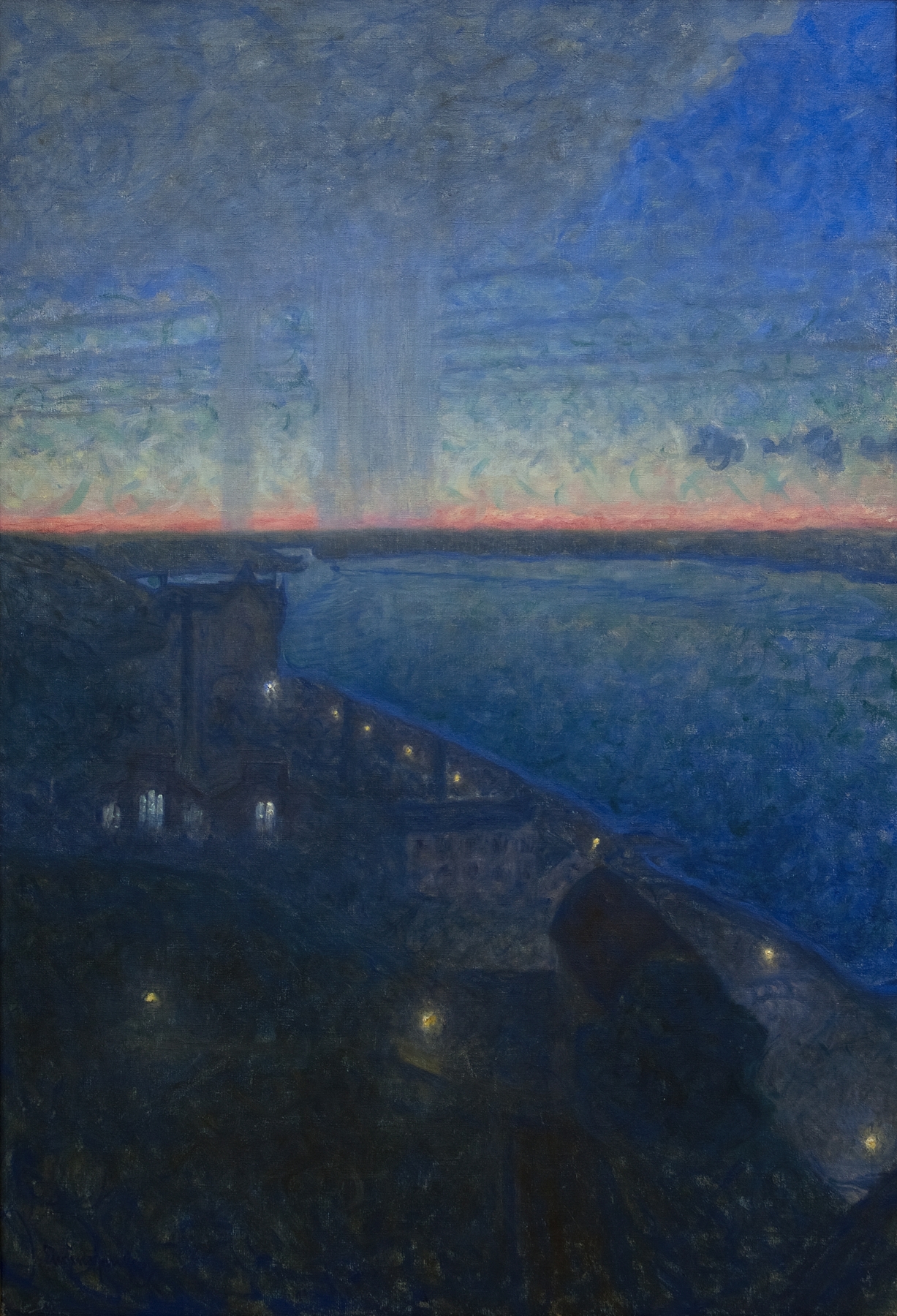
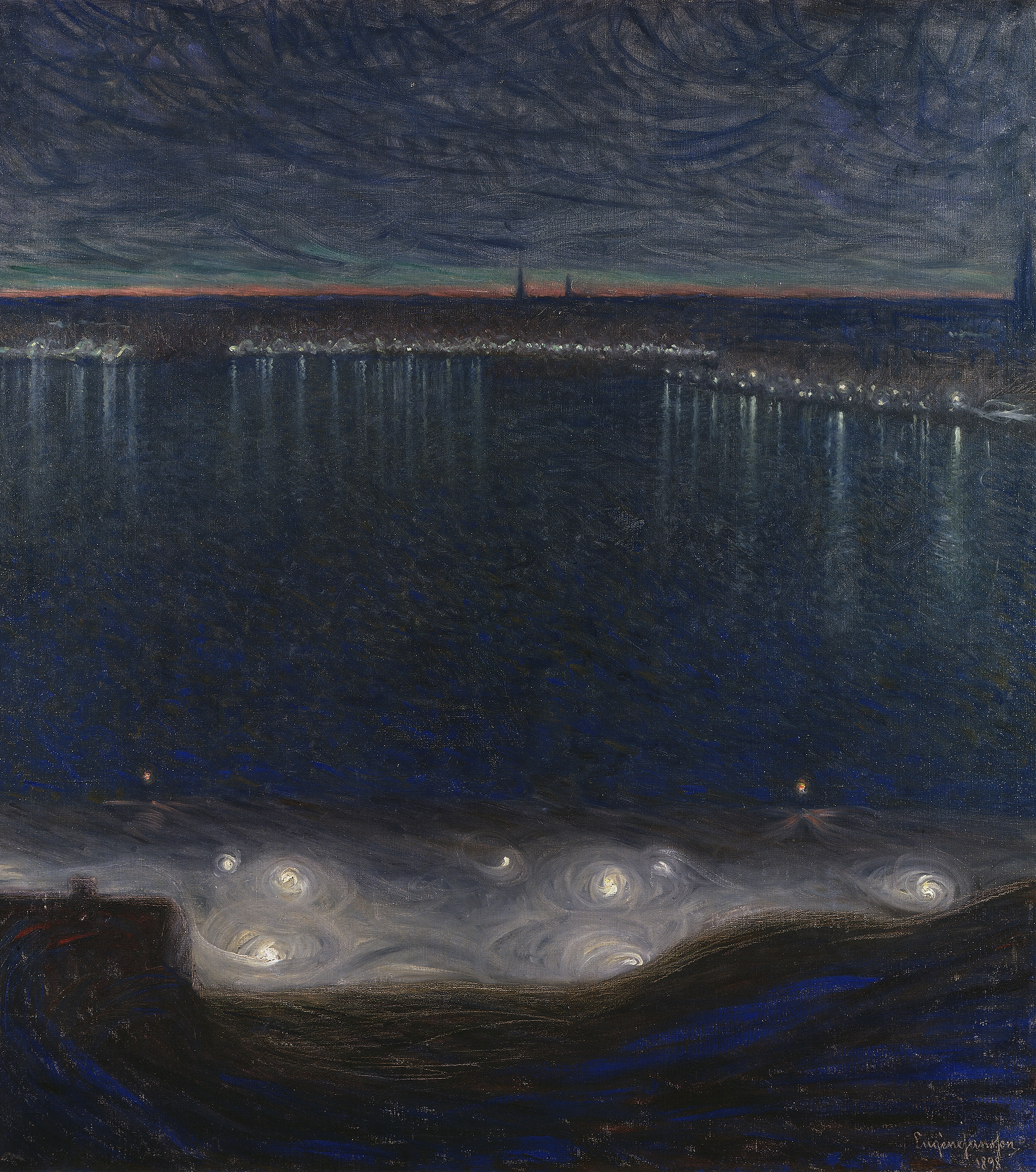
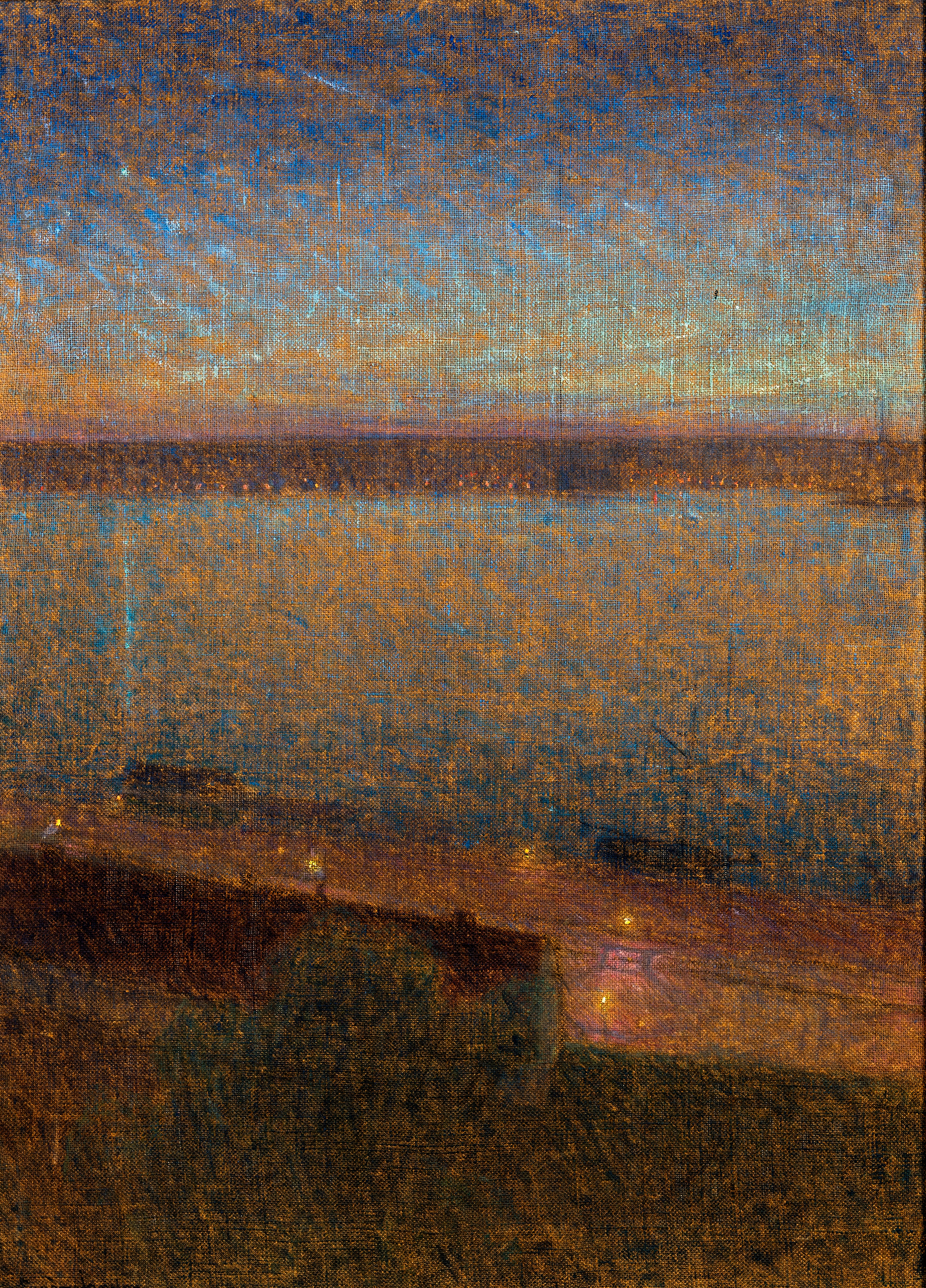
Can beauty exist without sorrow? In Riddarfjärden. A Stockholm, the stillness of water and the glow of twilight suggest a world of rebirth, where hope intertwines with melancholy. Look to the horizon, where the soft hues of the sky gently kiss the water's surface, creating a mirror-like effect. The muted blues and warm oranges blend seamlessly, drawing the eye to the distant cityscape, silhouetted against the fading light.
Notice how the brushwork is both delicate and deliberate, conveying the calmness of this moment while hinting at the bustling life just beyond the frame. Delve into the layers of emotion hidden in the piece. The tranquil waters reflect the beauty of the landscape but also symbolize the transient nature of life itself. The distant spires of Stockholm evoke a sense of longing, a reminder of what is left behind, while the fading light signifies an end that is also a beginning.
In this duality, one can sense the artist’s contemplation of life’s cycles, where joy and sorrow coexist. Eugène Jansson painted Riddarfjärden in 1898, a period of personal and artistic transformation. Living in Stockholm, he was deeply influenced by the city's landscapes and atmosphere. At that time, he was gaining recognition for his unique style, characterized by a blend of symbolism and impressionism, reflecting both the beauty of nature and the complexity of human emotions.