A rest outside of the Mosque — History & Analysis
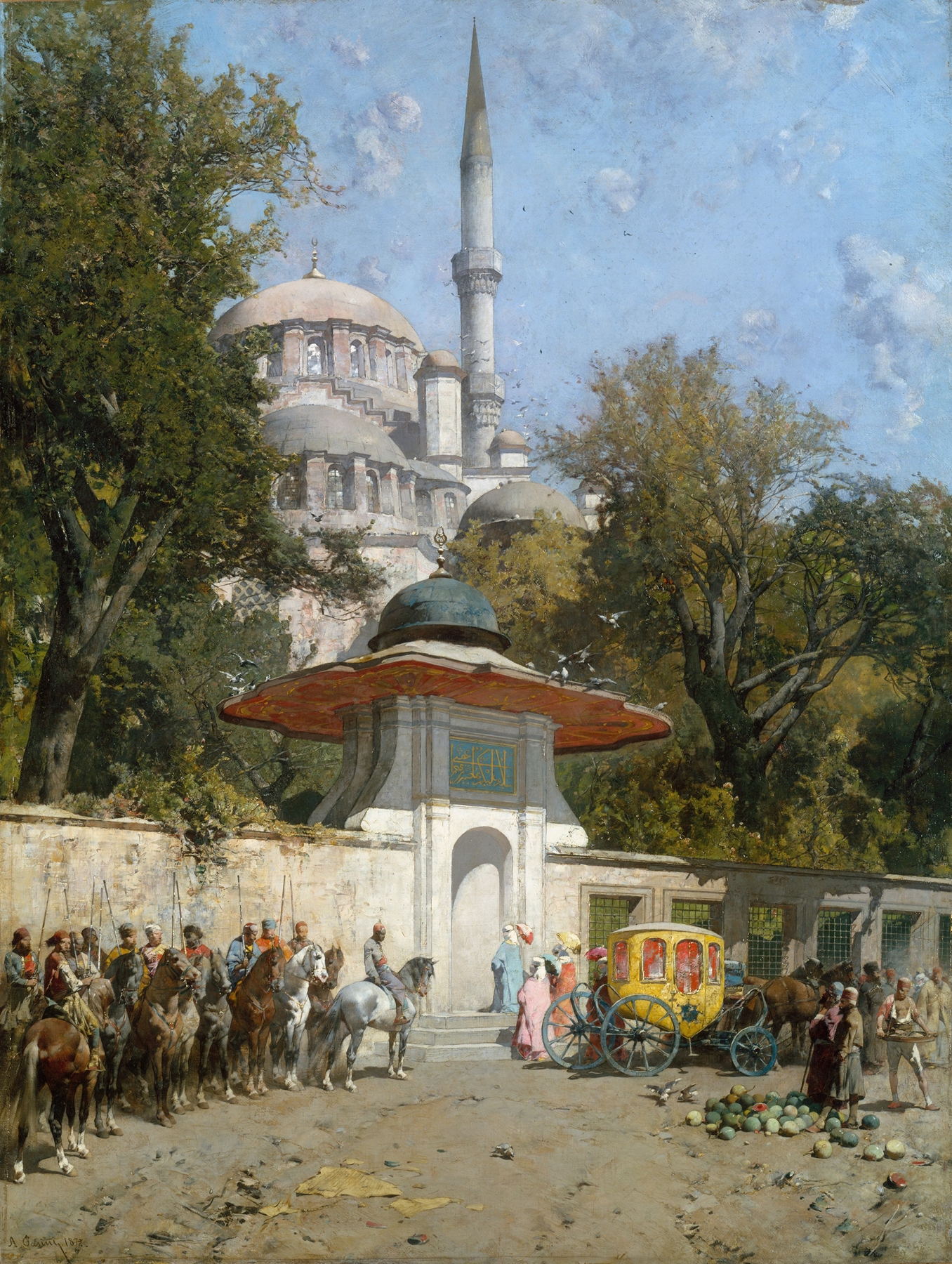
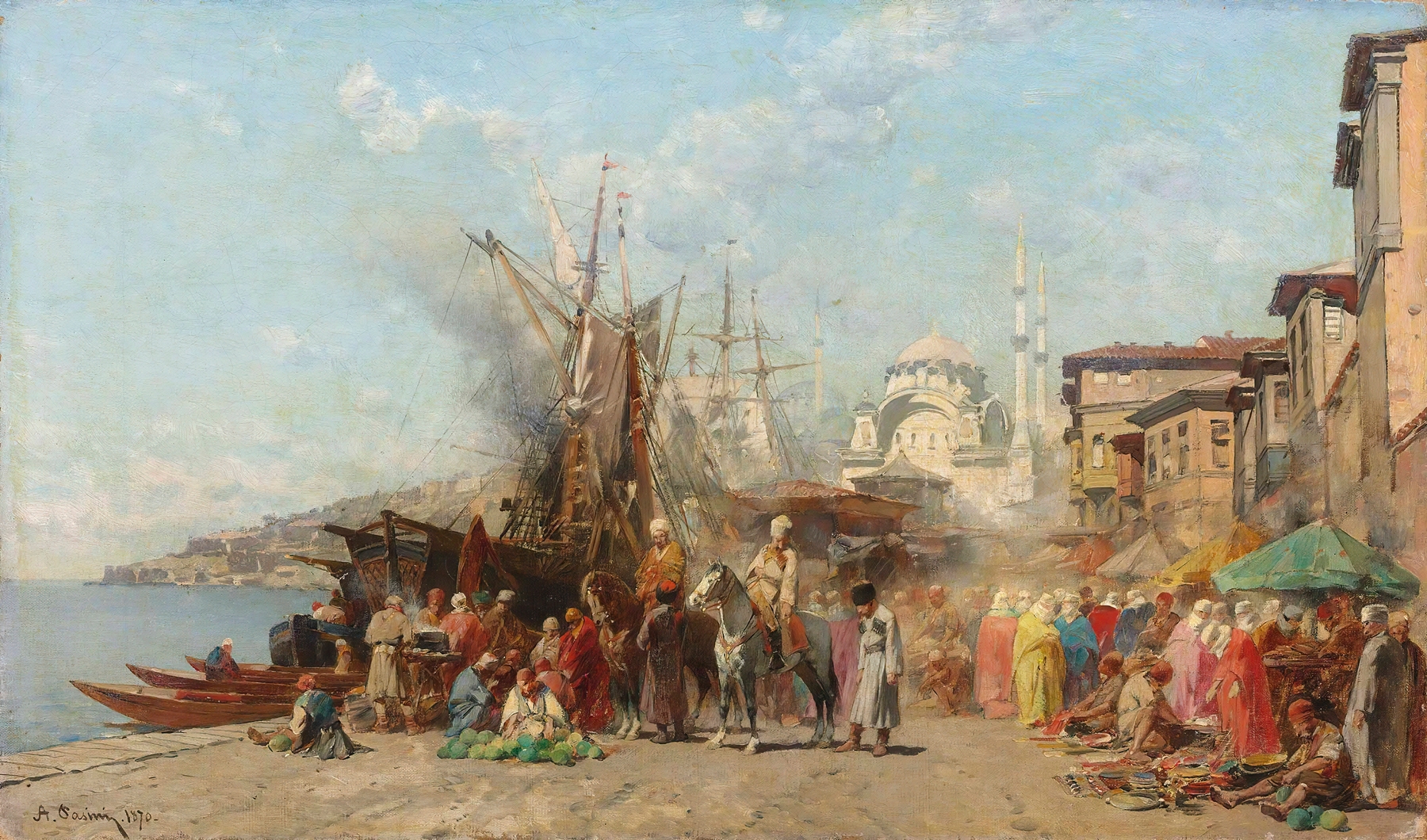
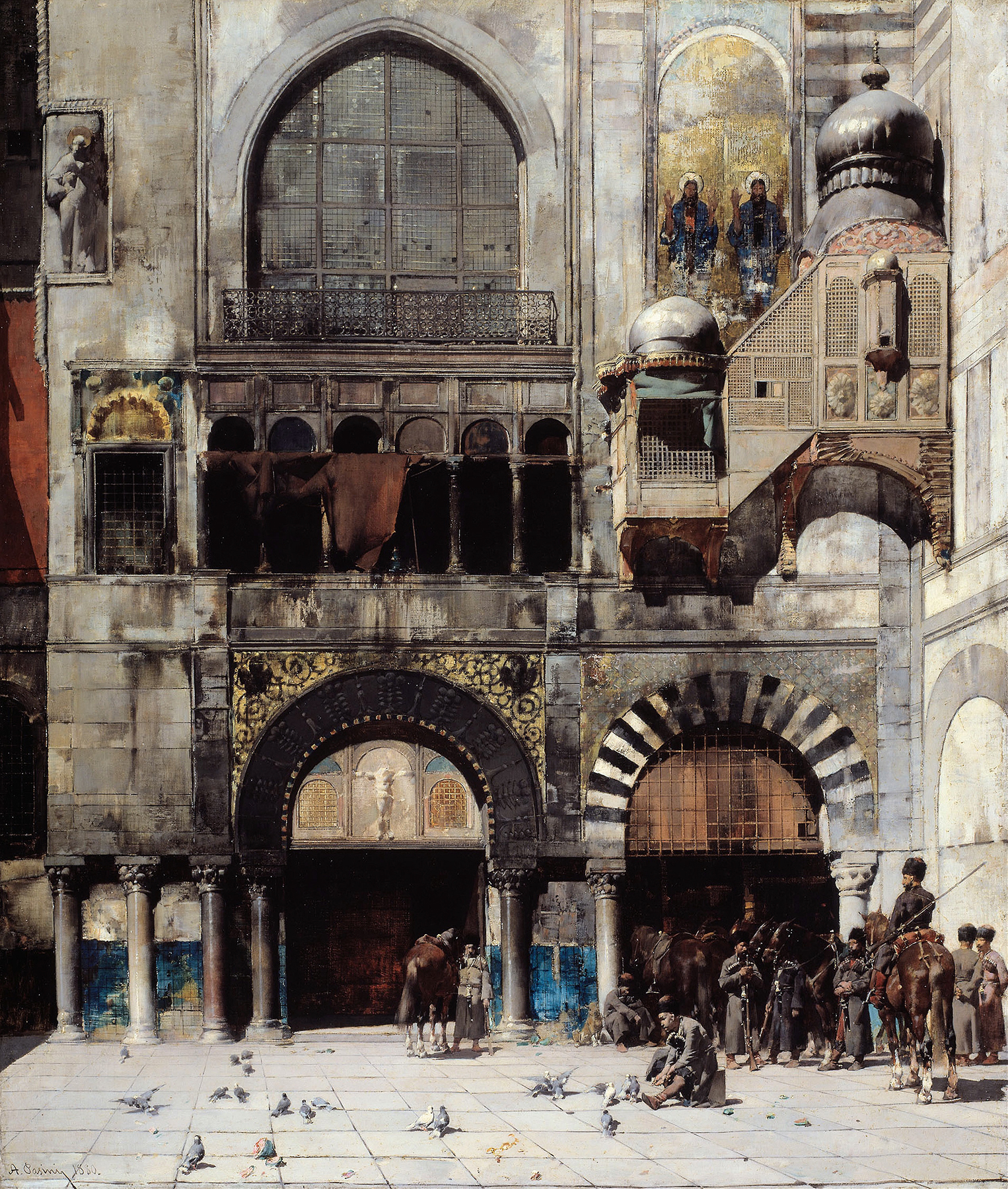
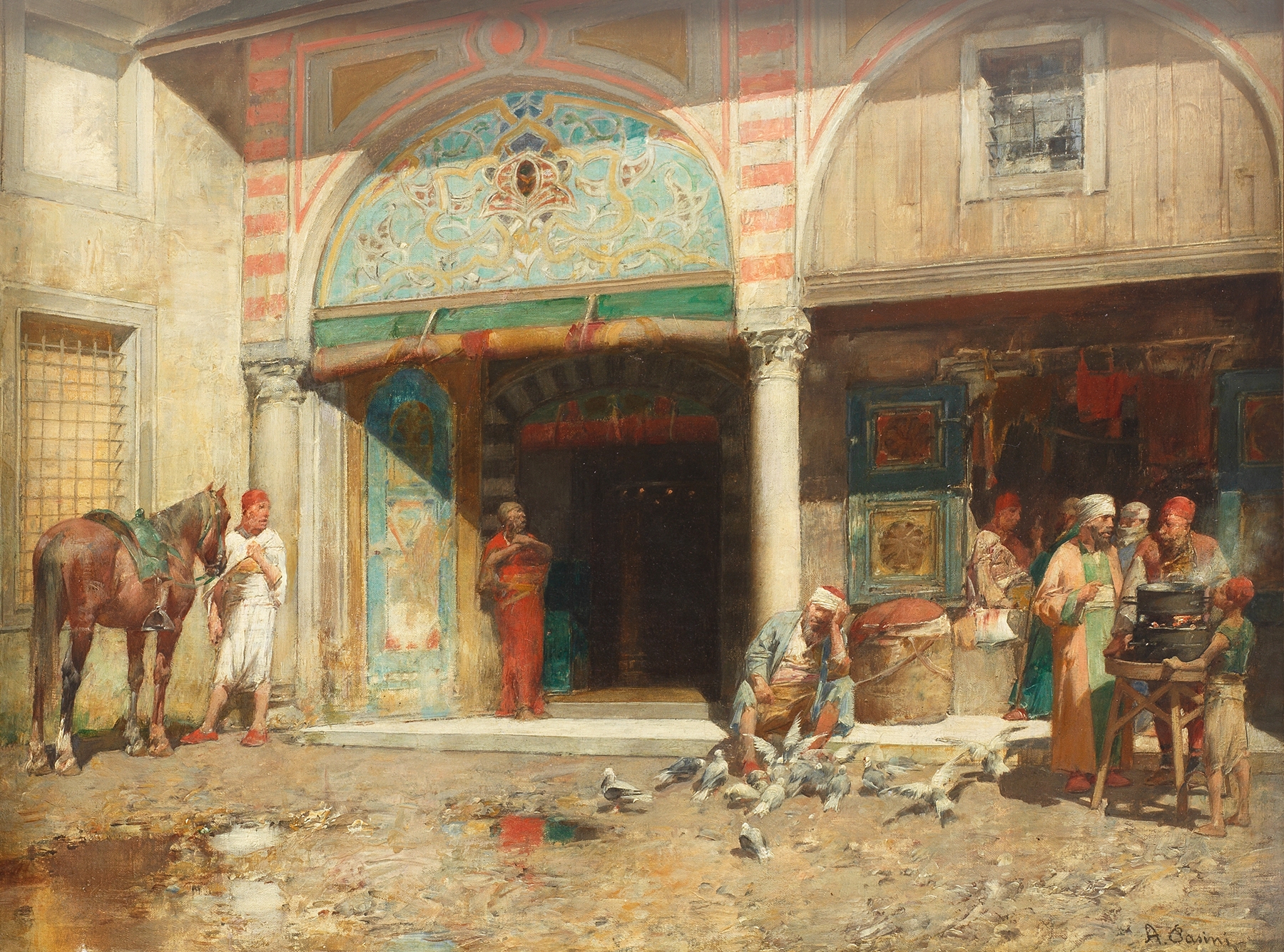
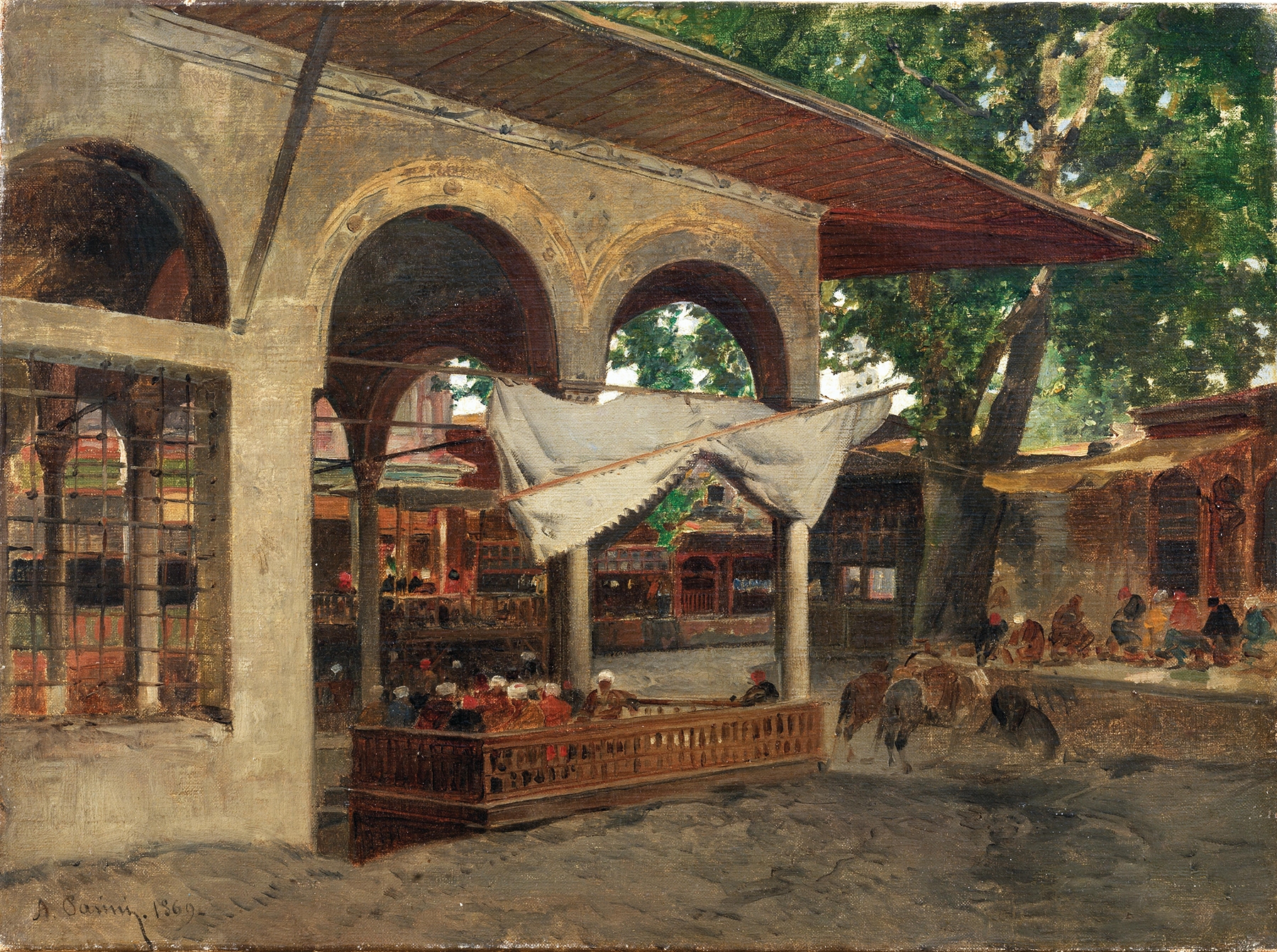
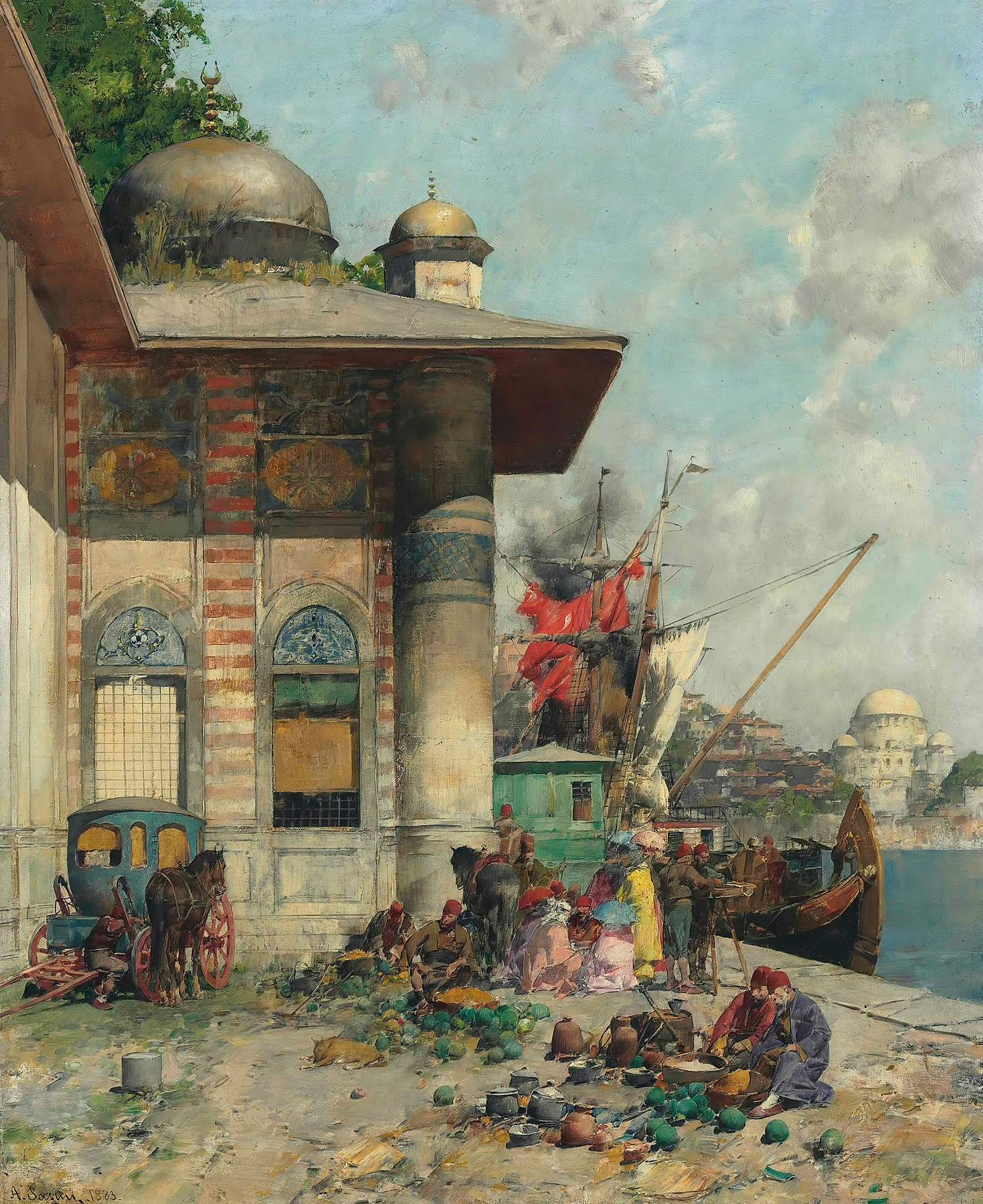
“Every silence here is a confession.” In the stillness of a sun-soaked afternoon, echoes of whispered thoughts linger in the air, revealing the madness that teeters just beneath the surface of calm. Shadows stretch lazily across the worn stones, where weary travelers pause to breathe, their gazes drifting into the distance—a moment suspended in time, where serenity cradles an undercurrent of chaos. Focus on the figure seated to the left, draped in vibrant fabric that sings against the earthy palette surrounding them. Every brushstroke captures the intricate patterns of their garment, pulling you into a world where color dances with light.
Notice how the sun filters through the leafy canopy, casting dappled patterns that unify the scene, while contrasting the vibrancy of the traveler against the muted backdrop of the mosque’s architecture. It creates a dialogue between stillness and motion, as if each element is caught in a moment of quiet anticipation. Within this serene tableau lies a tension of unspoken stories. The traveler’s expression is one of introspection, perhaps lost in thoughts of home or yearning for unknown places.
The juxtaposition of the mosque’s tranquil grandeur and the solitary figure’s vulnerability underscores a theme of isolation amidst community, highlighting the madness inherent in the human experience—where external beauty often masks internal conflict. During an unknown period of his career, the artist captured this scene while navigating the complexities of Orientalist themes, reflecting a fascination with the cultures he encountered. This work resonates with the broader art movements of the time, showcasing a blend of realism and romanticism, embodying his experiences as he traveled through the Middle East, seeking to translate the profound beauty and tension of life into his paintings.