A Winter Evening — History & Analysis
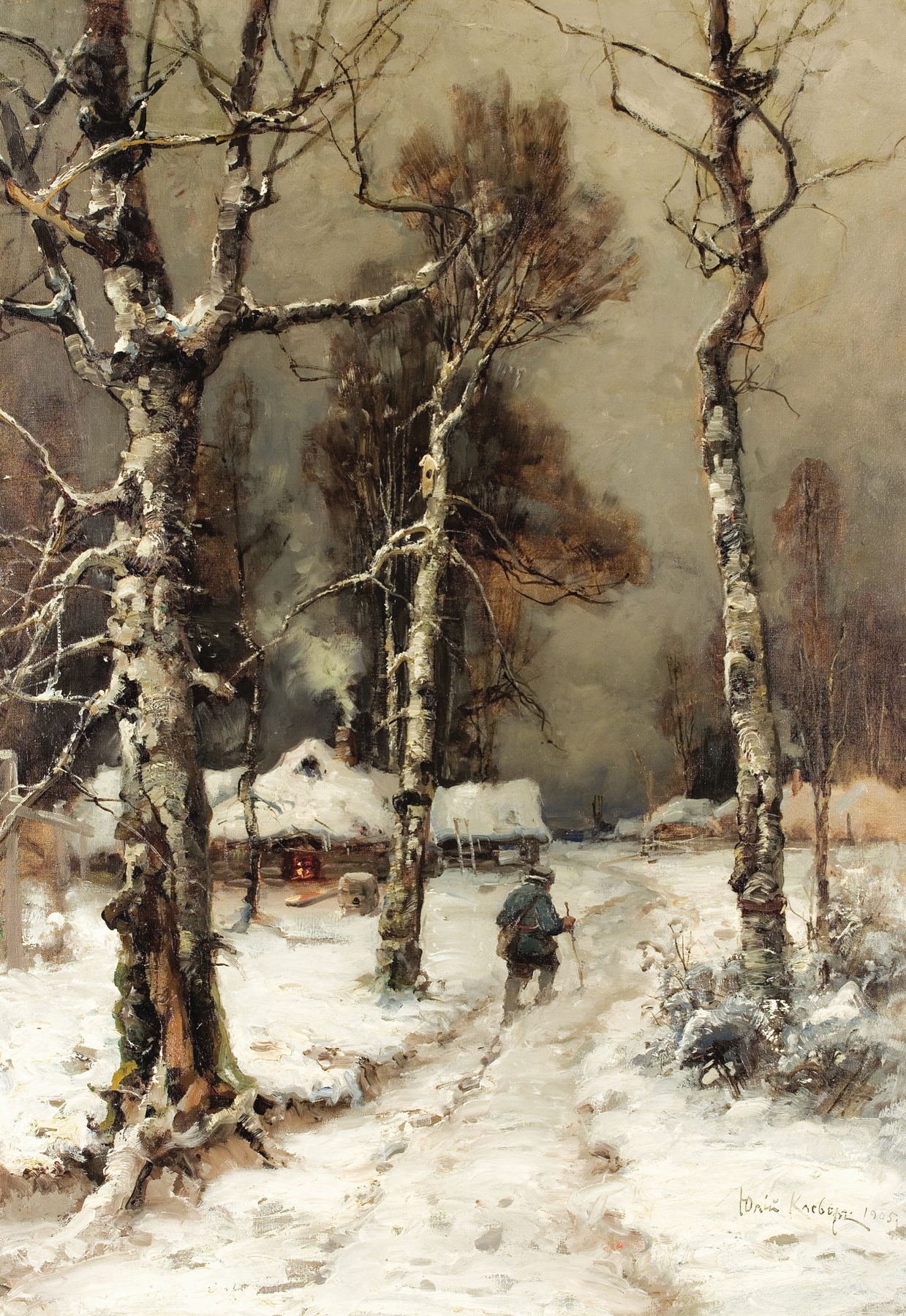
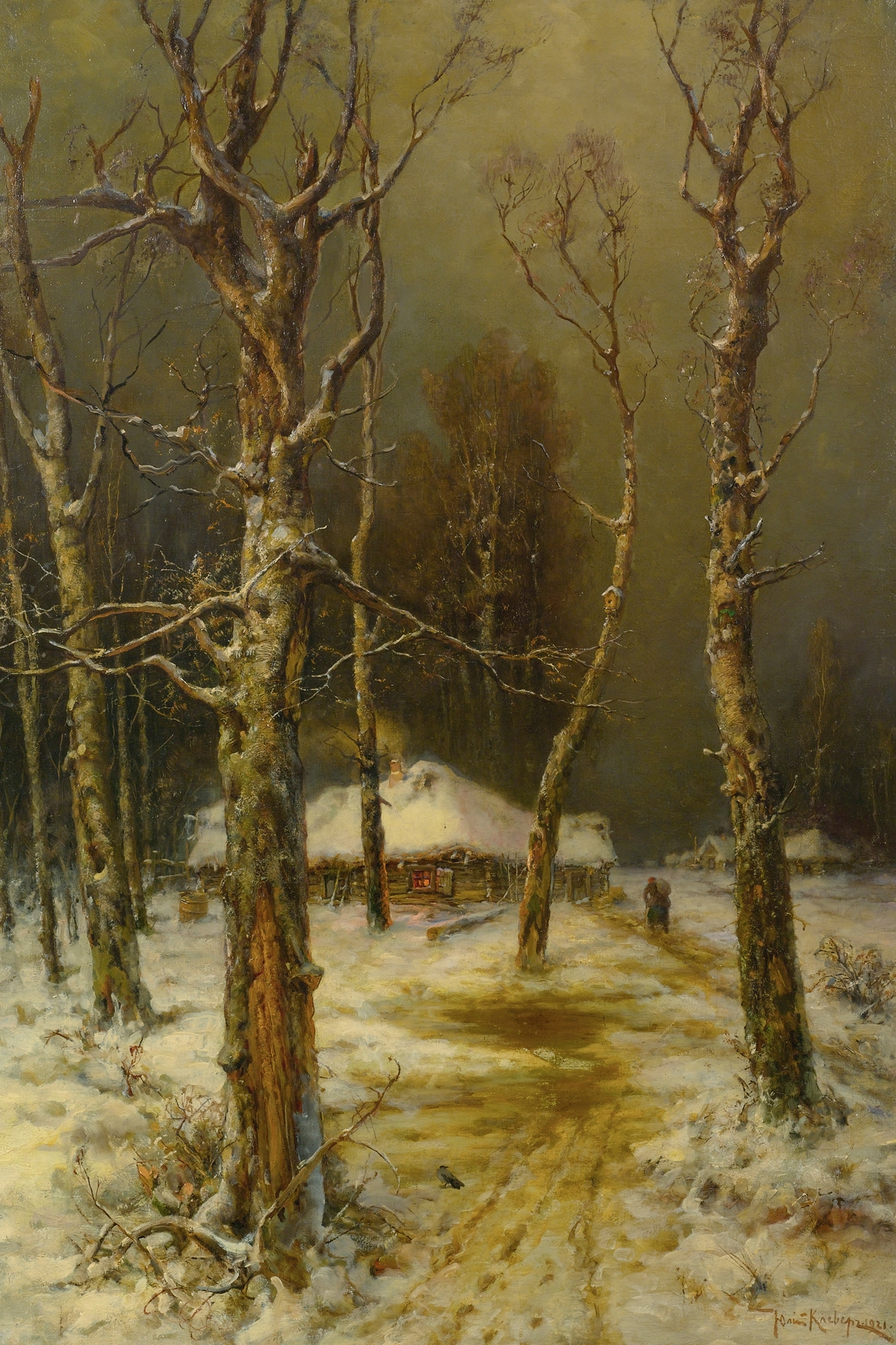
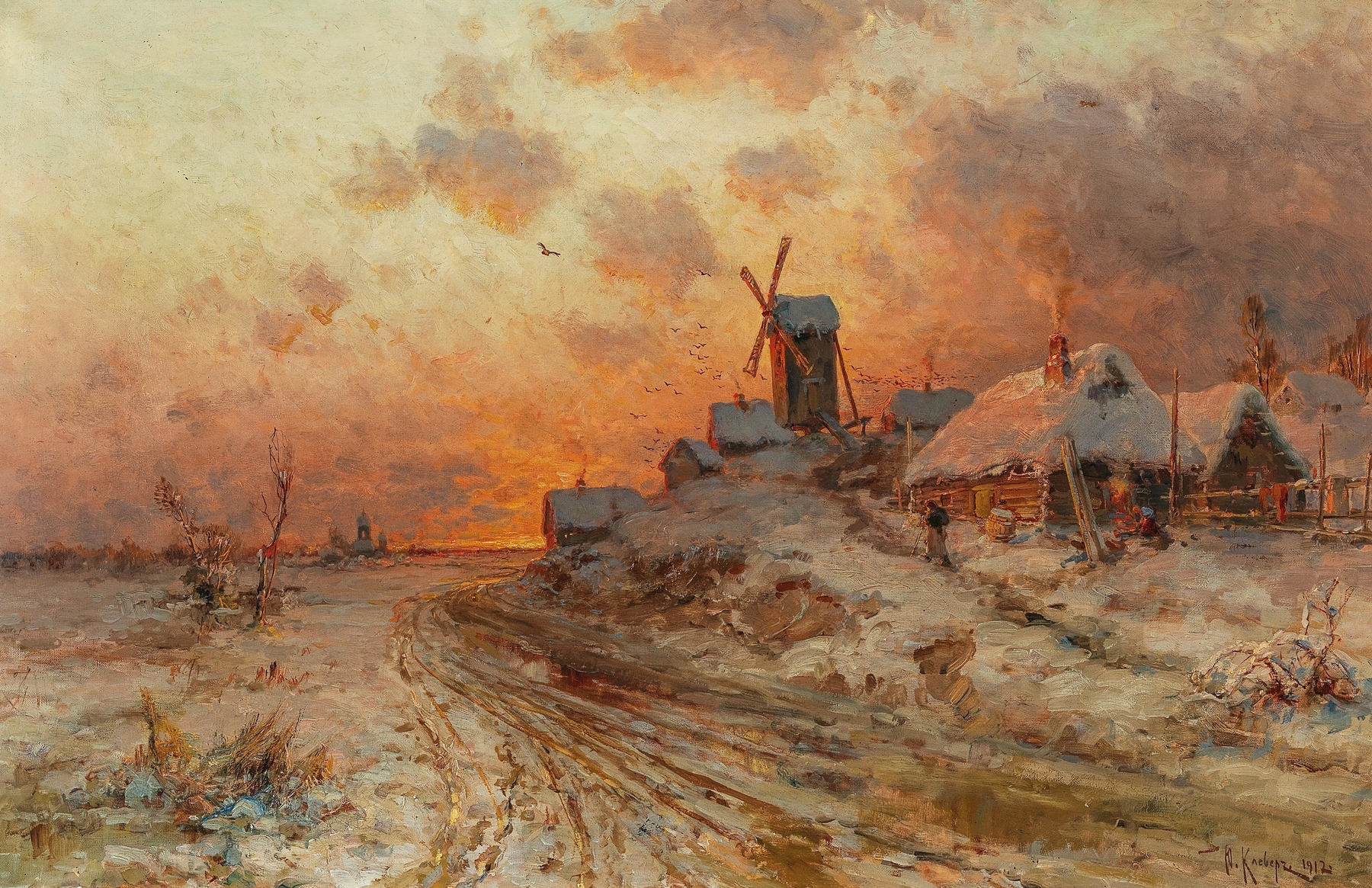
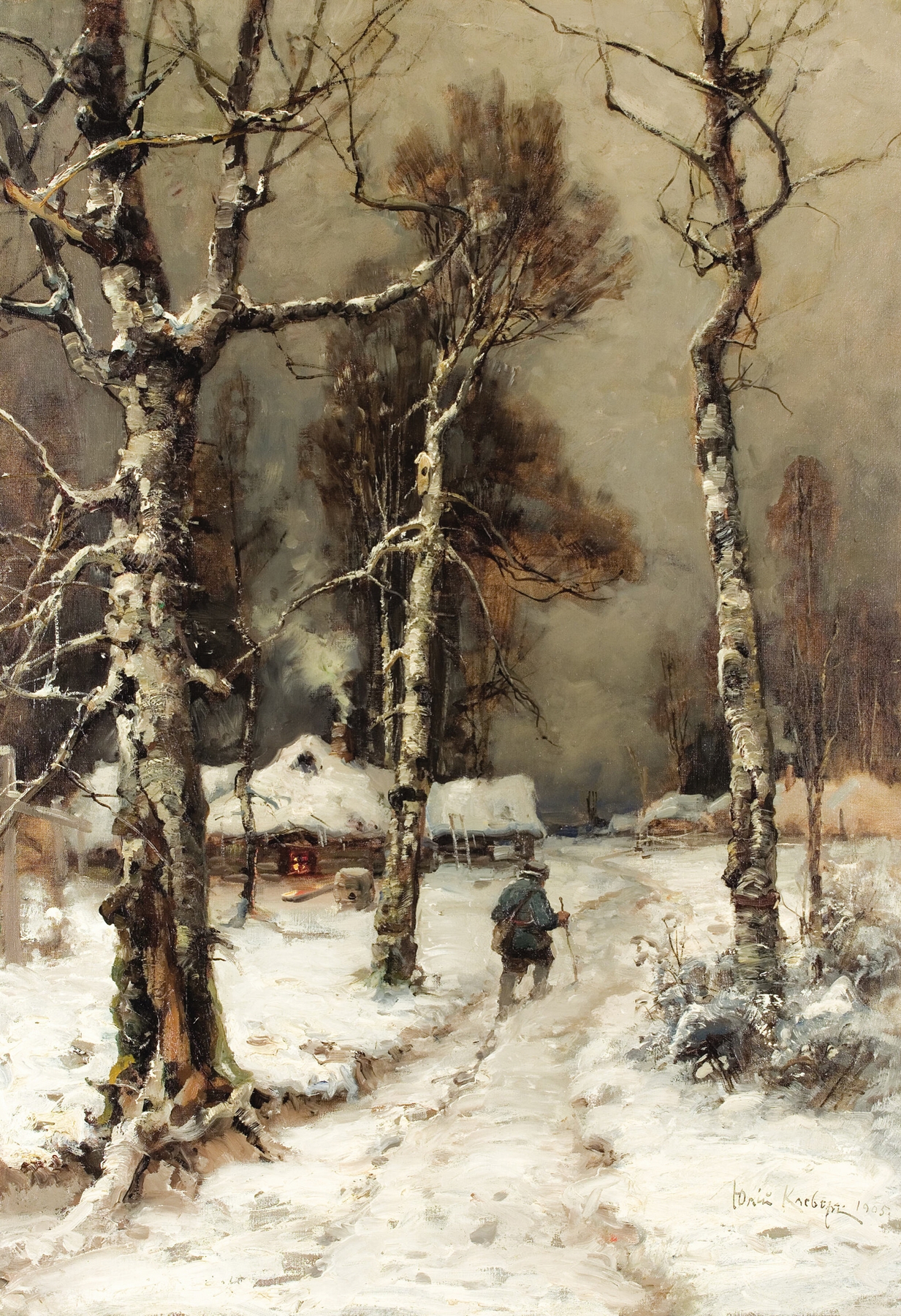
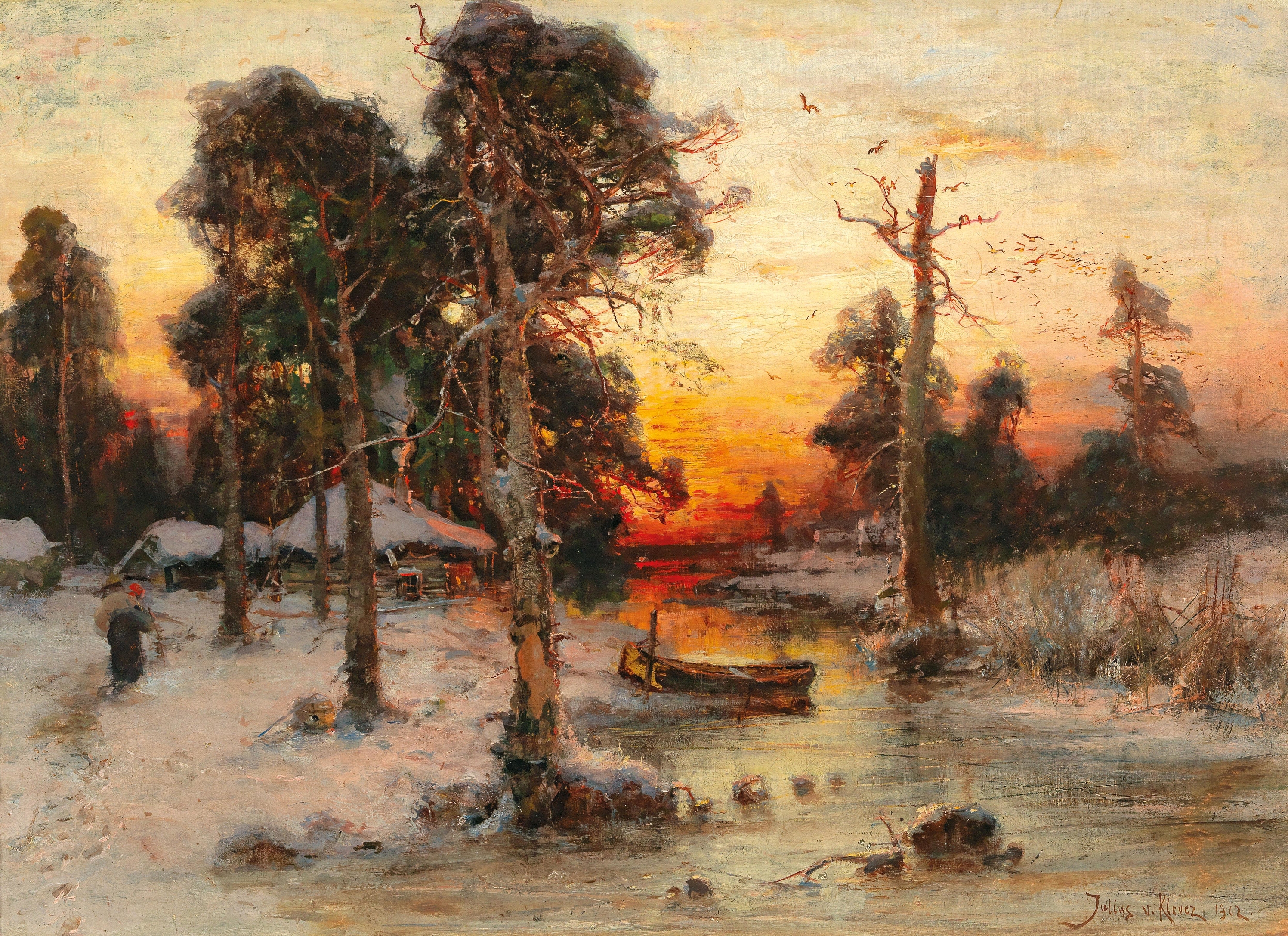
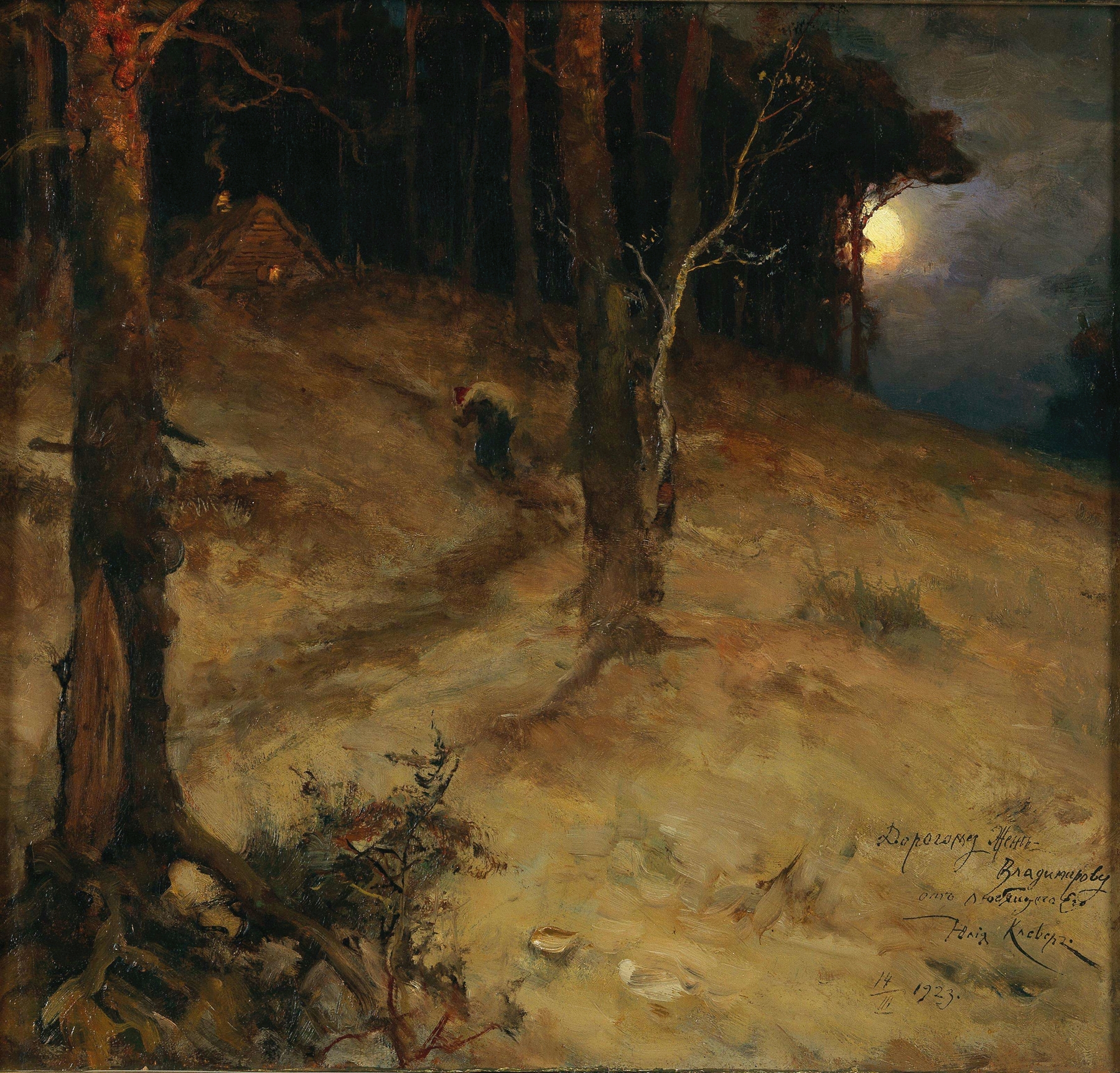
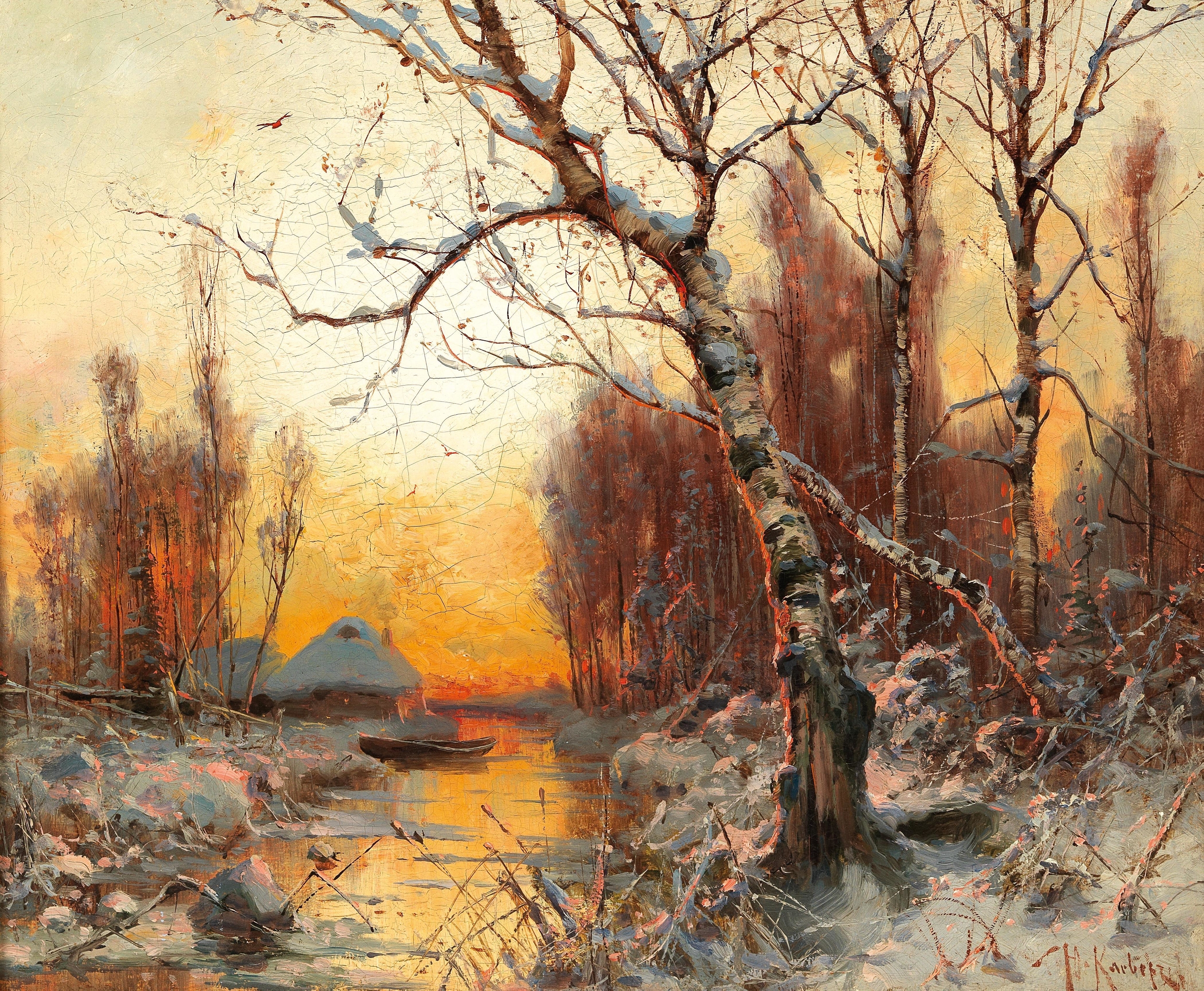
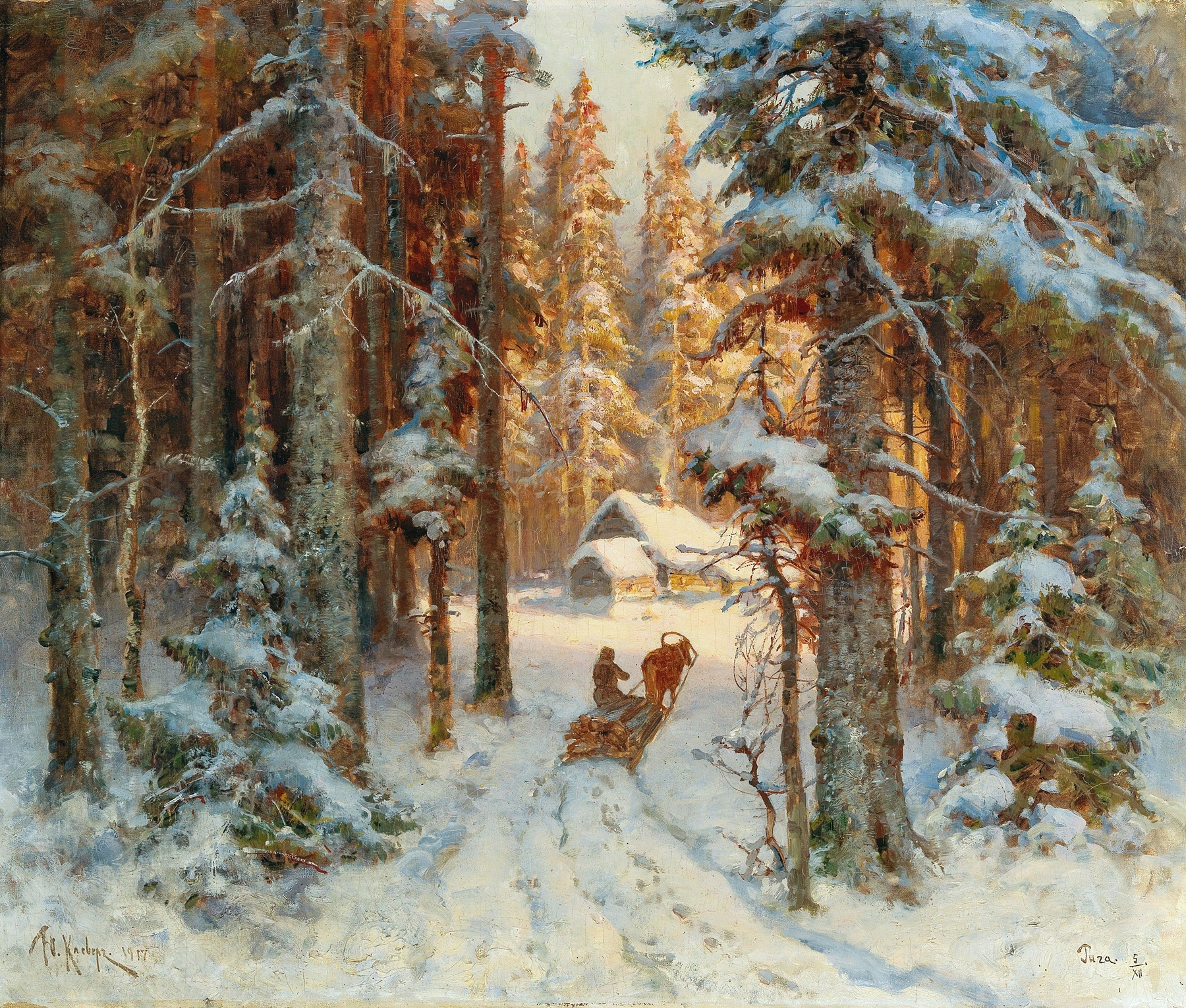
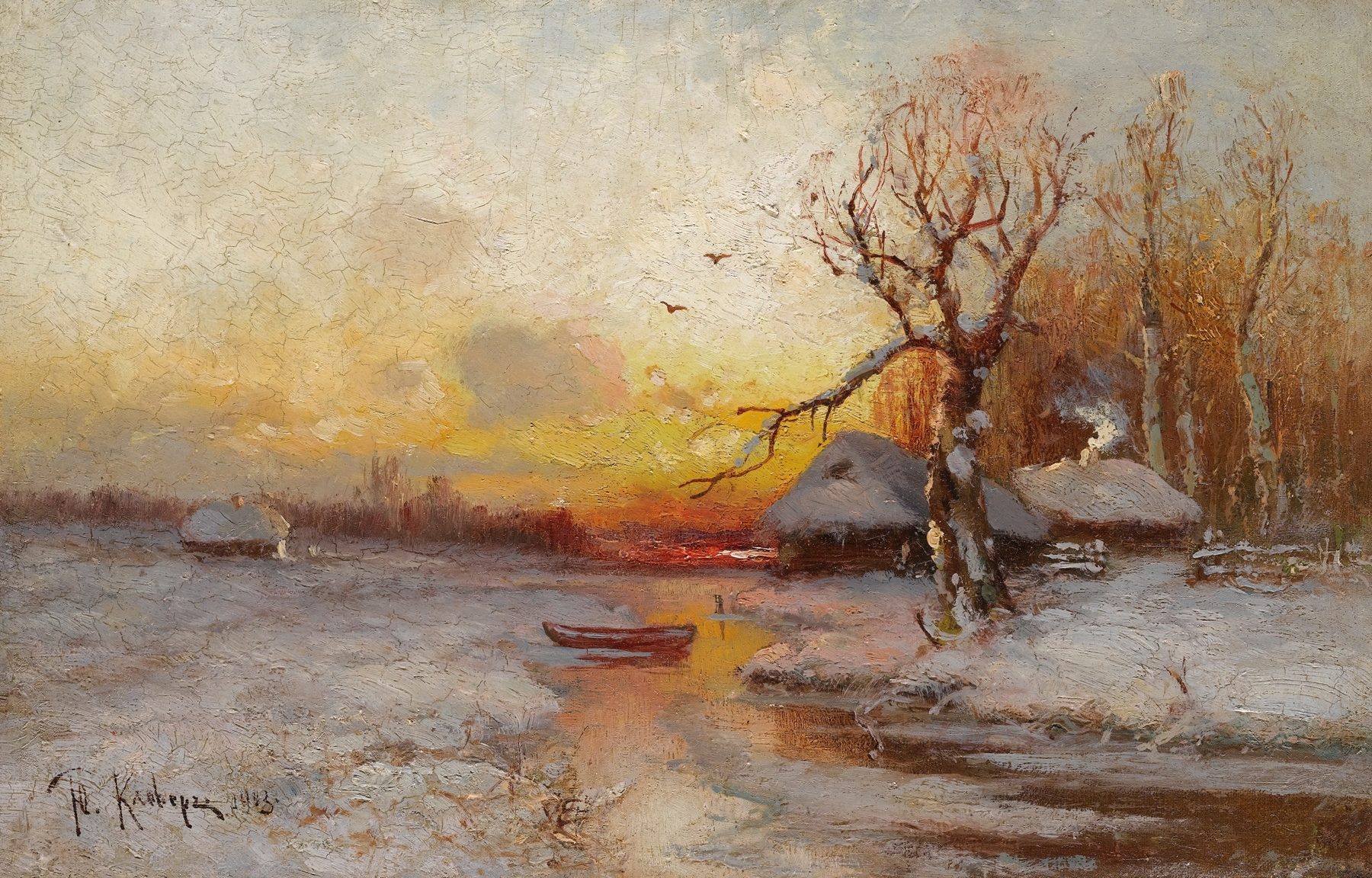
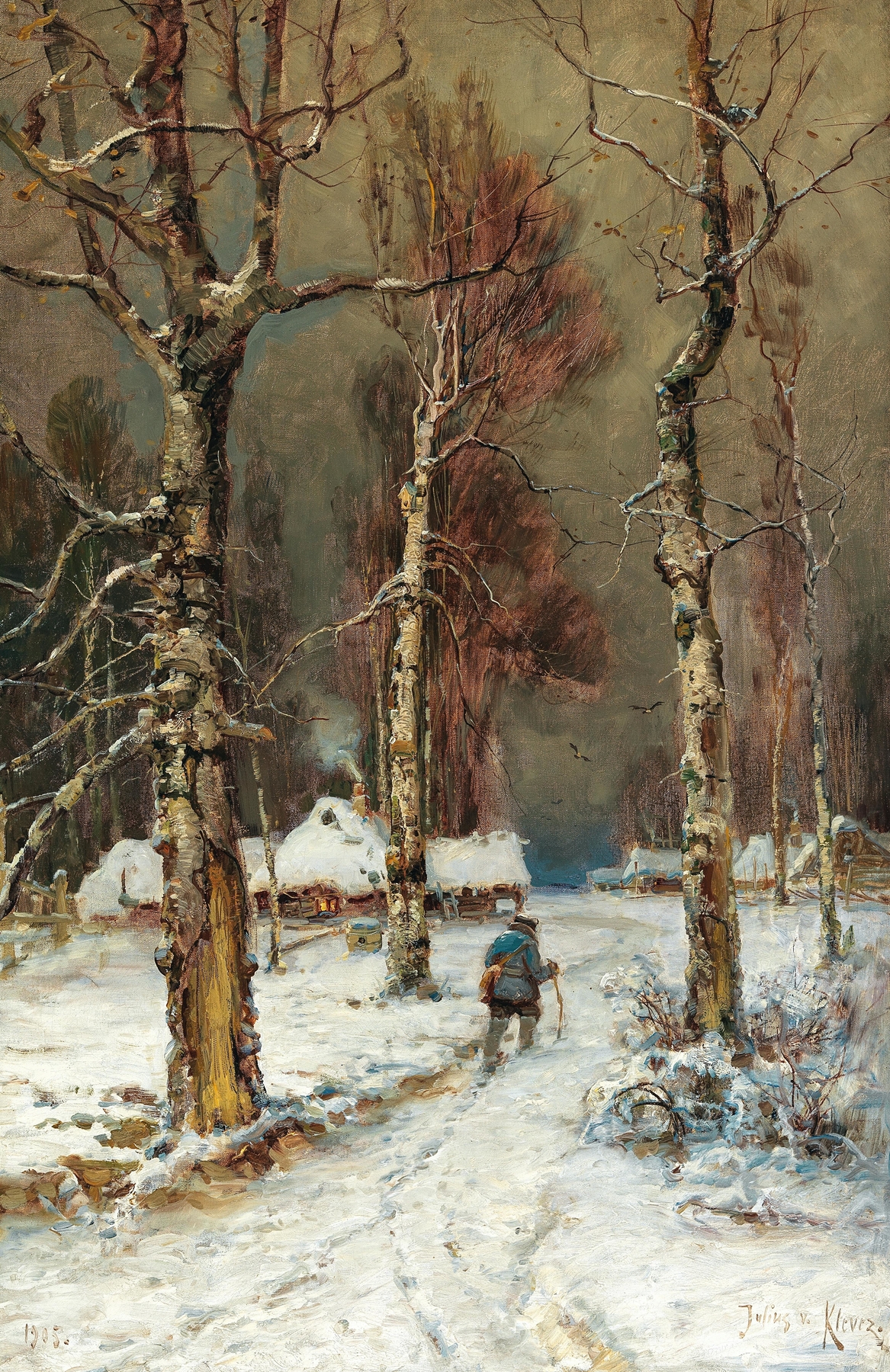
Can paint confess what words never could? In A Winter Evening, the canvas speaks volumes about the delicate balance between warmth and chill, solitude and companionship, light and shadow. Focus first on the soft interplay of blues and whites that dominate the scene, evoking the crisp breath of winter. As you take in the vast, snow-covered landscape, notice how the gentle glow from the windows of a distant cabin invites the viewer’s gaze. This warm light contrasts sharply with the cold hues surrounding it, creating a visual dialogue that draws you into the heart of the painting.
The delicate brushwork captures the falling snow, transforming it into ethereal whispers that dance through the air. Hidden beneath the surface lies a profound emotional tension. The isolation of the cabin, situated alone in a vast expanse, embodies both comfort and loneliness. The vibrant warmth spilling from the windows suggests a quiet refuge, yet the surrounding coldness evokes feelings of longing and introspection. This duality reflects the struggle to find harmony within oneself amidst external hardships, emphasizing the perpetual balance between light and darkness.
In 1905, while living in St. Petersburg, Klever created this piece during a time of artistic transition in Russia. The era marked a shift as artists began to explore realism and emotional expression, departing from rigid academic traditions. As he painted, the artist was influenced by the burgeoning Russian avant-garde movement, which sought to convey deeper meaning through everyday scenes, allowing him to capture the sublime beauty of winter while embracing the complexity of human experience.