Homeward Bound through a Wintry Forest — History & Analysis
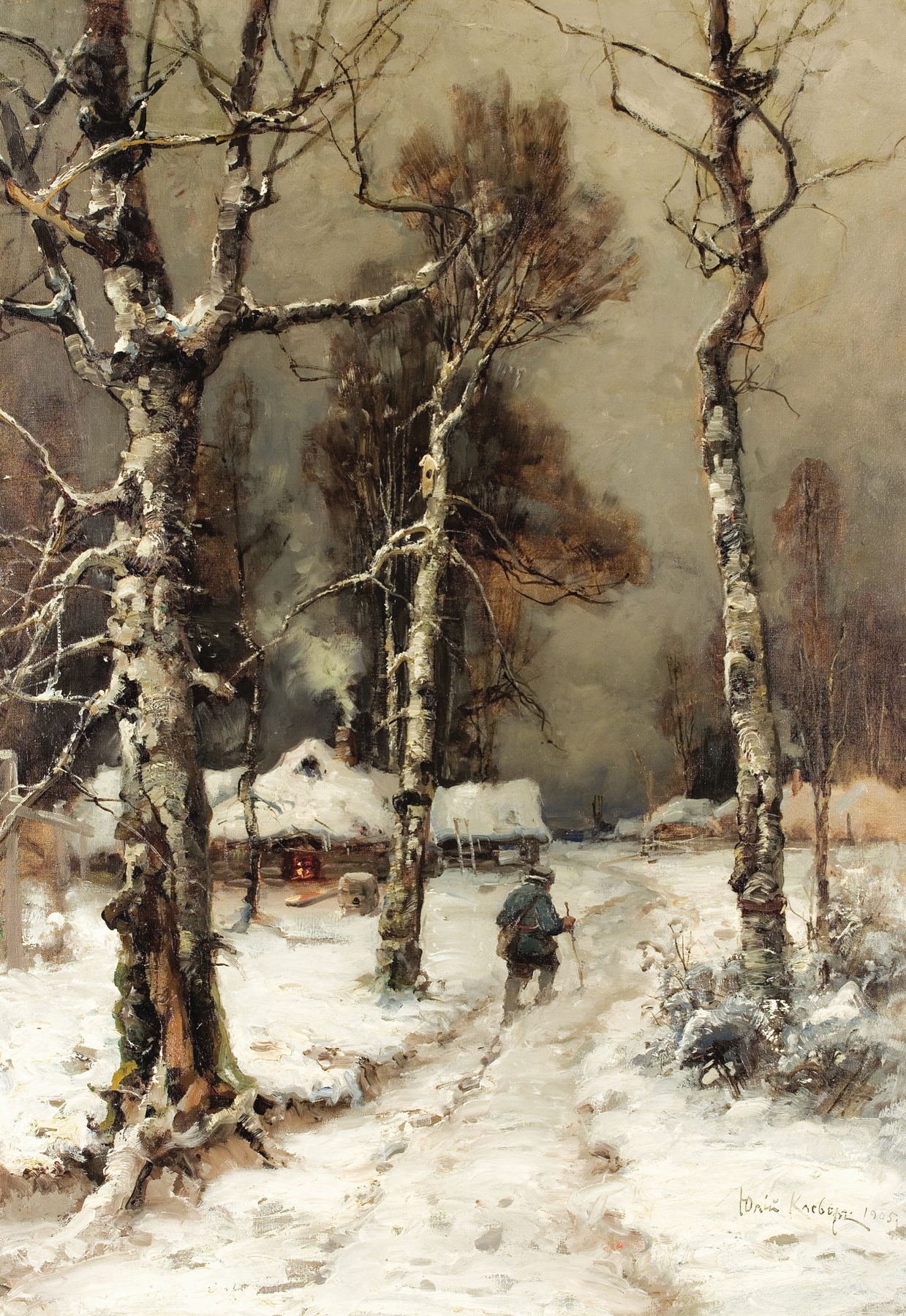
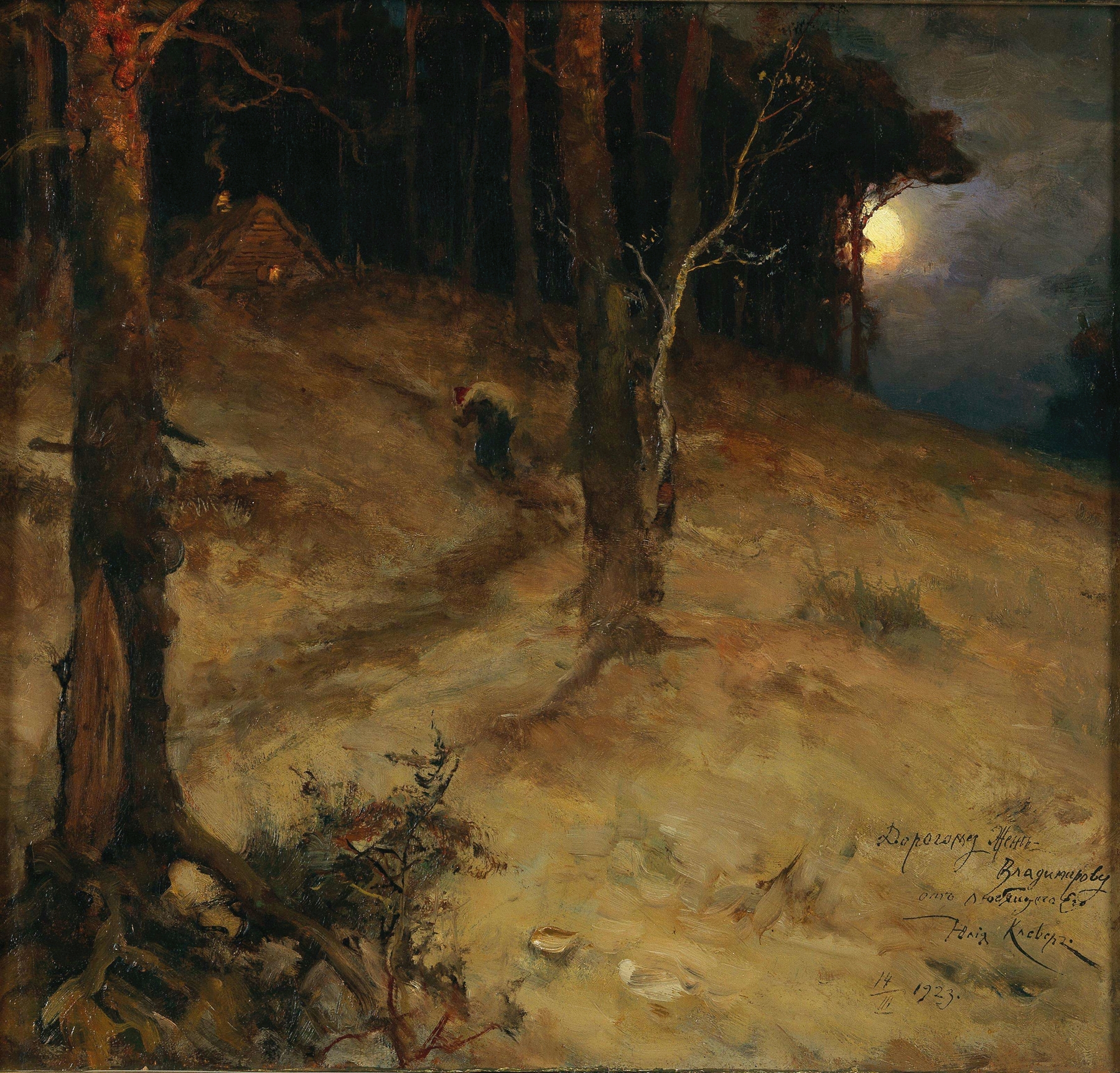
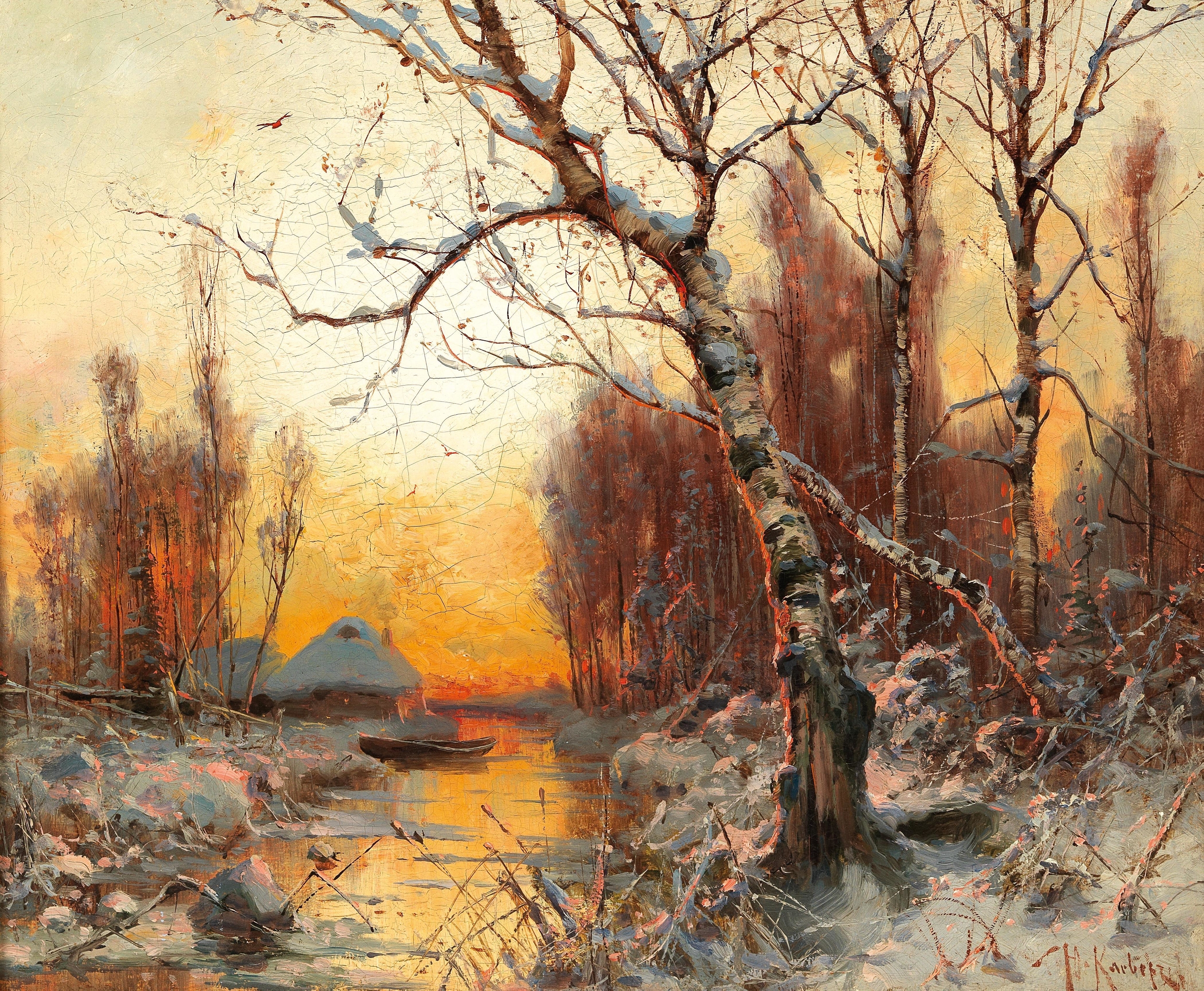
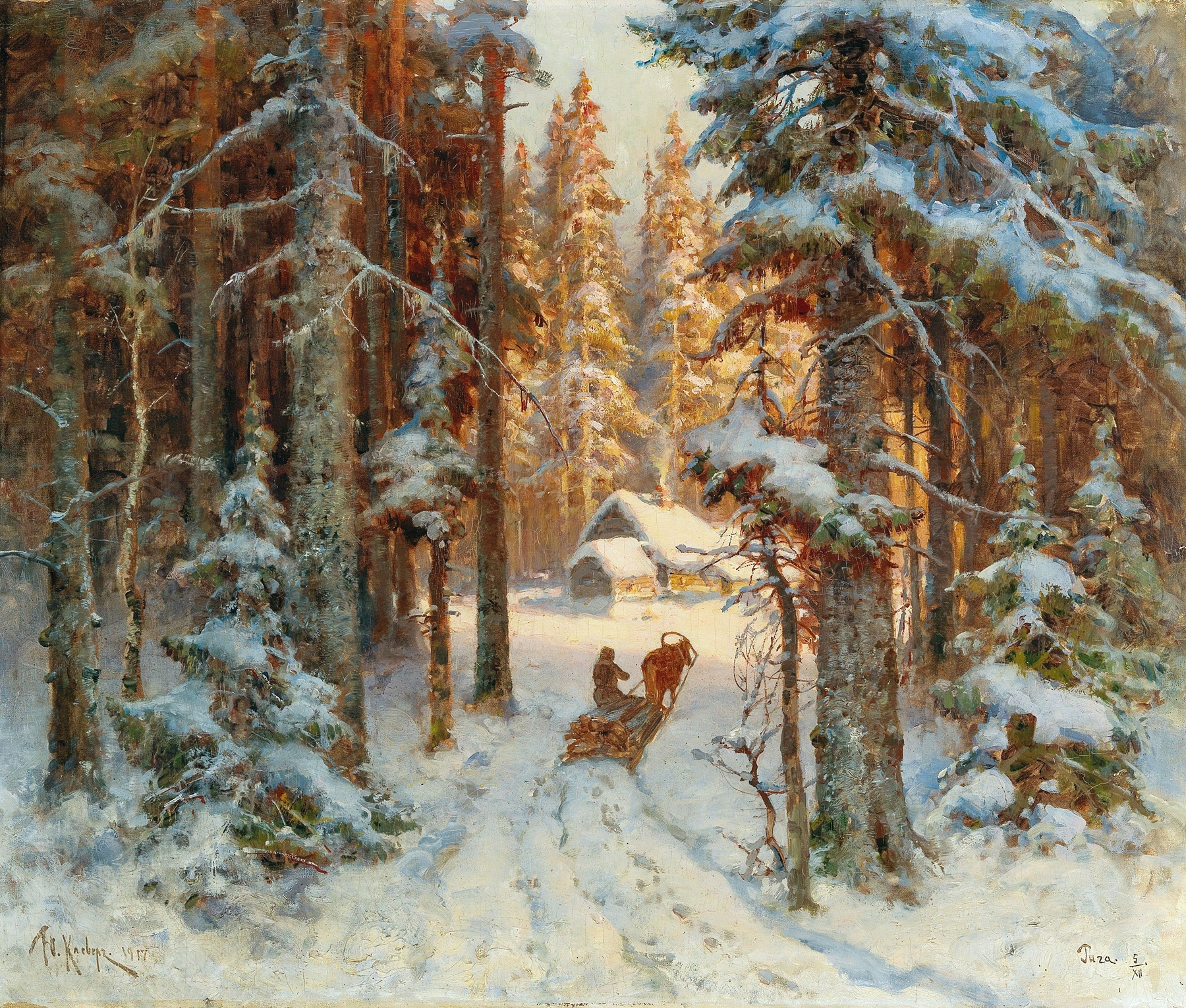
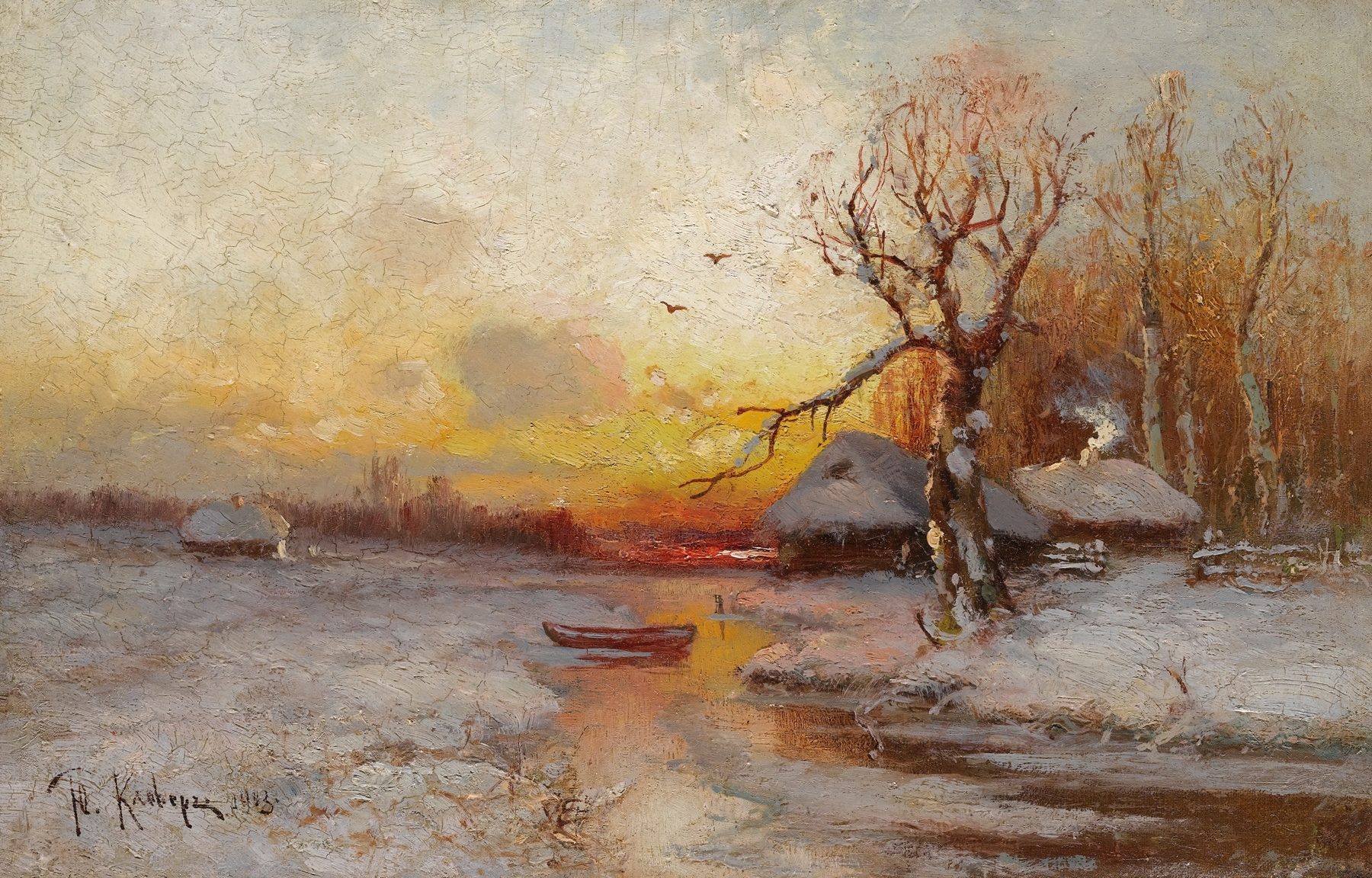
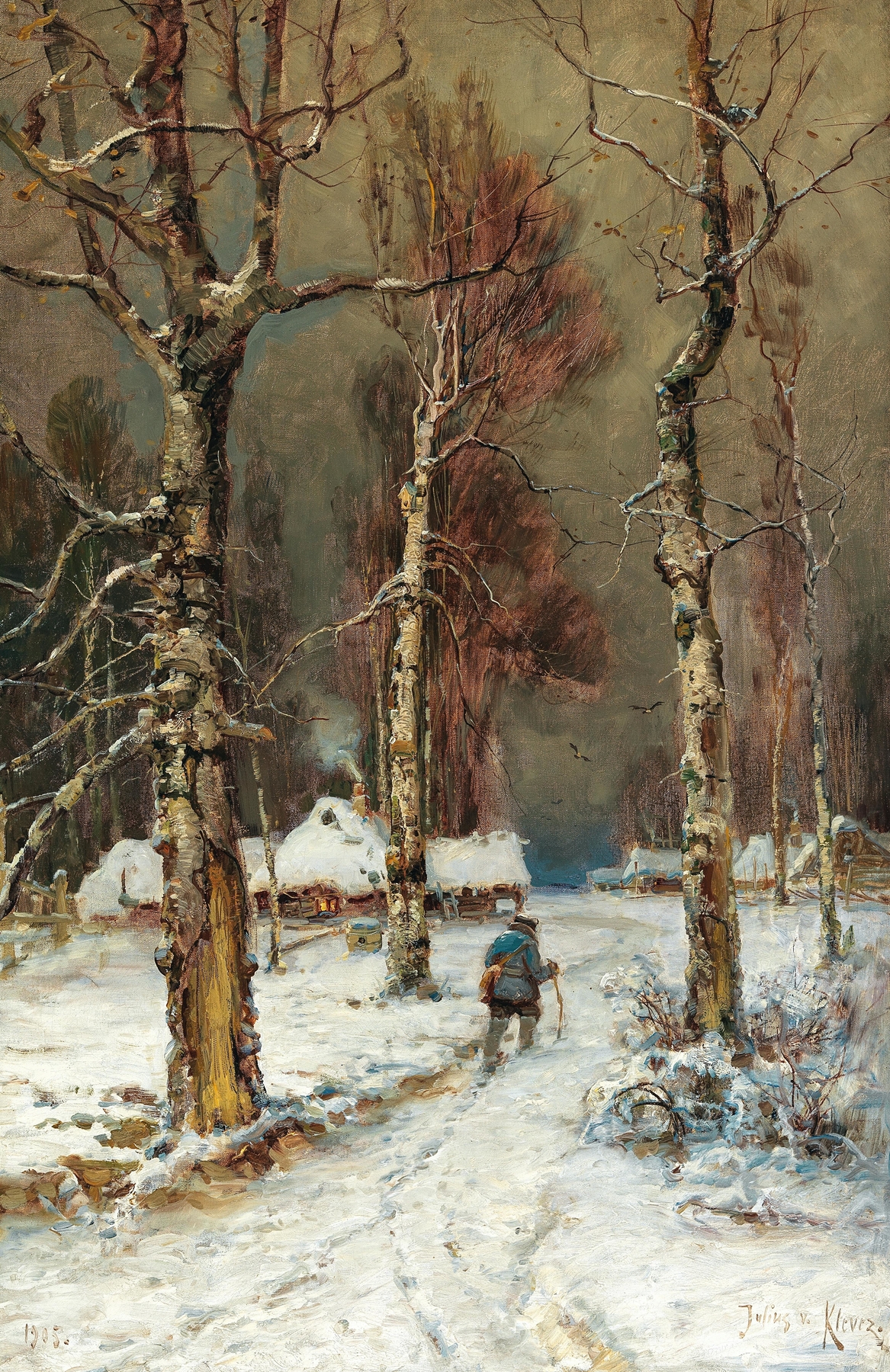
What if silence could speak through light? In the depths of a winter forest, the hush of falling snow creates a sacred space, a moment of suspended time, where every flake whispers the promise of rebirth beneath its cold blanket. Look to the left at the soft glow emanating from the horizon, where the sun struggles to penetrate the dense canopy of snow-laden branches. This contrast between the warm, golden light and the cool blues and whites of the forest draws the viewer into its embrace.
Notice how the delicate brushstrokes have captured each snowflake’s unique descent, weaving a tapestry of tranquility that invites a contemplative stillness. The winding path beckons the eye, leading through the trees as it guides us homeward, instilling a sense of both journey and destination. Hidden within the serene landscape lie emotional tensions: the contrast of the stark, cold environment with the warmth of the sun’s rays symbolizes hope and renewal amid desolation. The interplay of light and shadow reflects the duality of life and death, inviting viewers to ponder their personal journeys of growth.
Each tree, stoic yet resilient, stands as a testament to endurance, hinting at the cyclical nature of existence and the inevitability of change. In 1905, at a pivotal moment in his career, the artist created this piece while living in Russia's vibrant cultural milieu. The early 20th century was marked by a growing interest in nature and a move away from realism towards more expressive forms. Klever’s work reflects this transition, embodying the themes of transformation and introspection that resonated deeply within the broader art movement of his time.