Homeward Bound through a Wintry Forest — History & Analysis
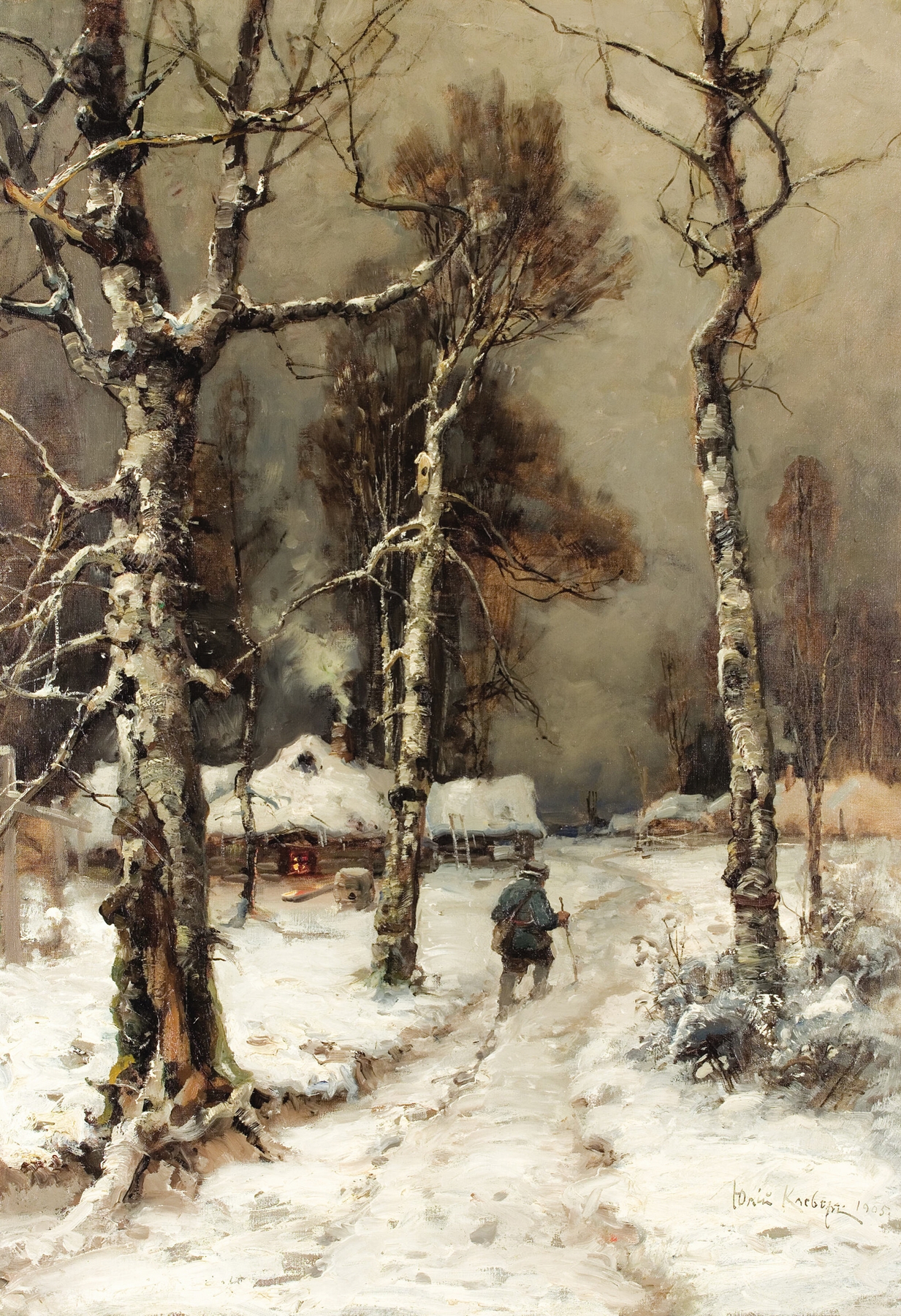
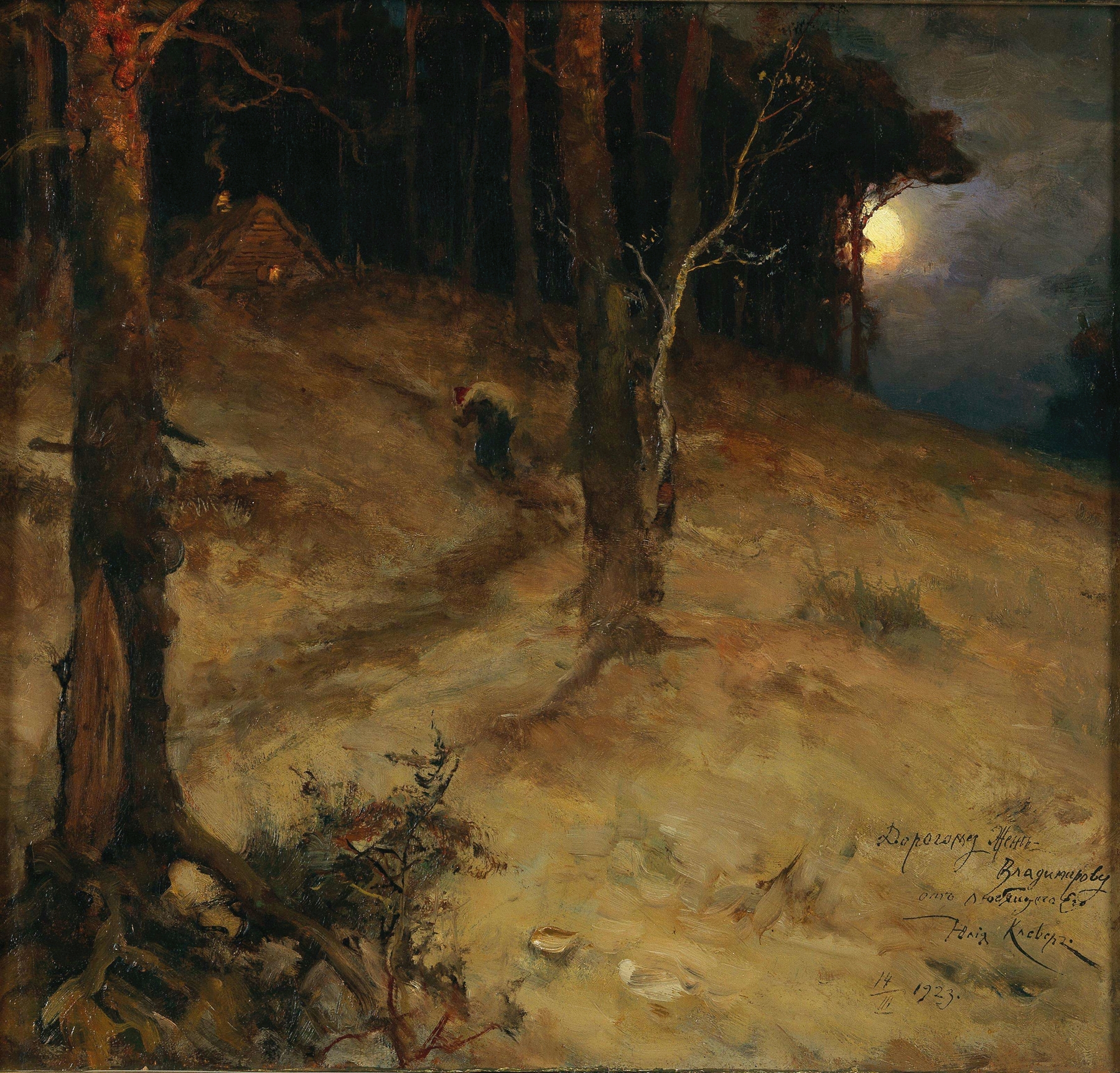
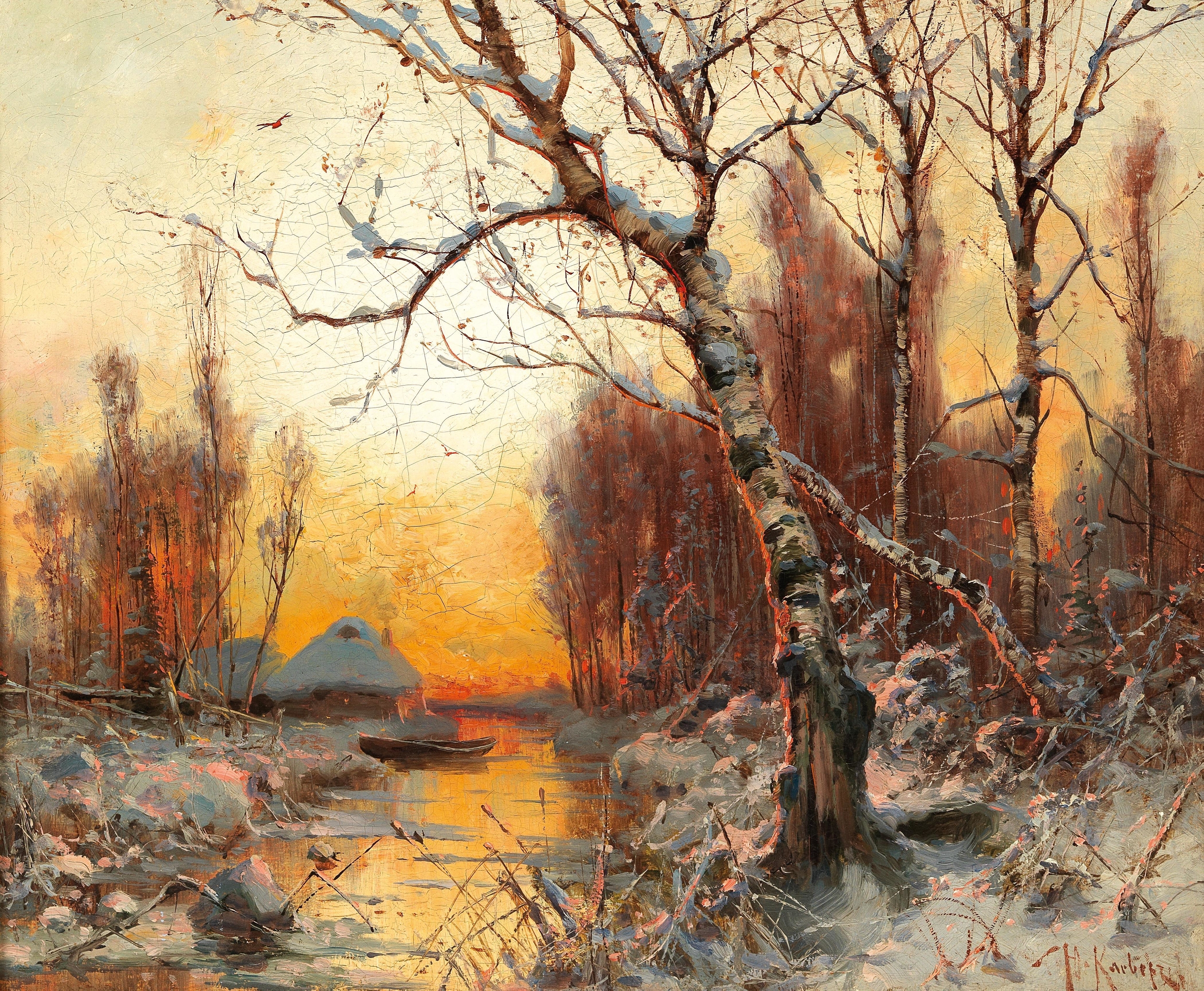
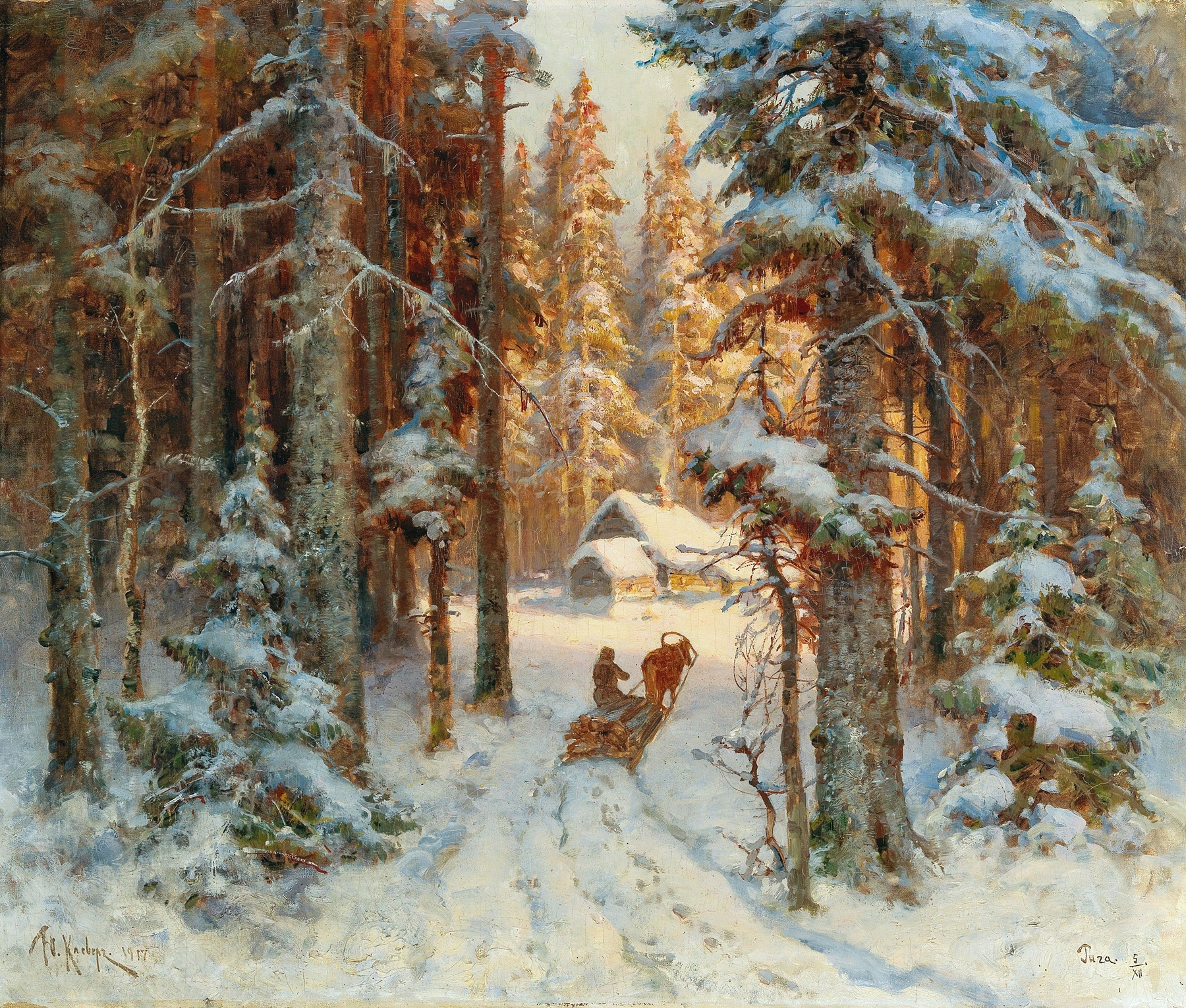
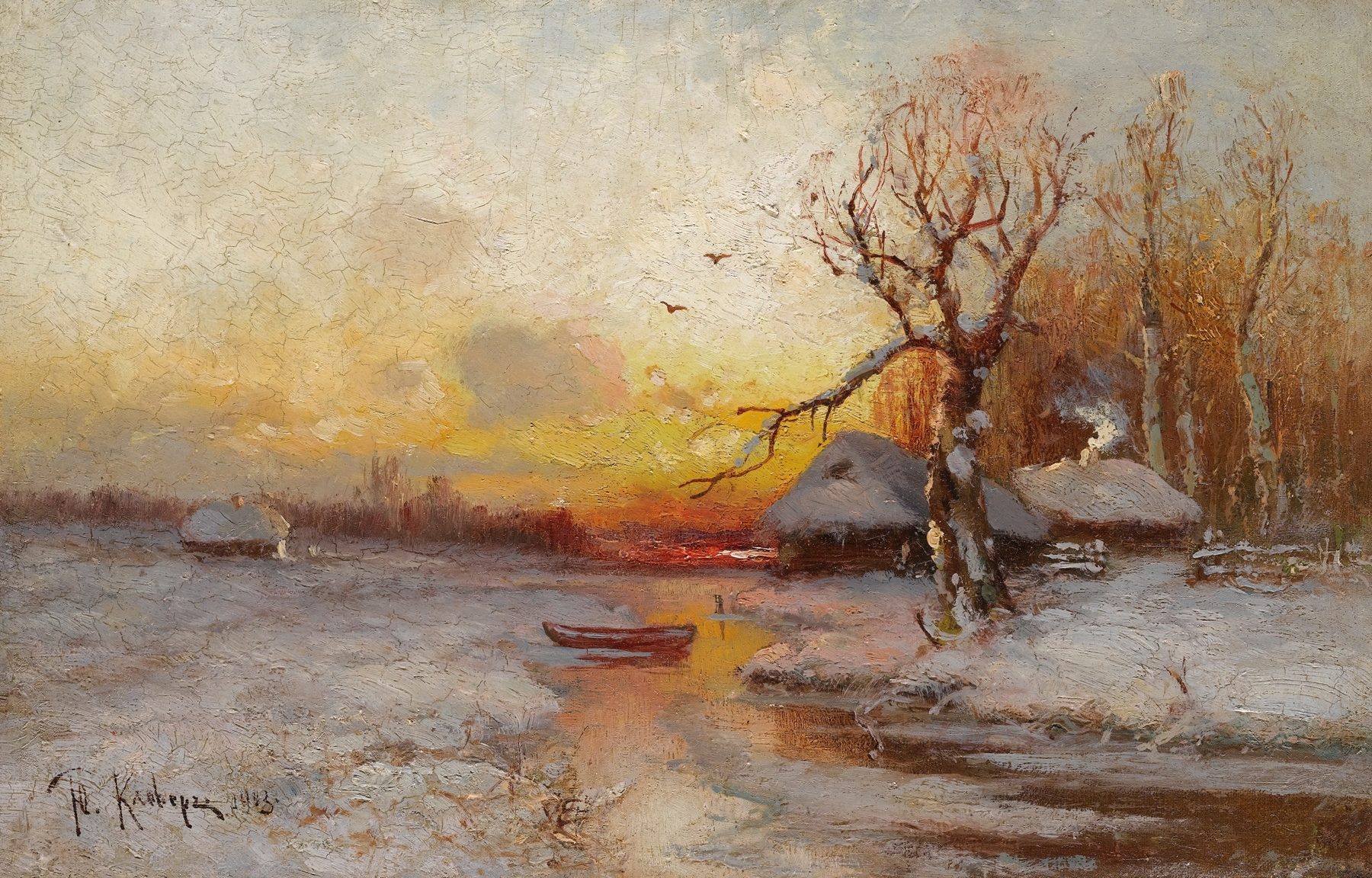
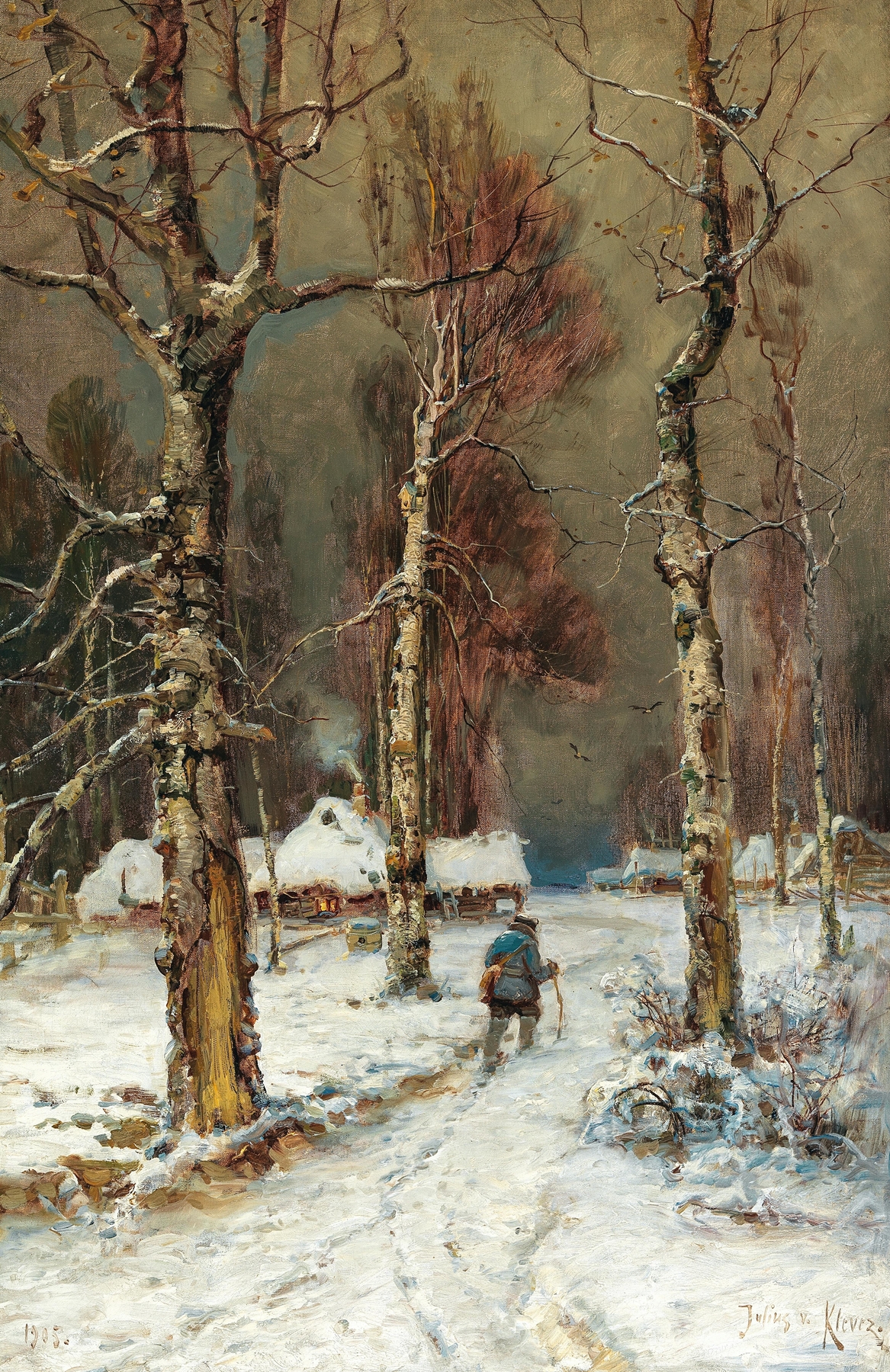
When did color learn to lie? The hues that dance in the shadows and light of winter tell tales of yearning and the divine, whispering secrets of a world beyond our grasp. Look to the forefront, where a path meanders through layers of snow, inviting yet daunting. The trees, towering sentinels draped in white, create a natural cathedral, their dark trunks contrasting sharply with the pristine blanket below.
Notice how the soft blues and grays punctuate the scene, reflecting the coolness of the air while hinting at warmth, as sunlight grazes the horizon. This intricate interplay of color draws the viewer deeper into the composition, urging an exploration of both the physical space and the emotions it evokes. Amidst this serene landscape lies an undercurrent of tension; the solitude portrayed captures both tranquility and an unsettling isolation. The distant figures trudging through the snow appear both resolute and vulnerable, symbolizing the human struggle against nature’s indifference.
The vibrant touches of sunlight cutting through the frost hold a promise of hope and comfort, yet evoke questions about the journey back to warmth and familiarity—an exploration of divinity in the mundane. Julius Sergius Klever painted Homeward Bound through a Wintry Forest in 1905, during a period of artistic transition in Russia where impressionism was gaining ground. Amidst the changing tides of art, Klever's work reflected both a connection to nature and the complex emotions tied to it, positioning him within a movement seeking beauty and depth amid the simplicity of everyday life.