Amalfi; The Gulf of Sorrento, Figures on a Veranda — History & Analysis
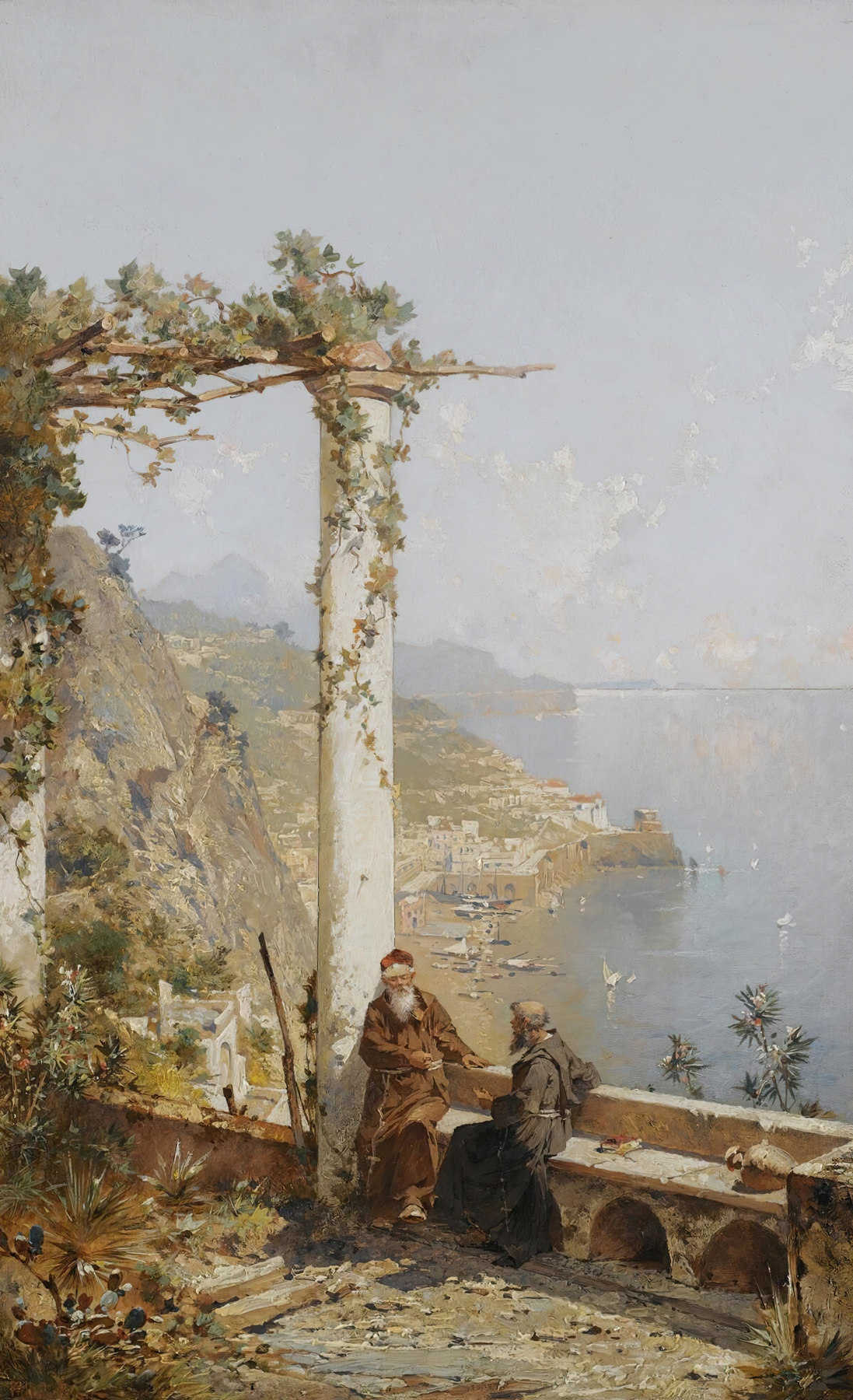
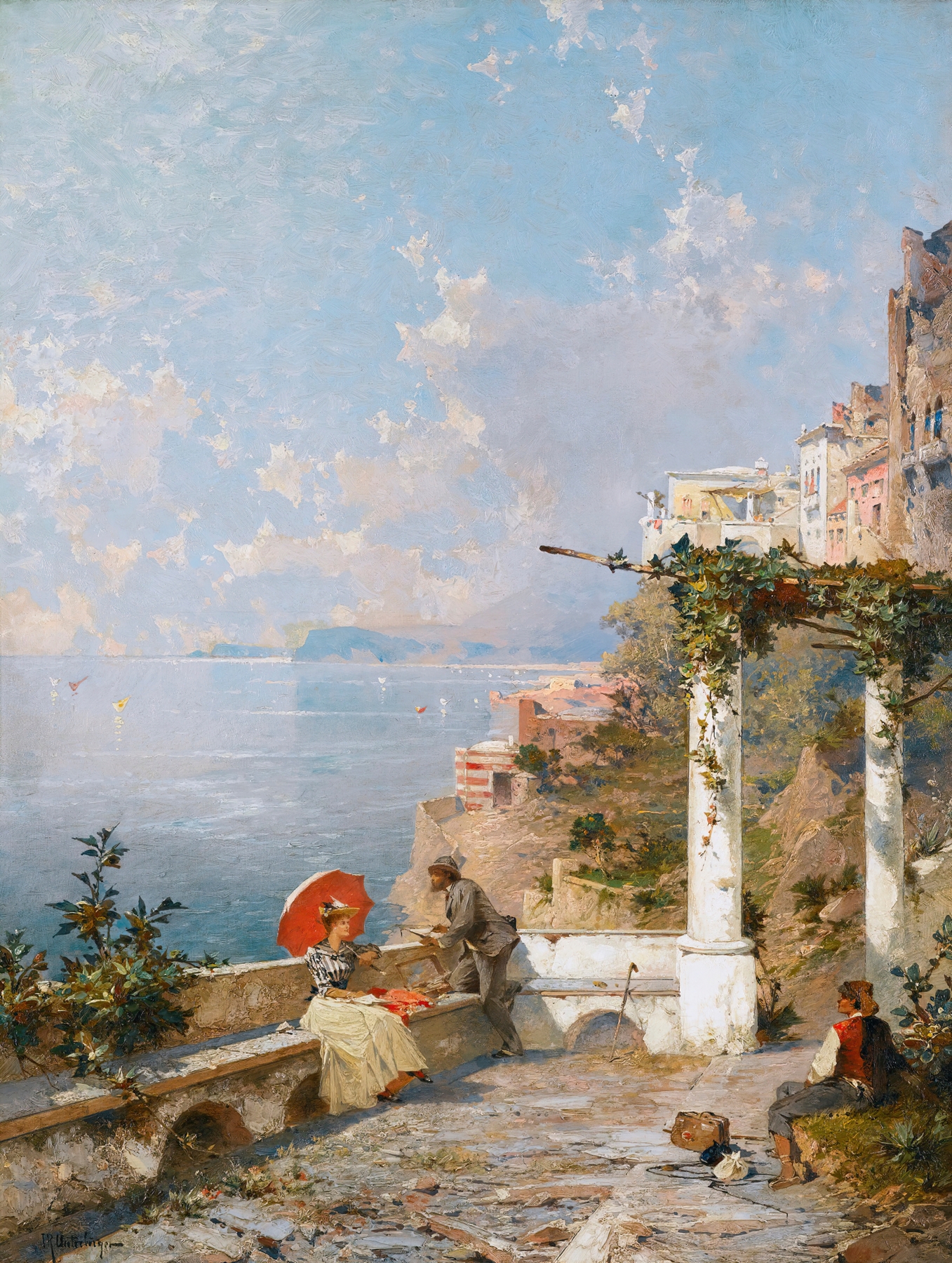
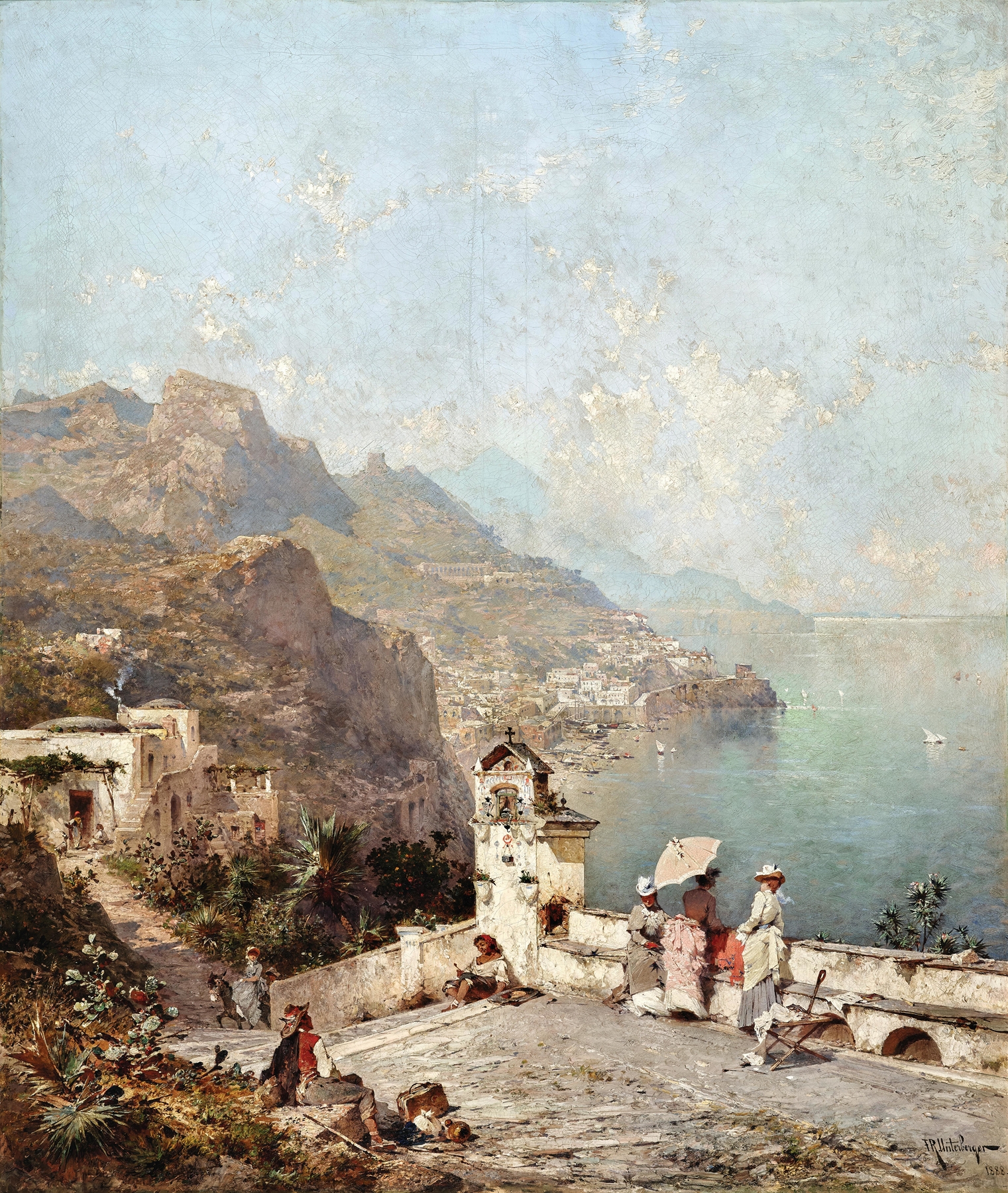
Who listens when art speaks of silence? In Amalfi; The Gulf of Sorrento, Figures on a Veranda, a balance between tranquility and the subtle hum of life unfolds before our eyes. Look to the left at the elegantly draped fabric that flutters softly in the breeze, capturing the essence of the Mediterranean air. The figures, casually positioned on the veranda, invite your gaze with their repose, framed by the iridescent blue of the sea that shimmers beneath the sun. The artist employs a delicate palette of warm earth tones combined with vibrant blues, creating a harmonious dialogue between the architecture and nature that envelops it.
Notice how the light filters through the leaves, casting dappled shadows that caress the scene, enhancing the sense of peace. Yet within this serene tableau lies an undercurrent of life’s complexities. The contrast between the stillness of the figures and the dynamic movement of the ocean hints at a world beyond the frame, suggesting both refuge and the unrelenting march of time. The way the woman gazes into the distance speaks to unspoken desires, while the others remain absorbed in their conversations, evoking a sense of connection and isolation simultaneously.
Each detail, from the textured brushstrokes of the tiles to the gentle sway of the trees, embodies the delicate balance of human experience against nature's grandeur. In 1888, Unterberger painted this work during a time when Europe was experiencing a surge of interest in Romantic and Impressionist styles. Residing in Italy, he captured the essence of coastal life amid a growing appreciation for plein air painting, reflecting both personal enjoyment and the vibrant artistic movement of the era. This piece encapsulates his ability to blend realism with a poetic sensibility, making it a defining moment in his career.