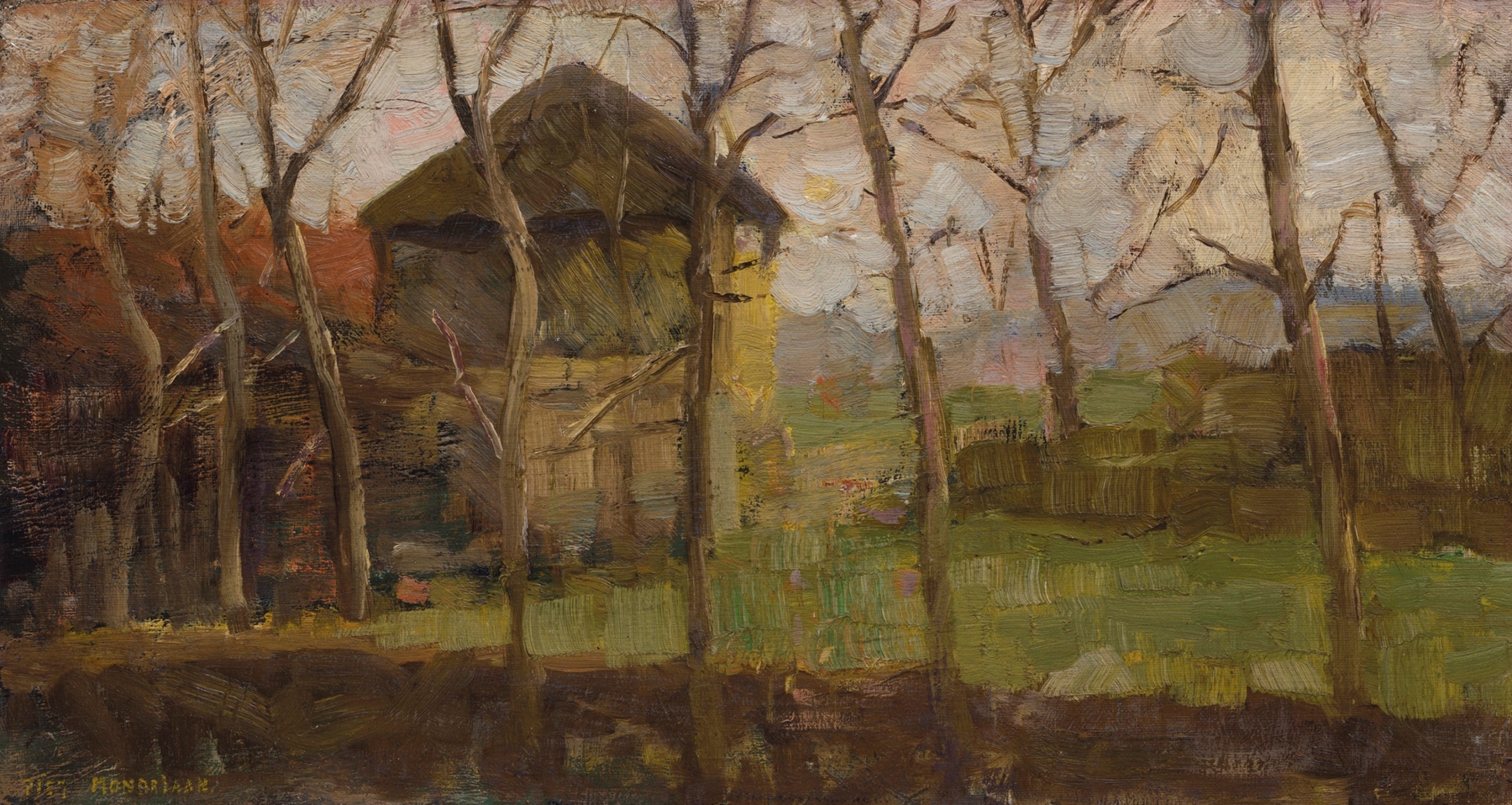
Amsterdam Skyline Viewed from the West — History & Analysis
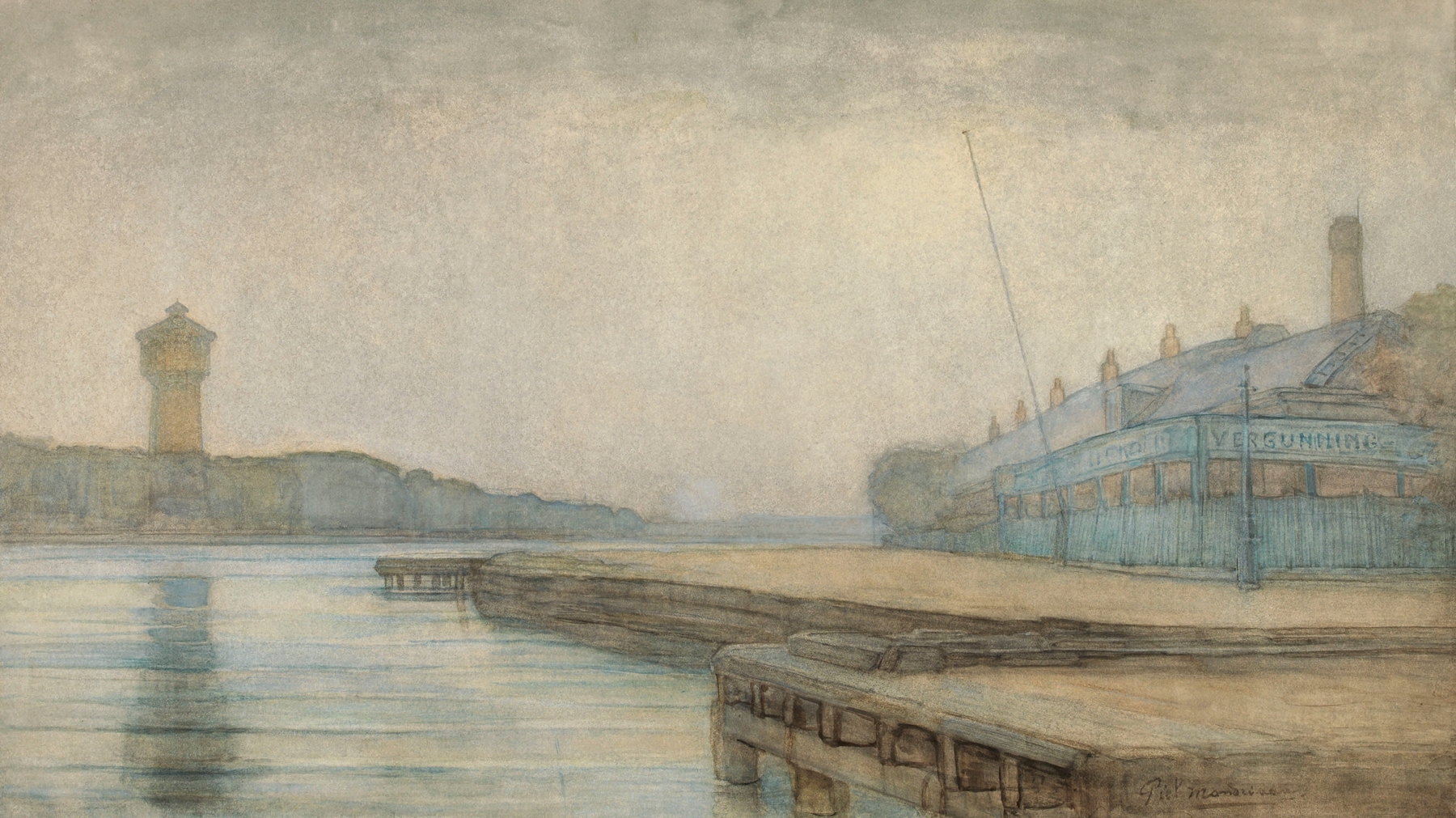
“Sometimes beauty is just pain, disguised in gold.” Memories linger like shadows over the skyline, transforming the mundane into something sacred. In the heart of urban life, what stories do the buildings tell, and what emotions do they conceal? Look to the left of the canvas, where the horizon is punctuated by a series of narrow, angular shapes that rise in a silvery haze. The muted palette of blues, grays, and golds reflects both the industrial character of the city and the transient nature of memory. Notice how the brushstrokes are loose yet deliberate, creating a sense of movement that pulls the viewer’s gaze across the painting.
Each structure stands as a testament to the past, while the diagonal lines suggest an ever-changing world. The tension between abstraction and representation is palpable here. The overlapping rectangles evoke a sense of fragmentation, hinting at the complexity of memory itself—how it can be both beautiful and painful. The gentle play of light and shadow serves to bridge the gap between the real and the ideal, suggesting that what we recall is often a blend of truth and longing.
As one gazes upward, a yearning to connect with the past and the present becomes evident, revealing the artist's profound introspection. During the time Amsterdam Skyline Viewed from the West was created, Mondrian was exploring his artistic identity amidst a city in transition. Painted between 1894 and 1904, this work emerged in a period marked by the rise of modernism and industrialization in Europe. As he experimented with form and color, Mondrian grappled with the interplay of structure and emotion, laying the groundwork for his eventual abstract style.