Boerderijgevel — History & Analysis
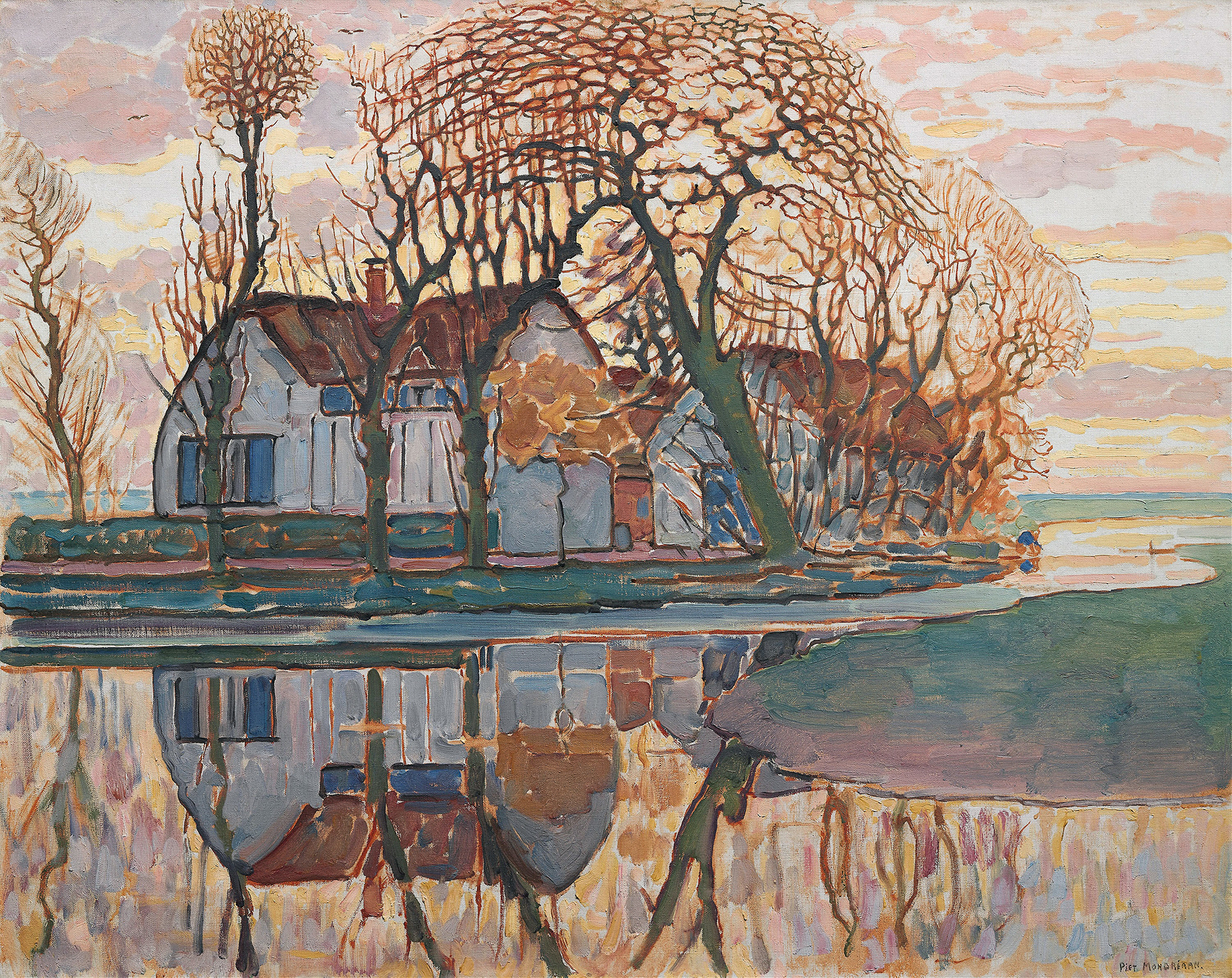
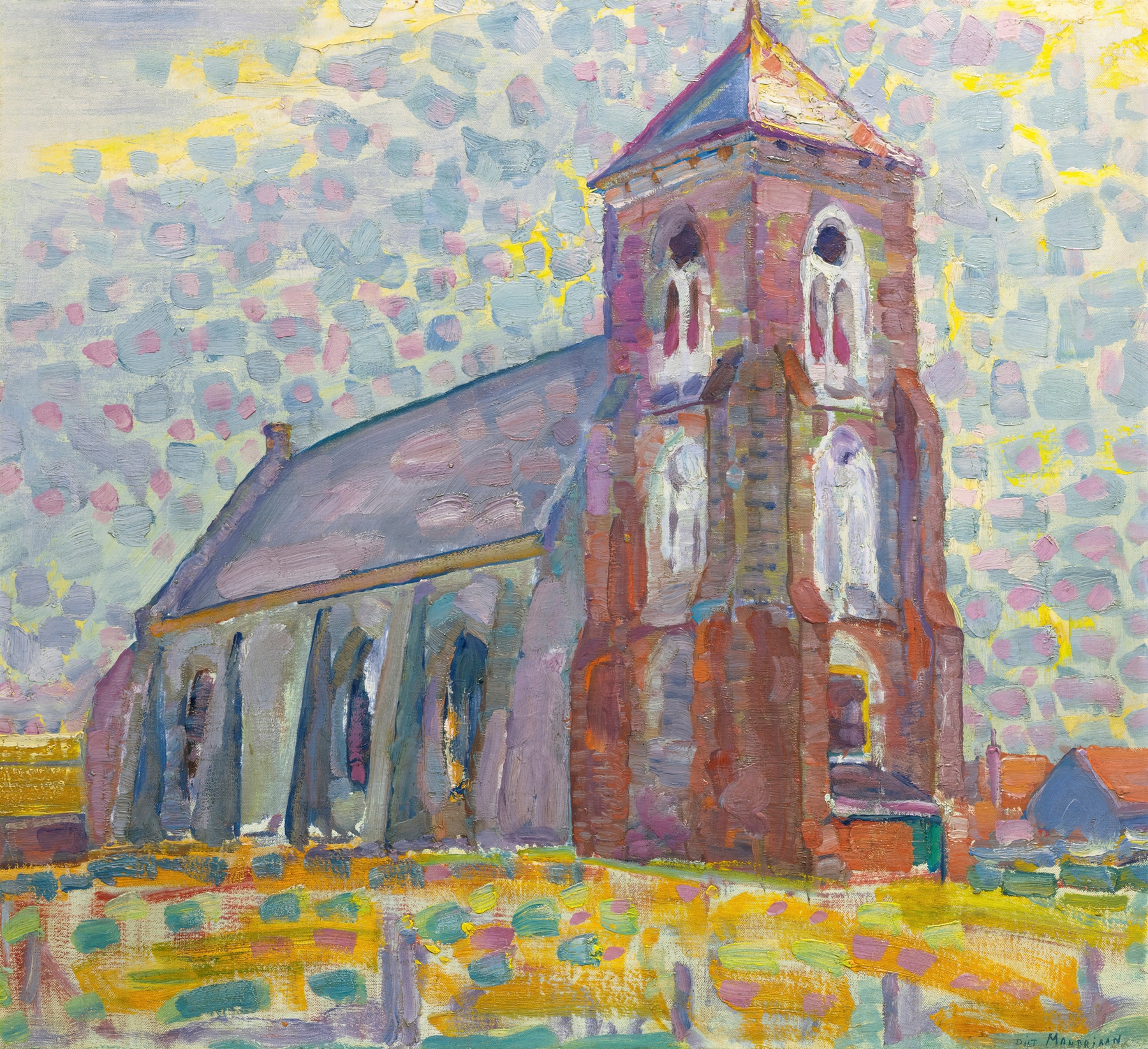
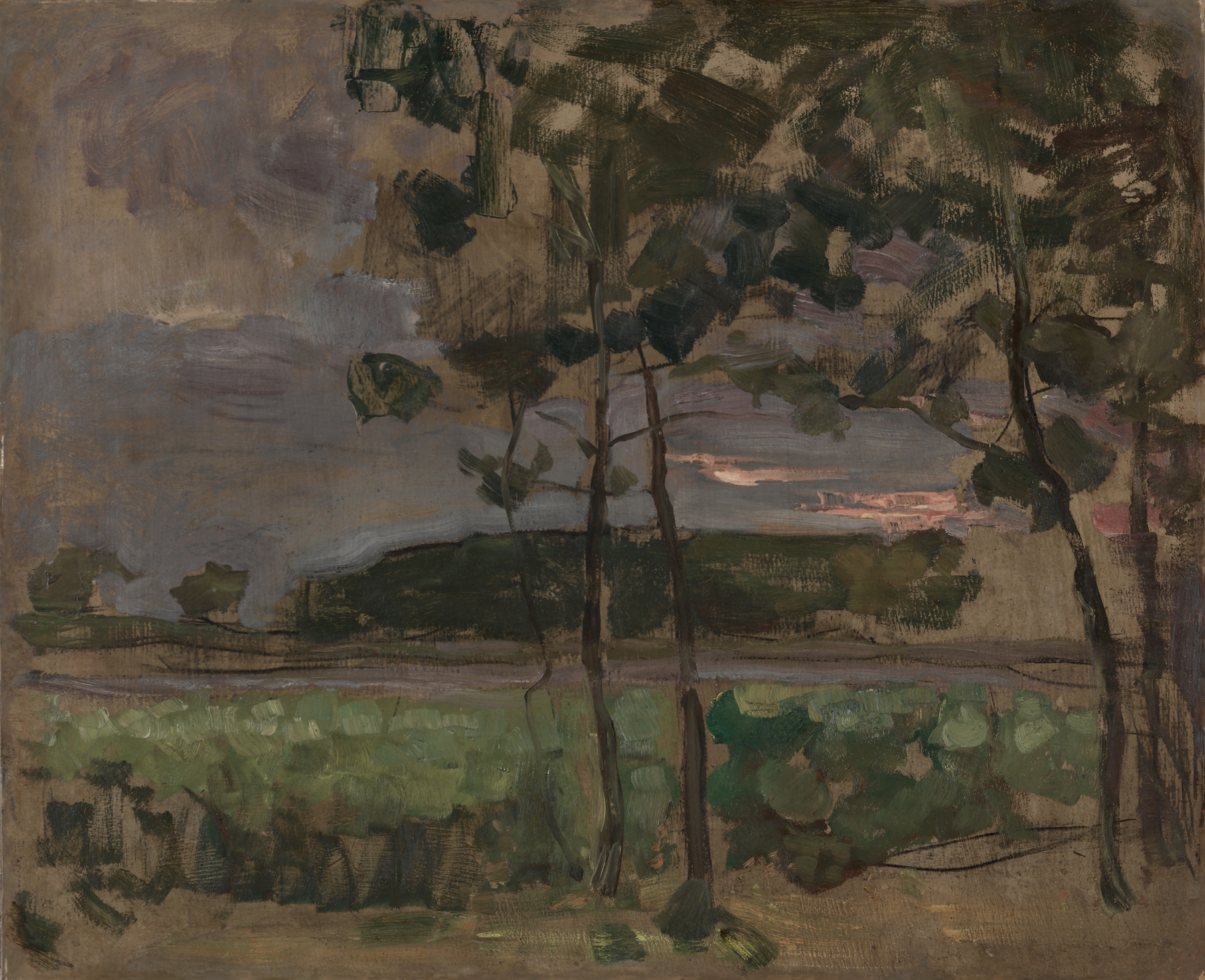
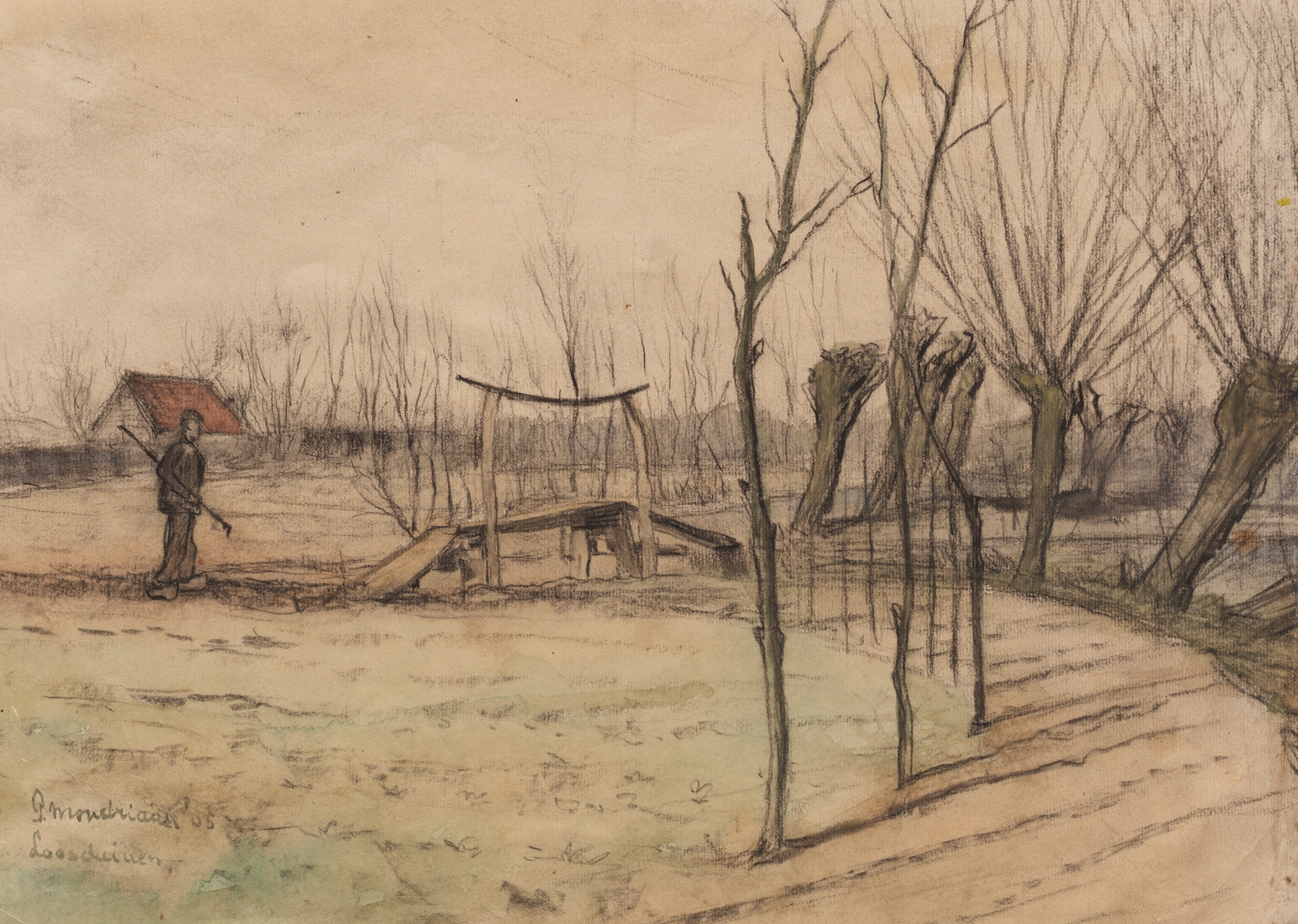
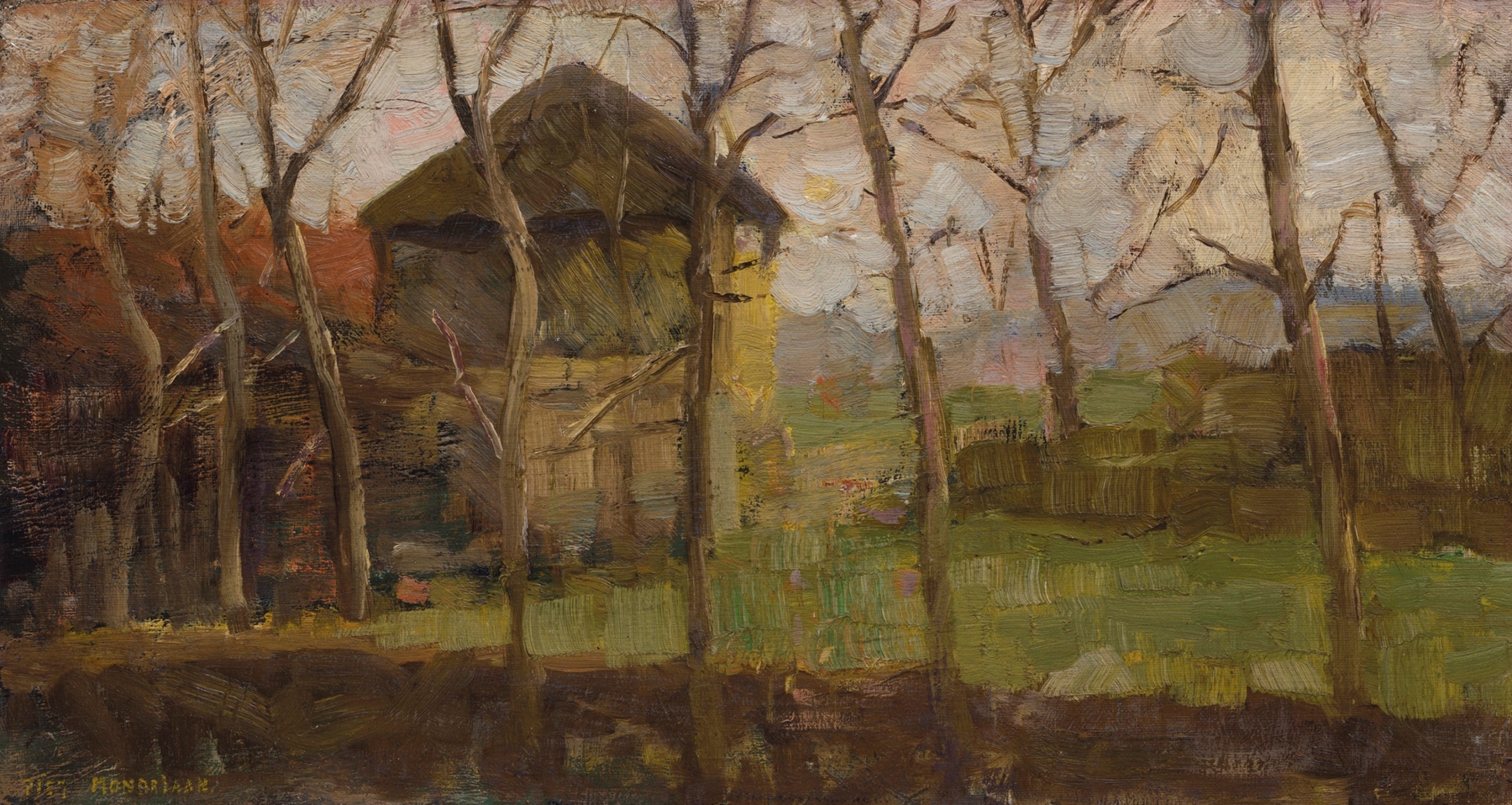
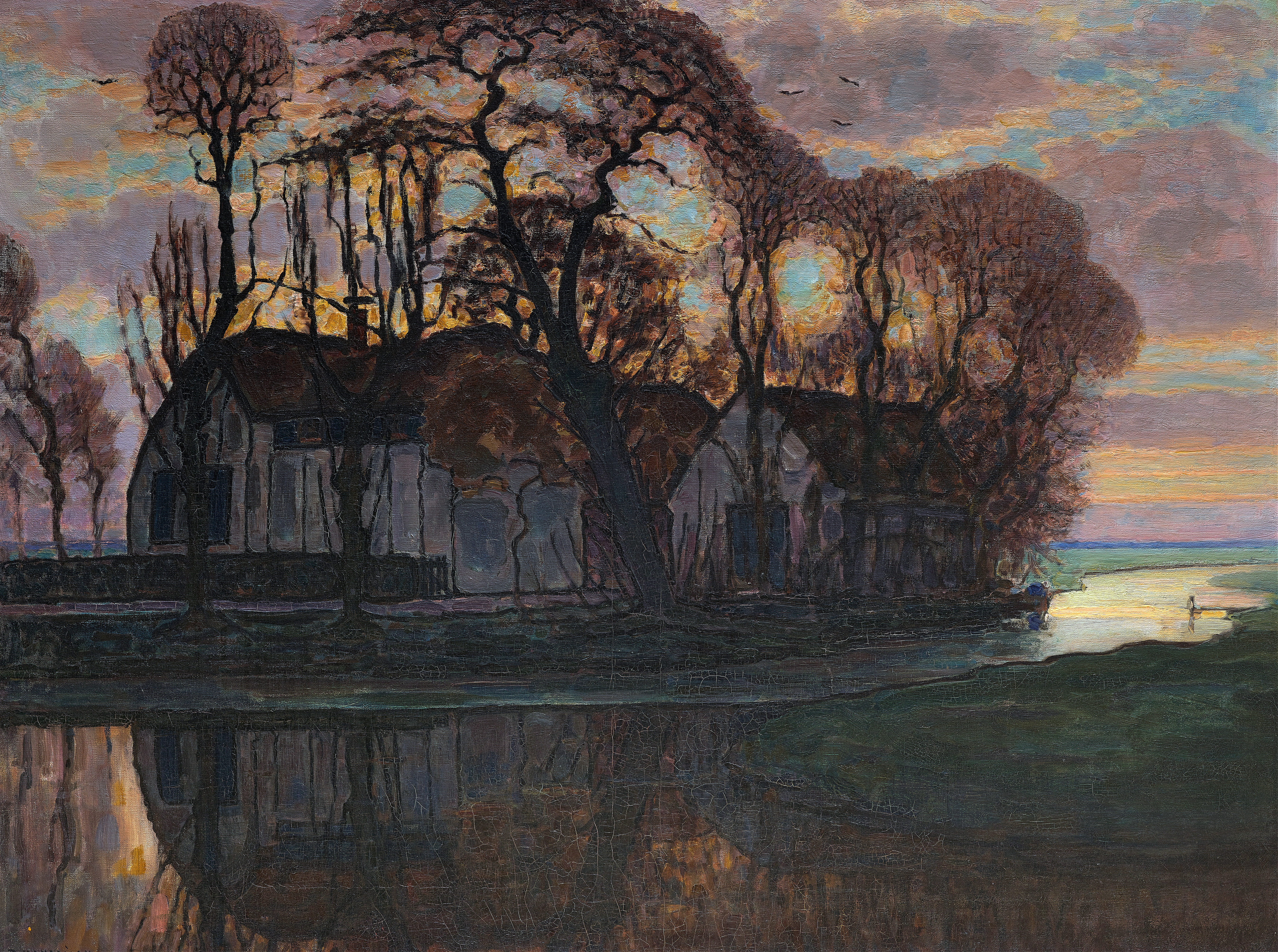
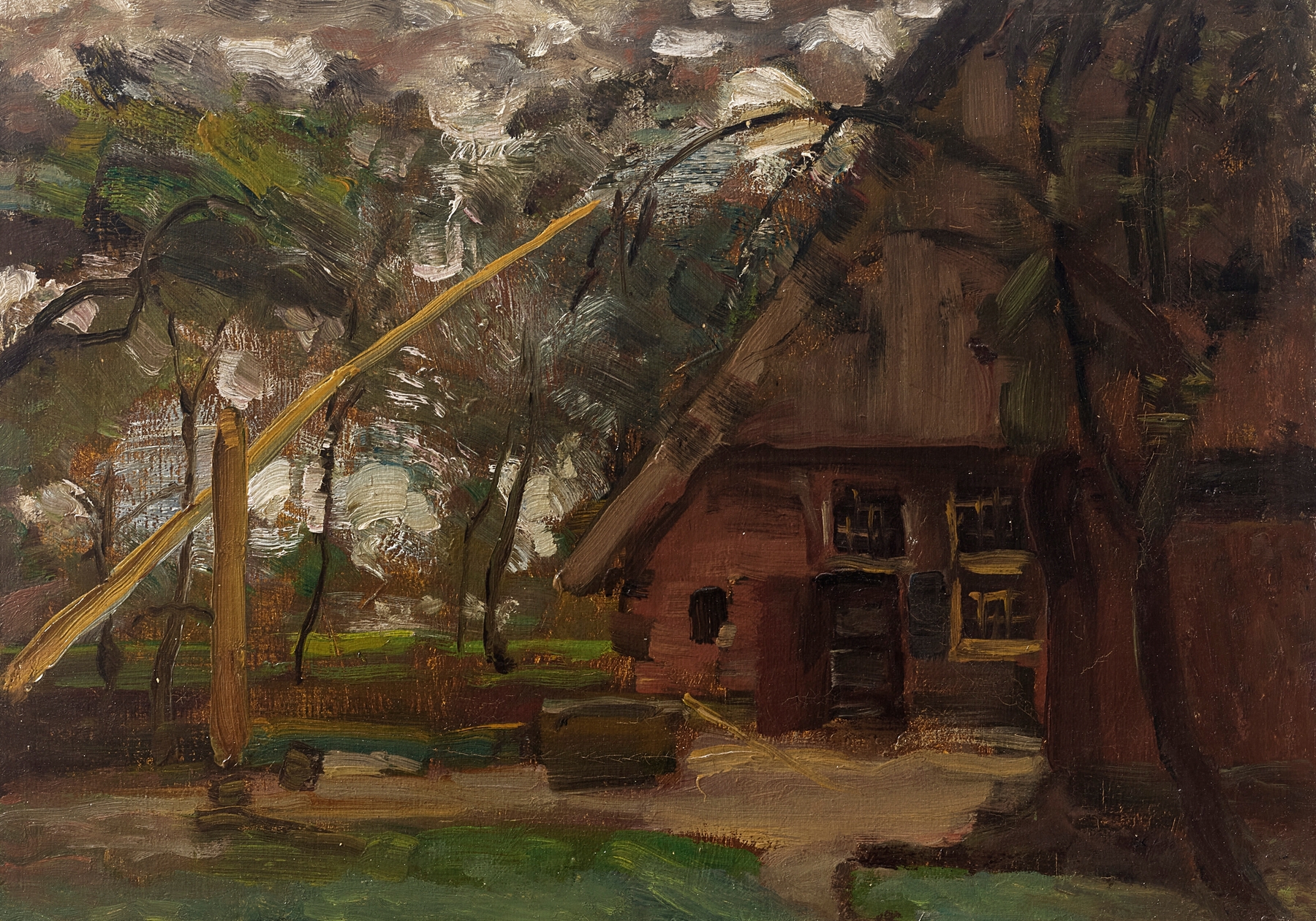
What secret hides in the quiet of the canvas? In Piet Mondrian's Boerderijgevel, the struggle between structure and fragility unfolds in a delicate symphony of shapes and colors. Look to the left at the bold vertical lines, their starkness countered by softer horizontal elements. This dynamic interplay creates a sense of balance, with the muted tones of yellow and blue inviting the viewer’s eye to dance across the surface.
Notice how the white spaces breathe life into the composition, acting as a reminder of the canvas itself, fragile and open to interpretation. Each brushstroke reveals the artist's hand, revealing the tension between the organic and geometric, stillness and energy. Delve deeper into the subtleties of this piece, where the juxtaposition of straight edges against curved forms speaks to the duality of existence. This unease echoes the fragility of rural life, a theme prevalent in the artist's earlier works.
The boxy forms evoke the stability of farm structures, yet their isolation suggests a vulnerability to the external world, hinting at the transient nature of human endeavors. Created during 1906-1907 in Amsterdam, Mondrian was navigating the early stages of his artistic evolution. At this time, he was exploring the tensions between representation and abstraction amidst a backdrop of burgeoning modernism. His devotion to uncovering the essence of form was influenced by the evolving artistic climate, which sought new ways to understand and depict reality.