Ansicht des Dachsteins mit dem Hallstättersee von der Hütteneckalpe bei Ischl — History & Analysis
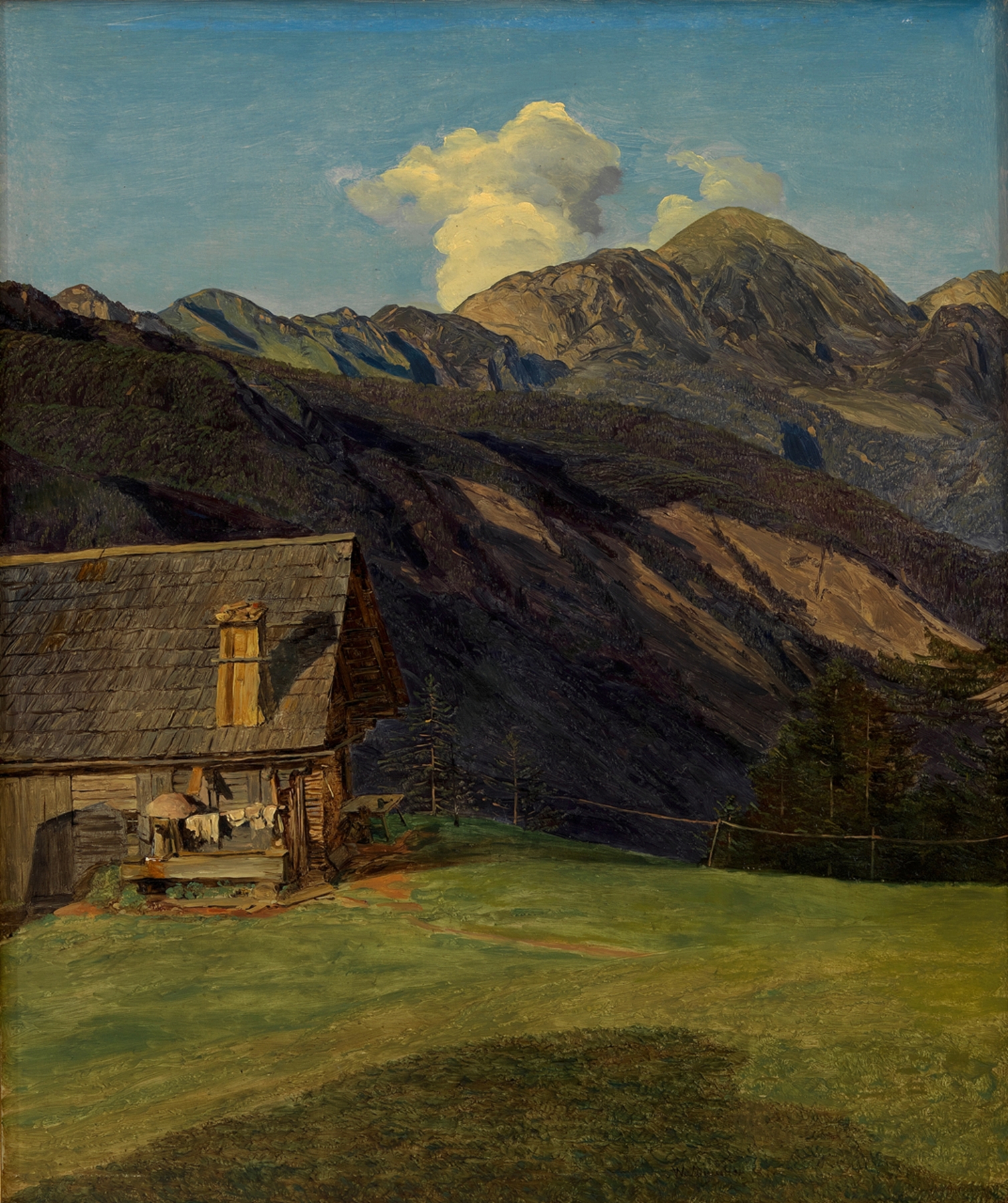
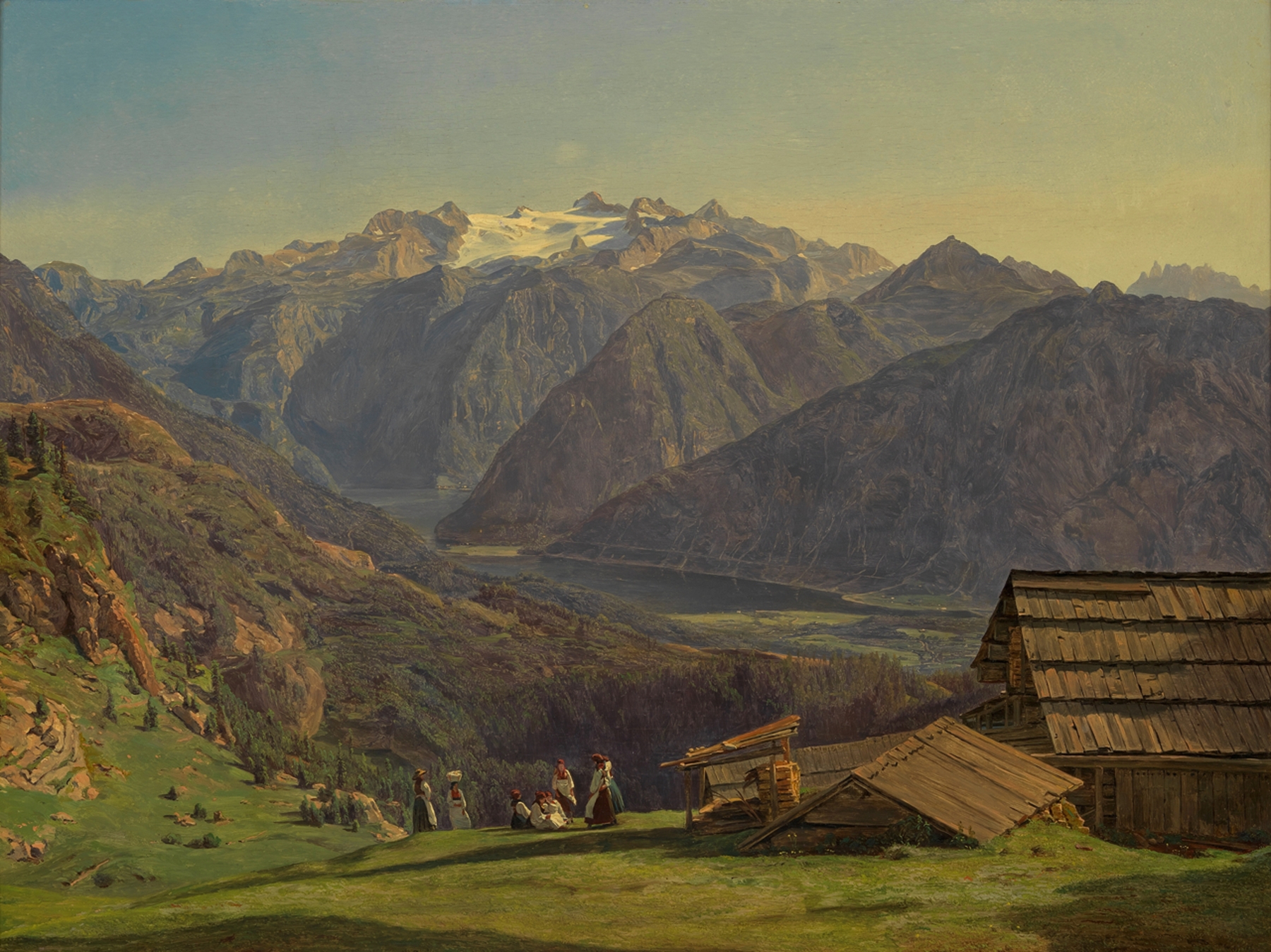
Could beauty survive in a century of chaos? In Ansicht des Dachsteins mit dem Hallstättersee von der Hütteneckalpe bei Ischl, the answer lies amidst the serene interplay of nature's grandeur and tranquil reflections. Look to the center where the majestic Dachstein looms, its snow-capped peaks piercing the azure sky. The artist's meticulous brushwork captures the delicate textures of the mountains, while the tranquil surface of the Hallstättersee mirrors the landscape, creating a harmonious dialogue between earth and water.
Notice how the vibrant greens of the foreground contrast with the stark whites and deep blues above, drawing your eye toward the horizon where the mountains meet the sky. This piece encapsulates not just a picturesque scene but a deeper emotional resonance. The juxtaposition of the towering, formidable mountains and the calm, reflective lake evokes a tension between strength and serenity, suggesting that beauty can be both awe-inspiring and comforting.
The soft strokes used in the foreground emphasize warmth and life, while the distant peaks embody a sense of permanence and isolation, provoking thoughts about humanity's place in the natural world. Ferdinand Georg Waldmüller painted this work in 1838, during a period marked by a growing Romantic movement in art that sought to express the sublime aspects of nature. Living in Austria, amidst the changing tides of society and the rise of industrialization, he embraced the beauty of the landscape as a response to the chaos of the modern world, reflecting the era's yearning for connection with nature.