Die Römische Ruine in Schönbrunn — History & Analysis
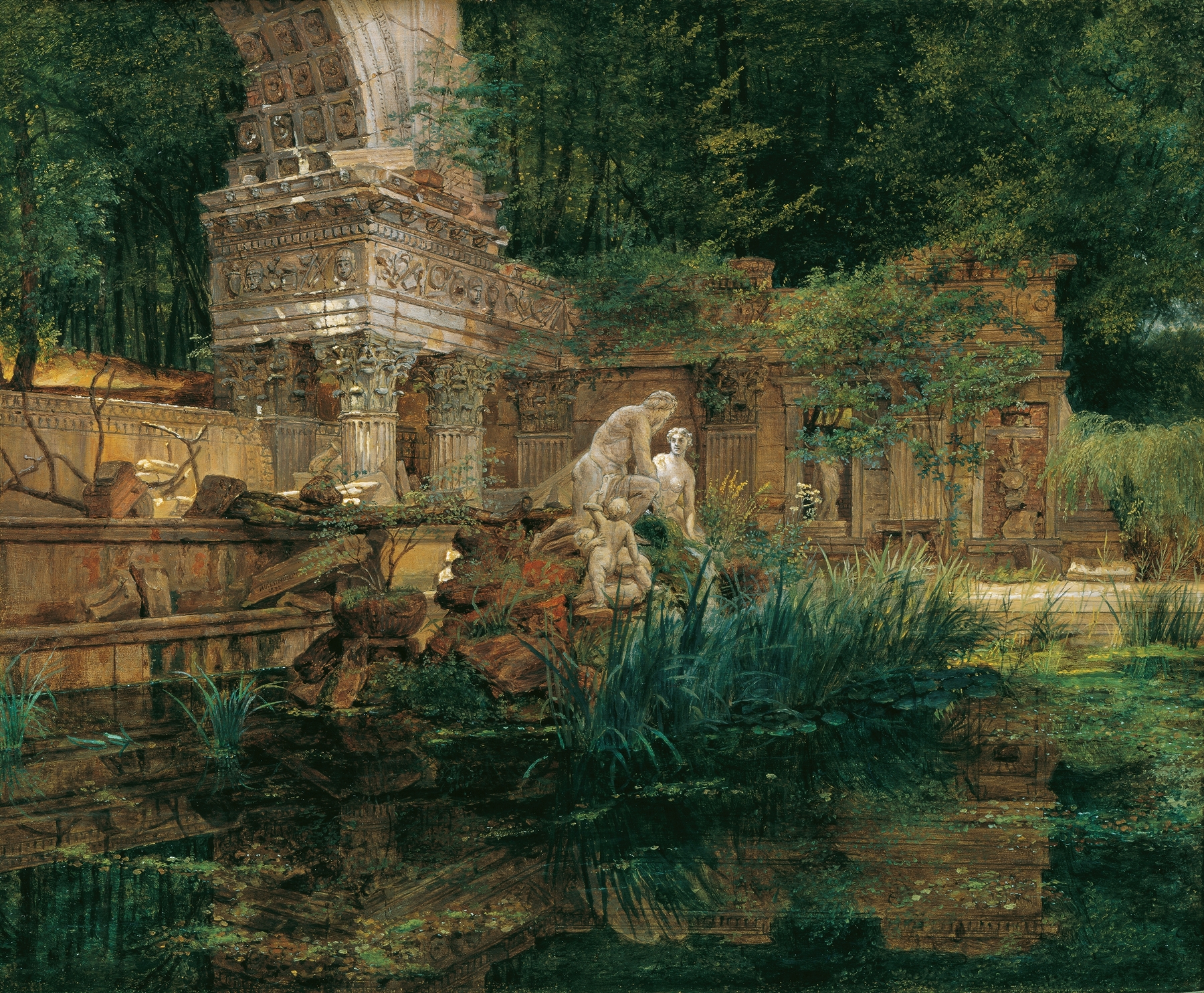
Can paint confess what words never could? In Die Römische Ruine in Schönbrunn, a symphony of color and form captures a moment of serene ecstasy, inviting us to lose ourselves in the beauty of decay and nature’s embrace. Look to the left where a majestic ruin rises, its stonework a soft gray, beautifully softened by the encroaching greenery. The verdant ivy weaves its way through the ancient columns, while dappled sunlight filters through the lush foliage, creating an interplay of light and shadow that evokes a sense of tranquility.
Notice how the artist’s brushstrokes gently define the contours of the landscape, blending the remnants of man’s ambition with nature's quiet reclamation. Within this scene lies a poignant duality: the juxtaposition of human artistry against nature’s relentless advance. The ruins suggest a once-great civilization now humbled, yet the vibrant flora encircling the stones offers hope and renewal. This tension speaks to the cycle of life and death; while the architecture may symbolize loss, the thriving greenery embodies resilience.
The colors, warm yet subdued, evoke feelings of nostalgia and bittersweet beauty, inviting introspection on the passage of time. In 1832, Waldmüller was in Vienna, mastering his craft during a period marked by Romantic ideals and a deep appreciation for nature. His focus on the interplay between man-made structures and the landscape reflected the era’s shift towards more personal expressions in art, as artists sought to capture the emotional essence of their surroundings. This painting stands as a testament to his ability to convey profound sentiments through the lens of serene beauty.