Die Alpenhütte auf dem Hoisenrad bei Ischl — History & Analysis
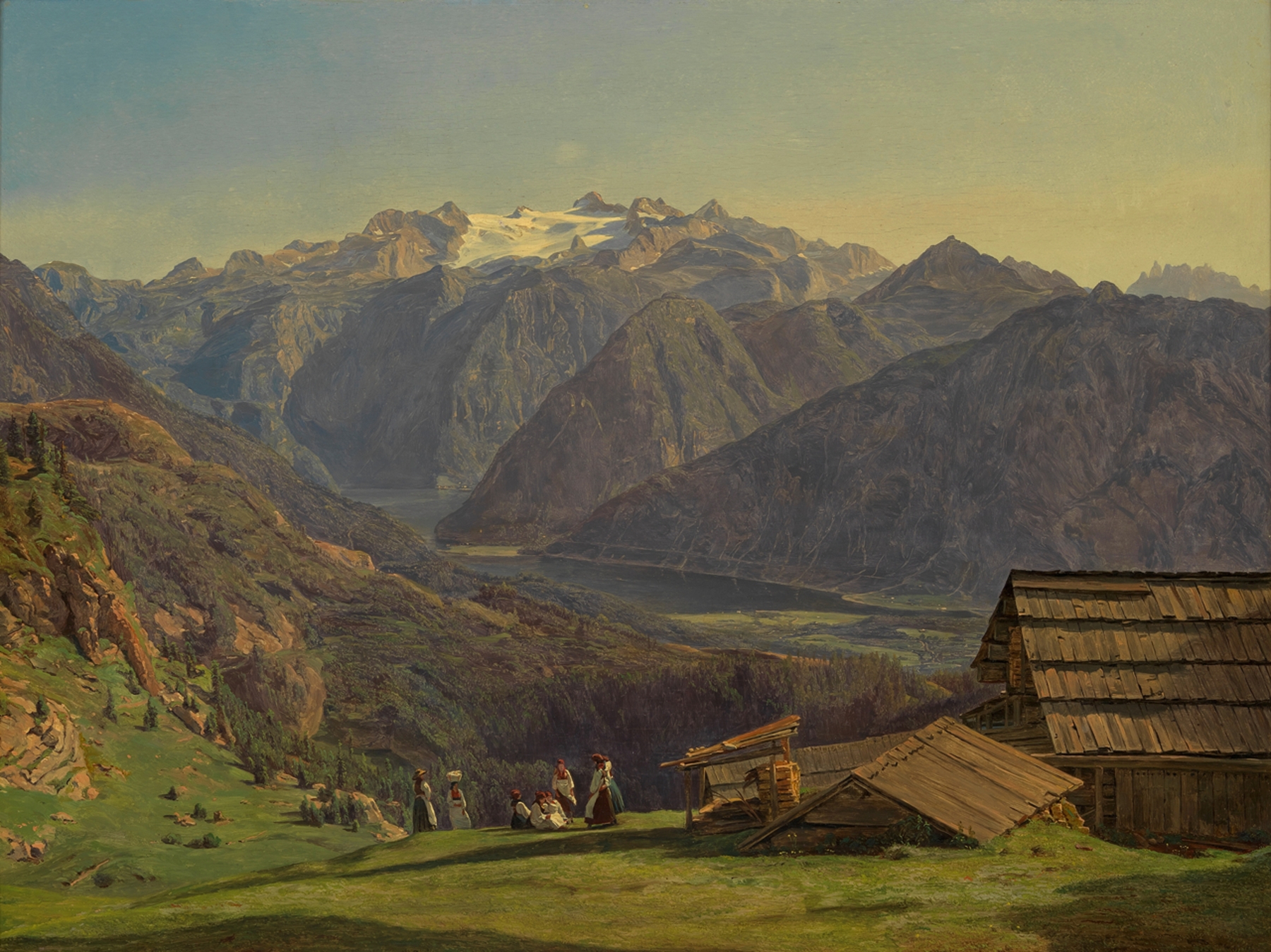
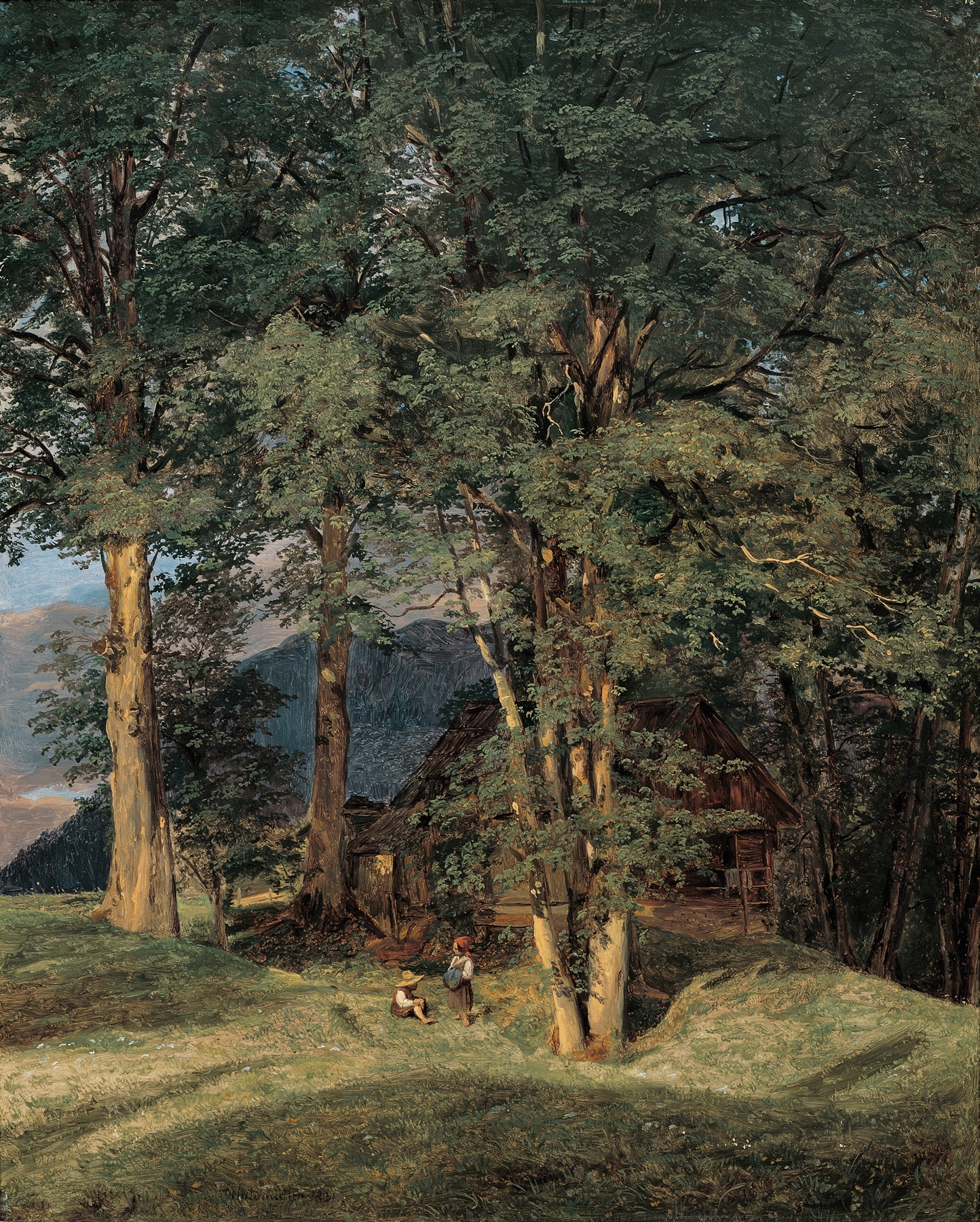
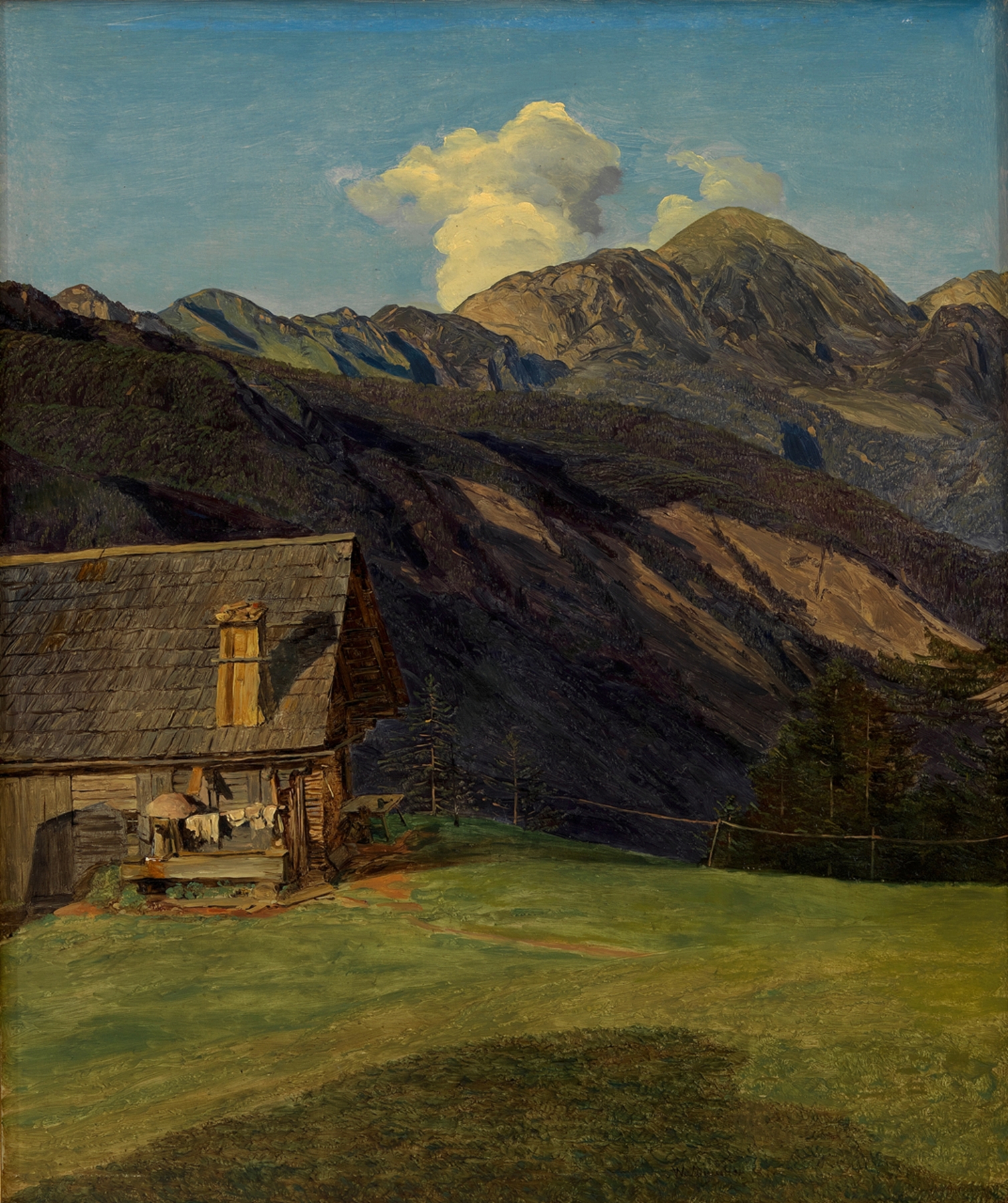
“Every silence here is a confession.” In Die Alpenhütte auf dem Hoisenrad bei Ischl, a serene landscape harbors unspoken betrayals, where beauty veils deeper truths. The tranquil setting invites contemplation, suggesting that even in moments of calm, hidden emotions simmer just beneath the surface. Look to the left at the quaint alpine hut, nestled against a backdrop of majestic mountains. The warm golden hues of the sun set the scene aglow, casting long shadows that dance upon the grassy foreground.
Notice how the bright sky, flecked with soft clouds, contrasts with the ruggedness of the peaks—an interplay of warmth and harshness that mirrors the complexities of human relationships. This juxtaposition in color and light captures the duality of the idyllic and the unsettling. As you delve deeper into the composition, consider the small figures in the distance—silhouettes engaged in mundane activities, yet their poses hint at an underlying tension. The careful arrangement of elements suggests a narrative of isolation and longing, where the rustic beauty of nature cannot shield the heart from its vulnerabilities.
Each stroke carries a whisper of betrayal, reminding us that even the most picturesque settings can harbor stories of loss. In 1834, Waldmüller was immersed in the burgeoning Romantic movement, capturing the essence of nature and human emotion. Living in Vienna, he witnessed a shifting artistic landscape, where personal expression began to eclipse rigid conventions. This period of introspection and transition in both his life and the wider world of art infused his work with a depth that resonates today, highlighting the silent confessions that linger within every scene.