Landschaft von Brunn am Gebirge — History & Analysis
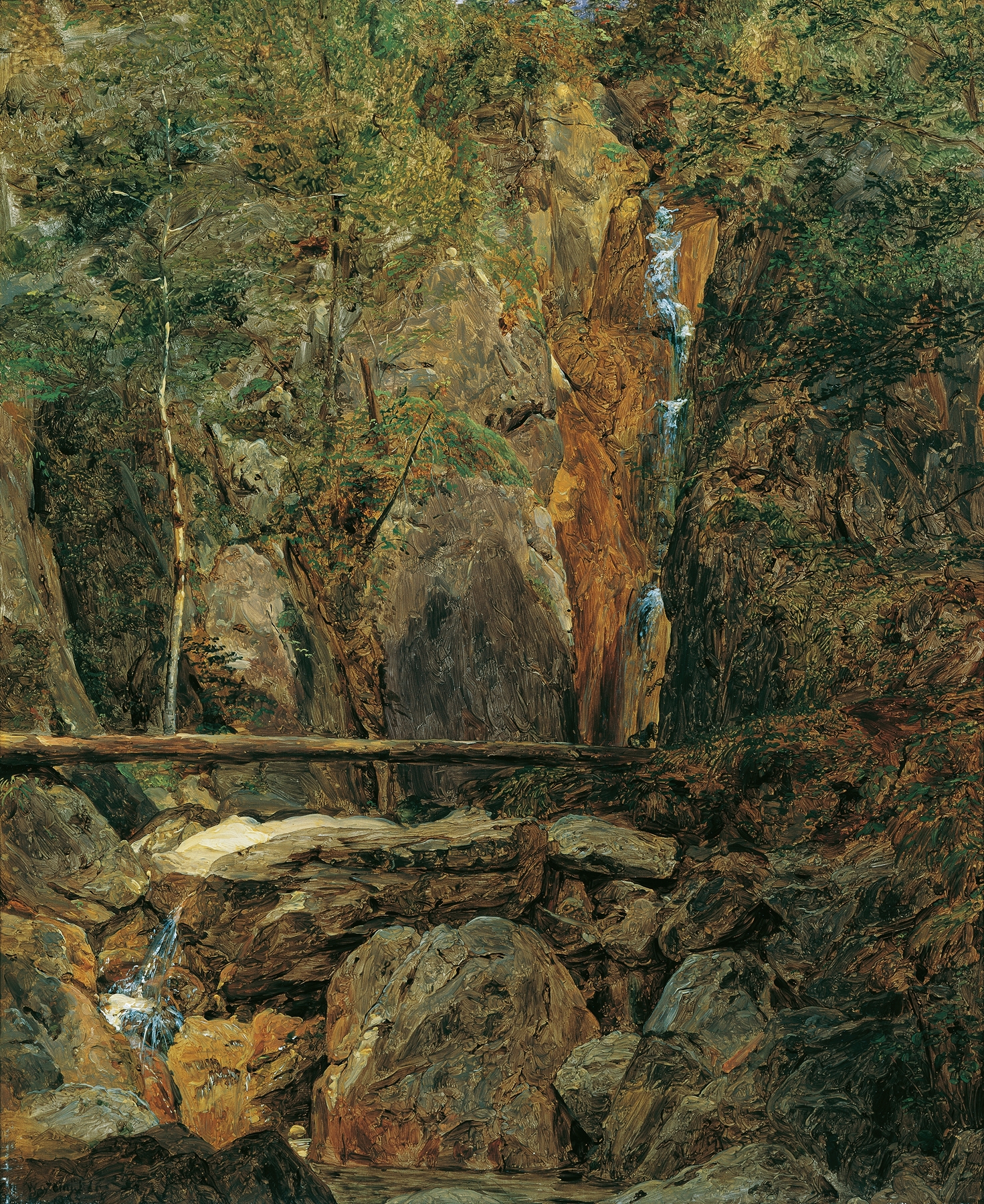
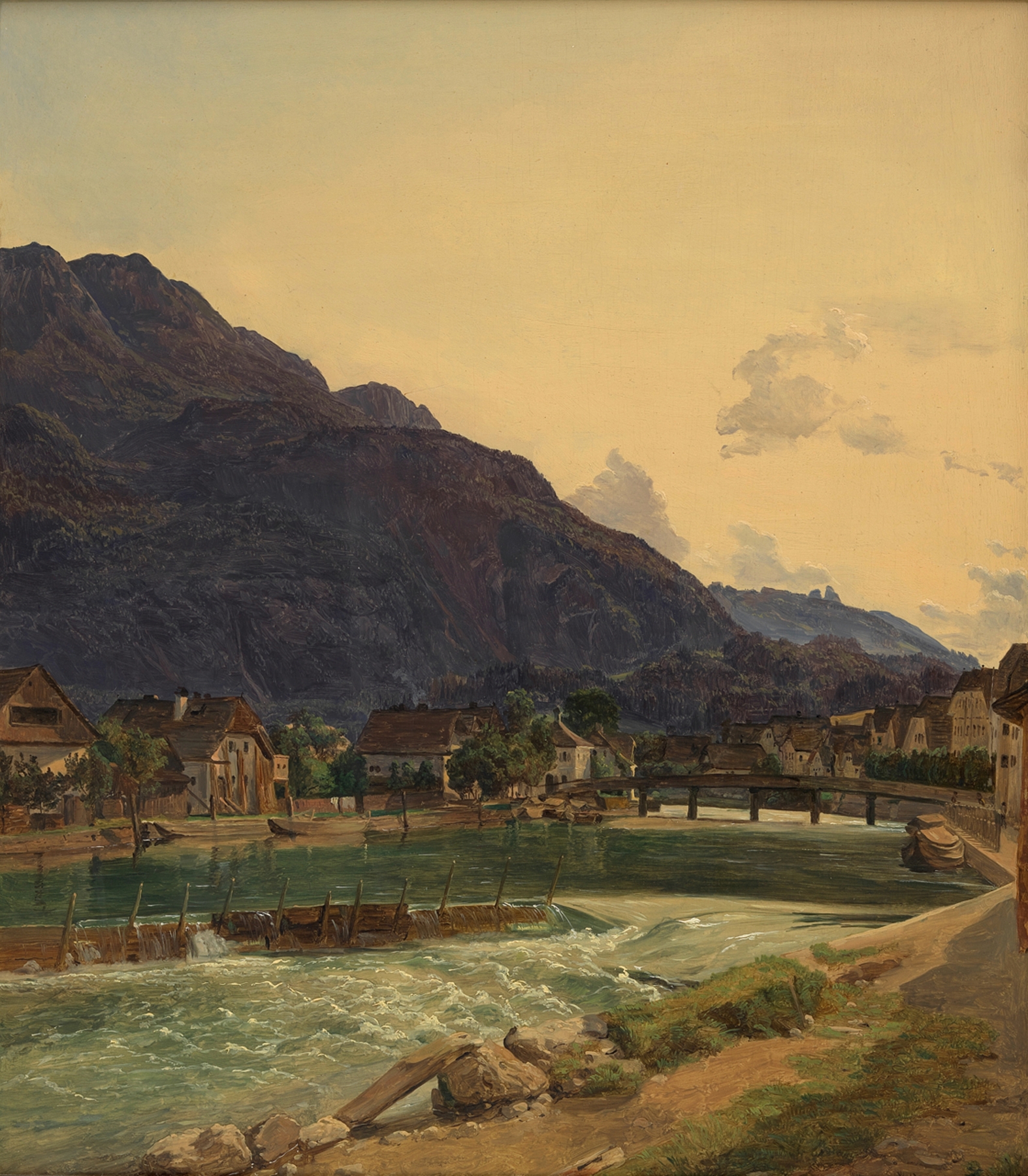
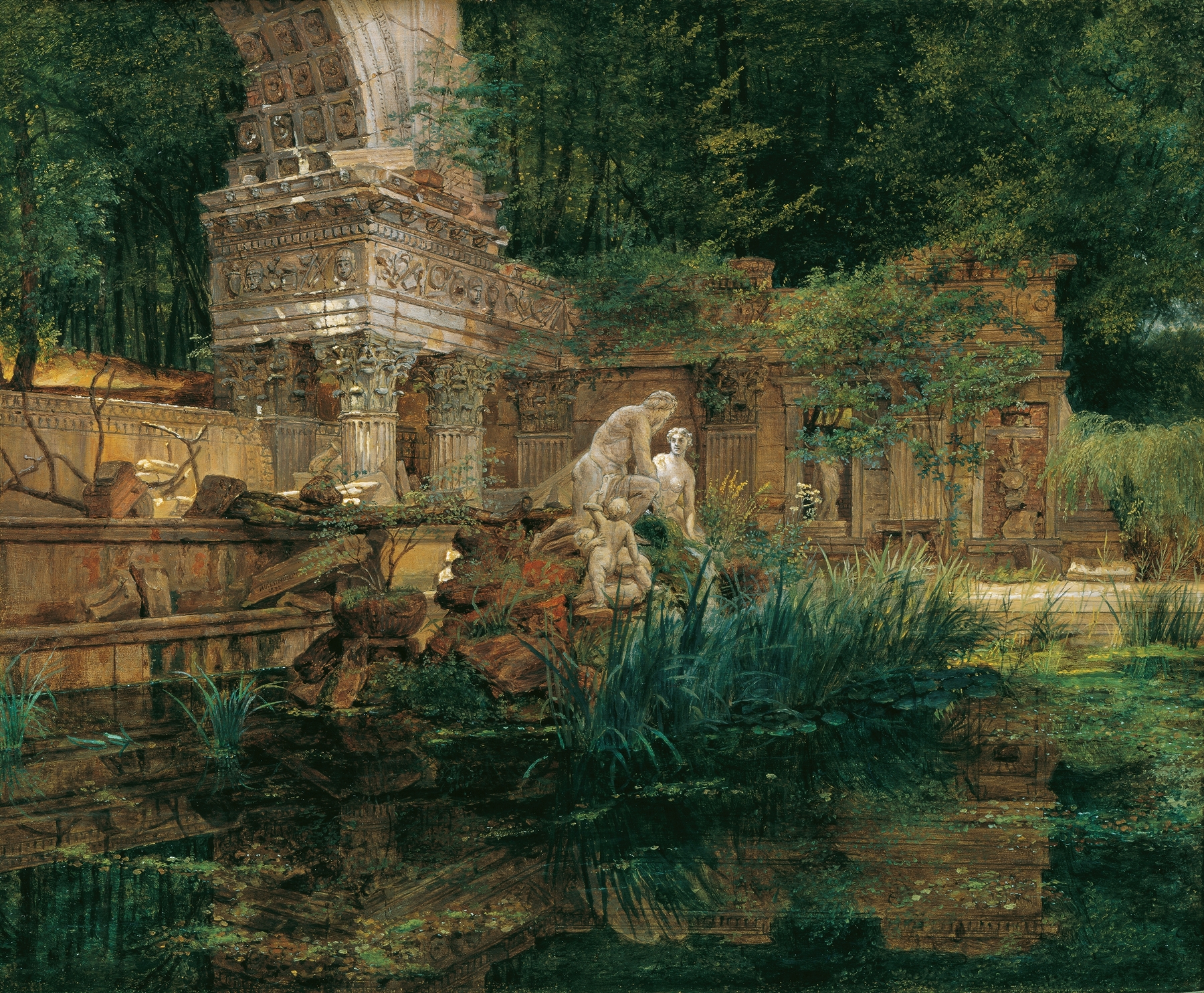
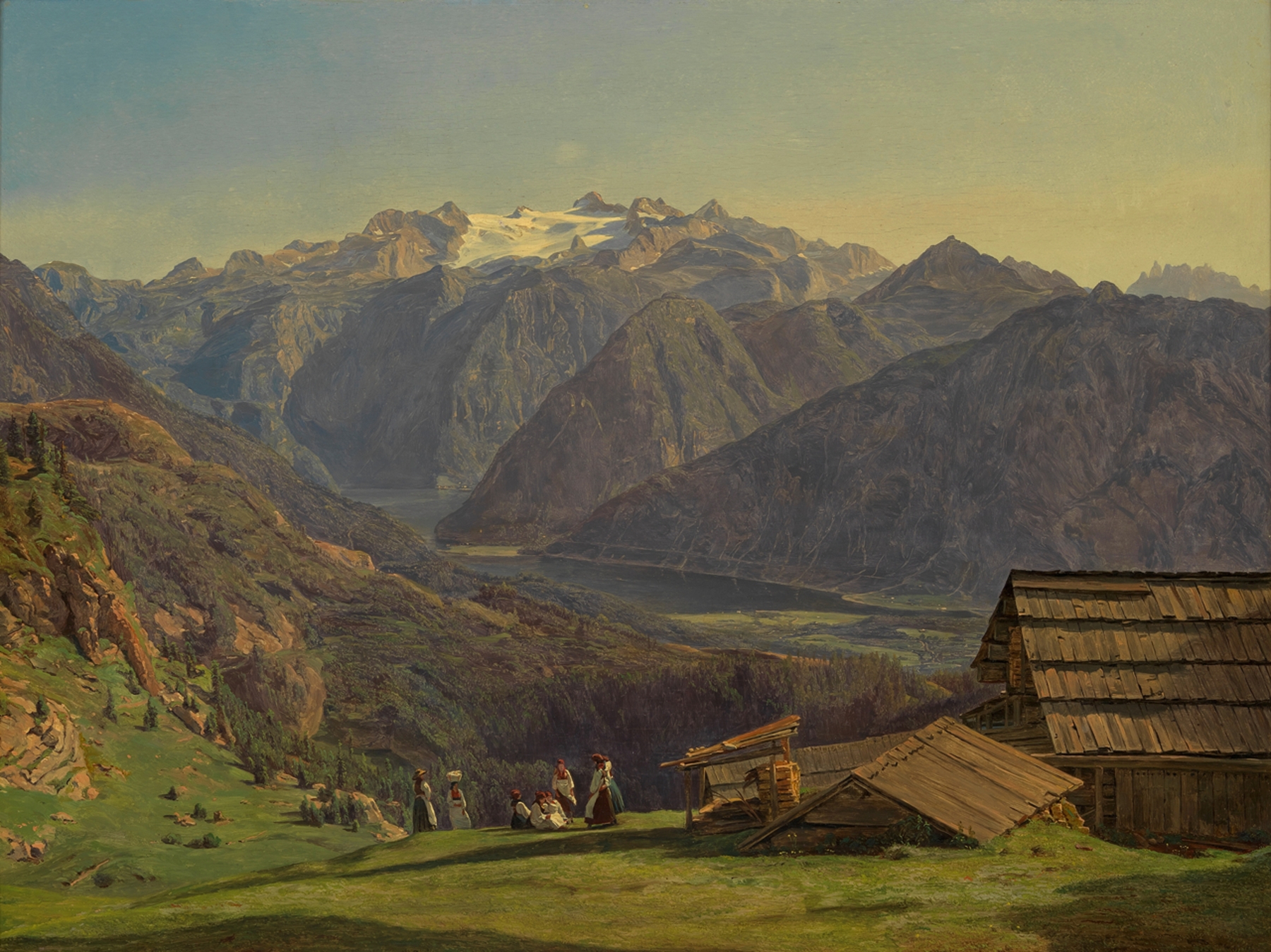
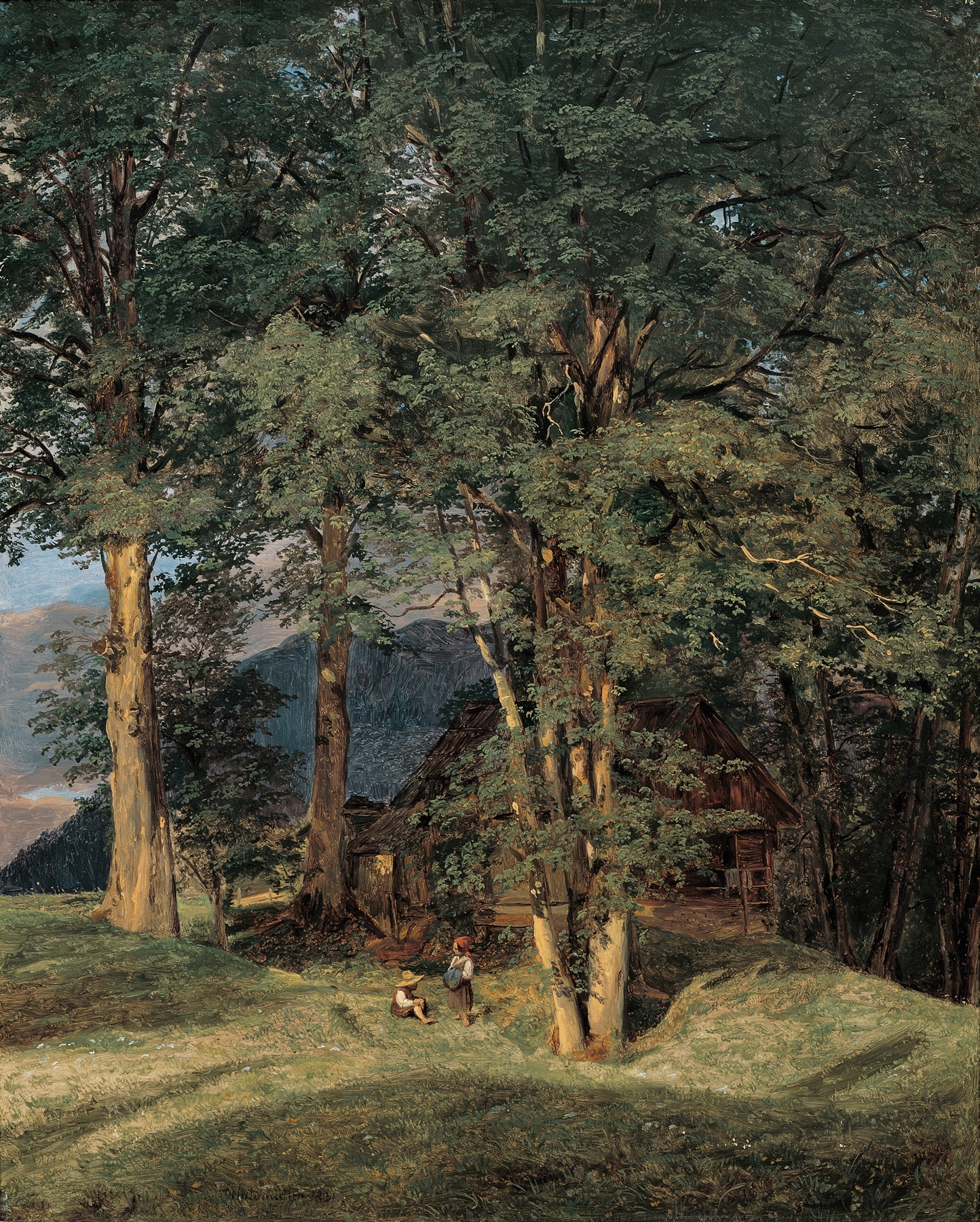
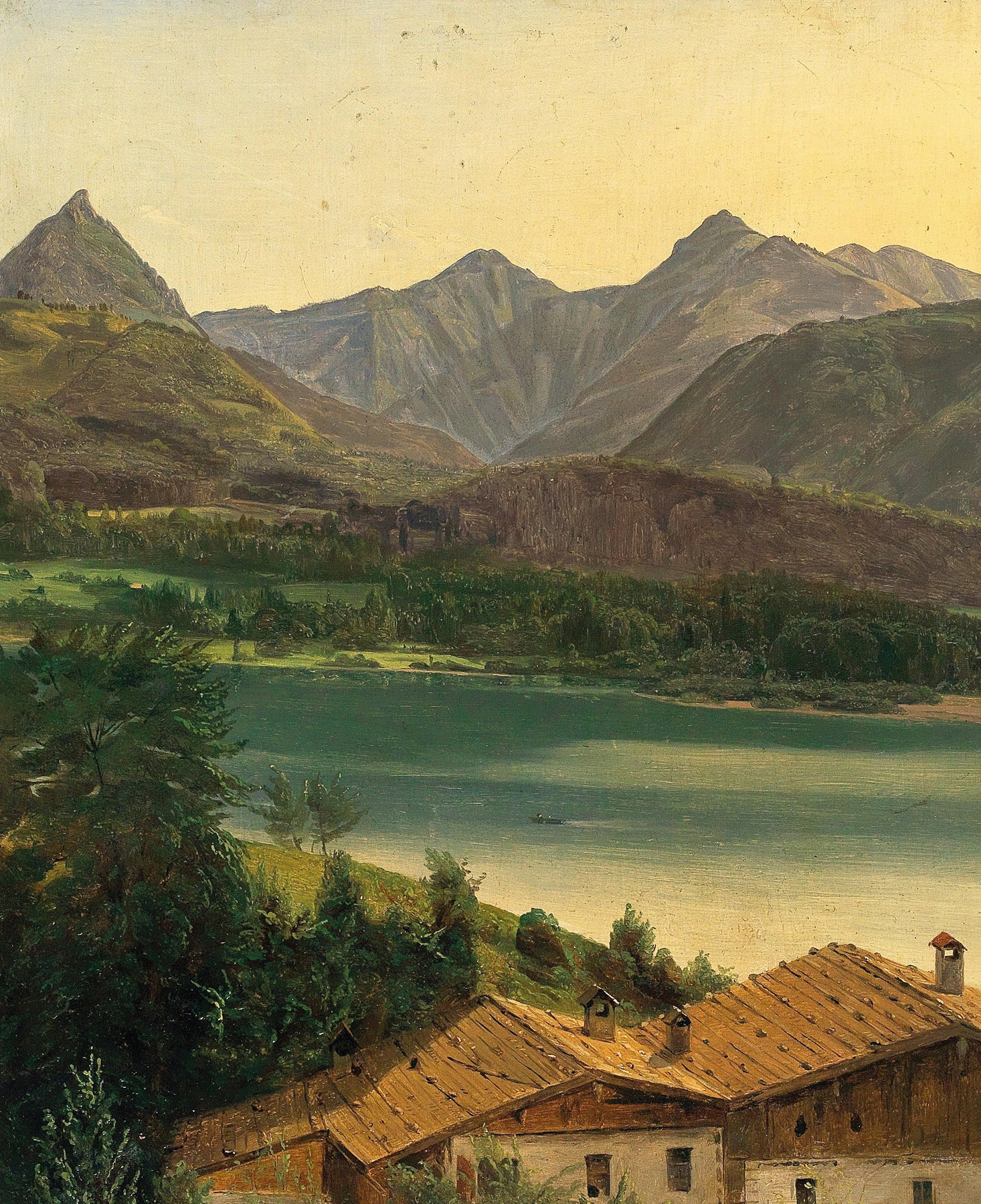
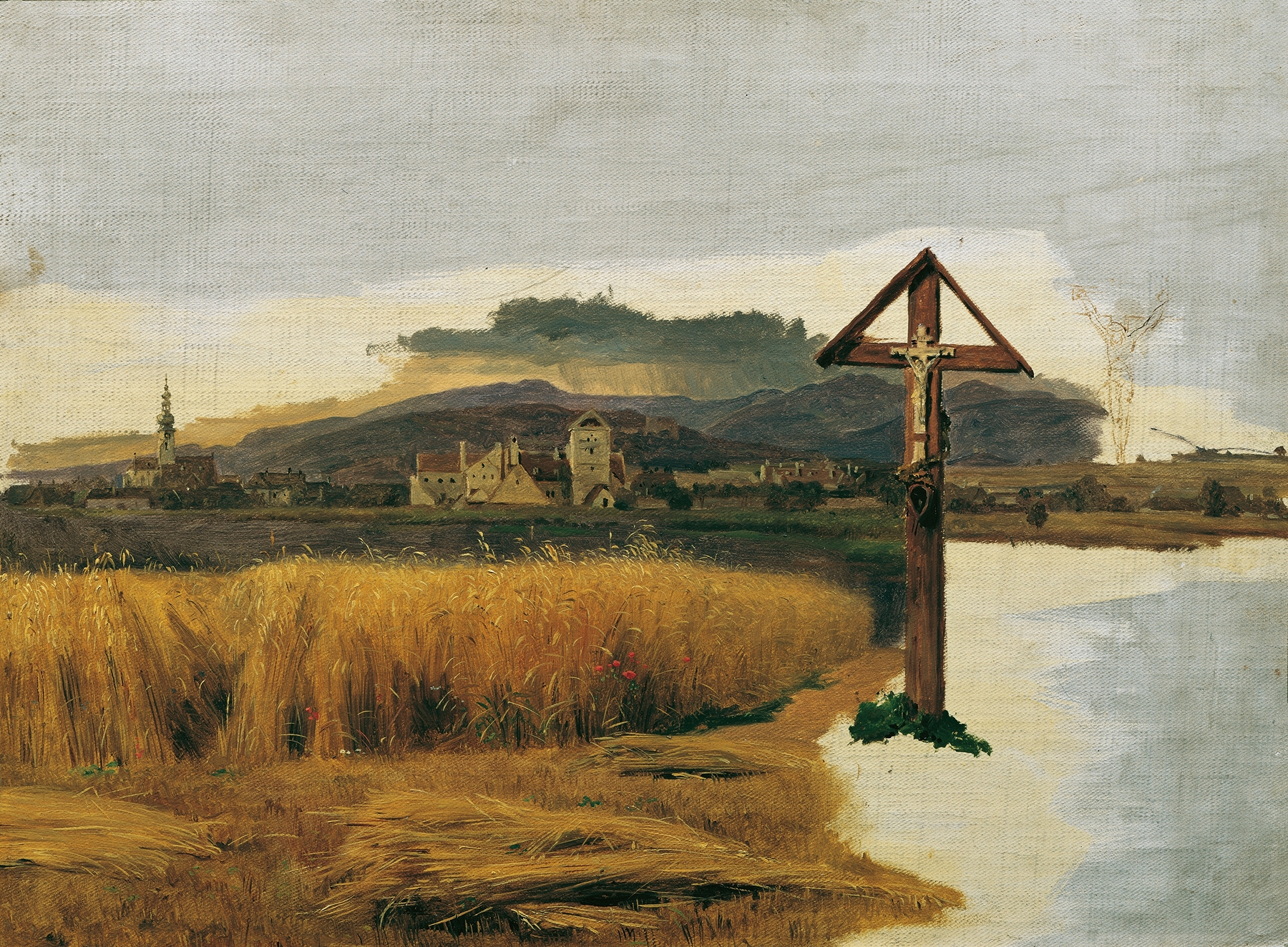
Did the painter know this moment would outlive them? The stillness of the landscape invites us to ponder the essence of time, filled with whispers of hope and nature's quiet resilience. Look to the foreground, where gentle undulations of green grass stretch toward the horizon, alive with life. The artist's meticulous brush strokes reveal tiny wildflowers peppering the verdant blanket, while a soft light bathes the scene in a golden hue, emphasizing the warmth of a late afternoon sun.
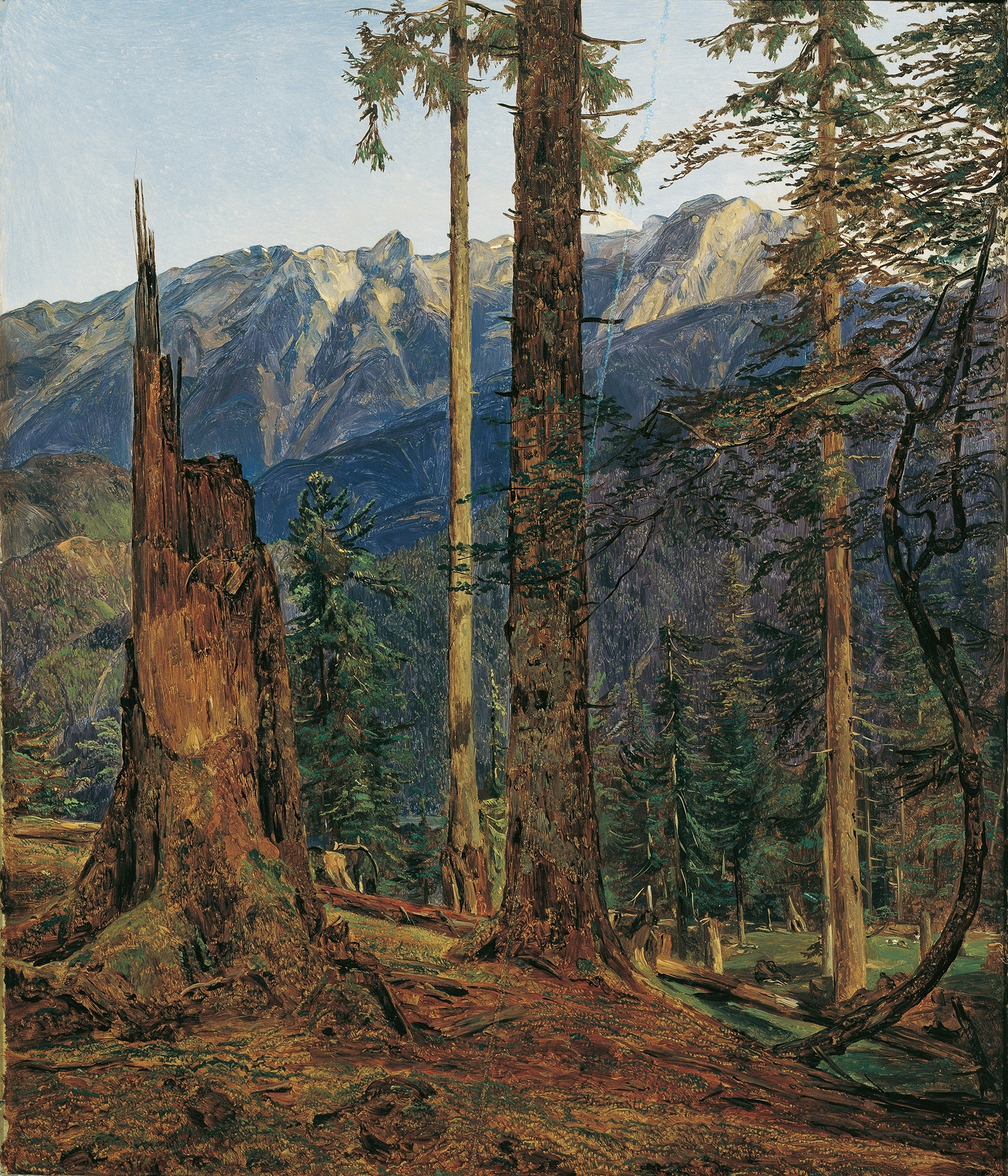
Notice how the trees, tall and proud, frame the composition—each leaf catching the light, a testament to nature’s unyielding beauty. In Waldmüller’s work, there lies a poignant contrast between the serenity of the landscape and the ephemeral nature of human existence. The distant mountains, looming yet distant, serve as a metaphor for the challenges that encroach upon our idyllic moments, while the vibrant colors evoke a sense of optimism.
Each detail—the rippling water, the birds in flight—speaks to an unshakeable belief in renewal and hope, despite the passage of time. Painted in 1846, during a period marked by significant shifts in Europe following the revolutions of 1848, the artist was deeply connected to the Romantic movement, which emphasized emotion and the sublime beauty of nature. Living in Vienna at the time, Waldmüller embraced a realism that captured the essence of his surroundings, grounding his work in a world that oscillated between turmoil and tranquility.