Ansicht von Genzano mit der Kirche Santa Maria della Cima — History & Analysis
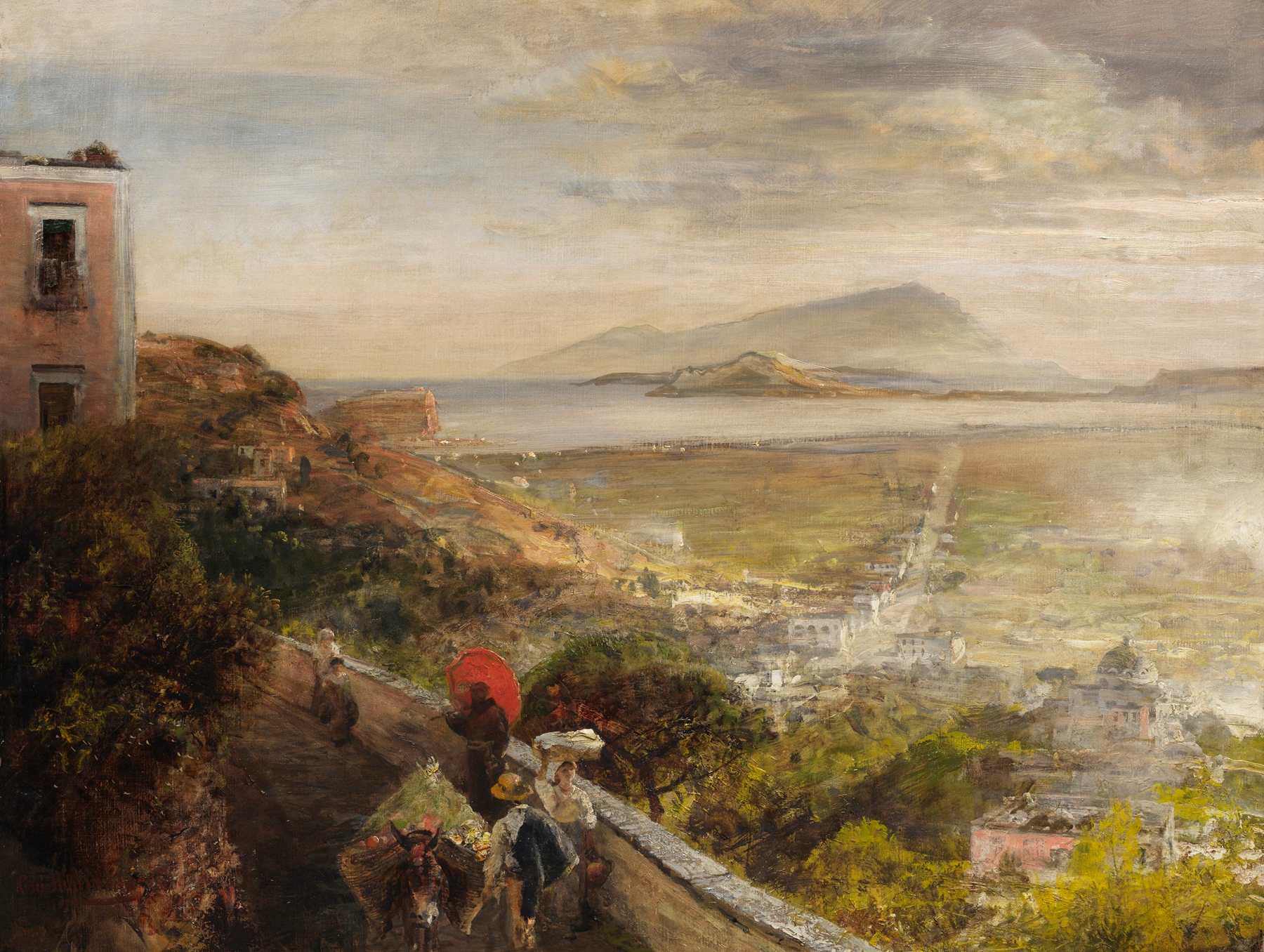
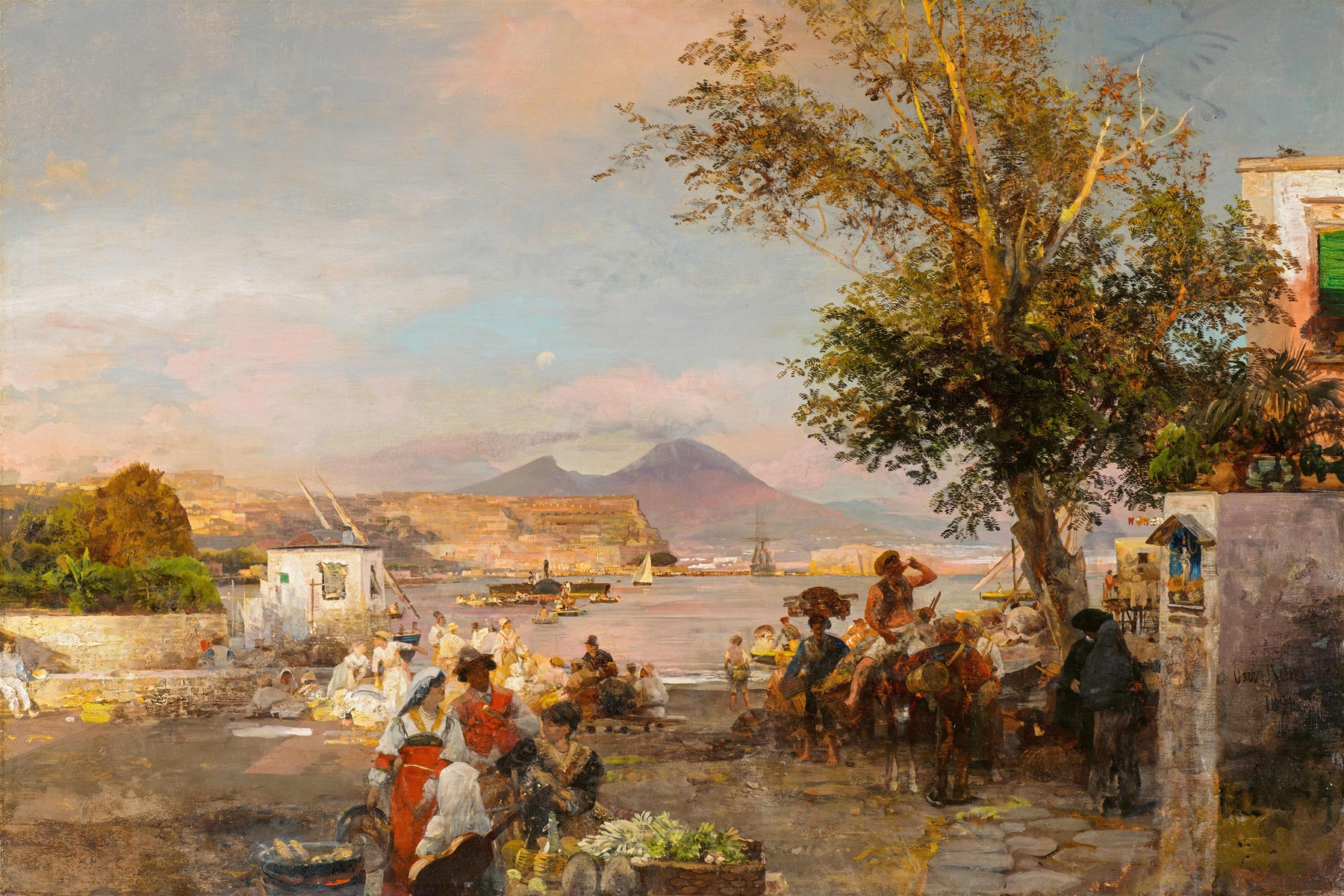
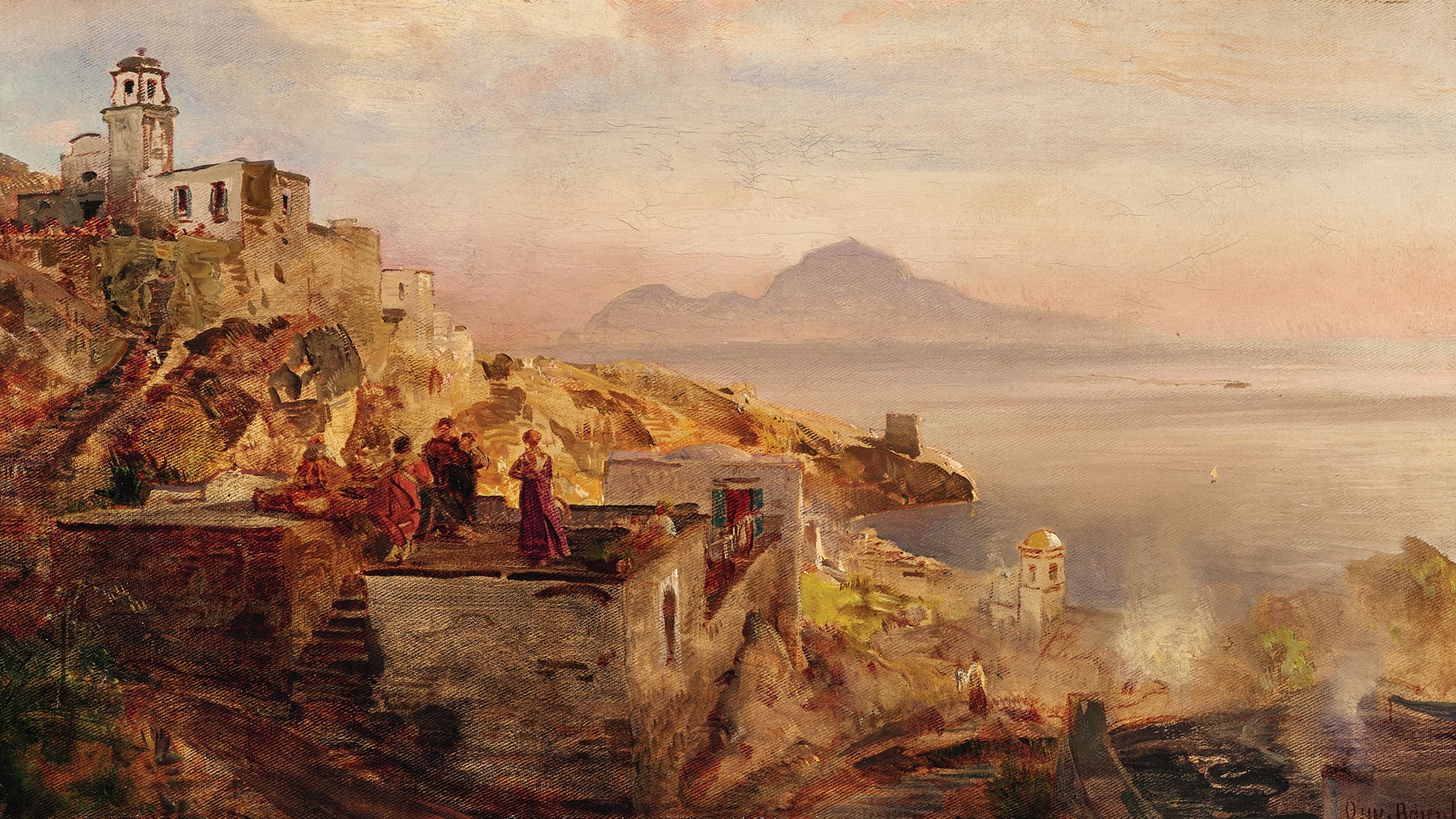
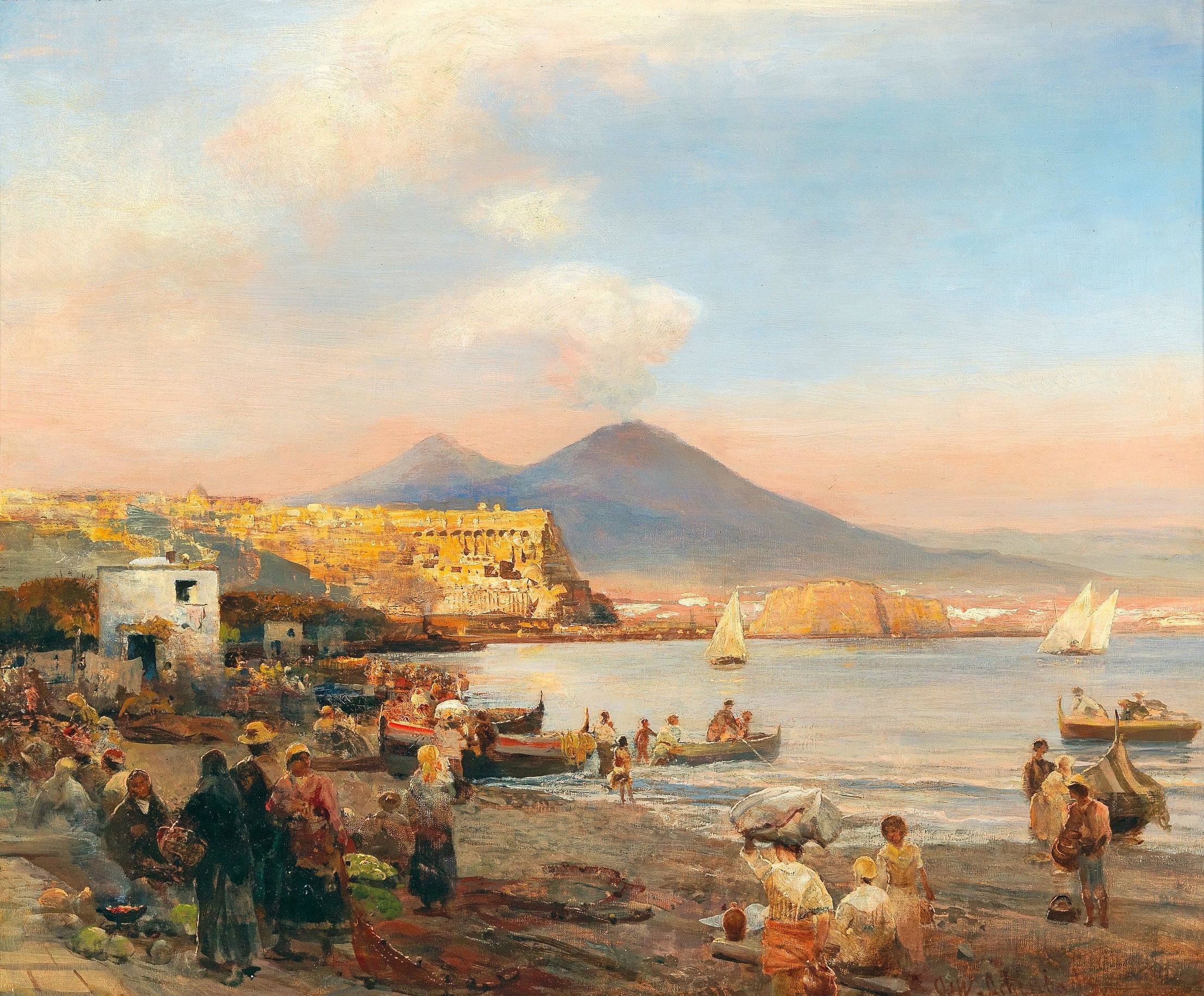
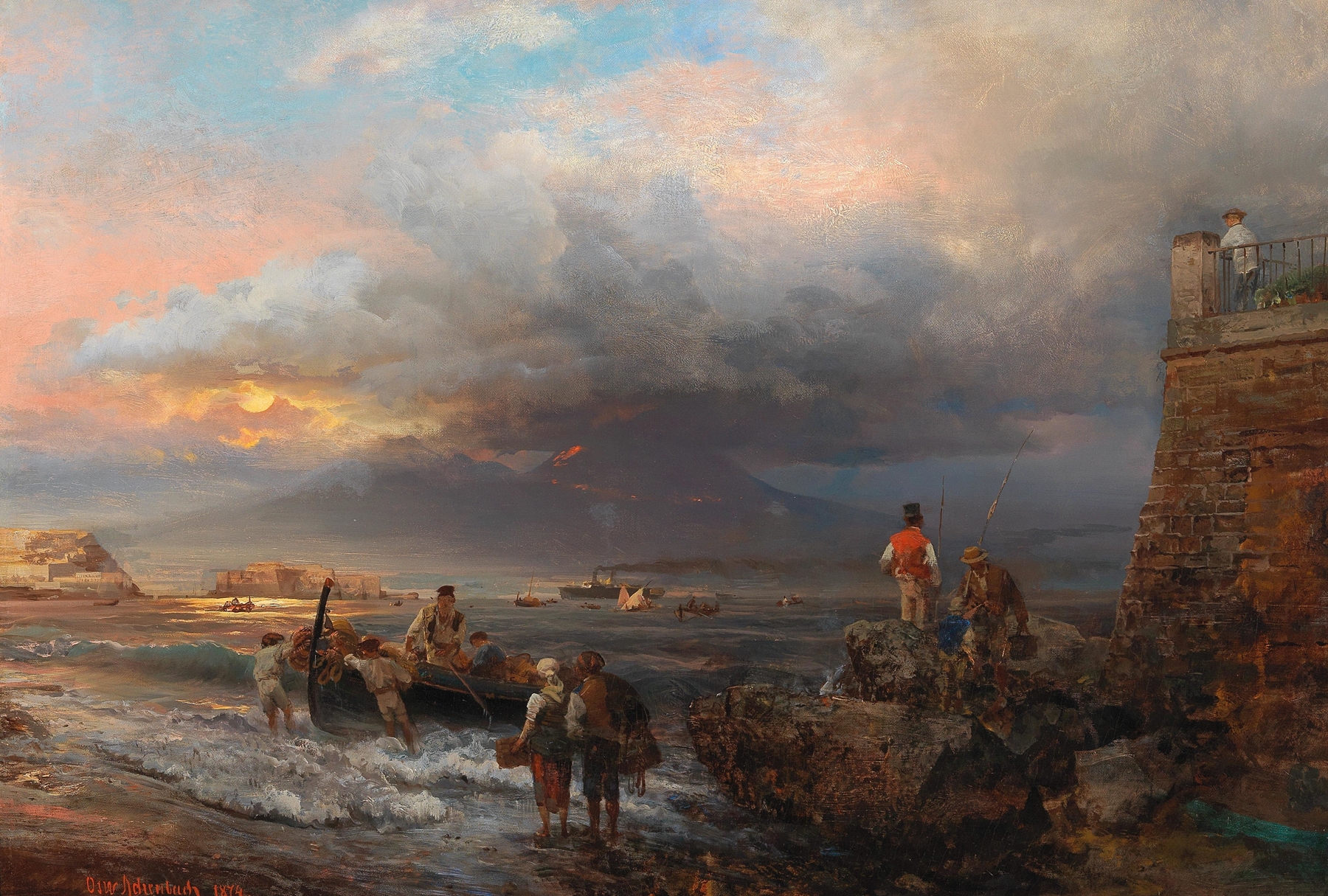
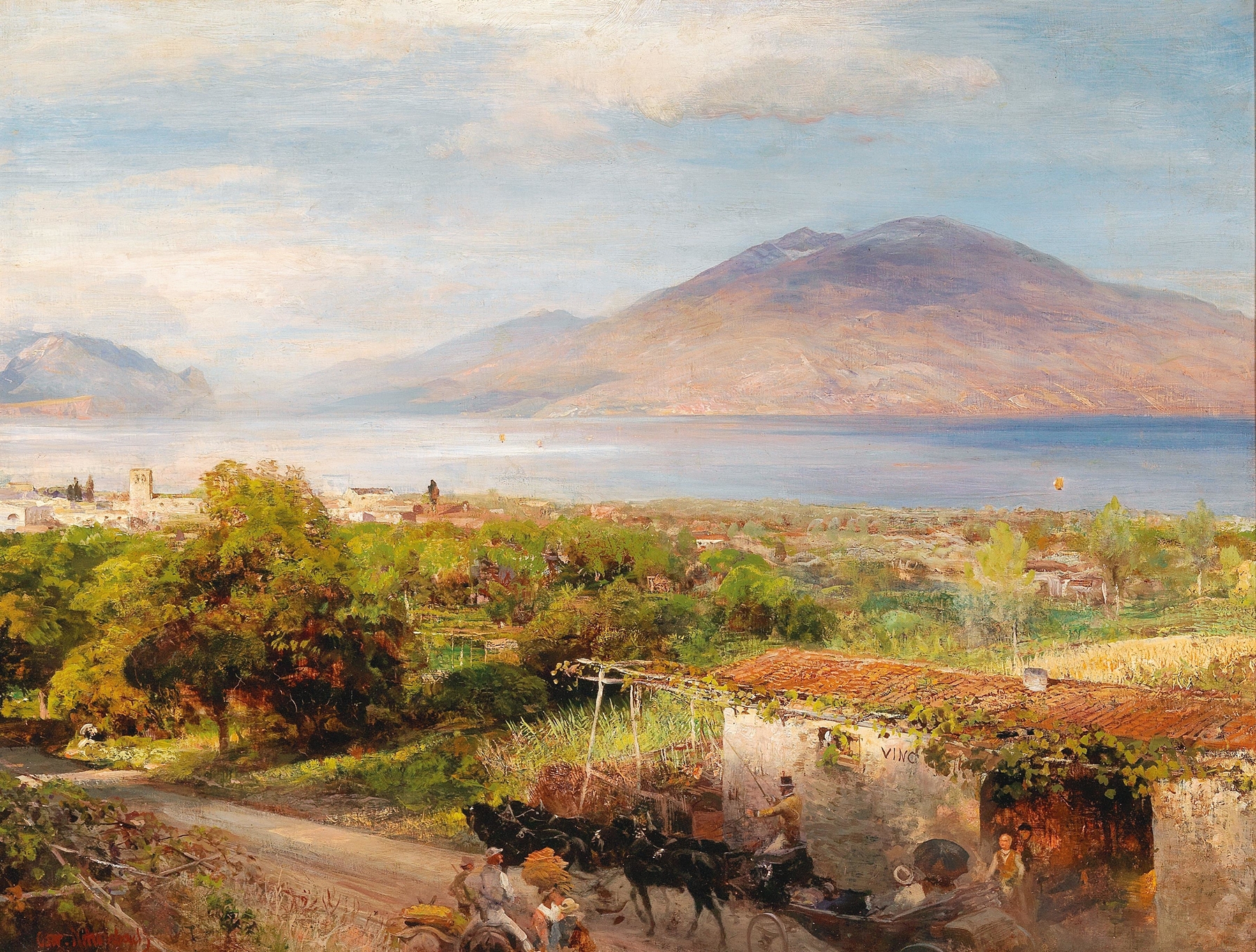
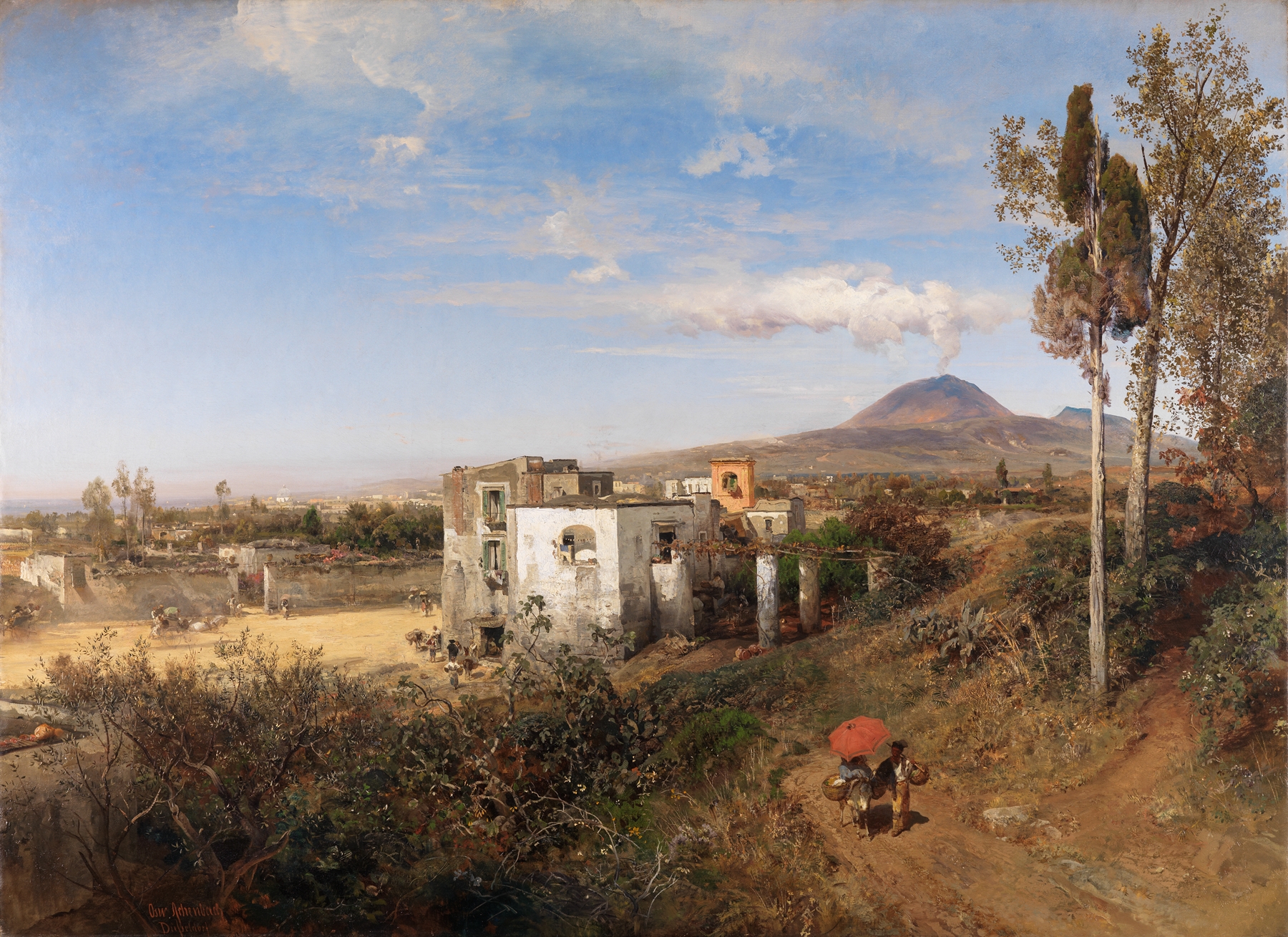
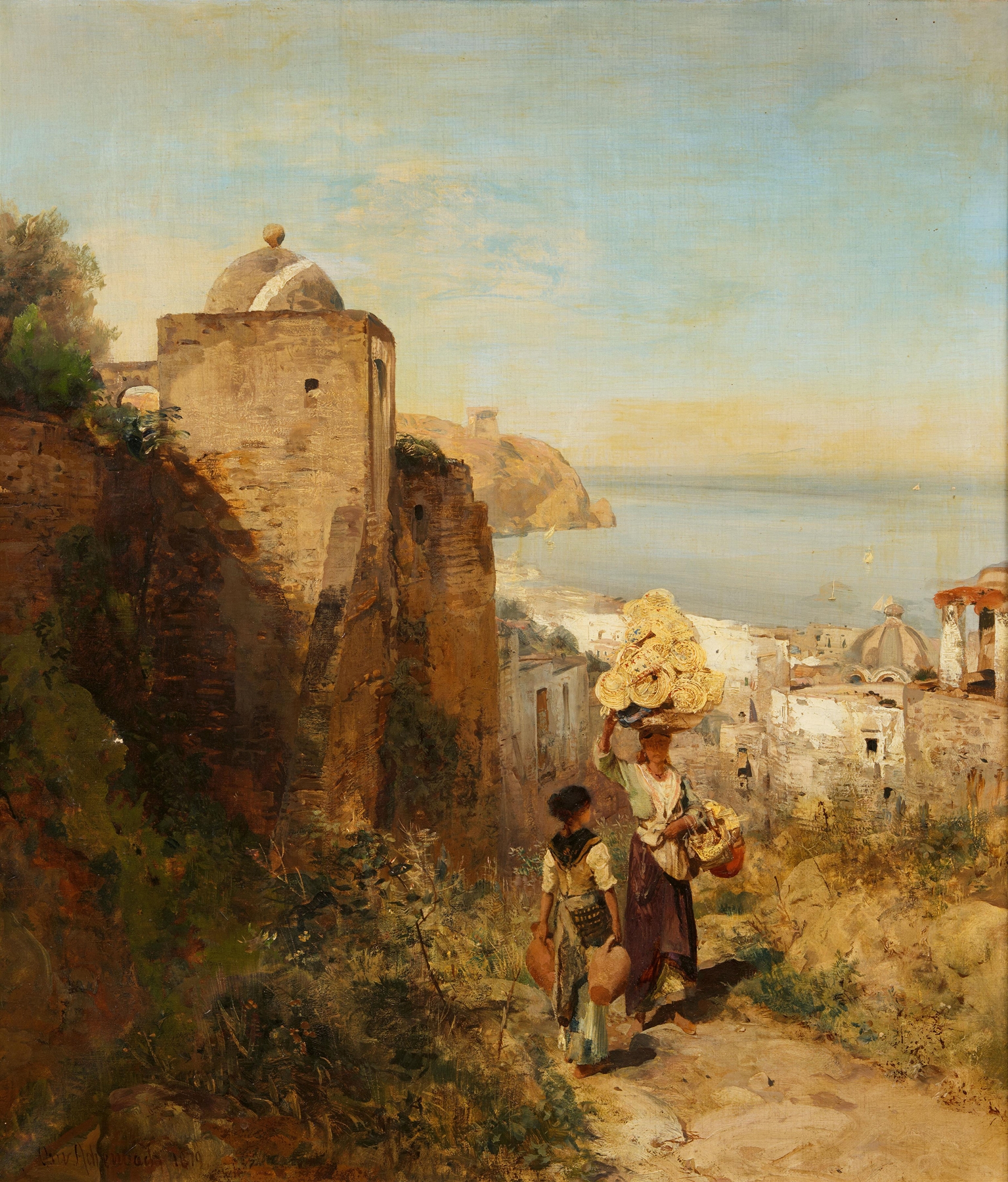
When did color learn to lie? In a world where beauty often masks deeper truths, the vibrant hues of this landscape invite both wonder and inquiry. Look to the left at the sun-drenched hills, where a gentle slope beckons with verdant green and dappled gold. The church, a delicate silhouette against the azure sky, stands like a sentinel, watching over the scene.
Notice how Achenbach employs delicate brushstrokes that blend seamlessly, creating a sense of harmony between the natural elements and the architectural form. The play of light dances upon the water’s surface in the foreground, reflecting the sky’s colors in soft whispers, while the air is thick with the promise of a warm afternoon. Yet, beneath the serene facade lies a contrast of human aspiration and nature’s timeless presence. The church’s spire reaches upward, embodying man's desire for the divine, while the sprawling hills and tranquil waters remind us of nature’s unyielding dominance.
The choice of warm colors elicits feelings of nostalgia, perhaps a longing for a simpler time, while the interplay of shadows hints at the ephemeral nature of beauty itself. Oswald Achenbach created this piece in 1885 during a period of artistic exploration in Düsseldorf, where he was deeply influenced by the Romantic movement. At that time, he sought to capture the emotional resonance of landscapes, reflecting a profound connection to the natural world amidst the rapid industrial changes of the era. This work stands as a testament to his mastery, not only of technique but also of the emotional landscapes that resonate within the viewer’s heart.