At Sunset — History & Analysis
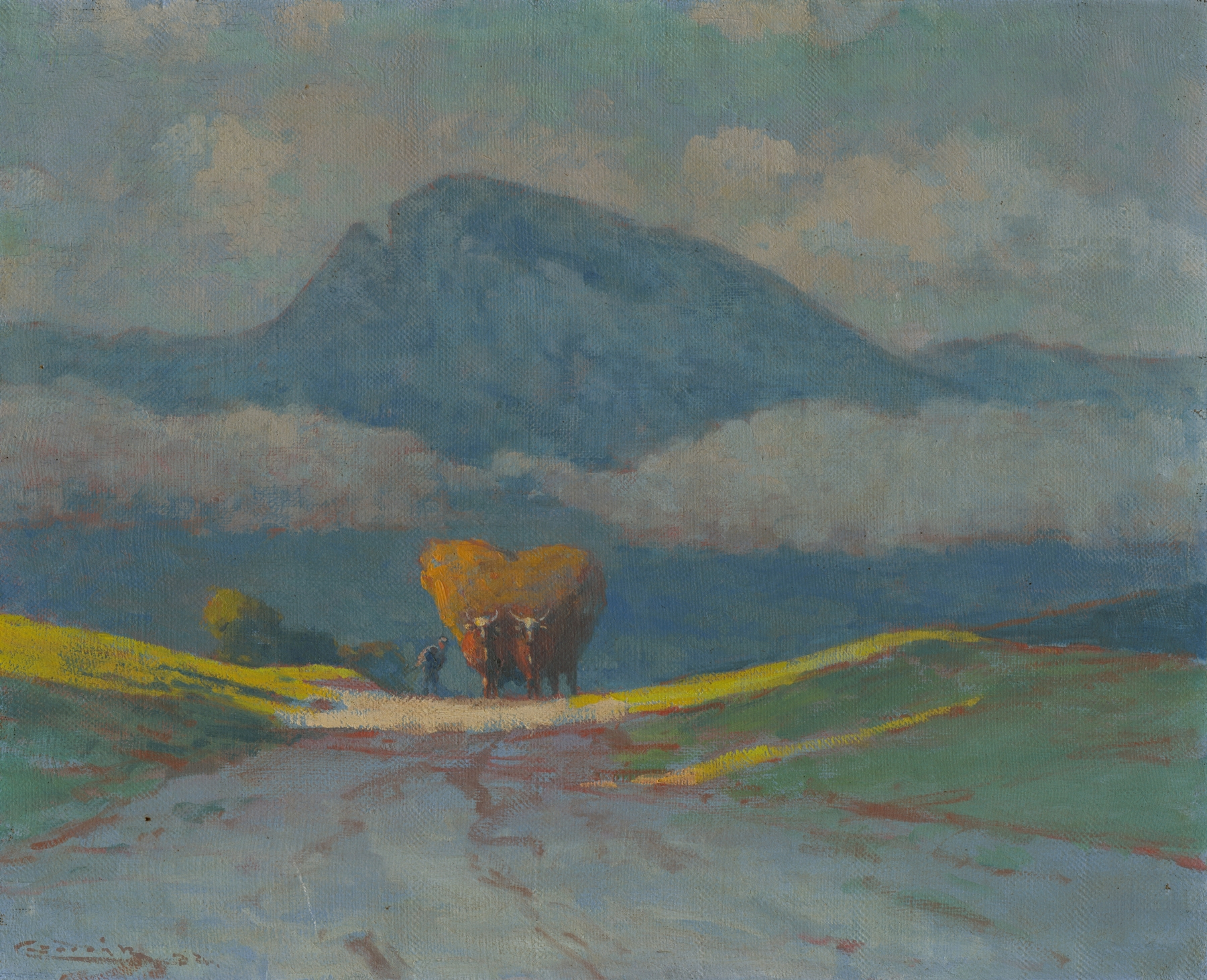
Where does light end, and longing begin? In the twilight glow captured within the canvas lies an invitation to ponder the space between day and night — a transient moment that holds both beauty and melancholy. Look to the center, where the horizon stretches wide, painted in soft hues of orange and lavender. The sun, a fiery orb, sinks into the embrace of the distant landscape, casting a warm cascade of light across a tranquil sea. Notice how the gentle brushstrokes blend the colors, creating a symphony of warmth that contrasts with the cool, shadowed figures that linger at the edge of the shore.
It's a delicate balance of chaos and calm, inviting the eye to wander yet holding it captive in a dreamlike state. Beneath this serene surface lies a tension of emotions — the bittersweet nature of farewell as day retreats. The figures, dwarfed by the expansive sky, seem to reach for each other, embodying a longing that transcends the physical space between them. Their silhouettes fade into the dusk, a reminder of fleeting connections and the inevitable passage of time.
The contrast between the vibrancy of sunset and the encroaching shadows prompts reflections on hope, desire, and the human experience of impermanence. In 1922, during a period of post-war reflection in Europe, the artist found himself navigating the complex interplay of light and emotion. Living in a world reshaped by conflict, he embraced the transformative power of art, channeling his feelings of longing and introspection into his work. This painting, a testament to a moment suspended in time, reflects both personal and collective sentiments of an era yearning for renewal.