At the Racecourse (The Races) — History & Analysis
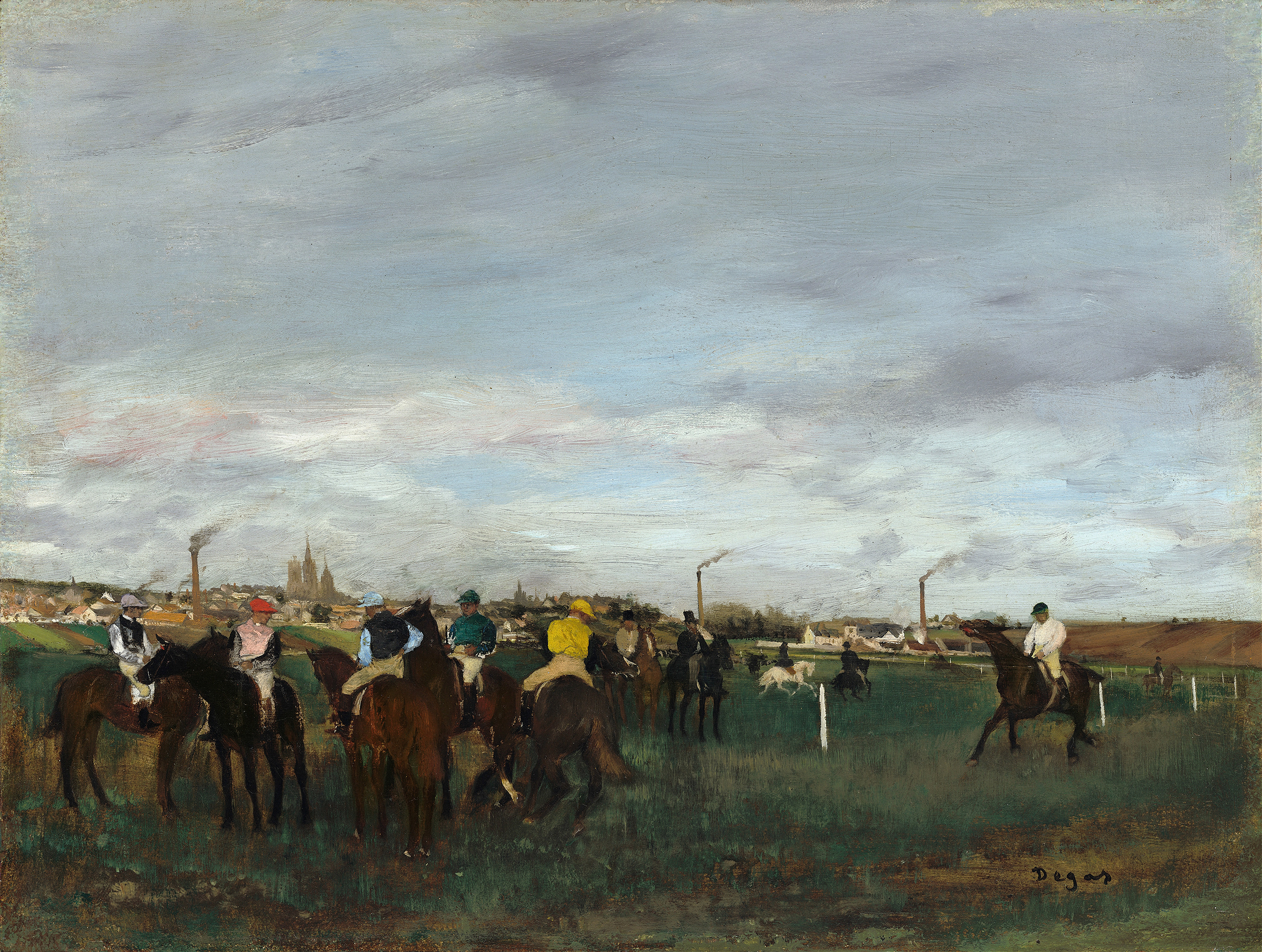
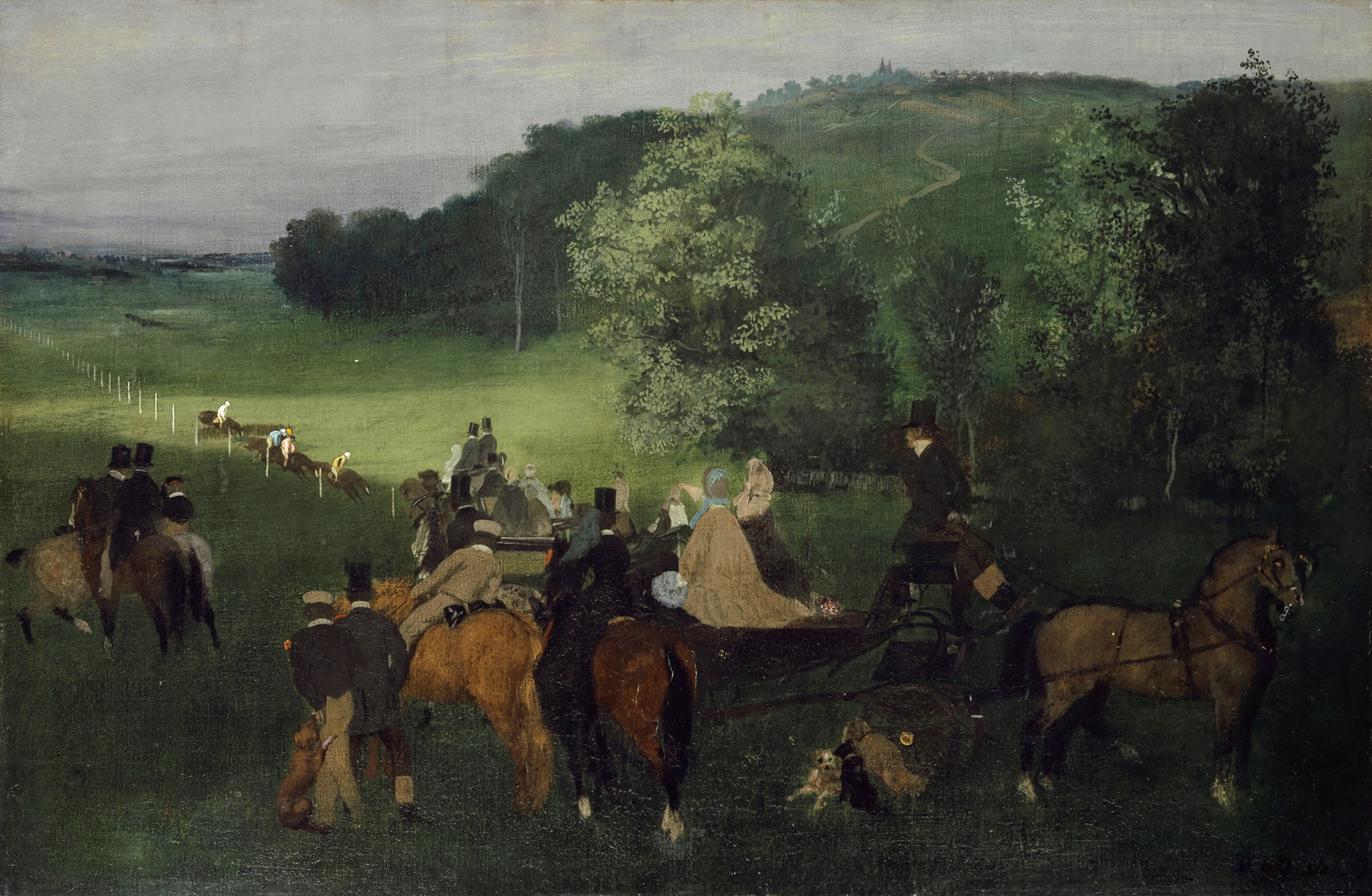
When did color learn to lie? The vivid hues of the racetrack conceal more than they reveal, whispering secrets of ambition and fate. Look to the foreground, where the vibrant splashes of crimson and azure dance against the muted earth tones of the crowd. The figures, elegantly attired and poised, seem to blend into a thrumming sea of anticipation, their gazes fixed on the distant competitors. Notice how the artist layers paint to create a sense of motion, as the horses emerge, powerful and unyielding, from the swirling chaos.
Each brushstroke tells a story of speed and elegance, capturing the very essence of the race. The contrast between the calm demeanor of the spectators and the frenetic energy of the competition raises questions about human desire and destiny. The canvas encapsulates a pivotal moment, a breath suspended between victory and defeat. Each face mirrors a spectrum of emotions—hope, anxiety, and exhilaration—all interwoven amidst the vibrant surroundings.
It’s a microcosm of life’s uncertainties, where fate hangs delicately in the balance, and every heartbeat echoes a longing for triumph. In the early 1860s, Degas painted this vibrant scene in France, during a time when Impressionism was on the rise, yet he remained somewhat detached from the movement's core principles. His focus on the world of racing was personal; it reflected his fascination with motion and the human experience. This work emerged as he explored the boundaries of color and form, laying the groundwork for his future masterpieces, while also navigating the shifting tides of the art world around him.