Rue de village — History & Analysis
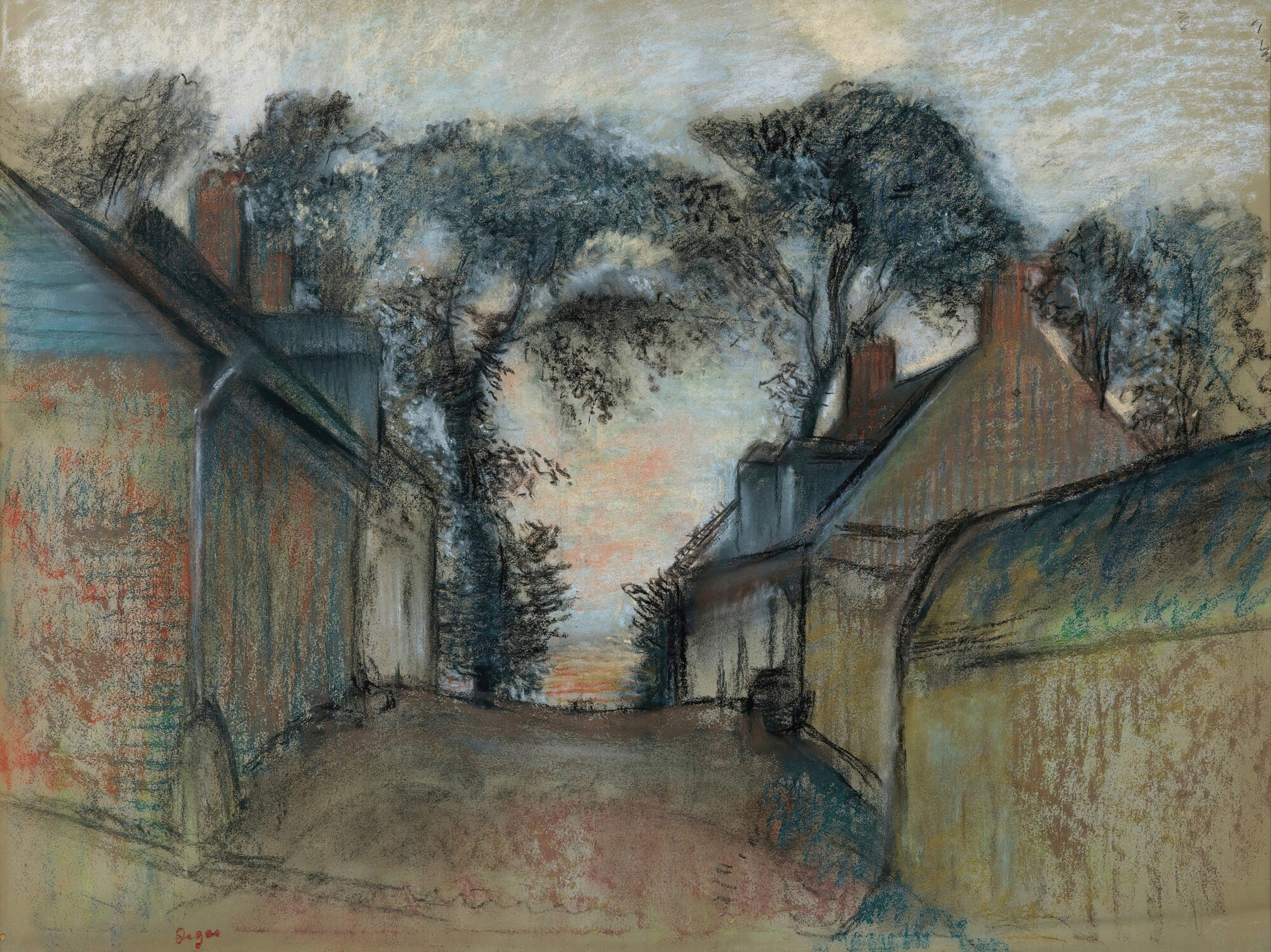
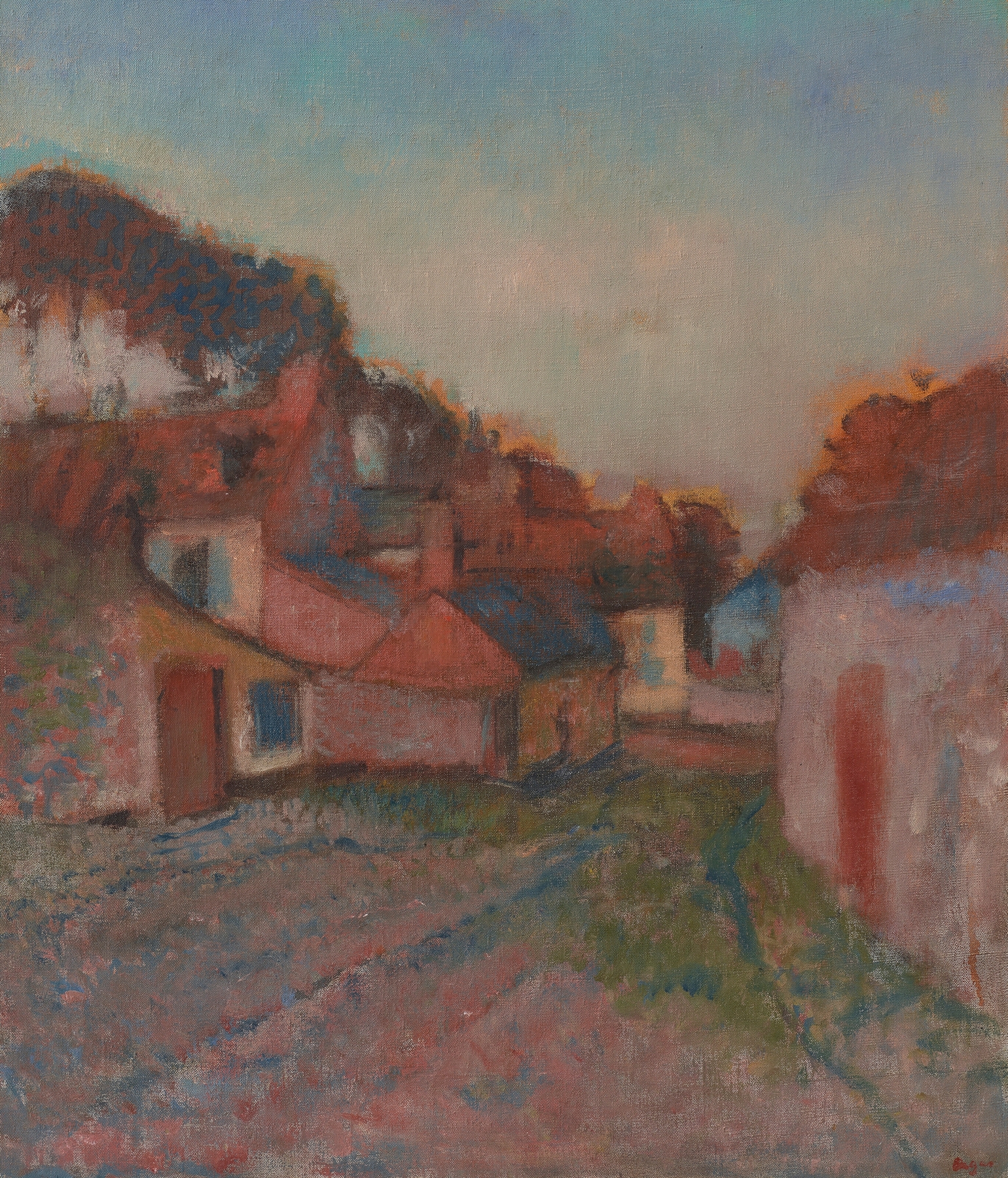
What if silence could speak through light? In Rue de village, shadows and hues weave a narrative that whispers the fears lurking just beneath the surface of everyday existence. Look to the center where the light strikes a narrow street, illuminating the figures that traverse the cobblestones. The warm glow contrasts with the deep, enveloping shadows, creating a sense of intimacy and unease. Notice how the gestural strokes of the artist capture the essence of movement, with the figures seemingly caught in a moment of hesitation.
The choice of a muted palette evokes a somber atmosphere, drawing the eye toward the interplay of light and shadow that defines the scene. Beneath this tranquil village facade lies an emotional tension. The figures, though seemingly engaged in mundane activities, convey a sense of isolation; their faces turned away or obscured, hinting at unspoken fears and regrets. The cobbled streets, both inviting and constricting, symbolize the duality of comfort and confinement, suggesting that safety often coexists with anxiety.
This juxtaposition lends the painting a haunting quality, encouraging viewers to consider the fragility of everyday life. During the years 1895 to 1898, Edgar Degas was immersed in exploring everyday scenes with a fresh perspective, often capturing fleeting moments in the urban landscape of Paris. At this time, the world of art was shifting with the rise of Impressionism, a movement that challenged traditional techniques and subjects. Degas, while often associated with this movement, also incorporated elements of realism, reflecting the complexities and uncertainties of both his personal life and the rapidly changing society around him.