The Collector of Prints — History & Analysis
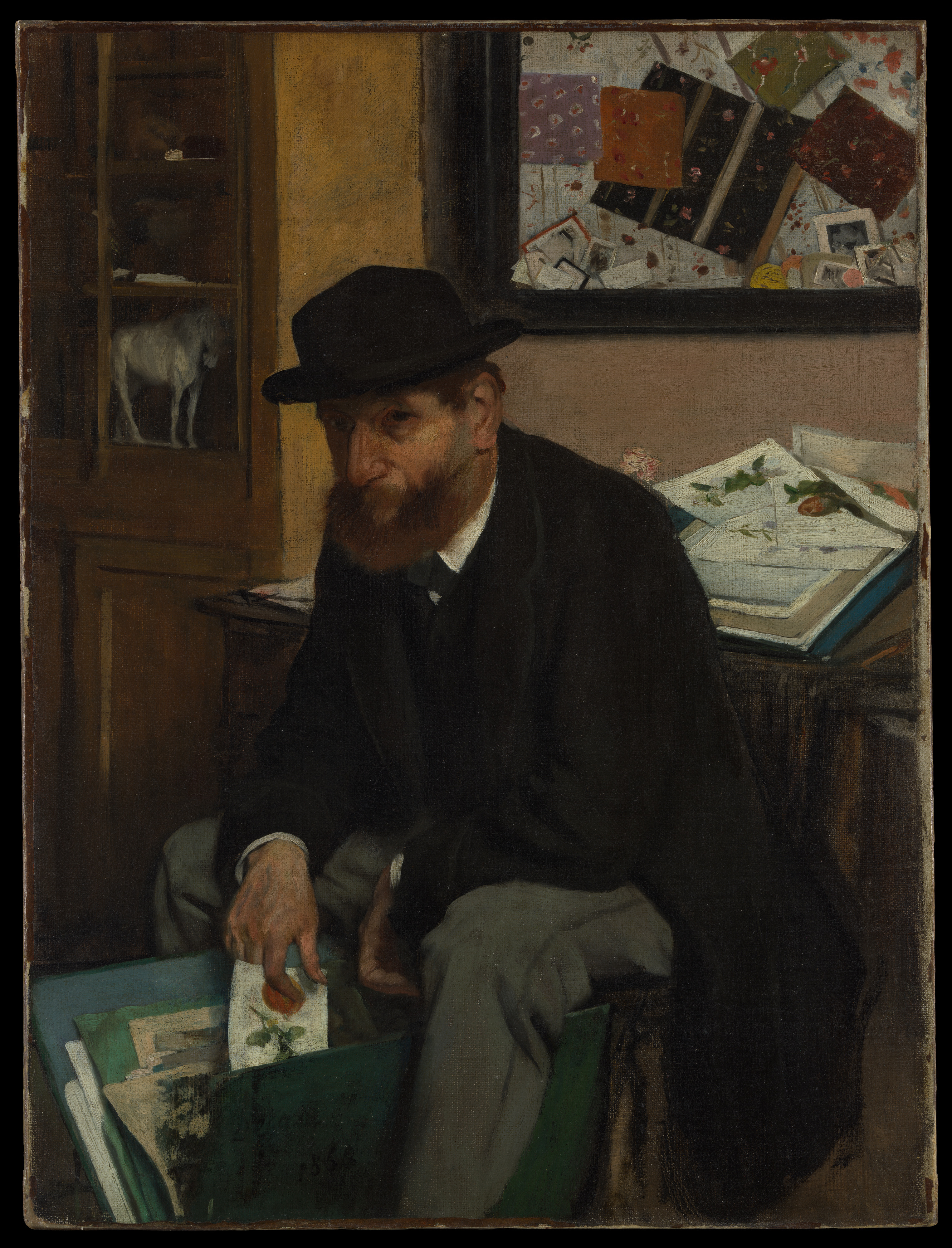
“Every silence here is a confession.” In a world saturated with noise and distractions, this haunting reflection invites us to explore the depths of faith nestled within the stillness of art. Look closely at the arrangement of prints in the foreground; each piece is a portal into the artist’s soul. The careful layering and placement of the images create a sense of intimacy, as if the viewer is peering into a sacred space. Notice how the warm, muted tones envelop the scene, creating a contrast between the vibrant prints and the subdued shadows that dance along the walls.
This interplay of light and dark draws our eyes into the heart of the composition, where the collector stands, a silent guardian of these visual treasures. In this work, Degas reveals the tension between possession and appreciation. The prints, each a distinct voice, whisper stories of faith and passion, yet they remain at the mercy of the collector's gaze. The figure’s contemplative posture suggests a deep connection to the art, even as he occupies a position of authority over it.
The viewer, too, grapples with this duality—invited to partake in the beauty while acutely aware of the distance between the appreciation and ownership of art. In 1866, during a pivotal period in his artistic development, the artist painted this piece amid the burgeoning Impressionist movement in Paris. As he immersed himself in the exploration of movement and representation, he was simultaneously influenced by the rise of printmaking and its impact on visual culture. This backdrop of artistic experimentation and societal change shaped The Collector of Prints, a testament to both personal and collective engagement with art.