Bab el Kalabshe on the Nile — History & Analysis
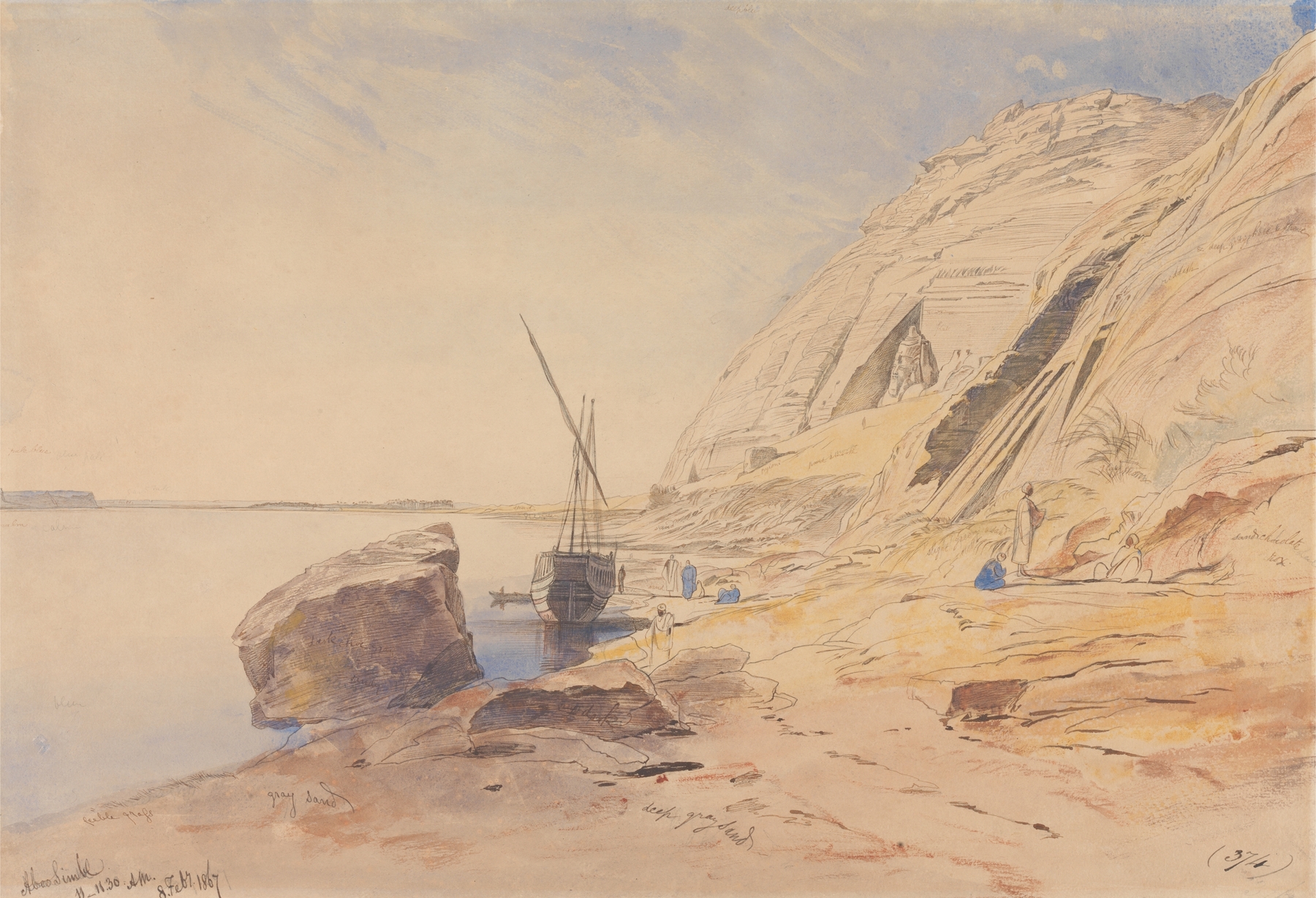
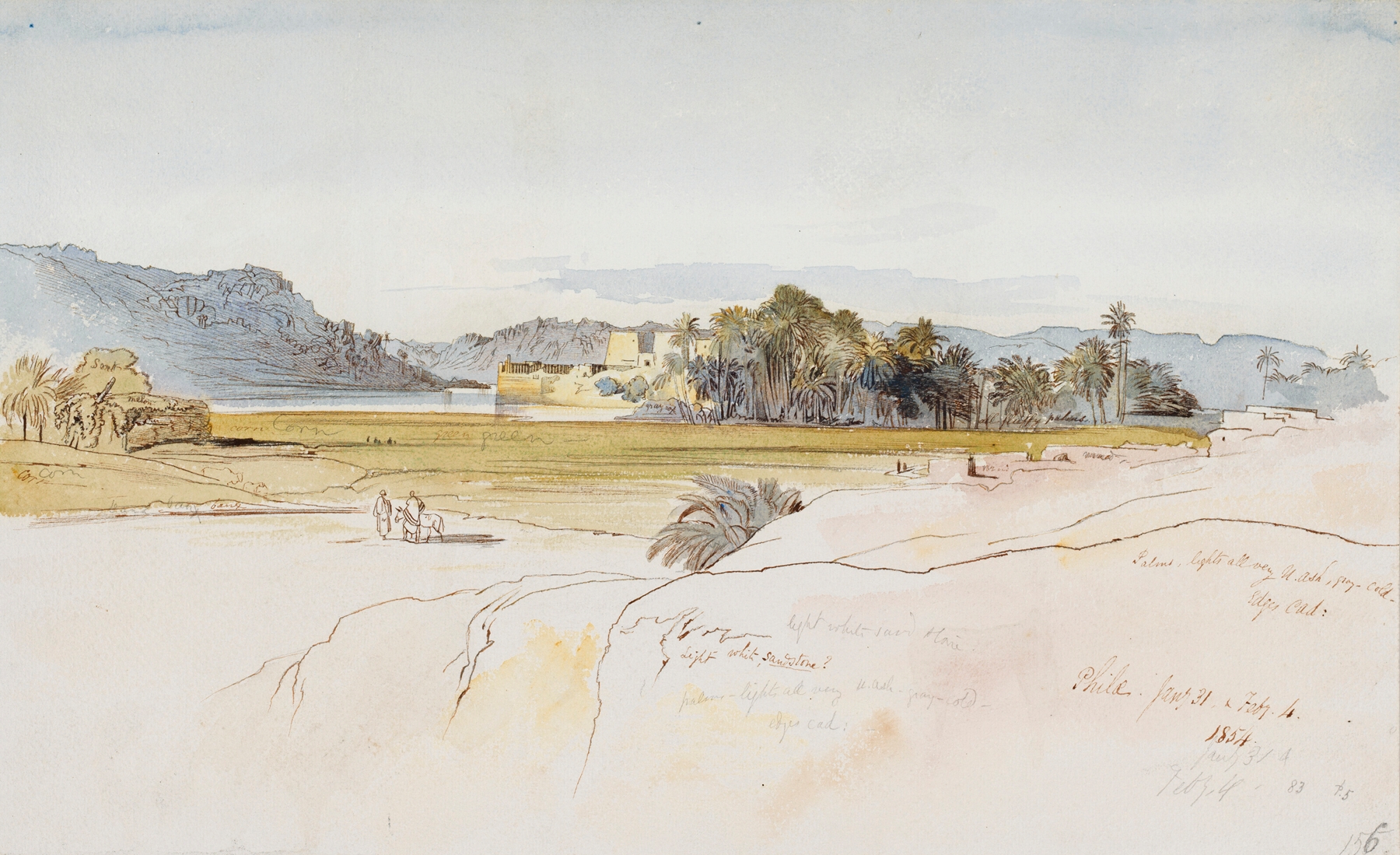
Is this a mirror — or a memory? The shimmering waters of the Nile beckon us to explore the delicate boundary between reality and the dreams of travelers who once navigated its currents. Look to the left at the vibrant hues of the sky, where shades of orange and blue collide in a dance of twilight. The viewer’s gaze is drawn to the elegant silhouettes of palm trees framing the horizon, their forms gently swaying in the evening breeze. Notice how the light melts into the water, casting a golden reflection that flickers like a fleeting memory, inviting you to immerse in the moment.
The composition is harmonious yet dynamic, a testament to the artist's deft brushwork and understanding of light. Beneath the serene surface lies a rich tapestry of emotion and intrigue. The contrasting elements of warm and cool colors evoke a sense of ecstasy tinged with nostalgia as the past intermingles with the present. The distant figures along the river can be interpreted as symbols of connection, representing both solitude and shared experience amidst the vast expanse of nature.
This layered narrative invites the viewer to contemplate their own journeys and the way memories shape our perceptions. In 1871, Lear was residing in Egypt, capturing the landscapes that inspired him deeply during his travels. This period marked a significant leap in his artistic expression, as he sought to depict not just the physicality of the places he visited, but also the emotional resonance they held. Surrounded by the richness of Egyptian culture and the beauty of its natural environment, he created evocative works like this one, reflecting his unique vision of the world.