Bab el Kalabshe on the Nile — History & Analysis
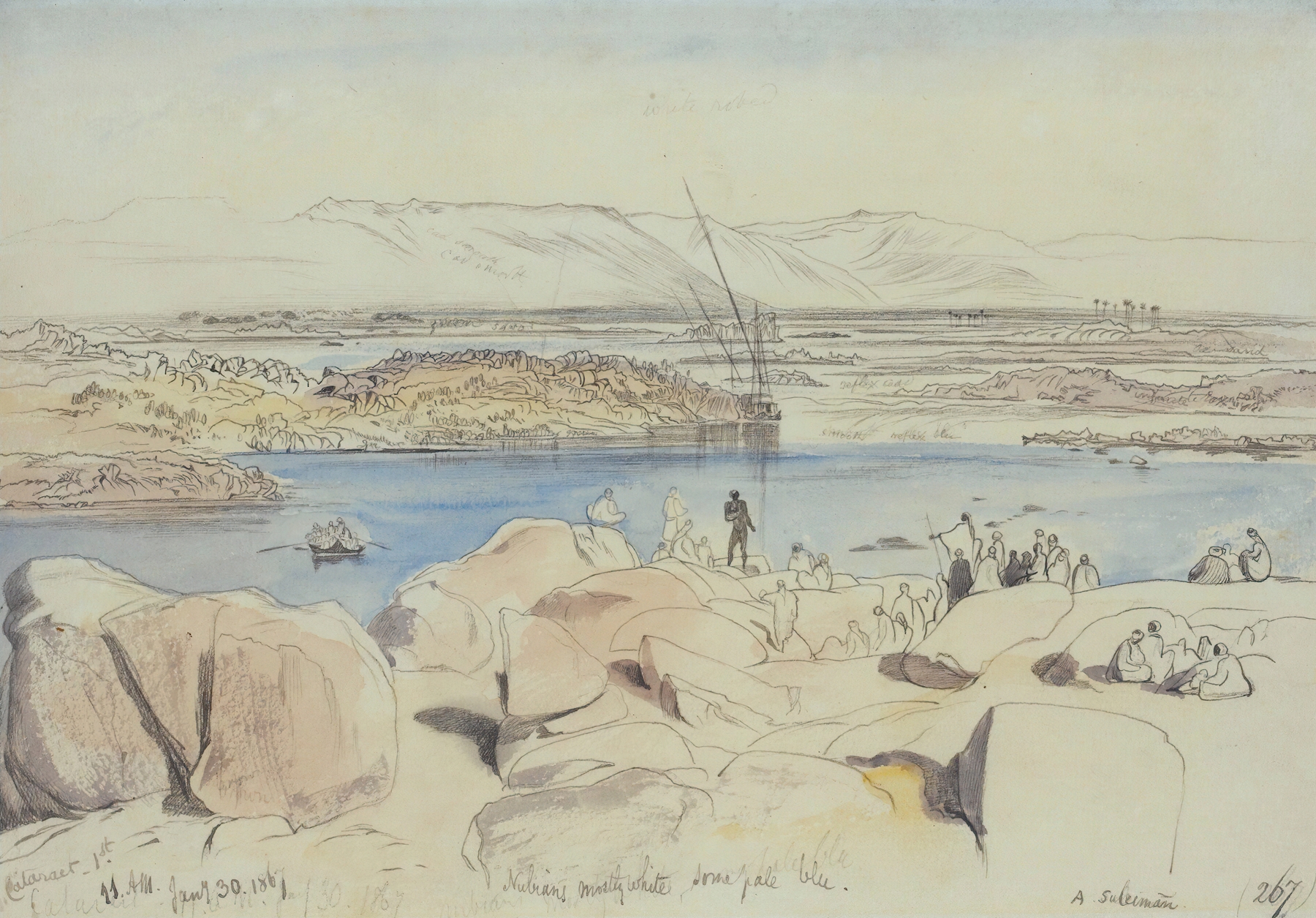
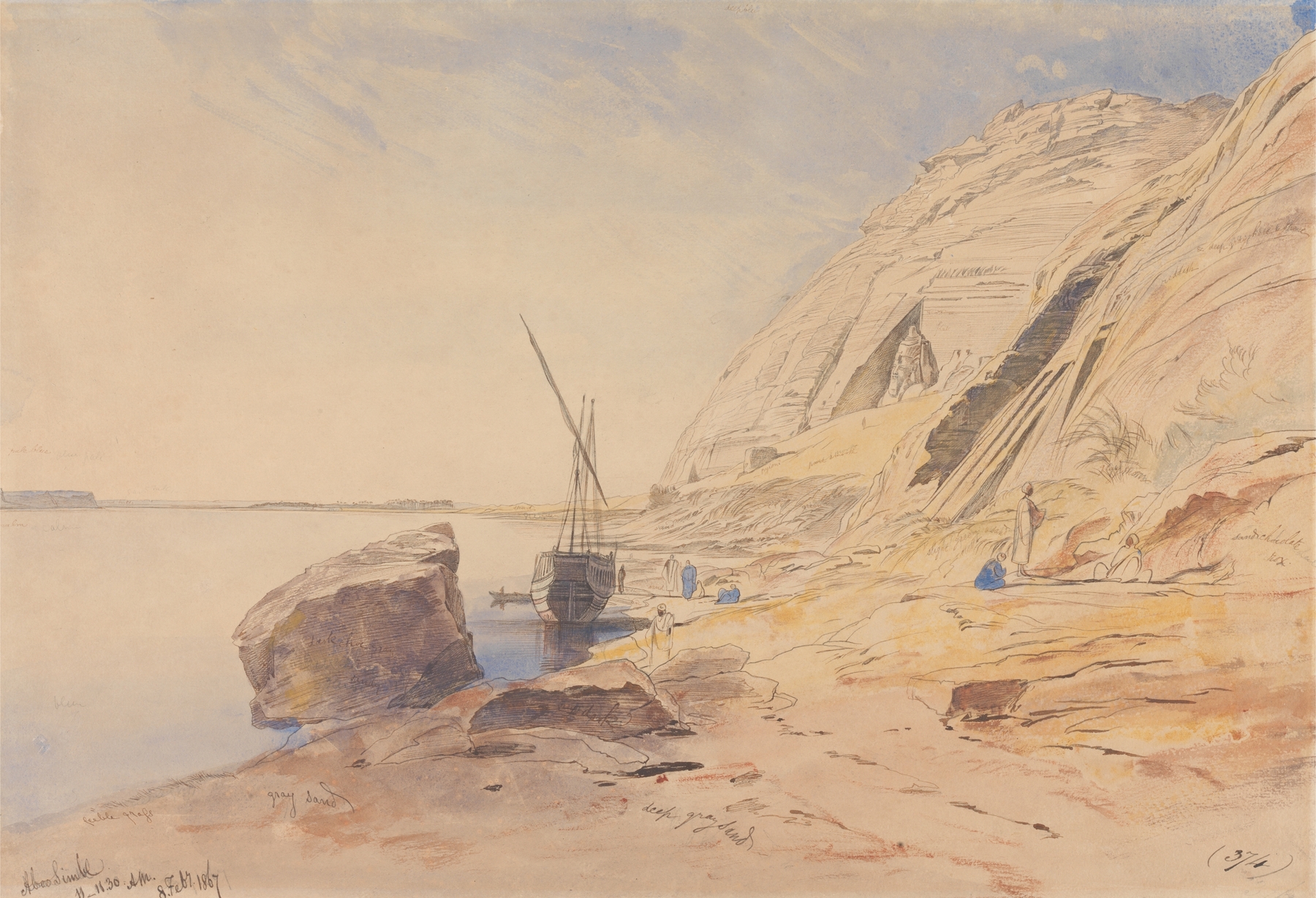
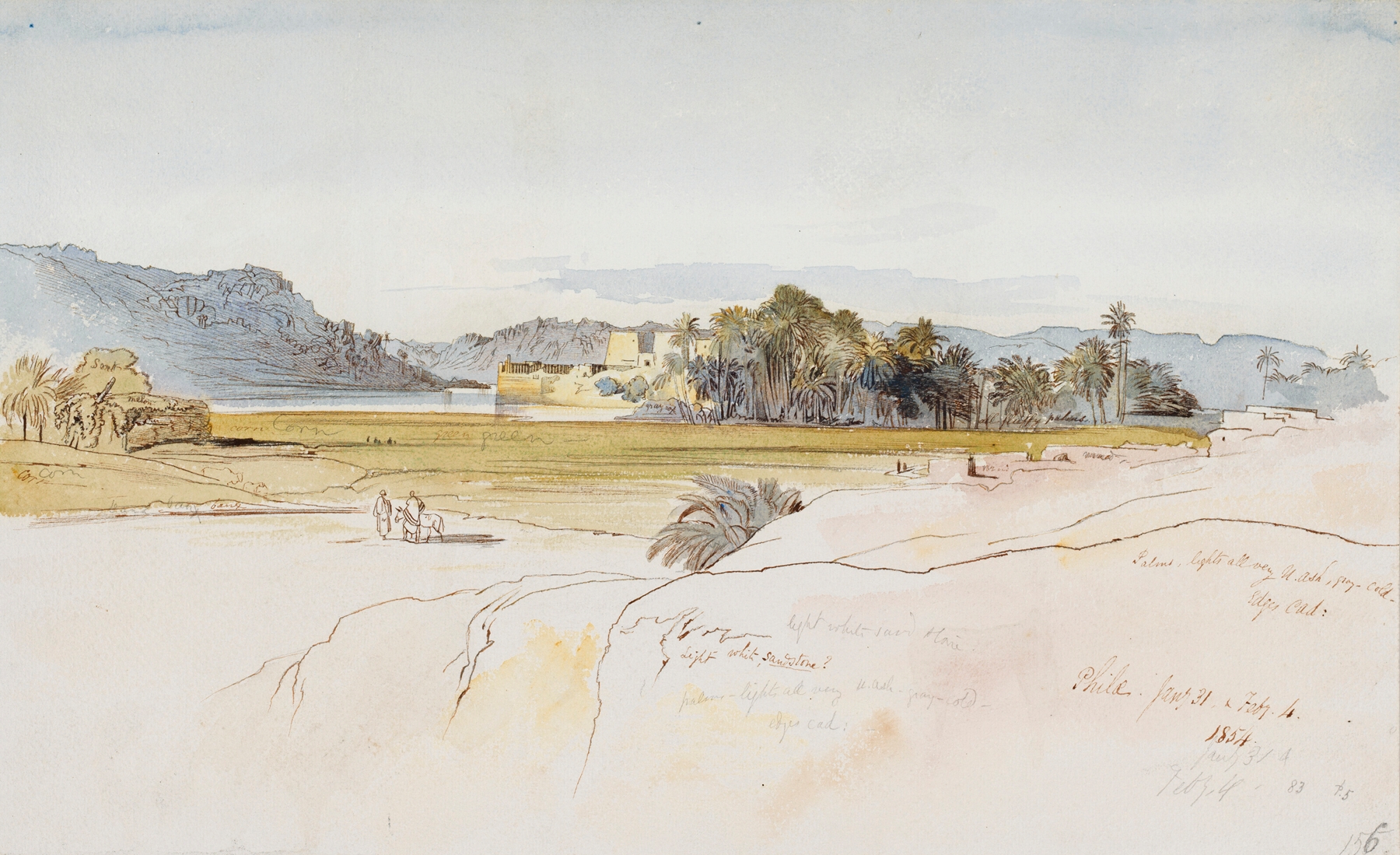
Where does light end, and longing begin? This question echoes through the intricate layers of Edward Lear's Bab el Kalabshe on the Nile, a canvas where the boundaries of reality blur, inviting a dance between reason and the sublime echoes of madness. Look closely at the vibrant horizon, where the sun bleeds into the Nile, casting a golden hue across the water's surface. Direct your gaze to the small figures near the riverbank, their silhouettes stark against the ethereal backdrop, seemingly caught in a reverie. The brushstrokes are both loose and deliberate, conveying a sense of movement that suggests the whisper of a breeze or the soft ripples of water, as if the scene breathes with life itself.
The palette of ochre, azure, and verdant greens creates a landscape that feels both inviting and haunting. Yet, amid the beauty lies a tension, a contrast between the serene landscape and the figures that appear almost ghostly in their stillness. The light reflects not just on the water but on the internal struggles of the viewers who might find themselves lost in this vivid dreamscape. What are these figures searching for along the banks of the mighty Nile?
The connection between madness and longing becomes palpable, suggesting that perhaps the beauty of the scene masks a deeper quest for meaning that lies just beyond reach. Created in 1871, Bab el Kalabshe on the Nile emerged during Edward Lear's travels in Egypt, a time when he sought inspiration from the exotic landscapes and cultures of the region. This period in his life was marked by personal challenges and a quest for artistic identity, mirroring the vibrant yet turbulent artistic movements of the time. Lear’s distinctive style, characterized by a blend of drawing and painting, reflects both his background in literature and his deep engagement with the natural world.