Bacchus — History & Analysis
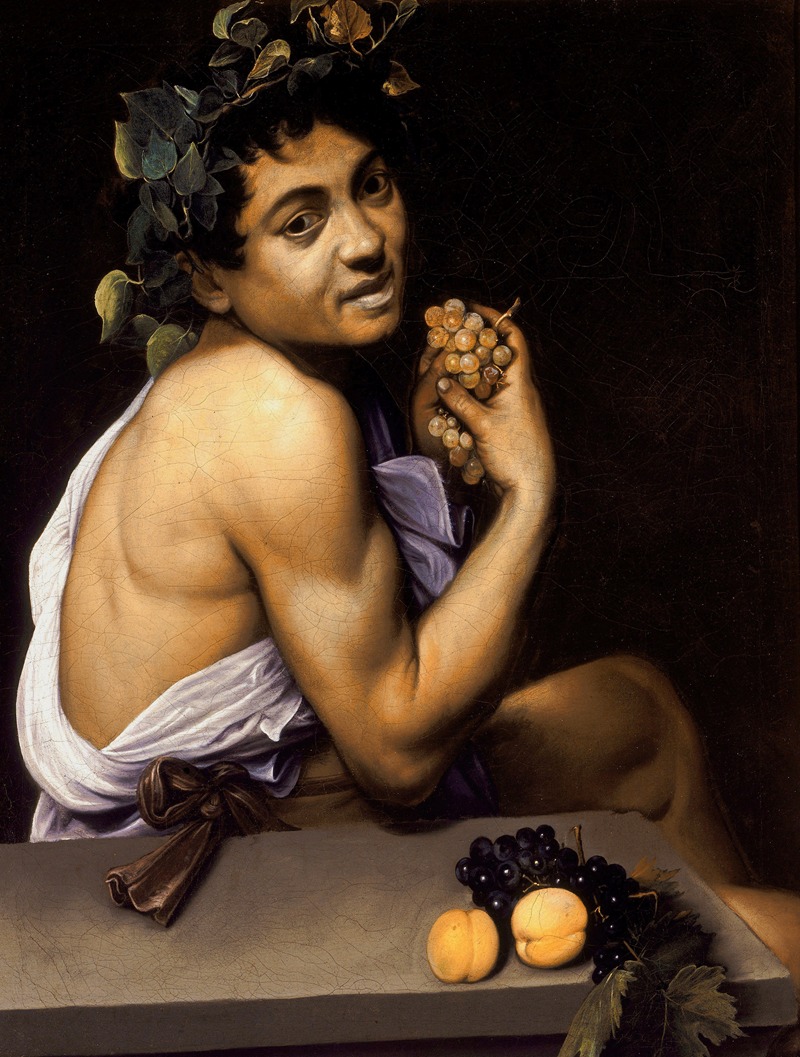
“Between color and silence, truth hides.” In Bacchus, vibrant hues dance across the canvas, a testament to the complexity of indulgence and desire. The rich greens and deep reds breathe life into the figure, hinting at a world where sensory experiences collide with profound truths. Look to the left at the exquisite drapery that envelops Bacchus’s form, its folds meticulously rendered to catch the light with a subtle sheen. The pearly whites of the grapes in his hand contrast dramatically against his bronzed skin, inviting the viewer’s gaze to linger on this moment of temptation.
Notice how the background fades into shadow, emphasizing the figure's luminosity and the sense of isolation that envelops him — an island of revelry in a sea of darkness. Delve deeper, and one can sense the tension between Bacchus's joyful demeanor and the elements of decay represented by the wilting vines. This juxtaposition speaks to the duality of pleasure: ecstasy intertwined with the inevitable decay of excess.
Each brushstroke whispers of the fleeting nature of indulgence, allowing viewers to contemplate their own relationship with pleasure. In 1598, during a period of burgeoning creativity in Rome, Caravaggio painted this work amidst a flourishing art scene that embraced realism and emotional depth. The artist, known for his dramatic use of light and shadow, was exploring themes of sensuality and spirituality, which resonated deeply in a society grappling with the complexities of faith and desire.